To pass the FAA Part 107 exam, focus on understanding airspace classifications, their rules, and when FAA authorization like LAANC is needed. Study weather factors affecting drone safety, such as wind and visibility, and how they influence your flight decisions. Practice scenario-based questions to reinforce your knowledge. Stay consistent with your review, and you’ll boost your confidence. Keep going, and you’ll discover essential tips to help you succeed with your certification process.
Key Takeaways
- Study FAA airspace classifications and their rules, focusing on B, C, D, E, and G distinctions.
- Understand weather’s impact on drone safety, especially wind, visibility, and VFR/IFR conditions.
- Familiarize yourself with when FAA authorization like LAANC is required for specific airspace.
- Practice scenario-based questions to apply knowledge of airspace and weather restrictions.
- Review safety protocols and legal requirements to ensure compliant, safe drone operations.
Are you ready to pass the Part 107 exam and start flying drones commercially? If so, understanding airspace classification is essential. The FAA divides airspace into different categories—Class A, B, C, D, E, and G—each with specific rules and restrictions. Knowing how these classifications affect your drone operations helps you navigate safely and legally. For example, flying in Class B or C airspace usually requires airspace authorization through the FAA’s LAANC system, while Class G is generally open for visual line-of-sight flights without special permission. Recognizing the boundaries and requirements of each class prevents violations that could lead to penalties or safety issues.
Weather considerations also play a pivotal role in your drone operations and exam preparation. The FAA emphasizes understanding current and forecasted weather conditions because they directly impact safety and flight legality. Before each flight, you should check the latest weather reports, including wind speeds, visibility, temperature, and precipitation. Wind is a critical factor—high winds can make control difficult or even dangerous, especially at higher altitudes or for smaller drones. Visibility issues, such as fog or heavy rain, can impair your ability to keep the drone within visual line-of-sight, which is a core requirement for Part 107 operations. Additionally, knowing how weather affects battery life and drone stability helps you plan flights more effectively, avoiding potential emergencies or violations. Being aware of VFR/IFR requirements can help you determine when conditions are suitable for safe flight.
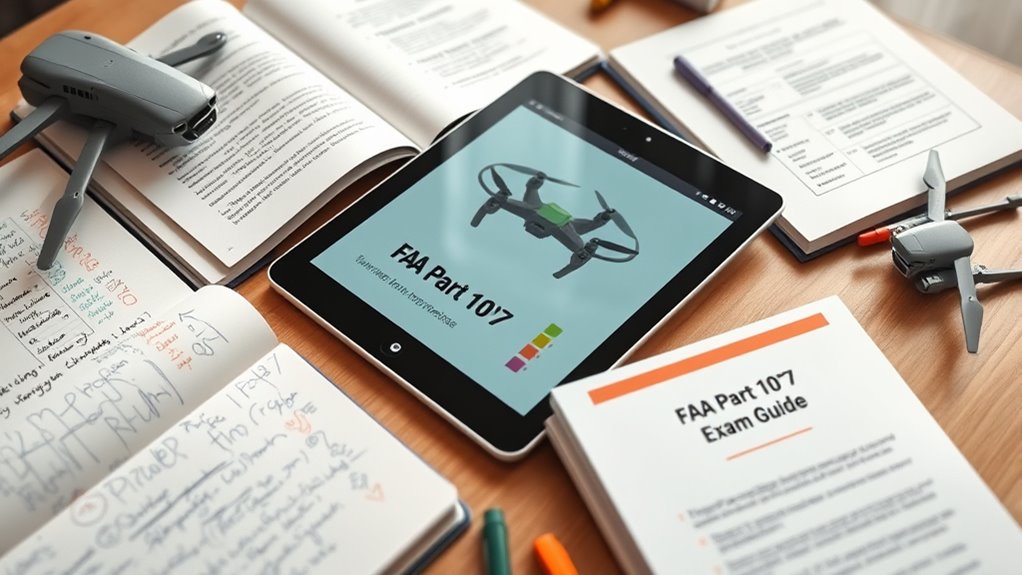
To ace the exam, you need to internalize how airspace classification informs your operational limits and the importance of weather considerations. The FAA expects you to understand that flying in certain airspace mandates specific procedures or permissions, and neglecting these rules can lead to legal trouble. Similarly, knowing how weather conditions influence safety allows you to make responsible decisions rather than risking unsafe flights. During your study sessions, focus on memorizing the key distinctions between airspace types and the weather factors that can ground or delay your flights. Practice scenario-based questions that require you to assess whether conditions are suitable for flight, considering both airspace rules and weather factors.
Frequently Asked Questions
How Often Do I Need to Retake the Part 107 Exam?
You need to retake the Part 107 exam every two years to renew your certification. The renewal frequency requires you to pass the exam retake, ensuring your knowledge stays current with FAA regulations. It’s a straightforward process—you can take the exam again if needed, but staying up-to-date with the latest rules helps you operate legally and safely. Make sure to schedule your renewal before your certification expires.
Are There Any Language Requirements for the Test?
Yes, there are language requirements for the test. You need to demonstrate sufficient language proficiency in English, as the exam must be taken in English or in a language you are proficient in. The FAA offers test language options, so if you’re more comfortable with another language, check if it’s available. Ensuring your language skills meet the requirements helps you understand questions clearly and improves your chances of passing.
Can I Take the Exam Online From Home?
Did you know over 90% of drone pilots now prefer remote testing? You can take the exam online from home through remote testing, making it more convenient. To do so, just schedule your exam online through an approved testing provider and confirm your setup meets the technical requirements. Once scheduled, you get a dedicated time slot, and you can complete the exam comfortably at your own pace.
What Is the Cost to Take the FAA Part 107 Test?
The test fee for the FAA Part 107 exam is $175. You should consider the cost of study materials, which can vary from free online resources to paid courses. Investing in quality study materials helps you prepare effectively, increasing your chances of passing on the first try. Keep in mind, paying the test fee is necessary, and thorough preparation with reliable study resources makes the process smoother and more successful.
How Long Does It Take to Receive My Drone Pilot Certificate?
Once you pass the FAA drone pilot test, you’ll typically receive your certificate within a few days to a week, depending on processing times. Your test result validity lasts for two years, so keep track of your certification renewal process to stay current. You should regularly check your email and FAA portal for updates, and make sure you complete renewal requirements on time to maintain your drone flying privileges without interruption.
Conclusion
Think of the Part 107 exam as a ladder you’re climbing. Each study session is a rung, bringing you closer to the top where clarity and confidence await. With steady steps and focused effort, you’ll reach the summit, gazing down at your new skills and certification. Remember, every small effort builds the ladder that leads to your successful drone piloting journey. Keep climbing, and you’ll soon soar with assurance and ease.