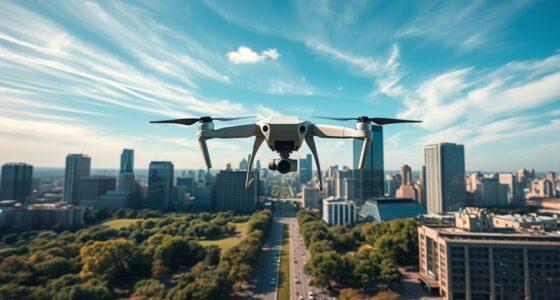

Your ability to see your drone at all times depends on factors like terrain, weather, and lighting conditions. Typically, the maximum visual line of sight (VLOS) is around 400 feet above ground level, but it can be shorter in forests, urban areas, or low visibility. To stay safe and compliant, you need to keep your drone within a distance where you can clearly observe it with your eyes or visual aids. If you want to learn more about maximizing your VLOS, keep exploring.
Key Takeaways
- VLOS typically extends up to 400 feet above ground, but actual distance depends on terrain, obstructions, and weather conditions.
- Open, unobstructed areas like fields or lakes provide longer VLOS ranges than urban or forested environments.
- Visual clarity and lighting influence how far you can see your drone without aids or assistance.
- Physical limits of your eyesight and natural obstructions determine the maximum distance you can effectively monitor your drone.
- Regulations generally require maintaining direct line of sight at all times, regardless of how far the drone is from the pilot.
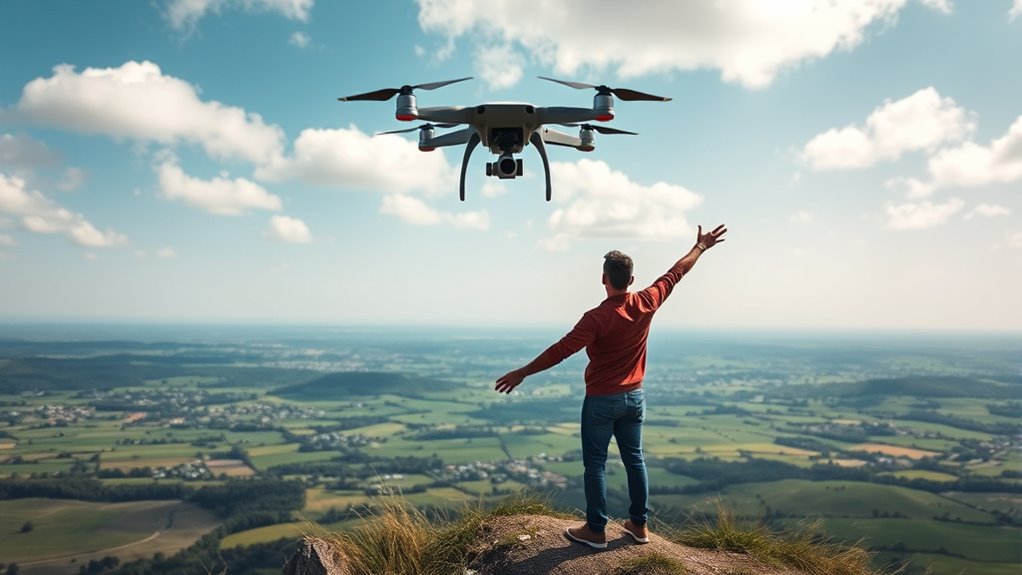
Visual Line of Sight (VLOS) refers to the clear, unobstructed view between a drone pilot and their drone, guaranteeing safe and effective operation. When you’re flying a drone, maintaining VLOS is vital because it allows you to keep track of your drone’s position, avoid obstacles, and respond quickly to any unexpected situations. This direct sightline is fundamental for drone safety, helping prevent accidents that could harm people, property, or other aircraft. It also plays a key role in complying with regulatory limits set by aviation authorities, which often specify how far you can fly while still maintaining VLOS.
Regulatory limits are in place to keep everyone safe and guarantee that drone operations don’t interfere with manned aircraft or create hazards in the airspace. These limits vary depending on where you’re flying and the local rules in effect. For example, in many regions, the maximum distance a drone can be flown from the pilot while remaining within VLOS is typically around 400 feet above ground level. However, more important than the altitude is the physical distance you can see your drone without visual aids like binoculars or cameras. Most regulations specify that you must have a clear, direct line of sight at all times, which naturally restricts how far you can fly.
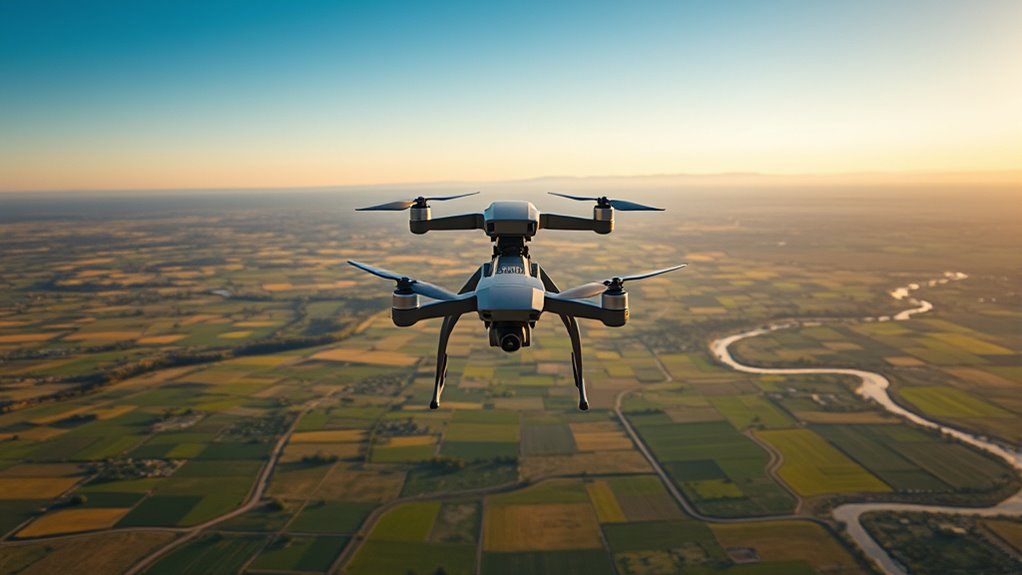
Knowing these limits helps you plan your flights responsibly. For instance, if you’re flying in open fields or along a lake, you can probably extend your range somewhat as long as you can see your drone comfortably. But if you’re in a densely built-up area or forest, your effective VLOS might be much shorter due to obstructions blocking your view. This is why it’s vital to stay within the distance where you can keep your drone in sight without straining your eyes or relying on electronic aids, which are usually not permitted for VLOS flights. Additionally, advances in European cloud solutions are enhancing drone safety and management through secure data handling and connectivity, supporting better compliance with VLOS requirements.
Staying within regulatory limits isn’t just about avoiding penalties; it’s about guaranteeing your drone safety. Pushing beyond VLOS increases the risk of losing control or crashing, especially if unexpected obstacles appear. It also makes it harder to respond quickly if something goes wrong. By respecting the limits defined by aviation authorities and maintaining a clear line of sight, you reduce these risks greatly. So, always plan your flights with these rules in mind—your safety, the safety of others, and compliance with regulations depend on it. Remember, your best tool for safe drone operation is always your own eyes and awareness.
Frequently Asked Questions
How Does Weather Affect Drone Visibility?
Weather considerably affects your drone’s visibility by causing sensor glare and creating visual obstructions. Bright sunlight can create glare that makes it harder to see your drone clearly, while fog, rain, or snow can obscure your view entirely. Wind may also cause movement that’s harder to track. To maintain good visibility, fly in clear weather conditions and avoid areas with visual obstructions, ensuring you keep your drone within your line of sight.
Can I Use Binoculars to Extend My Visual Line of Sight?
Yes, you can use binoculars to extend your visual range and gain an advantage in spotting your drone from farther away. Binoculars allow you to see more detail at a distance, providing an extended visual range beyond normal eyesight. However, make sure you’re still within legal limits and maintain a safe, clear line of sight. Binoculars are a helpful tool, but always prioritize safety and drone regulations.
Are There Legal Limits for Flying Beyond Visual Line of Sight?
Sure, you can dream about flying beyond visual line of sight, but FAA regulations say otherwise—no sneaky long-distance flights without special waivers. Privacy concerns also loom large, making authorities wary of spying from afar. So, if you’re itching to push boundaries, expect to jump through hoops and get approvals, or risk hefty penalties. Until then, keep your drone in sight and obey the rules—after all, flying isn’t a free-for-all.
What Equipment Improves Drone Visibility at Long Distances?
You can improve your drone’s visibility at long distances with equipment like high-quality antenna range and visibility enhancers. Upgrading your antenna range helps boost signal strength, allowing you to maintain better control and awareness of your drone’s position. Visibility enhancers, such as bright LED lights and reflective decals, make your drone easier to spot from afar. Combining these tools guarantees you stay within safe visual limits and enhances your overall flying experience.
How Does Drone Size Impact How Far I Can See It?
Your drone size directly affects how far you can see it because larger drones tend to be more visible due to their weight and size. Heavier drones are easier to spot, especially if they have high camera resolution and bright colors. Smaller drones, often lighter and less conspicuous, can be harder to see at long distances. To maximize visibility, choose a drone with a good balance of size, weight, and a high-resolution camera.
Conclusion
Think of flying your drone as steering a ship through foggy waters. If you lose sight of the lighthouse’s beam, you risk drifting off course. Staying within your visual line of sight keeps you the captain of your journey, guiding your drone safely home. Remember, your eyes are the lighthouse—trust them to keep you on course and make certain your adventure remains smooth and safe. Keep your eyes on the prize, and fly responsibly.