
To stay safe while flying your drone, start by understanding local rules and respecting privacy. Before each flight, check your drone’s components and batteries, and choose open, obstacle-free areas away from crowds. Keep your drone within your line of sight and stay mindful of weather conditions. Use safety features like geofencing and emergency stops, and always stay alert for unexpected hazards. Following these tips will help you avoid crashes—continue exploring for more essential safety insights.
Key Takeaways
- Understand and follow local drone regulations, no-fly zones, and privacy laws to avoid legal issues and accidents.
- Conduct thorough pre-flight checks of batteries, propellers, and safety features to ensure drone integrity.
- Choose open, obstacle-free environments with favorable weather conditions for safe flying.
- Maintain visual line of sight, stay alert, and practice controlled, deliberate movements during flight.
- Utilize safety features like obstacle detection, geofencing, and emergency protocols to prevent crashes.
Understand and Follow Local Regulations
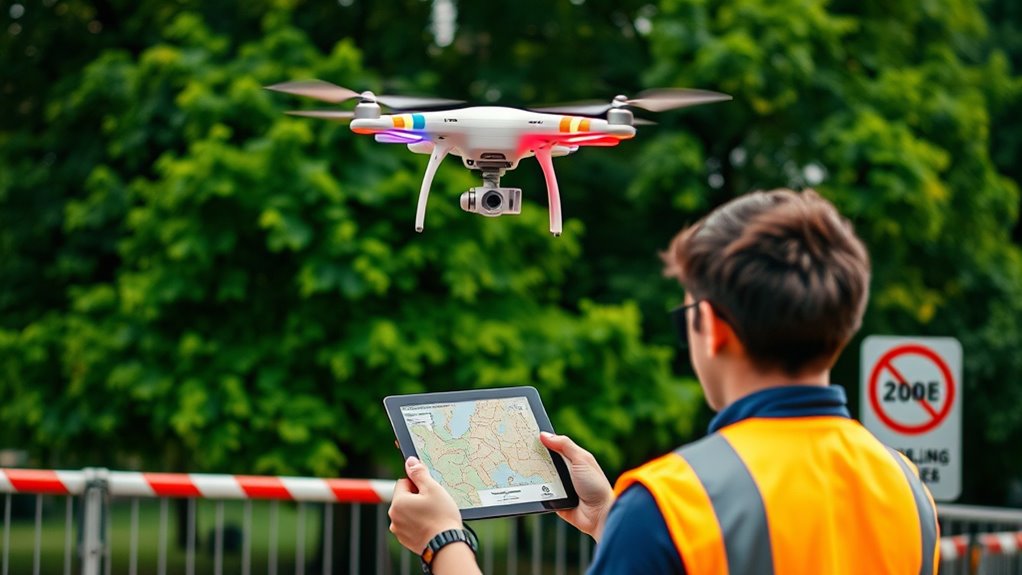
To guarantee safe drone operation, you need to understand and follow local regulations. This means checking the rules about where and when you can fly, which vary by area. Some places require you to obtain local licensing before flying, especially for commercial use. Airborne regulations often specify altitude limits, no-fly zones, and restrictions around airports or crowds. Ignoring these rules can lead to fines, penalties, or even losing your drone. Before taking off, research the specific regulations applicable to your location. Many agencies provide official guidelines online or through mobile apps. Following local licensing requirements and airborne regulations assures you’re flying legally, minimizing risks and helping keep everyone safe. Staying informed is your responsibility as a drone operator. Additionally, understanding floating on water safety principles can be helpful if your drone incidentally ends up near bodies of water or during aquatic activities. Being aware of airspace restrictions and adhering to them is crucial to prevent accidents and maintain safe skies. Moreover, keeping up with updates on drone regulations ensures you remain compliant as rules evolve. Regularly reviewing local drone laws can help you stay ahead of any changes and avoid inadvertent violations. Being proactive about these regulations can also help you avoid potential legal issues that may arise from non-compliance.
Conduct a Pre-Flight Check
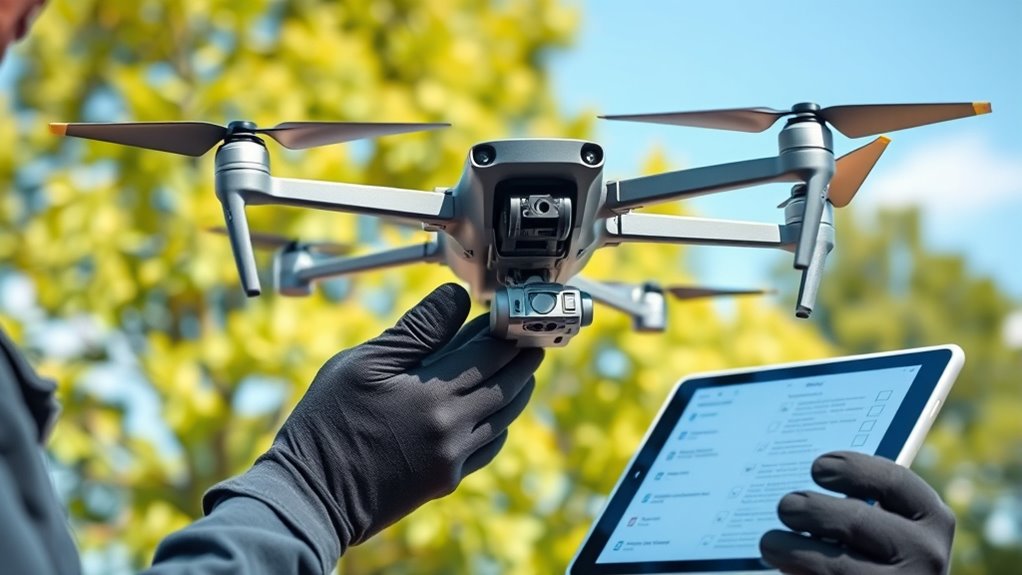
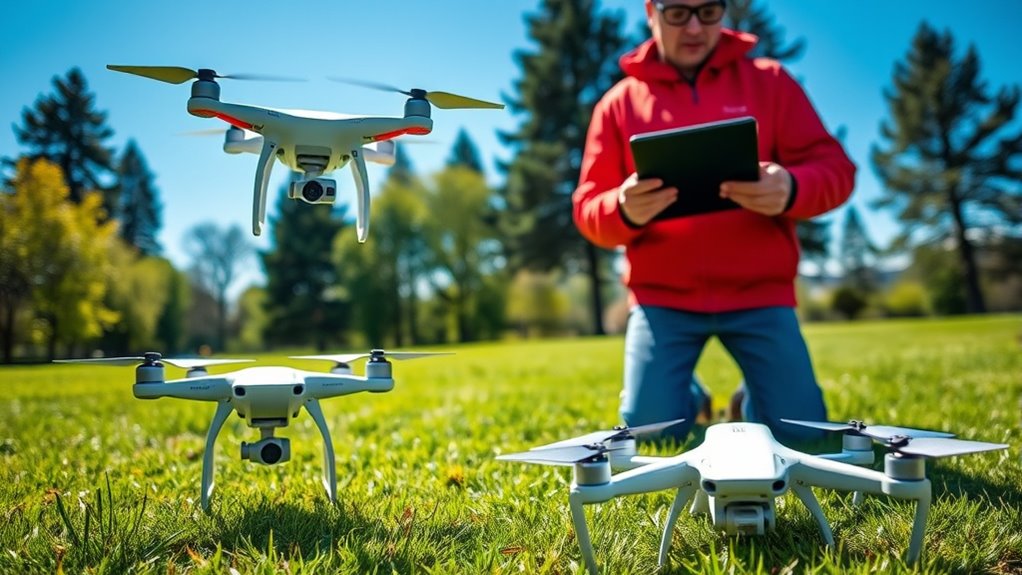
Before your flight, you should complete a pre-flight checklist to guarantee everything is in order. Take a close look at your drone components, checking for damage or loose parts. This quick step helps prevent potential issues during your flight and keeps everyone safe. Additionally, ensure your drone’s adaptive safety features are properly configured to respond to unexpected obstacles or hazards. Regularly reviewing the safety and troubleshooting tips can further help you identify and address common issues before takeoff. Incorporating reliable infrastructure awareness can also assist in selecting safe flying environments and reducing risks. Developing strong problem-solving skills can aid in quickly resolving any unforeseen technical problems during your flight, enhancing safety. Being familiar with Gold IRA Rollovers and other investment security measures can also enhance your overall preparedness for safe drone operation.
Pre-Flight Checklist
Conducting a thorough pre-flight check is essential to guarantee your drone is safe and ready for flight. Start by inspecting the battery safety; verify the battery is fully charged, properly secured, and free of damage or swelling. Check that the propeller guards are correctly attached and undamaged to prevent injuries during flight. Confirm that the propellers are securely fastened and free of cracks or chips. Examine the remote controller, making sure all controls respond properly. Verify that the SD card or onboard storage has enough space. Ensure firmware updates are installed and calibrate the compass and GPS if necessary. Paying attention to navigation and mapping features can help prevent accidents and improve flight stability. Additionally, understanding the contrast ratio of your drone’s camera can improve image clarity during aerial photography. Regularly reviewing drone safety protocols can further reduce the risk of crashes and injuries. It is also helpful to familiarize yourself with weather conditions that might affect your drone’s performance during flight. Practicing emergency procedures and having a backup plan ready can help mitigate unforeseen issues. Taking these steps minimizes risks, guarantees optimal performance, and helps you avoid potential crashes or injuries during your flight.
Inspect Drone Components
Inspecting your drone components is a crucial step to guarantee everything is in proper working order before flight. Proper battery management ensures your drone won’t unexpectedly lose power mid-air, so check that batteries are fully charged and securely connected. Camera maintenance is equally important; clean lens surfaces and verify stabilization functions to prevent blurry footage or crashes caused by faulty equipment. During your pre-flight check, focus on these key points:
- Confirm batteries are in good condition and properly seated
- Clean and test your camera to ensure ideal image quality
- Inspect motors and propellers for damage or debris
- Conduct a thorough inspection of all moving parts and connections to identify potential issues before takeoff
- Regular maintenance and easy cleanup help prevent issues during flight and extend your drone’s lifespan
Taking these precautions reduces risks, boosts performance, and keeps your flight safe and smooth. Don’t overlook these simple steps—they’re essential for a successful, injury-free drone experience.
Choose Safe and Open Flying Areas

Choosing the right flying area is essential for safe drone operation. Opt for open spaces away from trees, buildings, and crowds to reduce the risk of crashes. Guarantee the area allows you to maintain a safe flying altitude, avoiding obstacles and respecting local regulations. Check wind conditions before flying; strong or unpredictable winds can make controlling your drone difficult and increase the chance of accidents. A clear, open environment minimizes interference and provides better visibility of your drone’s position. Avoid areas near airports or restricted zones to prevent legal issues. By selecting a safe, open location with stable wind conditions and appropriate altitude, you create a safer flying experience for yourself and others.
Maintain Visual Line of Sight
You need to keep your drone visible at all times to guarantee safe flying. Avoid flying behind objects or into areas where your view is blocked. Staying aware of your drone’s position helps prevent accidents and keeps everyone safe. Additionally, being mindful of free floating obstacles in the environment can help you anticipate movements and respond quickly to unexpected changes, especially since environmental awareness is key to safe drone operation. Recognizing obstacle types like trees, power lines, or buildings can further enhance your ability to navigate safely. Maintaining a trusted resource for local obstacles and hazards can also improve your flight safety, especially when you are familiar with local environmental conditions.
Always Keep Drone Visible
Maintaining visual line of sight with your drone is essential for safe and effective flying. When you keep your drone visible, you enhance your visual tracking and obstacle awareness, reducing the risk of crashes. Staying focused allows you to respond quickly to sudden movements or obstacles, ensuring a safer experience.
Remember:
- Stay alert to unexpected objects or people around you
- Continuously monitor your drone’s position and behavior
- Avoid distractions that could divert your attention
Keeping your drone in clear view isn’t just about legality; it’s about maintaining control and preventing accidents. By actively watching your drone, you boost your ability to react swiftly, making your flights safer and more enjoyable. Never compromise on keeping your drone visible during every flight.
Avoid Obstructed Views
To guarantee safe flight, it’s essential to avoid obstructions that block your view of the drone. Camera obstruction can obscure important details, increasing the risk of collisions. Pilot distraction from looking at screens or avoiding obstacles can lead to loss of control. To stay focused, always maintain visual line of sight and be aware of your surroundings. Use the table below to identify common obstructions:
| Obstacle Type | Potential Risk | Prevention Tip |
|---|---|---|
| Trees and branches | Hidden hazards, camera obstruction | Keep a clear flight path |
| Buildings | Loss of visual contact | Choose open areas |
| Power lines | Electric hazard, crash risk | Scan your route beforehand |
| Moving objects | Sudden distractions | Stay vigilant and alert |
Staying alert helps you avoid distractions and keeps your drone safely in view.
Be Mindful of Weather Conditions

Weather conditions can change rapidly and considerably impact drone safety, so it’s essential to stay alert and prepared. Good weather planning helps you avoid surprises that could lead to crashes. Keep an eye on weather forecasts and wind reports before flying. Remember, storms can develop quickly, making storm avoidance vital to prevent accidents. Additionally, understanding weather impact on drone operation can help you better assess risks and ensure safer flights. Staying aware of weather helps you make smarter decisions, ensuring a safer flying experience and protecting your drone from unnecessary risks.
Practice Basic Flying Skills Safely
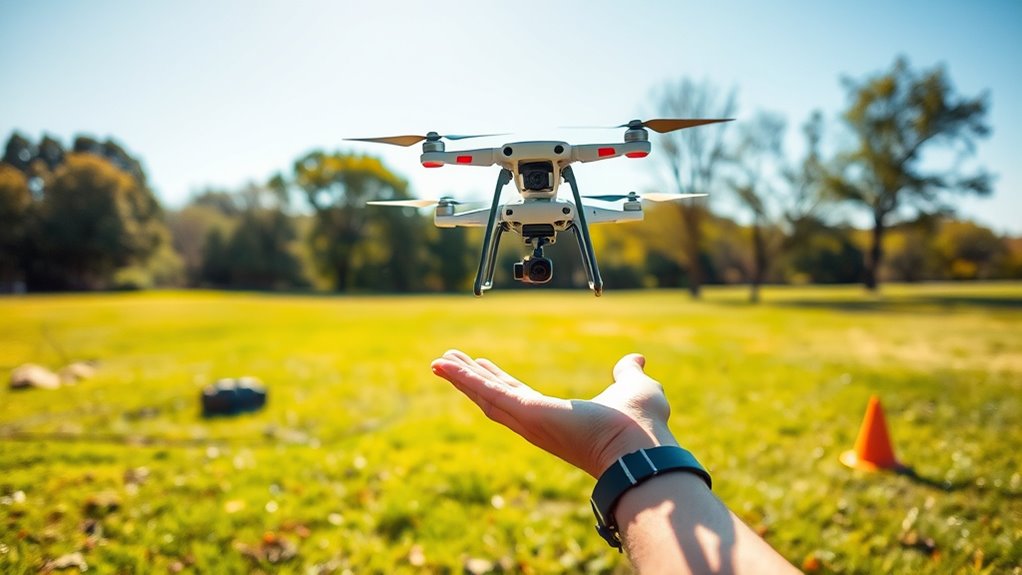
Practicing basic flying skills in a safe environment helps you build confidence and improve your control over the drone. Start with simulated flight sessions to familiarize yourself with controls without risking damage. Use skill drills to practice essential maneuvers like hovering, turning, and landing smoothly. These drills allow you to develop muscle memory and better respond to unexpected situations. Find an open, obstacle-free area to minimize hazards during your practice. Remember to keep your movements deliberate and steady, avoiding sudden or jerky motions. Repeating these exercises regularly will help you gain precision and comfort. Prioritize safety at all times, and don’t rush the learning process. Mastering basic skills safely sets a solid foundation for more advanced flying and reduces the chances of crashes.
Respect Privacy and No-Fly Zones
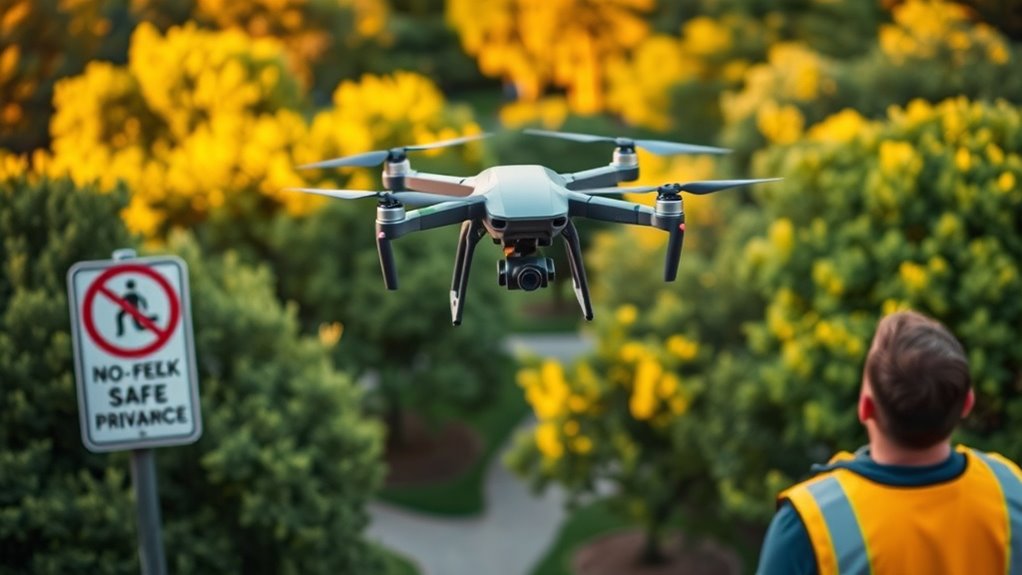
Understanding and respecting privacy and no-fly zones is essential for responsible drone operation. Ignoring privacy concerns can lead to serious invasions of personal space, causing discomfort or legal trouble. No-fly zones are put in place to protect sensitive areas and prevent accidents. As a drone pilot, you should:
- Respect others’ privacy by avoiding capturing images or videos without permission, ensuring you don’t invade personal space.
- Stay out of no-fly zones like airports, government buildings, or private properties marked as restricted.
- Be mindful of the impact your drone can have on people’s safety and privacy, avoiding actions that could cause distress or harm.
Use Safety Features and Equipment
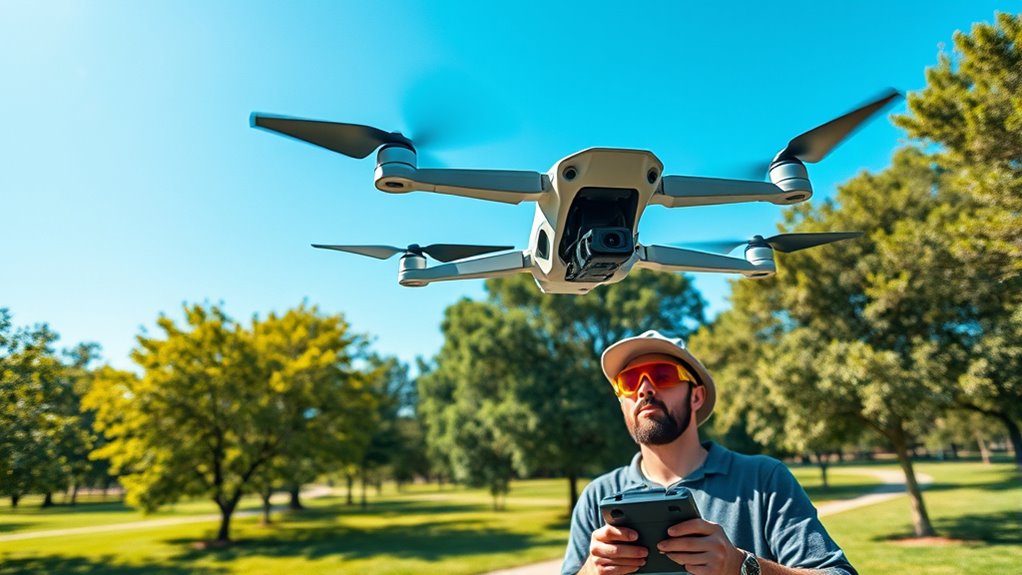
Using safety features and equipment is essential to guarantee your drone flights are secure and responsible. Modern drones come with automated alerts that warn you of low battery levels or potential obstacles, helping you stay aware of risks. Additionally, many models include emergency landing functions, allowing you to safely bring your drone down if something goes wrong. To maximize safety, familiarize yourself with these features before flying. Here’s a quick overview:
| Safety Feature | Purpose |
|---|---|
| Automated alerts | Notify you of issues like low battery or obstacles |
| Emergency landing | Safely land your drone during emergencies |
| Geofencing | Prevent flying in restricted or hazardous zones |
| Return-to-Home | Automatically return drone to the takeoff point |
| Obstacle detection | Detect and avoid collisions during flight |
Using these tools helps prevent crashes and injuries, keeping everyone safe.
Keep Learning and Stay Informed
Have you ever wondered how to stay ahead in drone safety? The key is to keep learning and stay informed about new technology and ongoing education. The drone world evolves rapidly, and staying updated helps you avoid mistakes and adapt to changes. Regularly check for firmware updates, new safety features, and regulations. Attend workshops or online courses to sharpen your skills. Staying informed empowers you to operate confidently and responsibly.
Stay informed and keep learning to ensure safe, confident drone operation and adapt to evolving technology.
- Feel confident knowing you’re using the latest safety tools
- Avoid accidents caused by outdated knowledge
- Protect yourself and others with continuous learning
Investing in ongoing education and understanding emerging technology ensures you’re always prepared. This proactive approach keeps you safe, responsible, and ahead of potential hazards. Remember, the more you learn, the better you can navigate the skies safely.
Frequently Asked Questions
How Can I Identify Restricted Airspace in My Area?
To identify restricted airspace in your area, you should check airspace maps from reliable sources like the FAA or local authorities. These maps clearly mark no-fly zones, including airports and military areas. Also, review local regulations because restrictions can vary. Always stay updated with any temporary restrictions or notices, and consider using drone apps that provide real-time airspace alerts to keep your flying safe and legal.
What Are Common Signs of Drone Malfunctions During Flight?
Did you know that over 60% of drone crashes are caused by malfunctions? During flight, common signs include sudden loss of control, unusual noises, or erratic movements. Always perform pre-flight checks, especially monitoring battery performance, to catch potential issues early. If you notice the drone drifting unexpectedly or the battery draining rapidly, land immediately to prevent accidents. Staying alert to these signs guarantees safer flights and reduces the risk of crashes.
How Do I Handle Emergencies or Crashes Safely?
When an emergency or crash occurs, follow your emergency protocols immediately. Power down the drone carefully to prevent further damage or injury, and move to a safe distance. Check for signs of damage and avoid attempting repairs on-site. To guarantee crash prevention, always maintain situational awareness and stay alert during flight. Afterward, review what happened to improve your techniques and prevent future incidents.
Are There Specific Safety Gear Recommended for Drone Pilots?
Did you know that nearly 60% of drone accidents involve pilot error? To stay safe, you should wear protective gear like goggles to protect your eyes and gloves for better grip. Safety accessories such as reflective vests and a first aid kit also help prevent injuries. Always prioritize your safety by using the right gear, so you can enjoy flying confidently and minimize risks during your drone sessions.
How Often Should I Update My Drone’s Firmware and Safety Features?
You should update your drone’s firmware and safety features regularly, ideally as soon as updates become available. Firmware updates often include critical bug fixes, performance improvements, and new safety features that help prevent crashes. By staying current, you guarantee your drone operates smoothly, maintains safety standards, and reduces risks during flights. Make it a habit to check for updates before each flight session to keep your drone secure and reliable.
Conclusion
By following these tips, you’ll navigate the skies with confidence, avoiding crashes and injuries. Picture your drone soaring smoothly above open fields or cityscapes, sunlight glinting off its sleek body. With each safe flight, you’re building skills and respecting boundaries, like a responsible pilot commanding your own story among the clouds. Stay vigilant, keep learning, and let your drone’s journey be as safe as it is exciting. Happy flying!