
Flying a drone over someone’s house without permission can violate privacy rights and property laws, making it potentially illegal. Many regulations, both federal and state, restrict drone flights over private property to protect residents’ privacy and prevent trespassing. Even if laws aren’t explicit, hovering over private land without consent may lead to fines or legal issues. To understand the full scope of rules and how to fly responsibly, continue exploring key guidelines.
Key Takeaways
- Flying a drone over private property may violate privacy rights if it invades the homeowner’s reasonable expectation of privacy.
- Laws vary by jurisdiction; many regions prohibit or restrict drone flights over private homes without permission.
- Drone operation over someone’s house could be considered trespassing or an invasion of privacy, leading to legal penalties.
- Respect property boundaries and privacy zones; capturing images or videos without consent is often illegal.
- Always check local, state, and federal regulations before flying to ensure compliance and avoid privacy violations.
Understanding Drone Laws and Regulations
To legally fly a drone over private property, you need to understand the current drone laws and regulations that govern such activities. Drone technology is advancing rapidly, but legal boundaries keep pace to protect privacy and property rights. Regulations vary by country and region, often requiring registration, pilot certification, or restrictions on altitude and flight zones. It’s essential to stay informed about these rules to avoid legal trouble. While flying, consider the privacy implications, even if laws don’t explicitly prohibit certain behaviors. Respecting property boundaries and adhering to local guidelines guarantees you stay compliant. Ignorance of regulations isn’t a defense, so always verify current laws before taking off. Being aware helps you enjoy drone flying responsibly without infringing on others’ rights. Additionally, understanding high refresh rates and low input lag in drone cameras can improve your flying experience and ensure clearer footage. For optimal results, it’s also beneficial to be aware of airspace classifications, which dictate where you can legally operate your drone. Furthermore, understanding privacy considerations in drone operation can help prevent potential conflicts and ensure respectful use of this technology. Recognizing the importance of technology updates can also keep you informed about evolving regulations and best practices, including how software updates may impact your drone’s compliance features.
Privacy Rights of Property Owners
Understanding drone laws and regulations helps you stay compliant, but it also highlights the importance of respecting property owners’ privacy rights. Flying a drone over someone’s property can lead to privacy invasion if you cross their property boundaries without permission. Property owners have a right to control what happens on their land, including the airspace immediately above it. Even if your drone is technically legal to fly, capturing images or videos over private property without consent can violate privacy expectations. Respecting these boundaries isn’t just about avoiding legal trouble; it’s about honoring others’ right to privacy. Maximize Your Truck Bed’s Potential by being mindful of where your drone is flying and always consider the potential impact on the property owner’s privacy rights. Being aware of airspace regulations can help prevent unintentional violations and protect everyone’s privacy. It’s also important to understand that privacy laws vary by jurisdiction and may impose restrictions even if your drone is legally permitted to fly in the area. Additionally, understanding the concept of privacy expectations can help you gauge when your drone activities might infringe on someone’s rights. Recognizing privacy zones established by property owners is also crucial to avoid unintended violations.
Federal and State Regulations on Drone Flights
You need to understand the federal drone laws that set nationwide standards for flying. At the same time, each state may have its own restrictions you must follow. Knowing both levels of regulation helps you avoid legal issues when operating your drone. Additionally, staying informed about modern kitchen technology can enhance your overall awareness of innovative tools and regulations in related fields. Being aware of local ordinances is also crucial, as some municipalities have specific rules that could impact your drone flights.
Federal Drone Laws
Are federal and state regulations on drone flights clear and easy to follow? Not always. Federal laws, primarily enforced by the FAA, set the framework for drone use, including restrictions on drone photography and airspace regulations. You must register your drone if it weighs over 0.55 pounds and follow rules for flying near airports and in controlled airspace. The FAA’s Part 107 rules specify where and how you can operate legally, emphasizing safe flying practices. While federal laws provide a baseline, states may add restrictions, so it’s essential to know both levels. These regulations aim to protect privacy and airspace safety, but the rules can sometimes be complex. Staying informed about drone regulations can help prevent inadvertent violations and ensure responsible flying. Always stay updated on federal and state laws to make sure your drone flights remain legal.
State-Specific Restrictions
While federal laws establish a baseline for drone operation, each state can impose additional restrictions that drone pilots must follow. Some states have strict rules to prevent privacy invasion during aerial photography, especially over private property. For example, certain states prohibit flying over homes without permission or restrict drone altitude near residences. These restrictions aim to balance recreational drone use with privacy rights. To help you navigate, here’s a quick overview:
| State | Restrictions | Penalties |
|---|---|---|
| California | No flying over private property | Fines up to $1,000 |
| Texas | Limits on altitude near homes | Civil penalties |
| Florida | No drone flights over private yards | License suspension |
| New York | Restrictions on aerial photography | Criminal charges |
| Illinois | Privacy invasion laws enforced | Fines and jail sentences |
Always check your state’s specific rules before flying to avoid legal issues. Drone regulations vary significantly by location and should be thoroughly reviewed before operation. Understanding privacy laws is essential to ensure compliance and respect for others’ rights. Additionally, state-specific restrictions often reflect local privacy concerns and enforcement priorities, which can include measures related to privacy protection.
Local Ordinances and Restrictions
Local ordinances and restrictions play a crucial role in governing drone flights over private property. Many cities and counties have specific rules that limit where and how you can operate your drone, even if federal laws don’t apply. These local ordinances often address issues like altitude limits, no-fly zones, and privacy concerns. It’s important to familiarize yourself with your area’s regulations because violation enforcement can lead to fines or other penalties. Some local authorities actively monitor drone activity to ensure compliance. Before flying, check your city or county’s laws to avoid unintentional violations. Understanding local regulations helps you stay legal and respectful of other residents’ privacy and property rights. Additionally, local enforcement practices can vary widely, so knowing how authorities handle violations is beneficial. Local governments may also update or change regulations periodically, so staying informed ensures ongoing compliance with changing rules. Staying aware of cultural sensitivities, such as respecting Native American dance traditions and sacred sites, is also essential to avoid conflicts or legal issues. Always stay informed about local rules to prevent enforcement actions.
What the FAA Says About Flying Over Private Property
The FAA regulates drone use across the United States, including flying over private property, to guarantee safety and privacy. While the FAA primarily focuses on airspace safety, it emphasizes that drone operators should respect privacy rights and avoid privacy invasion. The agency discourages aerial surveillance that intrudes on individuals’ privacy without consent.
The FAA emphasizes respecting privacy and avoiding intrusive aerial surveillance when operating drones over private property.
- Flying over private property without permission can lead to FAA enforcement actions.
- Drones must stay within visual line-of-sight unless authorized otherwise.
- No flying above 400 feet without special approval.
- Operators should avoid capturing images or videos that invade someone’s privacy.
- Violating FAA rules may result in fines or license suspension.
Although the FAA doesn’t explicitly prohibit flying over private property, it stresses responsible drone use to prevent privacy invasion and ensure safety.
When Is a Flight Considered Trespassing?
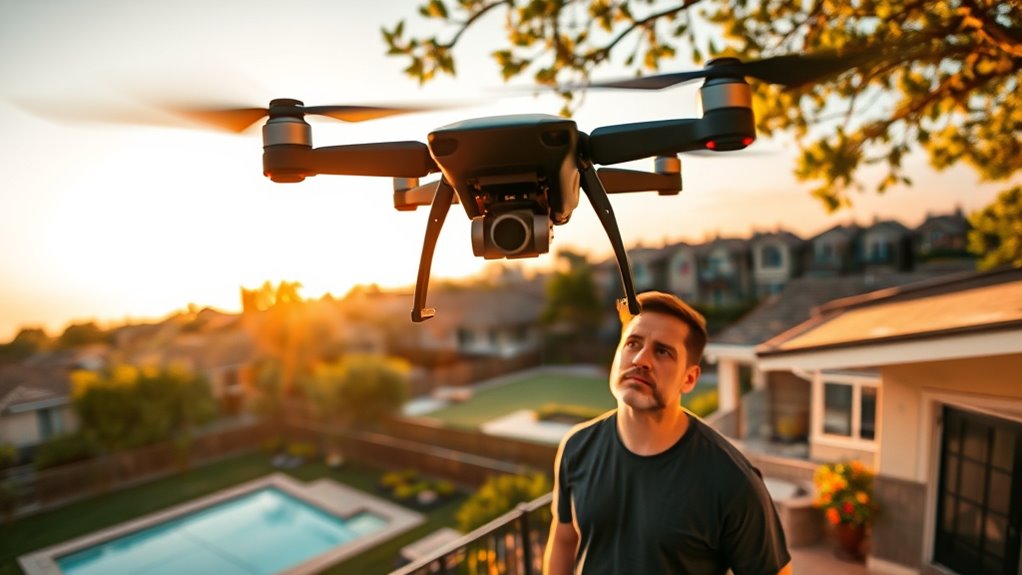
A drone flight is considered trespassing when it unlawfully enters or hovers over someone’s private property without permission, especially if it invades their reasonable expectation of privacy. This includes using aerial surveillance to peek into windows or private spaces without consent. If your drone’s flight causes noise disturbances that disrupt the peace or intrudes on someone’s quiet enjoyment of their property, it could also be seen as trespassing. Hovering just above someone’s yard or roof without authorization can cross legal boundaries, even if you’re not physically touching their land. Generally, the key factor is whether your drone’s presence intrudes on the owner’s privacy or peace, making the flight legally or ethically questionable.
Privacy Concerns and Ethical Flying Practices

As a drone operator, you need to respect others’ privacy boundaries and avoid capturing private moments without permission. Ethical flying practices mean being mindful of where and how you fly your drone, especially near homes or sensitive areas. By doing so, you help build trust and prevent potential legal issues related to privacy violations.
Respecting Privacy Boundaries
Flying a drone over private property requires careful attention to privacy boundaries to avoid infringing on others’ rights. Respecting these boundaries involves understanding when to seek consent considerations and how to maintain respectful distances. You should avoid capturing private moments or intruding into personal spaces without permission. Always be aware of property lines and local regulations to prevent privacy violations. Being considerate also means limiting your drone’s altitude and camera focus to avoid unnecessary exposure. Remember, respecting privacy boundaries isn’t just about legality—it’s about ethical flying practices that foster trust. By prioritizing consent considerations and maintaining respectful distances, you ensure your drone use remains responsible and respectful of others’ privacy. This approach helps prevent conflicts and promotes responsible drone operation.
Ethical Drone Operations
Respecting privacy boundaries is fundamental to responsible drone operation, but ethical considerations go beyond just legality. You should be mindful of privacy violations that can occur when your drone captures images or videos of others without consent. Ethical drone operations involve respecting people’s personal space and avoiding intrusive surveillance. Before flying, consider the potential impact on neighbors and passersby, and aim to minimize any invasion of privacy. Following these ethical practices demonstrates respect and responsibility, fostering trust within your community. Keep in mind that even if your drone flight is legally permissible, you still have a moral obligation to avoid privacy violations. Ethical flying isn’t just about avoiding legal trouble; it’s about maintaining respect for others’ rights and dignity.
Tips for Responsible Drone Usage Near Homes
To guarantee you’re flying responsibly near private property, it’s essential to be mindful of your surroundings and respect neighbors’ privacy. Always maintain visual line of sight and avoid capturing private moments. Keep drone altitude low to prevent intrusive views and minimize noise disturbance. For commercial applications, obtain proper permits and inform neighbors if your drone activities may affect them. Regular drone maintenance ensures safe operation and reduces risks of accidents. Respect no-fly zones and local regulations to avoid legal issues. Use geofencing features to prevent accidental intrusions. Finally, be courteous—if someone expresses concern, address it calmly and adjust your flight path accordingly. Responsible drone usage near homes fosters good relationships and ensures everyone’s privacy and safety are protected.
Navigating Legal Challenges and Resolving Disputes
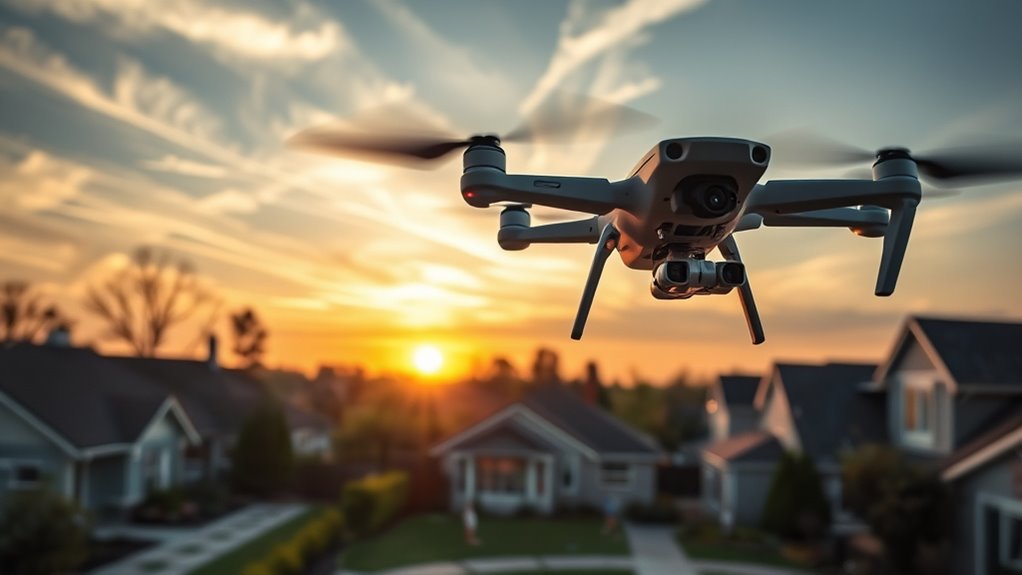
Legal challenges and disputes over drone flights often arise when property owners feel their privacy or rights have been violated. If you’re involved in commercial applications like drone photography, you need to understand local laws and respect boundaries to avoid conflicts. Disputes may occur if your drone captures images or videos over private property without permission. To resolve these issues, communicate openly with property owners and consider mediation or legal advice. Document your flight plans and adherence to regulations to build a clear record. Staying informed about regulations helps you navigate potential legal hurdles. By respecting others’ privacy and following the law, you can reduce disputes and ensure your drone activities remain compliant and trouble-free.
Frequently Asked Questions
Can Homeowners Legally Shoot Down a Drone Over Their Property?
You can’t legally shoot down a drone over your property, as doing so violates drone regulation and trespassing laws. Shooting at a drone risks damaging property or harming others, which could lead to criminal charges. Instead, report the drone to local authorities or law enforcement if you believe it’s invading your privacy or flying unlawfully. Remember, using force isn’t a legal or safe way to handle drone issues.
Are There Specific Times When Drone Flights Are More Restricted Near Private Homes?
Sunset’s glow and midnight’s hush make drone flights more restricted, especially during nighttime hours. You should also watch for seasonal limitations, like bird nesting seasons or holidays, when authorities tighten rules. During these times, flying over private homes can lead to privacy violations or legal trouble. Always check local regulations and avoid flying when it’s most sensitive, ensuring you respect privacy while enjoying your drone adventures.
What Penalties Exist for Violating Drone Flight Over Private Property Laws?
If you violate drone flight laws, you could face penalties like civil trespass charges, fines, or even criminal charges under federal regulations. Authorities may pursue civil trespass if you unlawfully enter private property with your drone, and federal agencies enforce regulations that restrict unsafe or invasive drone operations. To avoid penalties, always follow local laws and respect privacy, ensuring your drone activities stay within legal boundaries.
Do Privacy Laws Differ Between Residential and Commercial Drone Uses?
You might think privacy laws differ between residential and commercial drone uses, but they generally don’t. Privacy regulations and drone registration requirements apply to both, aiming to safeguard individual privacy regardless of drone purpose. Laws focus on preventing intrusive surveillance, so whether you’re flying for leisure or business, you must respect privacy rights. Always check local regulations to ensure compliance, as authorities enforce these rules equally across all drone activities.
How Can I Legally Document Drone Overflights That Invade My Privacy?
To legally document drone overflights invading your privacy, verify your drone is properly registered and note its flight altitude during the incident. Take clear photos or videos from a safe distance, capturing the drone’s location and altitude. Record dates, times, and any relevant details. These records can support your complaint, showing that the drone was flying at an illegal or intrusive altitude, helping authorities take appropriate action.
Conclusion
Charting drone laws might seem overwhelming, but staying informed keeps you on the right side of the law—imagine avoiding a legal storm that could ruin your entire day. Respecting privacy and following regulations ensures you’re a responsible drone pilot, not a villain in someone’s story. When you fly responsibly, you avoid turning your hobby into a legal nightmare, keeping your skies friendly and your conscience clear. Fly smart, stay legal, and keep everyone’s privacy intact.