
Before flying a drone in the USA, learn FAA rules for recreational and commercial use, including altitude limits and visual line-of-sight requirements. Register your drone if it weighs between 0.55 and 55 pounds unless you qualify for an exemption. Be aware of no-fly zones around airports, military bases, and parks. Respect privacy, follow safety guidelines, and stay updated on changing laws. Continuing further will help you fully understand how to fly responsibly and legally.
Key Takeaways
- Recreational drones must follow FAA safety guidelines, including flying below 400 feet and within visual line of sight.
- Register drones weighing between 0.55 and 55 pounds, unless exempted for hobby or educational use.
- Avoid no-fly zones like airports, military bases, national parks, and emergency areas to stay compliant.
- Operators need a Remote Pilot Certificate for commercial drone use and must adhere to stricter regulations.
- Stay updated with FAA rules through official sources, drone communities, and organizations to ensure safe, legal flying.
Understanding FAA Regulations for Recreational and Commercial Drone Use
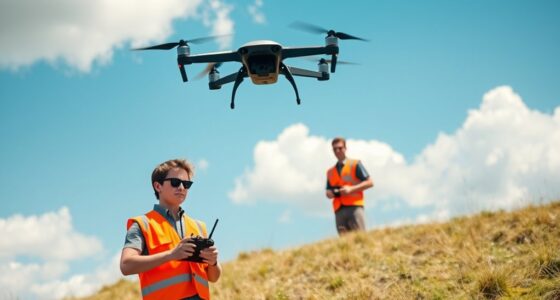
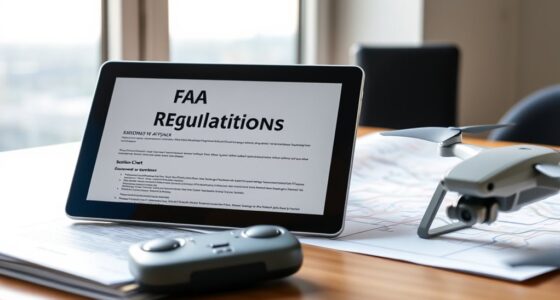
To fly a drone legally in the USA, you need to understand the FAA regulations that govern both recreational and commercial use. These rules are designed to address the rapid growth of drone technology and its potential risks. For recreational pilots, the FAA requires you to follow safety guidelines, such as flying below 400 feet and keeping your drone within visual line of sight. Commercial operators must obtain a Remote Pilot Certificate and adhere to stricter rules, including flight restrictions and operational limitations. Failing to comply can lead to legal implications, fines, or even criminal charges. Staying informed about these regulations helps you avoid penalties and guarantees responsible drone flying, protecting both your interests and the safety of others. Additionally, understanding the evolving European cloud solutions can provide insights into how secure and sustainable technology infrastructures support modern drone applications. Being aware of FAA regulations and the importance of safety measures ensures that you operate your drone responsibly and within legal boundaries. Proper knowledge of drone technology, including the specific net worth of key personalities involved in the industry, can influence your understanding of market trends and technological advancements in the drone sector.
Registration Requirements and When They Apply
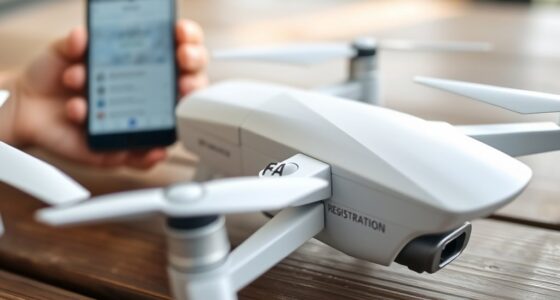
Understanding when you need to register your drone is vital to staying compliant with FAA rules. If your drone weighs between 0.55 pounds (250 grams) and 55 pounds (25 kilograms), you’re required to complete drone registration. This applies whether you fly recreationally or commercially. Registration involves providing your name, address, and drone details, and then paying a small fee. However, there are registration exemptions for certain cases, such as drones used solely for hobby or educational purposes that weigh less than 0.55 pounds. Additionally, drones operated exclusively under recreational flying rules may be exempt, but it’s important to verify the specific criteria to avoid penalties. Staying informed on airspace regulations ensures safe, legal flying in US airspace, and understanding drone registration requirements helps prevent inadvertent violations. Familiarizing yourself with registration exemptions can help you determine if your drone qualifies for any exceptions. Being aware of legal drone use guidelines further supports responsible flying and compliance.
Airspace Rules and No-Fly Zones
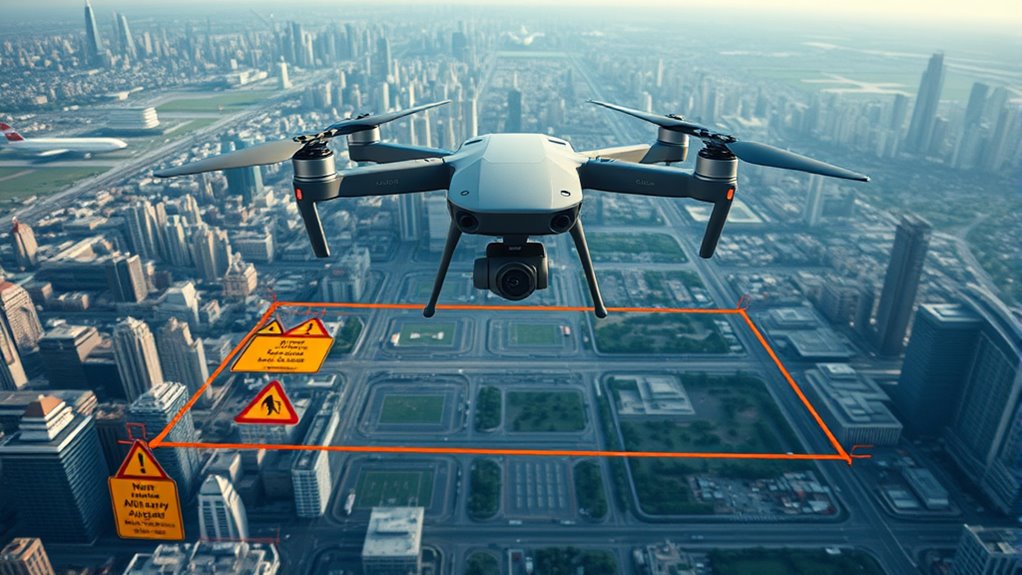
Flying your drone safely means knowing where you can and cannot go. The FAA designates certain airspace as restricted or no-fly zones, such as near airports or military bases. Your drone’s classification and model restrictions determine where you can operate legally. For example, some drones are limited to flying below 400 feet or within visual line of sight. Ignoring these rules risks penalties and accidents. Key areas to watch out for include:
Know where you can fly: avoid airports, military bases, and no-fly zones to stay legal and safe.
- Airports and heliports
- National parks and wildlife refuges
- Emergency response zones
- Military installations
Understanding airspace rules helps you avoid no-fly zones and stay compliant with regulations. Always check your drone’s classification and model restrictions before flying in new areas to make certain of safe, legal operation. Understanding airspace regulations is essential for responsible drone flying, and staying informed about airspace restrictions can help prevent unintended violations.
Privacy and Safety Considerations During Flight
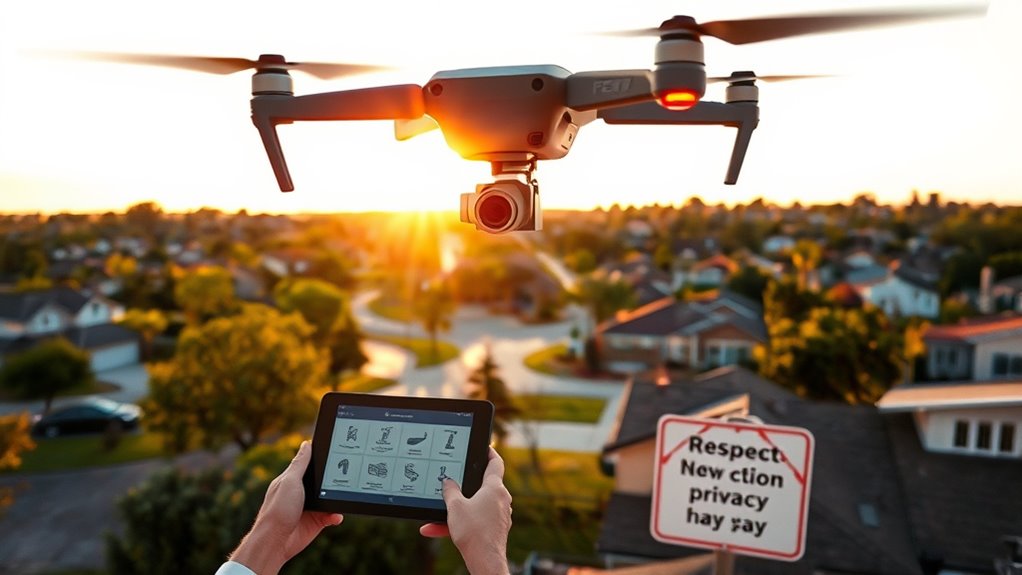
While knowing where you can legally fly keeps you out of trouble, guaranteeing your drone flight respects privacy concerns and safety protocols is just as crucial. Always avoid capturing images or videos of private property without permission to prevent privacy violations. Follow safety protocols like maintaining visual line-of-sight and not flying over crowds. To emphasize, consider this table:
| Privacy Concerns | Safety Protocols |
|---|---|
| Respect private property | Keep drone within sight |
| Avoid recording private moments | Avoid flying near people or animals |
| Seek permission when unsure | Follow altitude and airspace rules |
Adhering to these guidelines helps protect others’ privacy and ensures safe, responsible flying, reducing the risk of accidents or legal issues. Incorporating drone safety techniques from outdoor tech and craft guides can further enhance your flying practices. Additionally, understanding airspace regulations can help prevent unintentional violations during your flights. It’s also advisable to stay updated on local drone laws to ensure compliance across different regions.
Staying Updated on Changing Drone Laws and Best Practices
Staying informed about evolving drone laws and best practices is essential to guarantee your flying remains legal and responsible. Regulations can change quickly, affecting requirements like drone insurance and pilot certification. To keep up, regularly check official sources such as the FAA website or industry updates. Join online forums or local drone clubs for firsthand insights. Subscribe to newsletters from reputable drone organizations to stay current on policy shifts. Remember, maintaining proper pilot certification not only ensures legal flying but also helps you understand new rules. Staying proactive about these updates minimizes risks and keeps your operations compliant. By staying informed, you’ll confidently adapt to regulatory changes, ensuring your drone activities are safe, legal, and enjoyable. Additionally, understanding regulatory compliance can help prevent penalties and ensure responsible flying practices. Being aware of wave and wind conditions can also improve your flight safety and decision-making in various environments. Keeping track of weather patterns further enhances your ability to plan safe flights and avoid hazardous conditions. Regularly reviewing local regulations ensures you stay aligned with the latest rules in your area.
Frequently Asked Questions
Can I Fly a Drone in National Parks Legally?
You can’t legally fly a drone in national parks without special permission. National park restrictions prohibit drone use to protect wildlife and visitors. If you want to fly, you’ll need a drone permit, which is rarely granted and requires a formal application with detailed reasons. Always check with the park’s regulations beforehand, as violating these rules can lead to hefty fines or legal trouble.
Are There Specific Rules for Drone Photography at Private Events?
Imagine your drone as an artist capturing moments, but at private events, you need to dance carefully around privacy concerns. You must get consent before filming, respecting everyone’s privacy like a gentle breeze avoids disturbing flowers. Specific rules demand clear permission to avoid infringing on personal space. Failing to follow these guidelines can turn your creative shot into a legal snag, so always seek consent and be mindful of privacy concerns at private gatherings.
What Penalties Exist for Violating Drone No-Fly Zones?
If you violate no-fly zones, you face serious penalties. Penalty enforcement includes hefty fines, confiscation of your drone, and possible criminal charges. Authorities actively monitor no-fly zone violations, and enforcement efforts are strict to guarantee safety and privacy. You could also be sued for damages or face criminal prosecution if your violation causes harm or interference. Always check for no-fly zones to avoid penalties and stay compliant with regulations.
How Do State or Local Laws Differ From Federal Drone Regulations?
You’ll find that state or local laws often add layers of restrictions through local ordinances, reflecting state sovereignty and community concerns. While federal regulations set the baseline—like altitude limits and no-fly zones—states and municipalities may impose rules on flying near schools, parks, or private property. So, before you take off, check both federal and local laws to avoid surprises, ensuring your flight stays legal and enjoyable.
Are There Restrictions on Flying Drones at Night?
Yes, there are restrictions on night flying. You’re not allowed to fly your drone at night unless you use proper drone lighting, which helps with visibility and safety. The FAA requires drone operators to have anti-collision lighting visible for at least 3 statute miles during night flying. Make sure your drone is equipped with the necessary lighting, and always follow local regulations to avoid penalties.
Conclusion
Before you take off, make sure you understand the FAA rules to stay compliant and safe. Did you know that over 1.7 million drones are registered in the US? Staying informed about changing laws and respecting no-fly zones helps protect your privacy and others. By following these guidelines, you can enjoy your drone flights responsibly and avoid costly fines or accidents. Happy flying, and always prioritize safety!