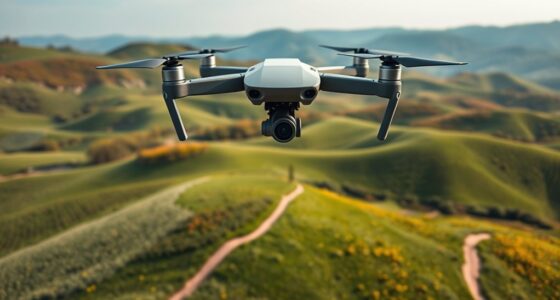
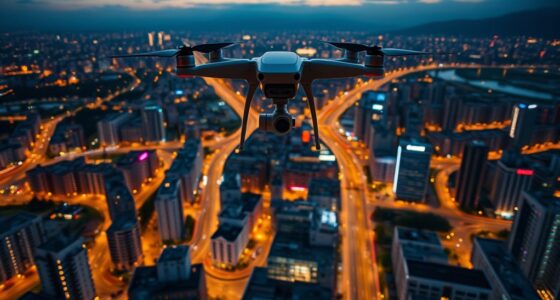
To shoot amazing aerial photos as a beginner, choose an easy-to-use drone with good battery life and GPS features. Practice smooth controls and keep the drone stable, especially during takeoff and flight. Focus on natural lighting conditions like golden hour for softer, more dramatic images. Scout locations beforehand and follow safety rules to avoid accidents. Keep refining your skills, and you’ll discover more tips to elevate your drone photography.
Key Takeaways
- Scout locations and plan flight paths to identify compelling angles, lighting, and safe flying zones before shooting.
- Use golden hour lighting for soft, warm tones and natural shadows that add depth to your photos.
- Maintain smooth, gentle controls and steady hover to prevent jitters and ensure sharp, professional-looking images.
- Optimize camera settings by adjusting exposure, resolution, and focus for clear, well-exposed aerial shots.
- Practice regularly to improve your skills, experiment with composition, and develop your creative eye for stunning aerial photography.
Choosing the Right Drone for Beginners

If you’re new to drone photography, choosing the right drone can feel overwhelming, but it’s essential to start with a model that’s easy to operate and budget-friendly. Focus on drones with good drone battery life, so you can enjoy longer flights without constantly recharging. This allows you to capture more shots and practice without interruptions. Additionally, opt for a drone with reliable GPS navigation, which helps maintain stable hover and accurate positioning, making flying easier for beginners. GPS features also enable smart flight modes like waypoint or follow-me, which simplify complex shots. By selecting a drone with these features, you’ll build confidence and improve your skills without the frustration of frequent battery changes or difficult controls. Understanding the importance of contrast ratio can help you choose a drone with better image quality for aerial shots. Moreover, considering European cloud innovation can enhance data security and streamline your editing and storage workflows. Incorporating advanced imaging technology can further elevate the clarity and detail in your aerial photos. Additionally, paying attention to battery lifecycle can help you plan for long-term use and maintenance of your drone. Being aware of data encryption standards can also protect your footage from unauthorized access, adding an extra layer of security.
Understanding Basic Drone Controls and Settings

Getting familiar with your drone’s controls and settings is essential for confident flying. You need to understand how to adjust flight altitude, which affects your shot framing and safety. Managing battery life is also vital; monitor battery percentage to avoid mid-air power loss. Start with simple controls: throttle for ascent/descent, yaw for rotation, pitch for forward/backward, and roll for side-to-side movement. Many drones have customizable settings for camera angles and flight modes that can enhance your shots. Understanding flight safety procedures can also help prevent accidents and ensure a smooth flying experience. Additionally, reviewing pre-flight checks ensures your drone is properly prepared before each flight.
Planning Your Shots and Scouting Locations
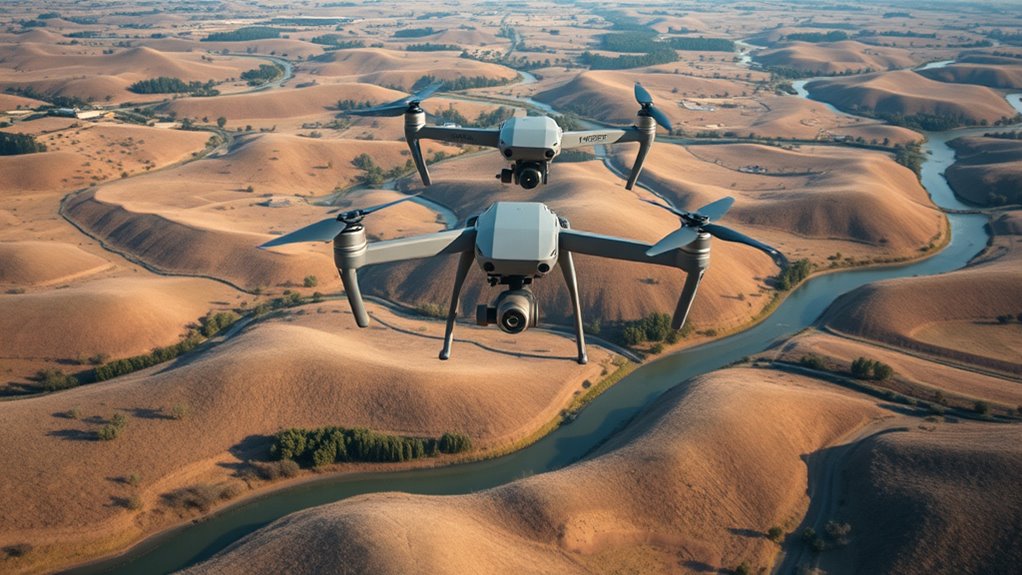
Have you ever arrived at a location without a clear plan, only to realize your shots are lackluster? To avoid this, spend time scouting your spots beforehand. Check out drone accessories like extra batteries, ND filters, and a reliable carrying case to keep your gear ready. Plan your shots by researching the area’s best vantage points and lighting conditions. Weather considerations are essential—wind, rain, and fog can ruin your flight or compromise safety. Always check the forecast and choose days with calm weather for stable shots. Use apps or maps to identify unique perspectives and potential hazards. Additionally, understanding essential oils for respiratory health can help you maintain a calm mindset during your flights, ensuring better concentration and steadiness. Moreover, understanding automotive repair basics can help you maintain your drone equipment, ensuring it stays in optimal condition for your photography sessions. Staying informed about drone regulations and safety guidelines can prevent legal issues and enhance your flying confidence. By scouting locations and preparing with the right accessories, you set yourself up for stunning aerial photos and a smoother flying experience.
Mastering Smooth and Stable Flight Techniques

Once you’ve scouted your locations and planned your shots, the next step is to guarantee your drone flies smoothly and stays steady in the air. To achieve this, focus on stabilization techniques like gentle control inputs and avoiding abrupt movements. Practice maintaining a consistent altitude and slow, deliberate turns to reduce jitters. Effective flight path planning helps you stay on course and minimizes sudden adjustments, ensuring smoother footage. Use the drone’s built-in stabilization features when available, and consider practicing hovering techniques to improve your control. Keep your movements intentional and steady, avoiding quick jerks or rapid directional changes. Understanding your drone’s performance metrics can help you optimize flight efficiency and stability during shoots. Being familiar with heat distribution and other material properties of your drone components can also improve its overall longevity and reliability. Regular maintenance and awareness of your drone’s battery life can prevent unexpected power loss during critical shots. Additionally, paying attention to weather conditions can significantly impact your drone’s stability and safety during flight. Additionally, monitoring component temperature is crucial to prevent overheating and ensure consistent flight performance.
Optimizing Camera Settings for Clearer Images

To capture sharp, vibrant images with your drone, enhancing your camera settings is essential. Start by adjusting the camera exposure to ensure your photos aren’t overexposed or underexposed. Proper exposure balances brightness and detail, especially in high-contrast scenes. Next, set your image resolution to the highest available; this ensures maximum detail and flexibility for cropping or enlarging photos later. Higher resolution images also improve overall clarity, making your aerial shots more professional. Avoid automatic settings that can vary exposure and resolution unpredictably. Instead, manually lock exposure and choose the best resolution for your drone’s camera. Additionally, understanding image quality factors can help you optimize your settings for the best results. Using the right camera features, such as manual focus or ISO adjustments, can further enhance your image clarity. Being aware of vetted camera equipment options ensures you select reliable tools for optimal performance. Paying attention to outdoor lighting conditions can also significantly impact your photo quality, so plan your shoots accordingly for optimal results. Considering sensor quality can also help you select the best camera setup for achieving clearer aerial images.
Composing Aerial Photos With Strong Visual Impact

Capturing aerial photos with strong visual impact depends on your ability to compose scenes thoughtfully. To do this, focus on balancing the foreground with the background so your shot feels harmonious. Incorporate interesting elements in the foreground to add depth and context, but avoid clutter that distracts from the main subject. When framing horizons, position them thoughtfully—either along the rule of thirds or symmetrically—to create a compelling composition. Pay attention to how lines and shapes guide the viewer’s eye across the image. Remember, a well-balanced scene emphasizes key features without overwhelming the viewer. Practice adjusting your angles and framing until you find a composition that feels dynamic and engaging. Utilizing proper outdoor kitchen plans can help you visualize and plan effective compositions for your shots. This approach will help you produce aerial photos with powerful visual impact.
Utilizing Natural Light to Enhance Your Shots

Natural light is one of the most powerful tools you can use to elevate your drone photography. By understanding how to harness natural light, you can create stunning images that stand out. Focus on shooting during the golden hour, shortly after sunrise or before sunset, when the soft, warm light adds depth and richness. Pay attention to natural shadows, which can add drama and dimension to your photos. To maximize this, consider these tips:
- Schedule flights during golden hour for ideal lighting.
- Position yourself to incorporate natural shadows for contrast.
- Use the low sun angle to highlight textures and details.
- Avoid harsh midday sunlight, which can flatten images and create unwanted glare.
- Understanding lighting conditions is essential for mastering natural light and capturing vibrant, professional-looking aerial photos.
- Recognizing the importance of time of day can help you plan shoots that leverage the best natural lighting.
Mastering natural light will help your aerial photos look more vibrant and professional.
Practicing Safe Flying and Respecting Regulations

Practicing safe flying and respecting regulations are essential steps to make certain your drone photography activities stay legal and risk-free. Before flying, check for airspace restrictions that may limit where you can operate your drone. Stay informed about no-fly zones near airports, military bases, or crowded areas. Always have emergency procedures in place, such as how to handle a loss of signal or a sudden flyaway. Keep your drone within visual line of sight and avoid flying above people or private property without permission. Respect local laws and regulations to prevent fines or crashes. By following these guidelines, you guarantee safe flights, protect others’ privacy, and maintain a positive reputation as a responsible drone pilot.
Editing and Enhancing Your Drone Photos

Once you’ve taken your drone photos, the next step is to bring out their full potential through editing and enhancement. Enhancing your images makes them more striking and professional. Start by experimenting with photo filters to add mood or correct lighting issues. Next, apply color grading to balance tones and make colors pop, giving your photos a consistent look. You can also adjust contrast and sharpness to add depth and detail. Additionally, cropping or straightening images can improve composition and focus. Using editing tools, you’ll transform ordinary shots into eye-catching aerial photos that truly stand out. Remember, subtle adjustments often have the biggest impact, so don’t overdo it. Focus on refining your images to showcase the best aspects of your drone photography.
Building Your Skills With Consistent Practice
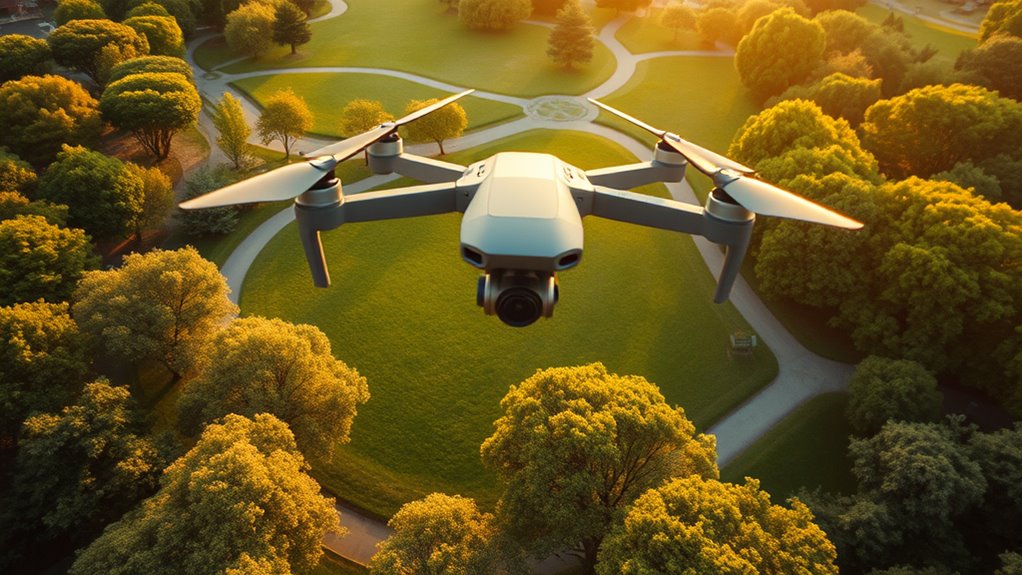
Building your drone photography skills requires regular, deliberate practice. Consistency is key to effective skill development, so set aside time regularly to fly and experiment. Focus on mastering basic controls, framing, and camera settings before tackling more complex shots. By practicing consistently, you’ll develop a better feel for your drone’s capabilities and improve your eye for compelling compositions. Keep a log of your sessions to track progress and identify areas for improvement. Don’t be discouraged by mistakes—use them as learning opportunities. Over time, this dedicated effort will boost your confidence and help you capture stunning aerial photos. Remember, steady practice not only sharpens your technical skills but also builds your creative vision, making each flight more productive and enjoyable.
Frequently Asked Questions
How Can I Improve My Drone’s Battery Life During Shoots?
To improve your drone’s battery life during shoots, focus on proper battery management and power optimization. Always fly with fully charged batteries, avoid extreme temperatures, and turn off unnecessary features like Wi-Fi or GPS when not needed. Use intelligent flight modes to conserve energy, and plan your shots to minimize unnecessary movements. Regularly check and maintain batteries, ensuring they’re in good condition for longer, more efficient flights.
What Are Common Mistakes Beginners Make in Aerial Photography?
Oh, the joys of beginner errors—flying too close to trees, ignoring wind conditions, or forgetting to check your camera settings, all while pretending you’re a pro. These common mistakes often lead to blurry shots, crashes, or missed opportunities. Remember, patience and practice are your best friends. Avoid these rookie blunders, stay aware of your surroundings, and don’t rush your shots; your future stunning aerial photos depend on it.
How Do Weather Conditions Affect Drone Flight and Photo Quality?
Weather impact your drone flight and photo quality markedly. Wind can make your drone unstable, causing blurry shots, while rain or snow can damage your equipment. Poor lighting conditions, like overcast skies or harsh sunlight, reduce photo clarity and contrast. Always check the weather forecast before flying, avoid strong winds, and aim for ideal lighting—like golden hour—for the best aerial images. Safety and quality depend on good weather awareness.
What Accessories Can Enhance My Drone Photography Experience?
You can enhance your drone photography experience by investing in camera filters, like ND and polarizers, to improve image quality and control exposure. Carrying cases protect your drone and accessories during transport, ensuring longevity and safety. Additionally, consider extra batteries and propeller guards for extended shoots and safety. These accessories make flying easier, protect your gear, and help you capture stunning aerial photos with greater ease and professionalism.
How Do I Handle Unexpected Drone Malfunctions or Crashes?
Think of your drone as a skilled pilot steering through unpredictable skies. When unexpected malfunctions or crashes occur, stay calm and follow emergency procedures, like safely landing or cutting power. Practice crash recovery techniques regularly so you’re prepared. Always keep a first aid kit and tools handy. By staying composed and knowing your drone’s emergency protocols, you’ll handle surprises with confidence, turning mishaps into learning moments rather than setbacks.
Conclusion
Getting started with drone photography is exciting, and with practice, you’ll capture stunning aerial shots. Did you know that 85% of drone pilots reported improved creativity and confidence after just a few sessions? Keep experimenting with your drone, follow safety guidelines, and refine your skills regularly. Before you know it, you’ll be creating breathtaking images that stand out. So, stay curious, keep practicing, and enjoy every flight—amazing photos are just a few flights away!