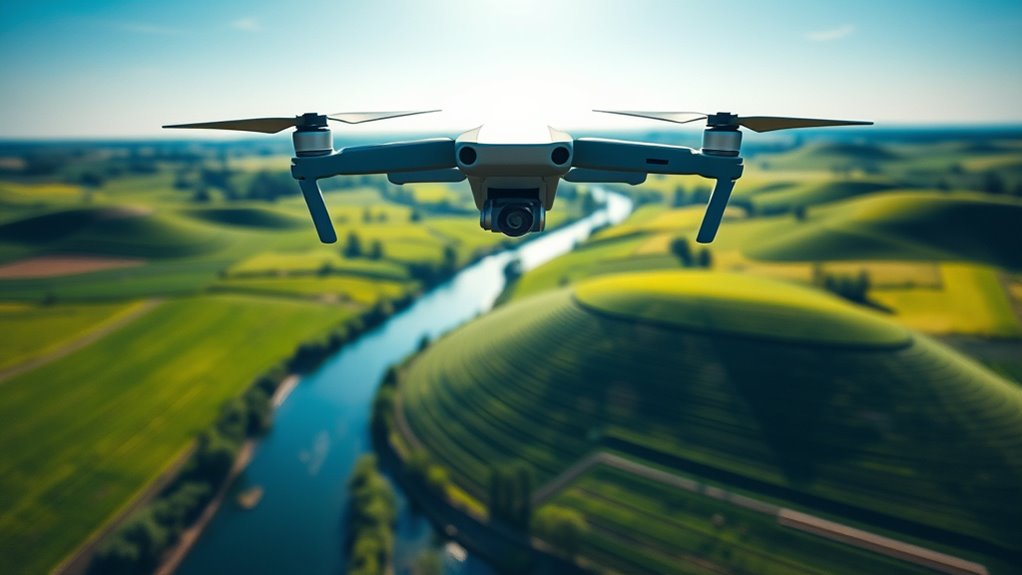

If your drone photos are blurry, it’s likely due to poor stabilization, such as wind or jerky movements, or issues with your gimbal calibration. Also, check your camera settings; using manual mode with faster shutter speeds helps freeze motion and improve sharpness. Regularly clean your lens and make sure everything is well-maintained. Small adjustments can make a big difference in image clarity—keep exploring to discover how to capture crisp, professional aerial shots.

Get the latest gadgets delivered free — and shop member deals
- Fast, free delivery on millions of items
- Access to Prime Big Deal Days deals on October 6–7
- Prime Video, Amazon Music and more included
Key Takeaways
- Ensure the drone’s gimbal is properly calibrated and functioning correctly for stable footage.
- Maintain a steady hover and avoid abrupt movements during flight to prevent camera shake.
- Use manual camera settings with faster shutter speeds to reduce motion blur, especially in low-light conditions.
- Keep the lens clean and free of dust or smudges for clearer, sharper images.
- Perform regular drone maintenance and practice smooth flying techniques to minimize vibrations and calibration drift.

If you’ve ever taken drone photos only to find them blurry, you’re not alone. Blurry images can be frustrating, especially when you’re aiming for crisp, professional-looking aerial shots. One common culprit behind this problem is camera stability. When your drone’s camera isn’t steady during the shot, even a slight shake or movement can turn a clear scene into a fuzzy mess. Wind, sudden jerks, or even small vibrations from the drone’s propellers can cause the camera to wobble, resulting in blurry photos. To combat this, ensure your drone’s gimbal is functioning correctly and stays properly calibrated. A well-maintained gimbal stabilizes the camera smoothly, keeping it steady regardless of drone movements. When flying, try to maintain a steady hover and avoid abrupt movements, which can disturb camera stability. If you notice persistent blurriness, check if your gimbal needs calibration; most drones have a simple calibration process that aligns the camera’s sensors, ensuring it remains stable during flight. Additionally, understanding the contrast ratio of your drone’s camera can help you better assess image quality and troubleshoot issues related to exposure and dark scene details. Lens calibration is another essential step in capturing sharp images. Over time or after crashes, your drone’s camera lens might become slightly misaligned, leading to focus issues or distortion that blurs your photos. Regularly calibrating your lens helps the camera focus correctly and produces sharper images. Many drones have a built-in calibration feature accessible through their app or control settings—use it routinely, especially if you notice your photos aren’t as sharp as they used to be. Additionally, ensure the lens is clean and free from dust, smudges, or fingerprints, which can degrade image quality. Use a soft, lint-free cloth to gently wipe the lens before each flight. Another factor that influences photo sharpness is your camera settings. Shooting in automatic mode might sometimes result in blurry photos, especially in low-light conditions. Switch to manual mode if available, and set an appropriate shutter speed—faster shutter speeds help freeze motion and reduce blur caused by drone movement. Pair this with a suitable aperture and ISO setting to achieve proper exposure without sacrificing sharpness. Remember, sharp photos are often the result of a combination of good camera stability, proper lens calibration, and correct camera settings. Regular maintenance and cautious flying habits will go a long way in helping you capture the crisp aerial images you’re after.
As an affiliate, we earn on qualifying purchases.
Frequently Asked Questions
Can Weather Conditions Affect Drone Camera Sharpness?
Weather conditions can definitely affect your drone camera sharpness. Atmospheric distortion caused by heat waves, humidity, or fog can create a weather impact that blurs your images. When the air is unstable or there’s turbulence, it can shake the drone or distort the shot, reducing clarity. To get sharp aerial images, avoid flying in extreme weather, and wait for calmer, clearer conditions to minimize atmospheric distortion and improve your photo quality.
Does Lens Quality Impact Photo Clarity?
Yes, lens quality is vital to your drone photo clarity, as higher-quality lenses reduce distortions and improve sharpness. Additionally, sensor resolution plays an essential role; a higher resolution sensor captures more detail, resulting in clearer images. When you choose a drone with a good lens quality and a high-resolution sensor, you’ll notice your aerial photos become noticeably sharper and more vibrant, making your shots look professional and well-defined.
How Does Camera Stabilization Work?
You can achieve sharp drone photos by understanding camera stabilization. Gimbal mechanics play a key role, as they use motors and sensors to counteract vibrations and movements. Vibration control is essential, as it minimizes camera shake caused by wind or drone motion. When your gimbal actively stabilizes the camera, it keeps the lens steady, resulting in clear, sharp images even in challenging conditions.
What Role Does Focus Play in Image Sharpness?
Did you know that a small adjustment in focus can make 90% of your drone shots sharper? Focus plays a vital role in image clarity by controlling the depth of field, which determines how much of your scene appears sharp. Using autofocus accuracy ensures your camera precisely locks onto your subject, preventing blurry results. To get crisp aerial photos, always double-check your focus settings before capturing, especially in varying lighting conditions.
Are There Specific Settings for Optimal Clarity?
To achieve maximum clarity, you should regularly calibrate your drone’s camera to guarantee accurate focus and color balance. Adjust settings like ISO, shutter speed, and aperture for the best results in different lighting conditions. After capturing images, use image processing software to enhance sharpness and reduce noise. These steps will help you get crisp, clear aerial photos consistently, making your drone photography stand out.
As an affiliate, we earn on qualifying purchases.
Conclusion
Blurry drone photos can be frustrating, but understanding common causes like shaky hands or low shutter speed helps you improve. Did you know that drones equipped with stabilization technology capture images up to 70% sharper? By adjusting your camera settings, using a tripod mode, or enhancing your flying stability, you can achieve crisp, stunning aerial shots. Keep practicing, and you’ll soon be capturing professional-quality images that truly stand out.
professional drone camera filter
As an affiliate, we earn on qualifying purchases.
As an affiliate, we earn on qualifying purchases.
As an affiliate, we earn on qualifying purchases.
Fall Picks
fall essentials
As an affiliate, we earn on qualifying purchases.