If you’re flying your drone around people, pets, or in tight indoor spaces, propeller guards are a smart safety addition. They form a barrier that helps prevent injuries and protects your drone from damage during bumps or obstacles. While they can slightly impact flight speed and battery life, their safety benefits often outweigh the downsides. To find out how to choose the right guards for your drone and flying needs, keep exploring further.
Key Takeaways
- Propeller guards provide a physical barrier, significantly reducing injury risk to people, pets, and property during flights.
- They are especially useful for indoor or cluttered environments, enhancing safety during low-speed, cautious flights.
- Guards can protect drone components from damage in case of collisions, preventing costly repairs.
- While they add weight and drag, proper use of guards improves safety without severely compromising performance.
- Use propeller guards when safety, obstacle avoidance, or flying around others is a priority, but avoid them during high-speed racing.
The Purpose and Advantages of Propeller Guards
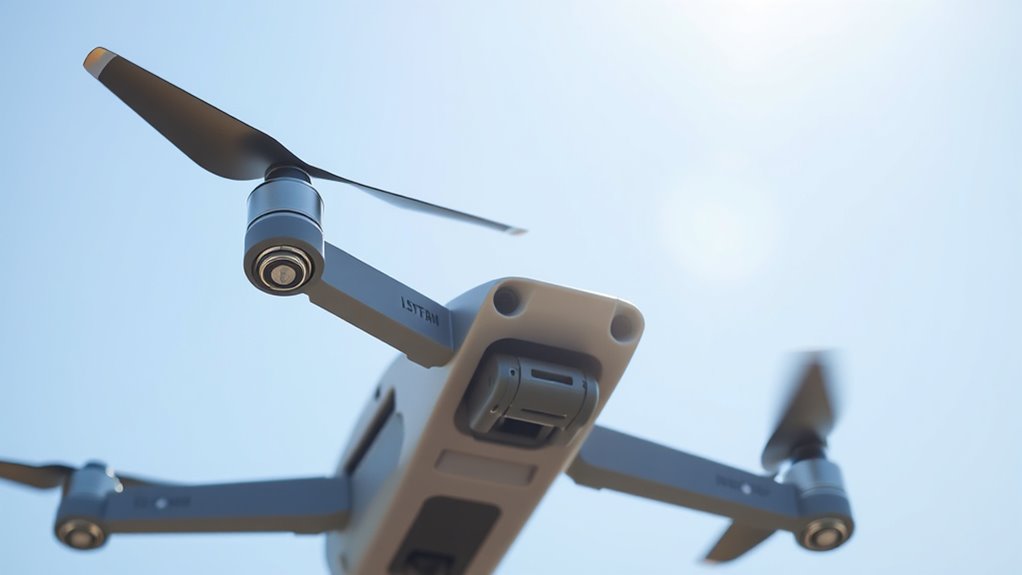
Propeller guards serve a critical role in making drone flights safer by creating a physical barrier around the spinning blades. They help protect your drone from collisions with obstacles like walls, trees, or furniture, reducing the risk of damage and crashes. This is especially useful during indoor flying or in tight spaces where accidents are more likely. Guards also shield people, pets, and property from injury caused by spinning propellers, offering peace of mind. They’re a cost-effective safety measure, preventing expensive repairs and prolonging your drone’s lifespan. While adding some weight and drag, the benefits of protection often outweigh the minor performance trade-offs. Overall, propeller guards are an essential safety accessory that enhances your flying experience and minimizes risks, especially when considering projector setup in your home theater or other environments. Additionally, using proper safety gear can further reduce potential hazards during drone operation. Incorporating safety accessories into your drone setup emphasizes responsible flying and can help you avoid costly accidents. Moreover, understanding drone safety protocols can significantly improve your confidence and safety during flights. Being aware of electrical safety practices ensures that all components are properly maintained and reduces the risk of malfunctions.
How Propeller Guards Influence Flight Dynamics
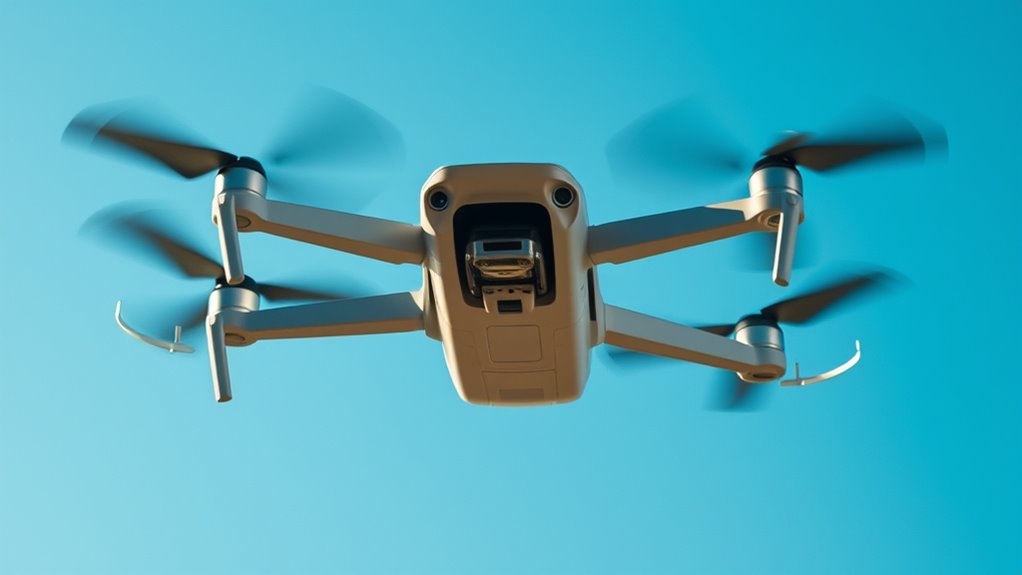
Adding propeller guards impacts how your drone moves through the air by increasing weight and aerodynamic drag. This extra weight means your drone needs more power to stay aloft, which can drain the battery faster and shorten your flight time. The increased drag slows down your drone’s speed and causes it to accelerate more slowly. You might notice slight changes in stability, especially during fast or aggressive maneuvers, leading to more drifting or less precise control. However, these effects are generally minor at slow, careful speeds. Some designs are optimized to minimize these influences, maintaining decent flight performance. Additionally, aerodynamic factors can influence how effectively your drone responds to control inputs. Proper drone design can help mitigate some of these effects and improve overall flight stability. It’s important to consider flight dynamics when choosing whether to use propeller guards for your specific drone model. For example, understanding how weight distribution affects maneuverability can help you make better modifications for safer flights. Moreover, aerodynamic efficiency plays a crucial role in maintaining optimal flight performance despite added accessories.
When and Where to Use Propeller Guards Effectively
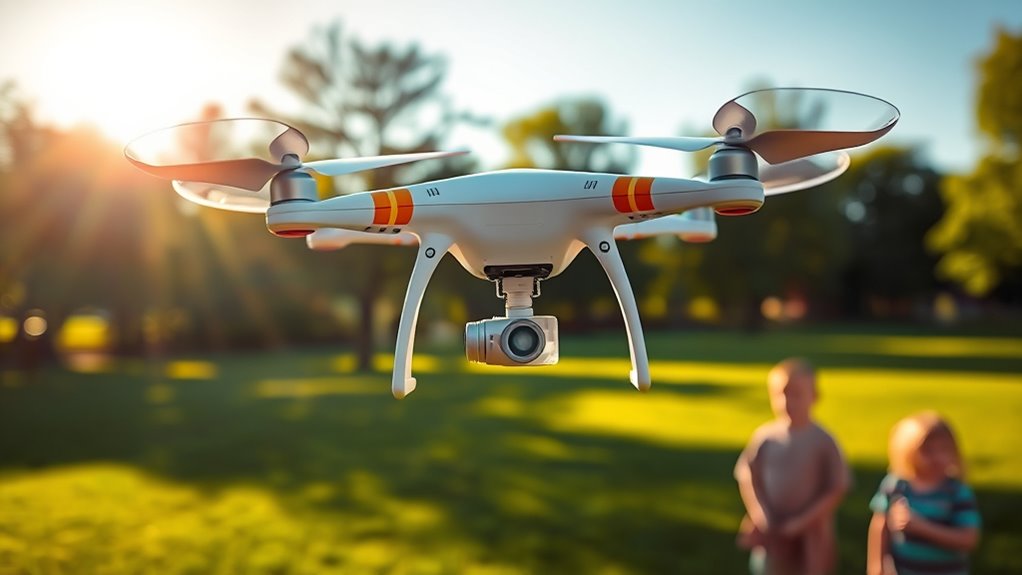
You should consider using propeller guards primarily during low-speed, cautious flights, especially indoors or in cluttered environments. They’re ideal when maneuvering tight spaces, around people, pets, or fragile objects, where minor collisions are likely. Use them during training sessions or casual flights to reduce the risk of damage and injury. Guards are particularly helpful when you’re still building flying confidence or flying in unfamiliar areas. Avoid them during high-speed, aggressive, or outdoor racing, where they can hinder performance and aerodynamics. Also, remove guards if you need maximum speed or maneuverability for specific tasks. Overall, deploy propeller guards whenever safety, obstacle avoidance, or protecting others is a priority, especially in confined or unpredictable settings. Additionally, considering home security systems can enhance overall safety during drone operation in various environments.
Choosing the Right Propeller Guard for Your Drone
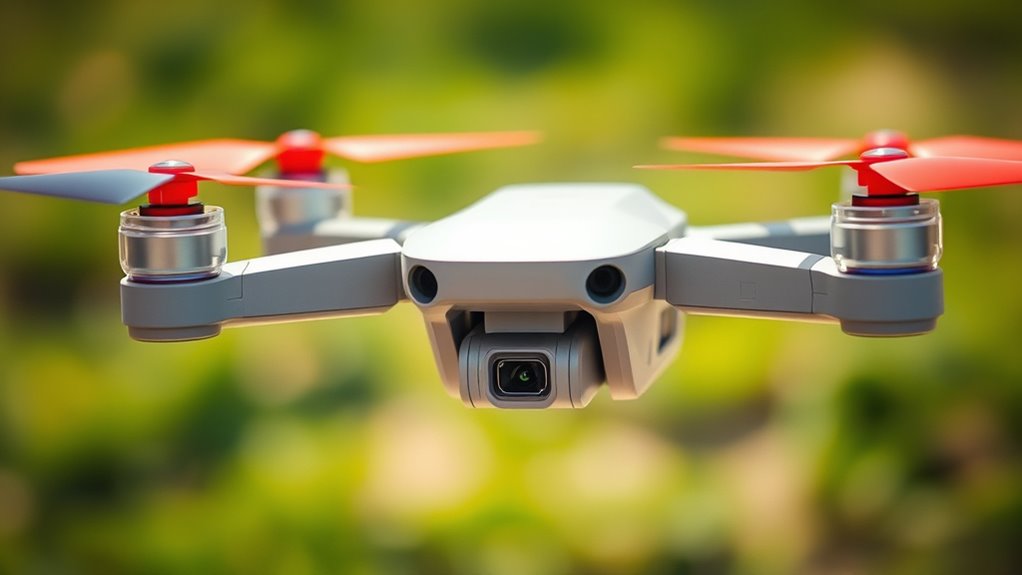
Choosing the right propeller guard for your drone involves considering factors like size, material, and compatibility to guarantee ideal protection without sacrificing performance. Ascertain the guard fits your drone model perfectly—an ill-fitting guard can cause vibrations or interfere with sensors. Opt for lightweight, impact-resistant materials like high-strength plastics or composites to minimize added weight and maintain flight efficiency. Check if the guard is compatible with your drone’s propellers and mounting system. Consider the purpose of your flights—indoor flying may require smaller, enclosed guards, while outdoor use might need larger, more durable options. Also, look for designs that don’t obstruct cameras or sensors. Picking the right guard balances protection, compatibility, and minimal impact on flight performance. Additionally, understanding the local regulations regarding drone safety can help you choose a guard that complies with legal standards. Ensuring proper drone safety guidelines are followed is essential for responsible flying and avoiding legal issues. Being aware of safety standards can further aid in selecting guards that meet industry best practices. When selecting a guard, it’s also helpful to consider regulatory requirements to ensure your drone setup remains compliant during operation. Furthermore, staying informed about industry innovations can lead to better options for enhanced safety features.
Balancing Safety and Performance: Making the Right Decision

Balancing safety and performance requires carefully evaluating how propeller guards impact your drone’s flight characteristics. While guards add a layer of protection, they also increase weight and aerodynamic drag, which can slow your drone and reduce flight time. This trade-off matters most during high-speed, aggressive flying, where maneuverability and speed are critical. If you prioritize safety, especially indoors or in cluttered environments, guards can prevent costly crashes and injuries. However, if you’re an experienced pilot focusing on performance, you might find guards hinder your agility. Consider your flying style, environment, and safety needs. Sometimes, the best choice is to use guards selectively, balancing peace of mind with ideal flight performance. Making an informed decision ensures you get the safety benefits without sacrificing too much in flight capability. Additionally, understanding how propeller guard design affects flight dynamics can help you choose the right setup for your needs. Exploring drone safety features can further enhance your flying experience and security, especially when considering overall flight stability.
Frequently Asked Questions
Are Propeller Guards Compatible With All Drone Models?
Propeller guards aren’t compatible with all drone models. You need to check your drone’s size, design, and manufacturer recommendations before installing them. Some drones have integrated or specialized mounts that prevent standard guards from fitting properly. Always verify compatibility to avoid interfering with sensors or flight performance. If in doubt, consult your drone’s manual or manufacturer to ensure you select the right guards that won’t compromise your drone’s safety or functionality.
How Do I Install and Remove Propeller Guards Quickly?
To install propeller guards quickly, line up the mounts with the designated attachment points on your drone and snap them into place, ensuring they click securely. To remove them, gently press or disengage any clips or latches, then lift the guards away. Keep your fingers clear of spinning blades during installation or removal. Practice this process a few times to become faster and more confident, especially before a flight.
Can Propeller Guards Improve Drone Safety During Outdoor Racing?
Did you know that 60% of drone crashes involve collisions with obstacles? Propeller guards can definitely boost safety during outdoor racing by protecting your drone from sudden impacts. They act as a physical barrier, reducing damage and preventing injuries. While they add some weight and drag, they’re especially useful in tight courses or crowded environments. Overall, they’re a smart safety addition, giving you peace of mind and helping preserve your drone.
Do Lightweight Guards Offer the Same Protection as Heavier Ones?
Lightweight guards don’t offer the same level of protection as heavier ones because they’re less impact-resistant and may break or bend more easily. While they’re easier to install and cause less drag, they might not withstand strong collisions or crashes, increasing your risk of damage. If safety is a priority, especially in tight spaces, opting for sturdier, heavier guards provides better protection, though they may slightly affect flight performance.
Are There Legal Regulations Requiring Propeller Guards in Certain Areas?
Did you know that 65% of drone-related injuries involve propellers? In some areas, laws explicitly require propeller guards, especially for indoor or crowded settings. You must check local regulations before flying, as non-compliance can lead to fines or confiscation. Using guards not only helps you stay within legal boundaries but also enhances safety, protecting people and property from potential injuries caused by spinning blades.
Conclusion
Ultimately, propeller guards offer safety without sacrificing flight. They protect your drone and surroundings, but may slightly impact performance. You get peace of mind and a smoother flying experience, yet might face minor compromises in agility. Weigh the risks against the benefits, and decide if the extra layer of security is worth it. Because when safety meets performance, you’re empowered to fly confidently—whether in tight spaces or open skies.