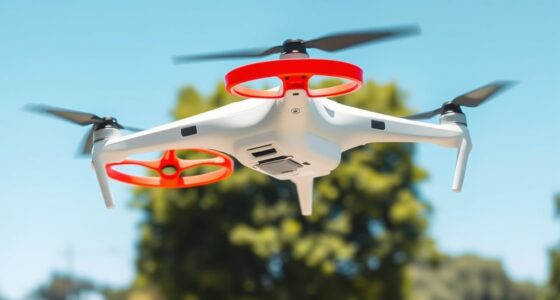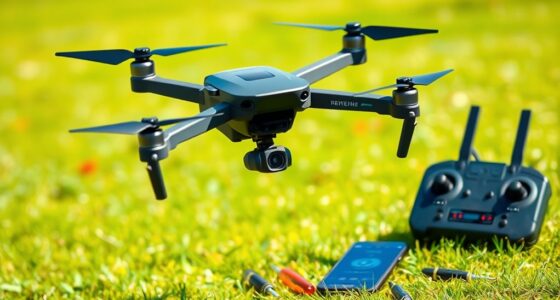

Your drone battery typically lasts between 300 and 500 flight cycles before performance drops considerably. Each cycle reduces capacity slightly, so after about 300 flights, you might notice shorter flight times and less power. Proper care, like partial charges and storage, can extend this lifespan. If you want to learn how to maximize your battery’s longevity and ensure safe, reliable flights, keep exploring these essential tips.
Key Takeaways
- Most drone batteries last between 300-500 charge cycles before capacity significantly declines.
- Each flight consumes a partial or full charge, counting toward the total cycle count.
- Proper charging and storage habits help maximize battery lifespan and delay capacity loss.
- Expect shorter flight times and reduced performance after approximately 300-500 cycles.
- Regularly monitoring cycle count ensures timely battery replacement for safe, reliable drone operation.
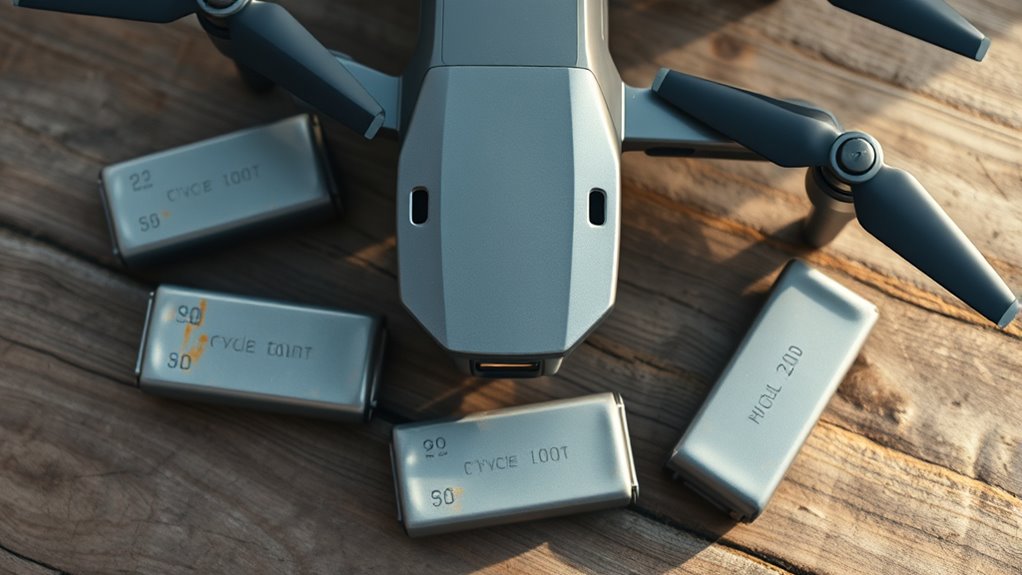
Understanding drone battery cycles is vital if you want your drone to perform reliably and last longer. Every flight uses a portion of your battery’s total capacity, and over time, this gradual wear impacts its overall lifespan. Recognizing how many cycles your battery can handle before it needs replacing helps you plan better and avoid unexpected drops in performance. Typically, drone batteries are rated for a specific number of charge cycles—often between 300 and 500—before their capacity drops considerably. Once you hit that limit, you’ll notice shorter flight times and decreased reliability, signaling that it’s time to think about a new battery.
Your charging habits play an essential role in determining your battery’s longevity. For instance, consistently letting your battery discharge completely before recharging can shorten its lifespan. Lithium-polymer batteries, which most drones use, prefer partial charges—around 20% to 80%—rather than full 0-100% cycles. By avoiding deep discharges and not overcharging, you help preserve the battery’s health. It’s tempting to leave your drone charging overnight, but maintaining ideal charging routines prevents unnecessary stress on the battery. Using a proper charger designed for your drone’s battery type ensures a controlled, safe charge and reduces the risk of damaging the cells.
Another key aspect of managing battery lifespan is understanding how to store your batteries correctly. If you won’t be flying for a while, store them in a cool, dry place with about 50% charge. Avoid leaving batteries fully charged or completely drained during storage, as both extremes can harm the cells over time. Also, don’t expose batteries to extreme temperatures—heat accelerates degradation, while cold can temporarily reduce capacity. Regularly inspecting your batteries for swelling or damage is equally important, as damaged packs can be dangerous and should be replaced immediately. Additionally, understanding battery cycle ratings helps you anticipate when your battery’s performance will decline significantly.
To maximize your drone’s flight performance and extend the lifespan of its battery, develop consistent charging habits and follow best storage practices. Keep track of your flight hours and cycles so you know when your battery is approaching its limit. After around 300 to 500 cycles, expect noticeable performance drops, and plan for replacements accordingly. Proper care isn’t just about prolonging your battery’s life—it also ensures safe, reliable flights every time. By paying attention to how you charge, store, and handle your drone batteries, you’ll enjoy longer-lasting power and better overall drone performance over time.
Frequently Asked Questions
How Can I Extend My Drone Battery’s Lifespan?
To extend your drone battery’s lifespan, regularly calibrate it to guarantee accurate readings, and avoid deep discharges. Follow proper storage tips by keeping the battery at around 50% charge and storing it in a cool, dry place when not in use for extended periods. Also, limit full charge cycles and avoid exposing the battery to extreme temperatures, which can considerably reduce its overall lifespan.
What Are Signs My Drone Battery Needs Replacing?
You’ll notice your drone battery needs replacing when it no longer holds a charge or shows reduced flight time, like a fading spark. Watch for inconsistent power, swelling, or overheating—signs that battery chemistry has deteriorated. Proper charging techniques help prolong life, but once these signs appear, it’s time to swap out your battery to ensure safe, reliable flights. Don’t ignore these clues; your drone’s performance depends on it.
Does Temperature Affect Drone Battery Cycles?
Yes, temperature affects drone battery cycles. Extreme temperature fluctuations can accelerate battery chemistry degradation, reducing overall lifespan. When it’s too hot or cold, your battery’s performance drops, and its cycle life shortens. To maximize battery life, avoid exposing your drone to rapid temperature changes and operate within the manufacturer’s recommended temperature range. Proper storage and careful flight planning help preserve your battery’s health over time.
Can I Safely Use a Second-Hand Drone Battery?
You can safely use a second-hand drone battery if you check its overall condition first. Look into its battery storage history and ask about charging habits to gauge its health. Avoid using a battery that shows signs of swelling or poor performance. Always fully charge and discharge it carefully, and store it properly to extend its lifespan. Monitoring these factors helps make certain of safe, reliable drone flights with used batteries.
How Do Different Flight Styles Impact Battery Life?
Different flight styles impact your drone battery life considerably. Aggressive maneuvers, rapid acceleration, and high speeds put more strain on the battery, causing faster degradation. To maximize lifespan, follow proper propagation techniques and charging protocols, like avoiding overcharging and discharging fully. Gentle flying extends your battery’s cycle life, while aggressive flying shortens it. Adjust your flight style accordingly to get the most out of each charge and prolong your drone’s battery health.
Conclusion
Remember, every battery has its limits, but with proper care, you can extend its life. Typically, expect around 300 to 500 cycles before replacement. Treat your drone’s battery like a good friend—give it the right care, and it’ll serve you well. As they say, “A stitch in time saves nine.” Keep an eye on your battery’s health, and you’ll enjoy many more flights before needing a new one.