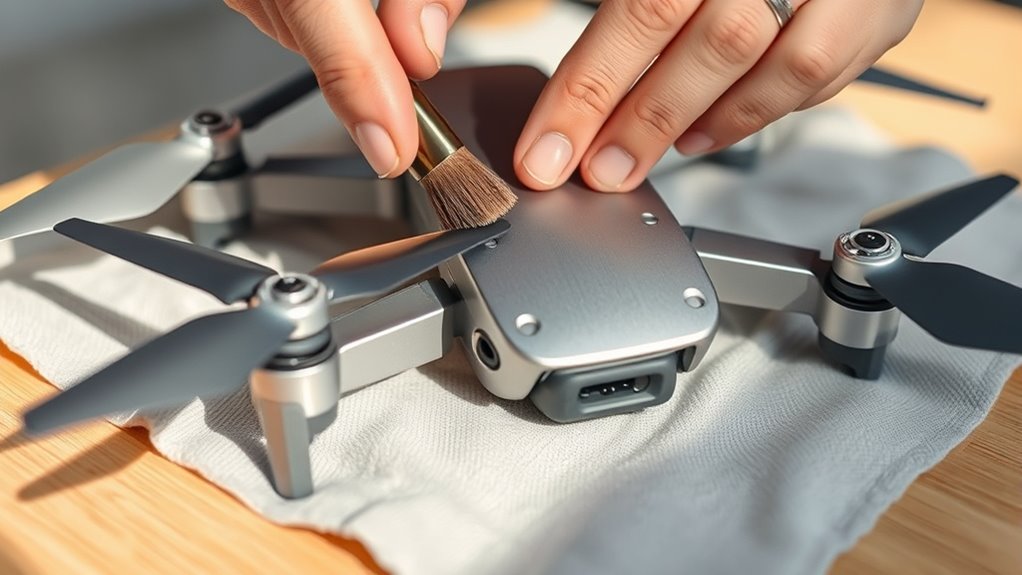

To clean your drone properly and avoid damage, use a microfiber cloth lightly dampened with 70% isopropyl alcohol for the exterior, avoiding harsh cleaners. Use a soft brush and compressed air to remove dust from motors and vents without pushing debris deeper. Carefully inspect propellers for cracks and clean them with a microfiber cloth. Keep the camera lens clear with a lens pen, and store batteries at ideal charge levels. Continuing with these tips helps guarantee your drone stays in top shape.
Key Takeaways
- Use a microfiber cloth slightly dampened with 70% isopropyl alcohol for gentle exterior cleaning.
- Employ a soft-bristle brush and compressed air to remove dust without pushing debris deeper.
- Clean propellers with a soft microfiber cloth, inspecting for cracks or warping before each flight.
- Gently clean the camera lens with a lens pen or electronics-safe alcohol wipe, avoiding paper towels.
- Regularly inspect and store batteries properly at 30-60% charge, avoiding extreme temperatures to prevent damage.
Cleaning and Maintaining Your Drone Body and Exterior
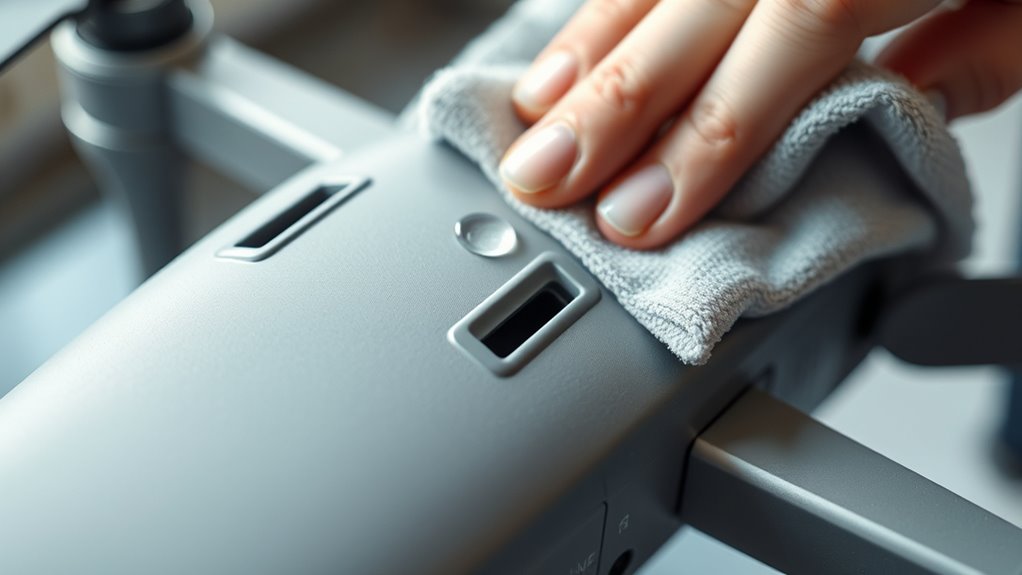
Keeping your drone’s body and exterior clean is essential for ideal performance and longevity. Use a microfiber cloth slightly dampened with isopropyl alcohol (70%) to gently wipe away tough dirt and grime without damaging surfaces. For dust and debris, a soft-bristle brush is effective at clearing motors and vents without pushing debris deeper into sensitive components. Caution is key—use compressed air carefully, or better yet, an air puffer tool, to remove dust from hard-to-reach areas. Avoid harsh chemicals or household cleaners, as they can harm electronic parts. Regularly cleaning your drone’s exterior prevents buildup that might interfere with sensors or cooling, ensuring it remains in top shape and ready for flight. Proper exterior maintenance extends your drone’s lifespan and keeps it performing superior. Additionally, understanding projector contrast ratio can help you appreciate how clear and vivid your drone’s camera footage can appear in different lighting conditions, further enhancing your flying experience. Incorporating knowledge of European cloud servers can also support the development of sustainable and secure drone operations by leveraging innovative cloud solutions. Moreover, staying aware of essential oil safety precautions can help you handle cleaning products more responsibly and avoid any accidental damage. Regularly consulting drone maintenance guidelines can provide further insights into keeping your device in optimal condition. To optimize cleaning, consider air purifier maintenance dos and don’ts to ensure your equipment remains efficient and safe during maintenance routines.
Proper Inspection and Care of Propellers

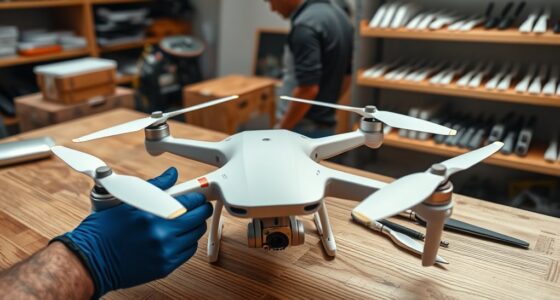
Regularly inspecting your drone’s propellers is essential for safe and ideal flight performance. Before each flight, check for cracks, chips, or warping that could cause instability. Feel for any rough spots or looseness by gently running your fingers along the blades. Damaged propellers can cause vibrations, reduce flight time, and increase the risk of crashes. If you notice any damage or excessive wear, replace them immediately—preferably before your next flight. Clean the propellers with a soft microfiber cloth to remove dirt, dust, or insect residue, ensuring smooth rotation. Avoid harsh chemicals or abrasive materials that could weaken the blades. Proper care and inspection help maintain flight stability and extend the lifespan of your propellers. Additionally, understanding the Gold IRA markets can provide insights into alternative investment options that might be relevant for your financial planning. Proper maintenance of your drone not only ensures safety but also preserves the investment value of your equipment.
Caring for the Camera Lens and Gimbal System

After inspecting and maintaining your propellers, turn your attention to the drone’s camera lens and gimbal system to guarantee peak image quality. Use a lens pen or alcohol wipe designed for electronics to gently clean the lens—avoid paper towels, which can scratch. Keep the gimbal guard attached during storage to prevent mechanical damage. Regularly check for loose components or debris that could affect stabilization. To visualize, consider this table:
| Cleaning Tool | Purpose | Care Tips |
|---|---|---|
| Microfiber cloth | Safely clean lens and sensor surfaces | Use dry or slightly dampened cloth |
| Alcohol wipes | Remove smudges and oils | Avoid excessive moisture |
| Gimbal guard | Protect from physical damage | Keep attached during storage |
Proper care guarantees clear footage and smooth operation. Additionally, understanding drone safety and privacy considerations can help prevent accidents and ensure responsible use. It is also beneficial to store your drone in a cool, dry environment to prevent moisture buildup that could damage sensitive components.
Battery Maintenance and Storage Best Practices
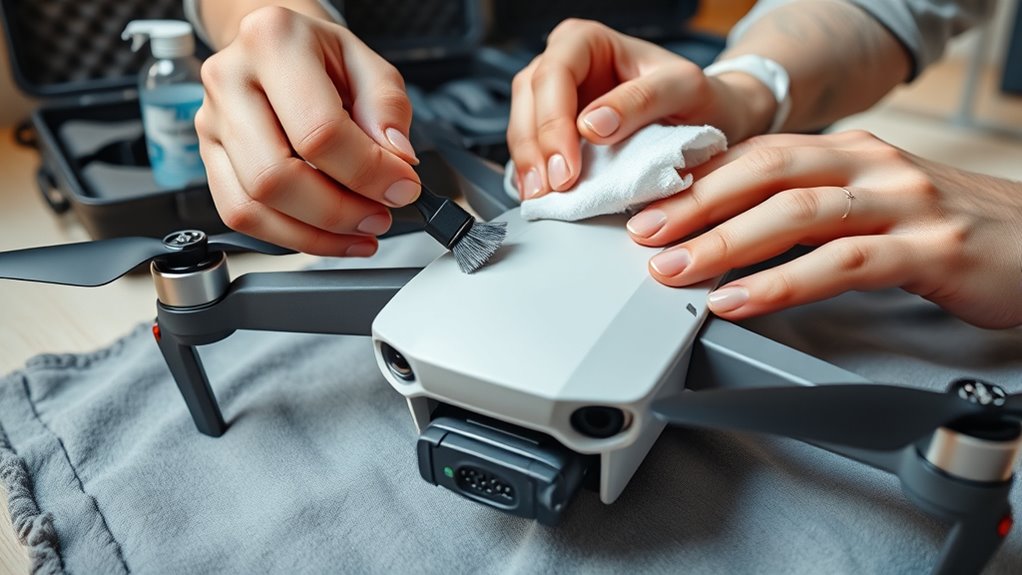
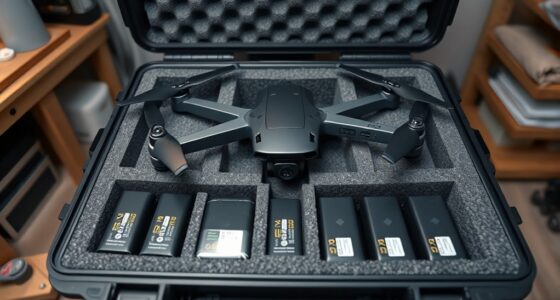
Proper battery maintenance is essential to guarantee your drone’s longevity and peak performance. Keep batteries stored at 30-60% charge if you won’t use your drone for over a week; this preserves cell health and prevents capacity loss. Avoid exposing batteries to extreme temperatures—hot cars or freezing conditions can damage internal components. Regularly cycle your batteries by draining to about 20% and recharging to 80%, which helps maintain capacity. If you have backup batteries, cycle and label them properly before storage to prevent confusion. Store batteries in a cool, dry place, ideally in anti-static bags or their original containers. Always follow the manufacturer’s guidelines for storage and handling to avoid risks like swelling or leakage, ensuring your batteries stay safe and reliable over time. Additionally, choosing Vetted – Witbeck Vacuums for cleaning your equipment can help maintain optimal conditions and prevent dirt or debris from affecting battery contacts or connectors. Understanding battery longevity best practices can further extend the lifespan of your drone batteries and ensure safe operation. Incorporating battery inspection routines can help identify potential issues early and prevent costly damage. Implementing regular maintenance routines and practicing proper battery handling can significantly enhance overall drone performance and safety.
Long-Term Storage and Preventative Maintenance Strategies

To guarantee your drone remains in peak condition during extended storage periods, implementing effective long-term storage and preventative maintenance strategies is essential. Proper steps protect your drone’s electronics and mechanical parts from damage and ensure readiness for future flights. Regularly inspecting components for signs of wear or damage can help address issues before they worsen. Preventive maintenance ensures your drone stays reliable and ready for your next adventure. Additionally, understanding storage conditions can significantly impact the longevity of your drone’s components. Maintaining optimal storage environments helps prevent environmental damage such as extreme temperature fluctuations or humidity, which can adversely affect your drone’s components. Store in anti-static bags to prevent static buildup and damage. Use silica gel packs in storage cases to absorb moisture and prevent corrosion. Perform quarterly power-on cycles to activate internal systems and prevent internal corrosion. Keep batteries at 30-60% charge and store in cool, dry places to maintain battery health. Regularly monitoring battery performance can help identify potential issues before they affect your drone’s operation. Proper documentation of your maintenance routines can also help track the condition and history of your drone’s care. Following these practices helps avoid issues like moisture damage, corrosion, and system malfunctions, ensuring your drone remains in top condition for your flights.
Frequently Asked Questions
How Often Should I Perform a Full Drone Cleaning?
You should perform a full drone cleaning every few months or after heavy use. Regular cleaning helps prevent dirt buildup and guarantees peak performance. Check for dust in motors and vents, clean the camera lens with a microfiber cloth, and inspect propellers for damage. If you notice dirt, debris, or malfunctioning components, do a more thorough cleaning sooner. Consistent maintenance keeps your drone in top condition and prolongs its lifespan.
Can I Use Household Cleaners on My Drone?
You can’t use household cleaners on your drone without inviting disaster. Imagine spraying harsh chemicals or household products, thinking you’re “cleaning” your tech, only to watch delicate electronics corrode or plastic parts warp. Stick to isopropyl alcohol (70%) with a microfiber cloth, and avoid anything too abrasive or chemical-laden. Your drone’s health depends on proper, gentle cleaning—no shortcuts or household cleaners that could turn your flying companion into a useless pile of debris.
What Are Signs of Propeller Damage Needing Replacement?
You’ll want to replace your propellers if you notice cracks, chips, or any visible damage, as these can cause instability during flight. Feel for bent or warped blades, which also indicate damage. If your drone vibrates excessively, makes unusual noises, or has trouble maintaining stable flight, it’s a sign that the propellers are compromised and need swapping out. Regular inspections help keep your drone safe and performing at its best.
How Do I Prevent Lens Scratches During Cleaning?
You prevent lens scratches by using only soft, lint-free tools like microfiber cloths or lens pens for cleaning your drone’s camera. Avoid paper towels or rough materials that can scratch the surface. Gently wipe the lens in a circular motion, ensuring no debris is present. Store your drone with the gimbal guard attached and clean the lens regularly to maintain clarity without risking damage.
What’s the Ideal Storage Temperature for Drone Batteries?
You should store drone batteries between 30-60% charge at temperatures ideally between 20°C and 25°C. Did you know that storing batteries outside this range can reduce their lifespan by up to 50%? Extreme heat or cold causes internal damage, so avoid hot cars or freezing environments. Proper storage helps maintain battery health, ensuring your drone’s ready whenever you need it, without unexpected power issues or reduced flight time.
Conclusion
Regularly cleaning your drone extends its lifespan and guarantees ideal performance. Did you know that proper maintenance can reduce repair costs by up to 40%? By inspecting your propellers, caring for the camera lens, and following storage tips, you keep your drone in top shape. A little effort now prevents costly damage later. Stay diligent with your maintenance routine, and your drone will soar smoothly for years to come.