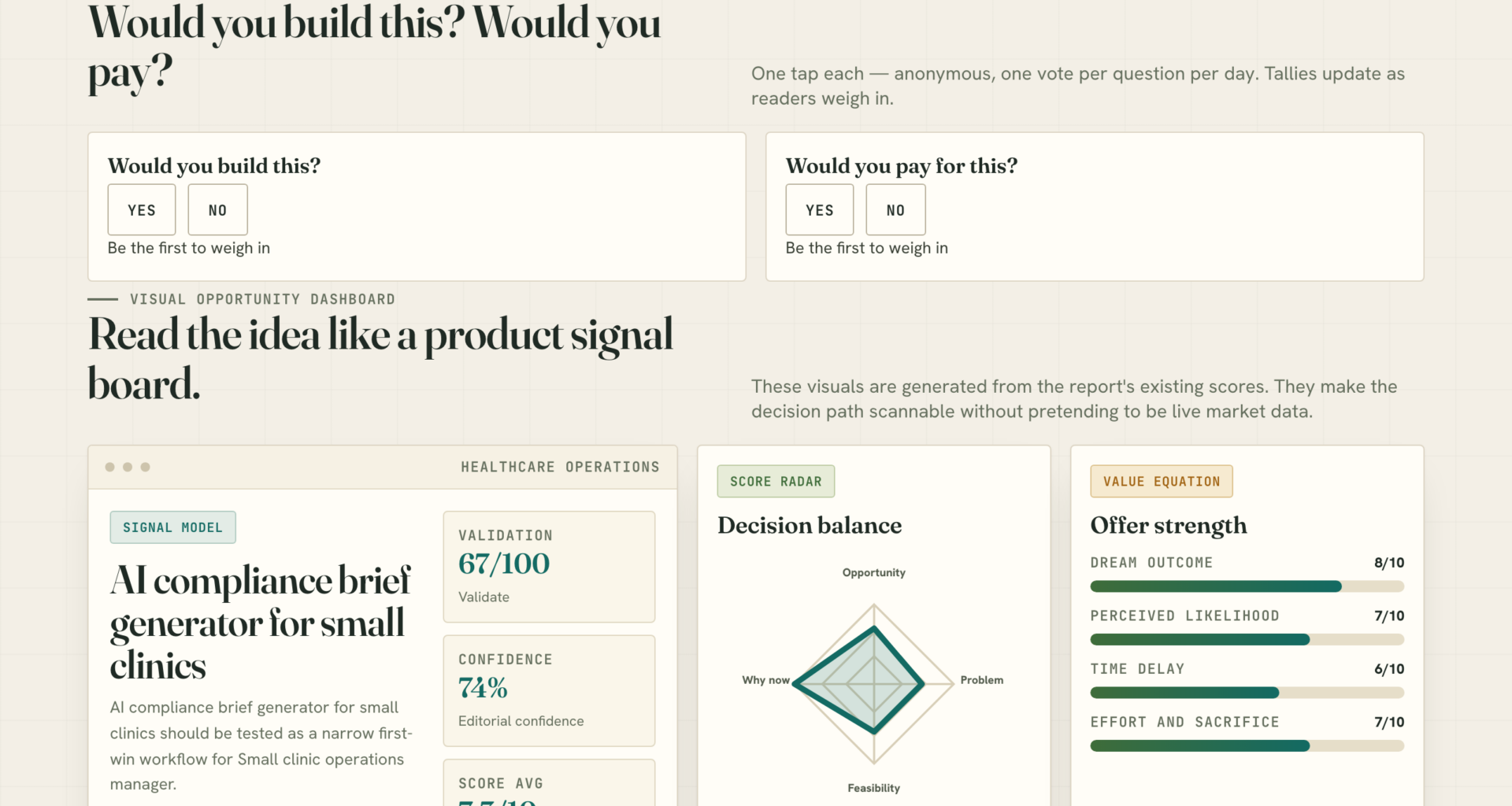

📊 Full opportunity report: AI compliance brief generator for small clinics on IdeaNavigator AI — validation score, market gap, and execution plan.

Get the latest gadgets delivered free — and shop member deals
- Fast, free delivery on millions of items
- Access to Prime Big Deal Days deals on October 6–7
- Prime Video, Amazon Music and more included
TL;DR
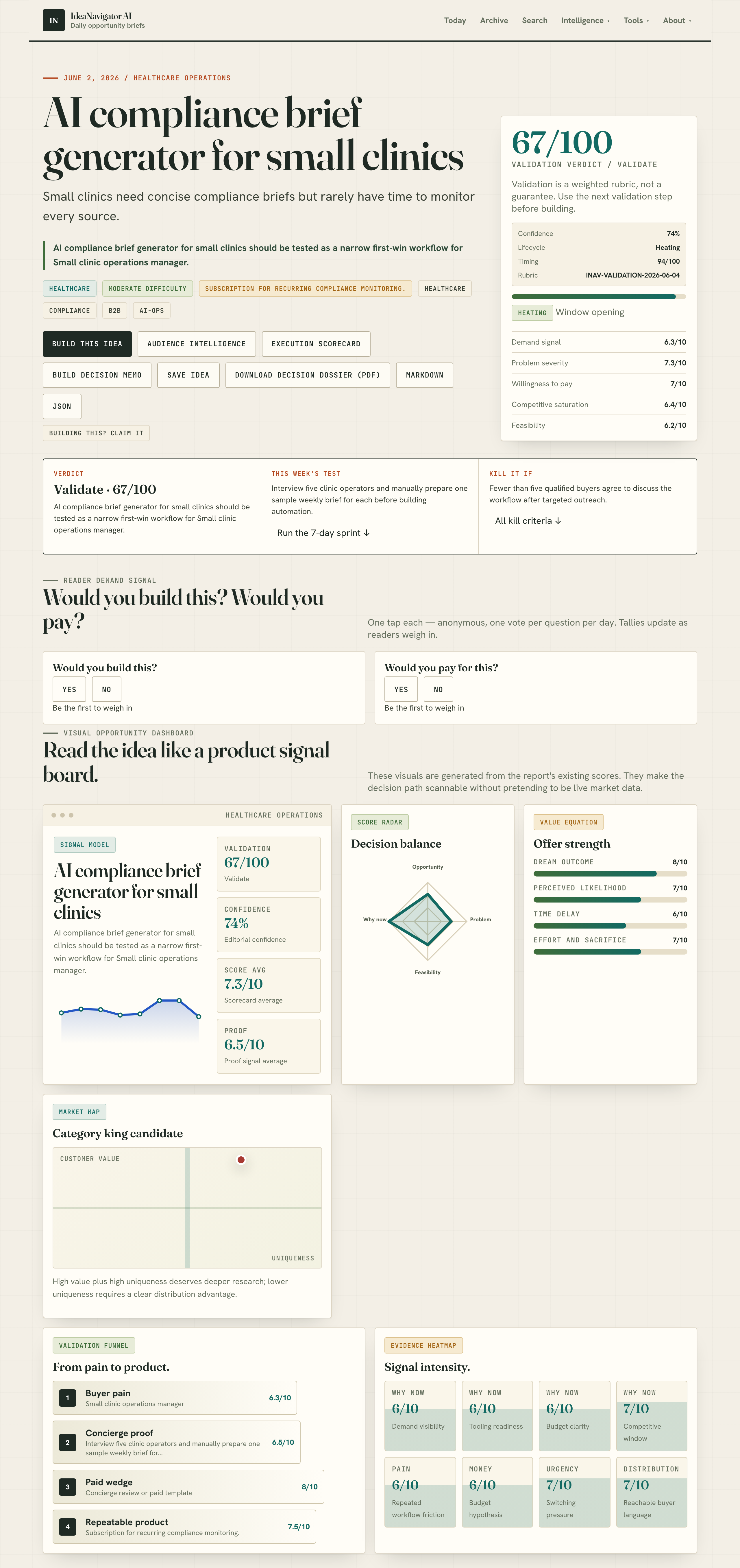
A new AI tool is being tested to automatically generate weekly compliance briefs for small clinics. This aims to help busy operations managers stay updated on regulations efficiently. The project is in early testing, with validation involving interviews and manual brief creation.
Small clinics are preparing to test an AI-powered compliance brief generator designed specifically for their operational needs. This tool aims to provide concise, weekly summaries of regulatory updates, helping clinic managers stay compliant without extensive manual monitoring. The development reflects a growing trend of applying AI to streamline healthcare compliance tasks, which are often time-consuming for small practices.
The AI compliance brief generator is currently in a testing phase, targeting small clinic operations managers as the primary users. The goal is to produce a weekly brief that includes source links, a review option for owners, and a simple action checklist. This approach addresses the challenge faced by small clinics, which often lack dedicated compliance staff and limited time to monitor multiple sources for regulatory updates.
According to an anonymous researcher involved in the project, the MVP (minimum viable product) will be validated through interviews with five clinic operators and by manually preparing one sample brief for each before automating the process. The service plans to operate on a subscription model, offering recurring compliance monitoring as a paid feature. The broader market focus is healthcare operations, especially small clinics seeking cost-effective compliance solutions.
Potential Impact on Small Clinic Operations Efficiency
This development could significantly reduce the compliance burden on small clinics, which often struggle with resource constraints. Automating weekly updates can help ensure timely adherence to changing regulations, potentially reducing legal and financial risks. If successful, the tool could become a standard part of small clinic management, improving operational efficiency and compliance accuracy.
AI compliance brief generator for clinics
As an affiliate, we earn on qualifying purchases.
As an affiliate, we earn on qualifying purchases.
Growing Need for Automated Compliance Solutions in Healthcare
Small clinics face increasing regulatory complexity but lack the dedicated staff or resources to monitor all updates manually. Recent advances in AI summarization and automation have opened opportunities to streamline compliance workflows. The concept of a weekly brief generator aligns with broader trends toward digital transformation in healthcare operations, especially for small practices that need affordable, easy-to-use tools.
The project is inspired by the recognition that timely, concise regulatory updates are critical for maintaining legal compliance and avoiding penalties. Prior efforts have focused on larger healthcare providers, leaving small clinics underserved in this area.
“The goal is to create a simple, automated way for clinics to stay compliant without dedicating significant staff time.”
— an anonymous researcher
healthcare regulatory update automation tool
As an affiliate, we earn on qualifying purchases.
As an affiliate, we earn on qualifying purchases.
Uncertainties Around Implementation and Adoption
It is not yet clear how well the AI will perform in real-world scenarios, or how receptive small clinics will be to adopting the new tool. The validation process involves manual brief creation, but the effectiveness of automation remains to be proven. Additionally, regulatory requirements can vary by region, which may complicate the development of a universally applicable solution.
clinic compliance management software
As an affiliate, we earn on qualifying purchases.
As an affiliate, we earn on qualifying purchases.
Next Steps in Validation and Deployment Planning
The project team plans to complete interviews with five clinic operators and produce sample briefs for each. Following this, they will refine the AI model based on feedback and test the automation process. If successful, broader deployment could follow within the next several months, with plans to develop additional features based on user needs and regulatory changes.
medical practice regulatory compliance tool
As an affiliate, we earn on qualifying purchases.
As an affiliate, we earn on qualifying purchases.
Key Questions
How will the AI generate compliance briefs?
The AI will analyze recent regulatory updates from multiple sources and condense key points into a weekly summary, including source links and actionable items.
Will clinics need to pay for this service?
The planned model is subscription-based, offering recurring compliance monitoring for small clinics on a recurring fee basis.
Is this solution adaptable to different regions or regulations?
While the initial focus is on general healthcare compliance, regional customization may be required, which is still under consideration during testing.
When will the tool be available for broader use?
If validation proves successful, broader deployment could occur within a few months after testing concludes, with ongoing updates to improve accuracy and usability.
What challenges might affect adoption?
Potential challenges include AI accuracy, regional regulatory complexity, and clinic staff’s willingness to integrate new technology into their workflow.
Source: IdeaNavigator AI
Halloween Picks
halloween
As an affiliate, we earn on qualifying purchases.