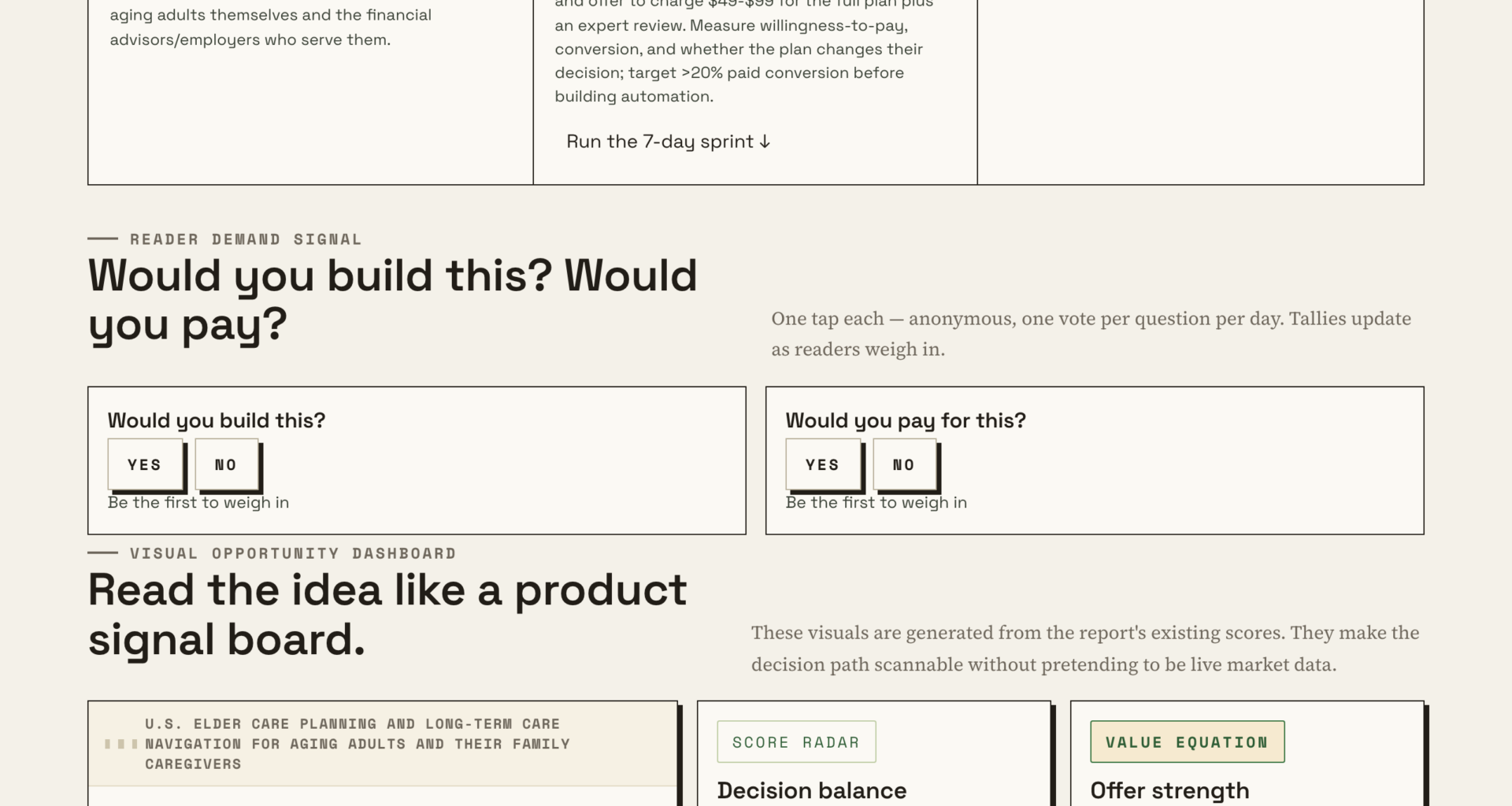

📊 Full opportunity report: Retirement Care Planner on IdeaNavigator AI — validation score, market gap, and execution plan.

Get the latest gadgets delivered free with Prime
- Fast, free delivery on millions of items
- Prime Video, Amazon Music and more included
- Member-only deals all year
TL;DR
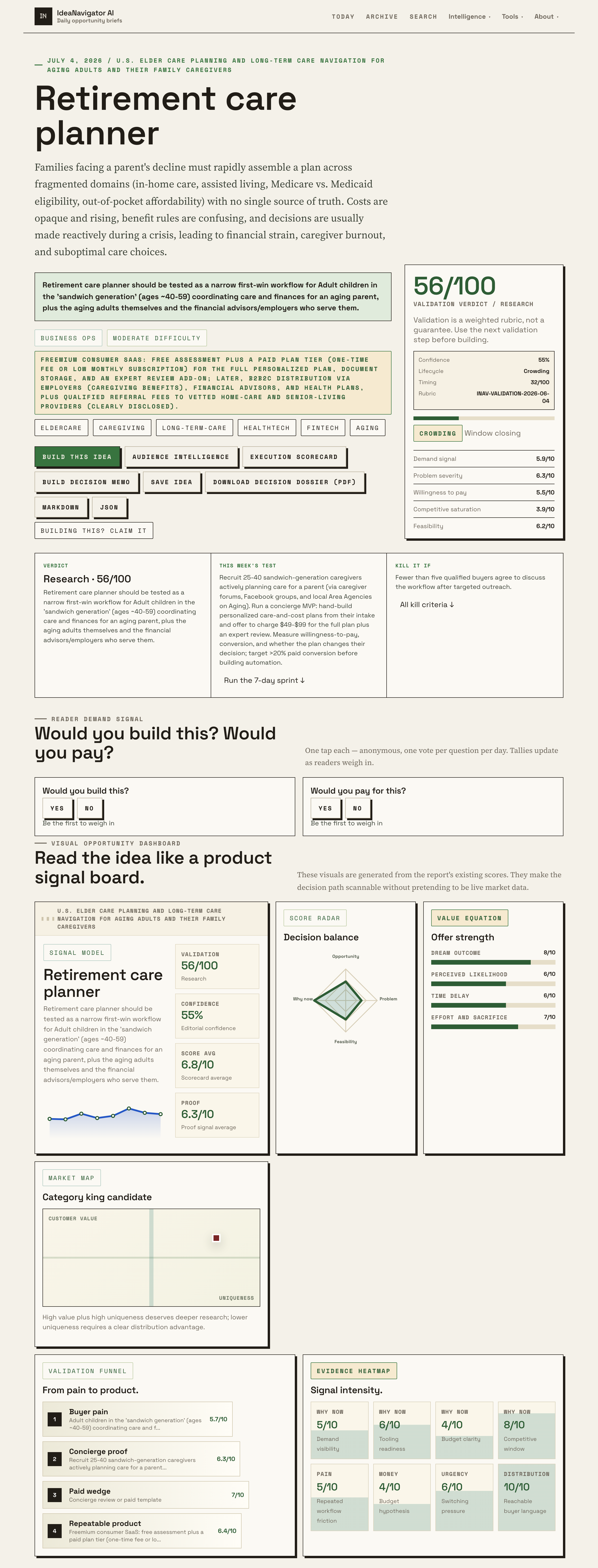
A prototype retirement care planning web app is in early testing to assist middle-aged family caregivers. It aims to simplify complex decisions around elder care costs and options. The initiative responds to rising costs and caregiver stress.
A prototype web-based retirement care planner is being tested to assist middle-aged caregivers in the ‘sandwich generation’ with coordinating care and finances for aging parents. The tool aims to address the fragmented, costly, and often reactive decision-making process faced by families, offering personalized, localized care options and financial guidance.
The retirement care planner is designed specifically for adult children aged approximately 40-59 who are managing care for their aging parents. It provides a streamlined process: after a brief intake about the parent’s health, location, and finances, it generates a personalized plan that includes a cost comparison of local care options, an explanation of Medicare and Medicaid eligibility, an affordability projection, and a prioritized action checklist with vetted local providers.
This initiative is currently in a testing phase with a small group of 25-40 caregivers recruited through forums, Facebook groups, and local agencies. The prototype offers a free assessment, with plans to charge a low fee ($49-$99) for a comprehensive plan and optional expert review. The goal is to validate whether families find the tool useful, are willing to pay, and whether it influences their decision-making process.
Impact of Structured Planning on Elder Care Decisions
This development could significantly improve how families navigate the complexities of elder care, reducing reactive decision-making, financial strain, and caregiver burnout. As costs for assisted living and nursing care rise sharply—median assisted living costs now around $6,200 per month—structured guidance can help families make more informed choices and potentially save money. The tool also aims to fill a market gap for accessible, localized elder care planning, supporting both families and professionals like financial advisors and employers offering caregiving benefits.
assisted living cost comparison guide
As an affiliate, we earn on qualifying purchases.
As an affiliate, we earn on qualifying purchases.
Growing Need for Care Planning Solutions Amid Rising Costs
The U.S. is approaching a demographic peak, with about 73 million Americans aged 65 and older expected by 2030. Nearly 70% of those turning 65 today will need some form of long-term care. Costs have surged in recent years, with nursing home costs reaching approximately $115,000 annually and assisted living at a median of $6,200 per month. Meanwhile, caregivers in the sandwich generation report increasing financial and emotional stress, often making decisions reactively during crises. Existing tools are fragmented and often lack personalized guidance, creating a pressing need for integrated planning solutions.
“Families face a complex maze of costs, benefits, and eligibility rules, often making decisions too late and under stress.”
— an anonymous researcher
Medicare Medicaid eligibility book
As an affiliate, we earn on qualifying purchases.
As an affiliate, we earn on qualifying purchases.
Uncertainties About Adoption and Effectiveness
It is not yet clear how many families will adopt the tool at scale or whether it will significantly influence decision-making and cost savings. The prototype is still in early testing, and outcomes such as willingness-to-pay, user engagement, and actual decision changes remain to be measured. Additionally, the effectiveness of localized cost comparisons and eligibility explanations in different states or regions is still under evaluation.
senior care financial planning software
As an affiliate, we earn on qualifying purchases.
As an affiliate, we earn on qualifying purchases.
Next Steps in Validation and Expansion
The team plans to complete initial testing within the next few months, collecting data on user engagement, willingness to pay, and decision impact. If results are positive, the next phase will involve automating the platform, expanding to additional states, and exploring partnerships with employers, financial advisors, and elder care providers. Further research will also assess long-term benefits and integration with existing elder care services.
local elder care provider directory
As an affiliate, we earn on qualifying purchases.
As an affiliate, we earn on qualifying purchases.
Key Questions
How does the retirement care planner determine care options?
The tool uses publicly available benchmark data to compare costs of in-home care, assisted living, and nursing homes in the user’s local area, based on the parent’s location and needs.
Will families have to pay for this service?
The initial assessment will be free, with a full personalized plan offered at a low fee ($49-$99). Future monetization may include expert reviews and partnerships with organizations offering caregiving benefits.
Is this tool available nationwide?
Currently, it is being tested in a single high-cost state to manage data complexity. Expansion to additional states will depend on initial results and further development.
What makes this different from existing elder care resources?
Unlike fragmented resources, this platform aims to provide an integrated, personalized plan that combines cost comparisons, eligibility explanations, and action steps tailored to each family’s situation.
When will the tool be available for broader use?
There is no fixed date yet; the next few months will determine if the prototype’s results justify further deployment and development.
Source: IdeaNavigator AI
Fall Picks
fall essentials
As an affiliate, we earn on qualifying purchases.