📊 Full opportunity report: Make Career Readiness Tangible With Work Simulations on IdeaNavigator AI — validation score, market gap, and execution plan.

Get the latest gadgets delivered free with Prime
- Fast, free delivery on millions of items
- Prime Video, Amazon Music and more included
- Member-only deals all year
TL;DR
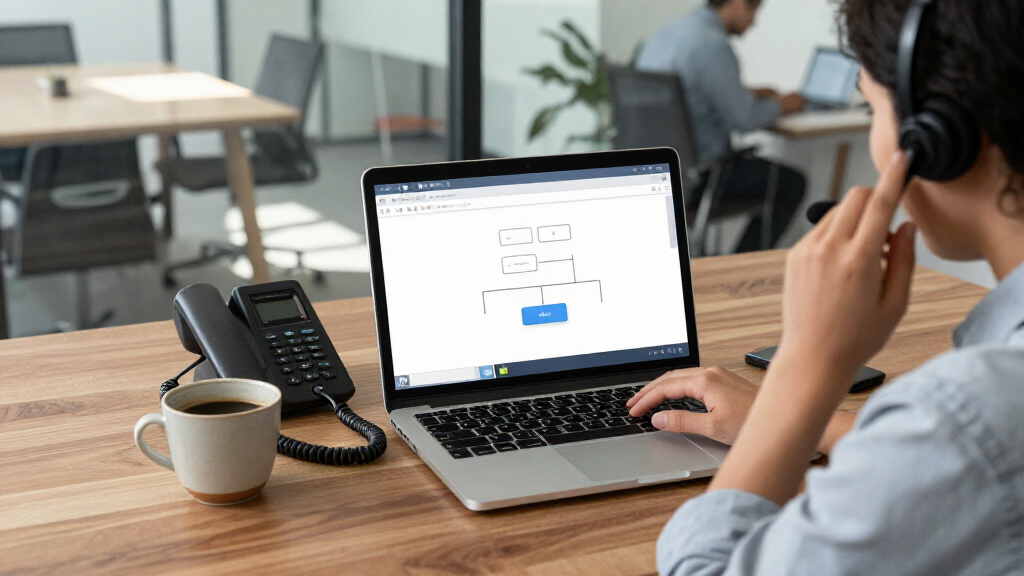
A proposal from IdeaNavigator AI recommends testing job simulations with Indiana school districts facing work-based-learning placement and documentation demands. The suggested pilot would pair five simulations with local employer reviews and measure accepted hours, student completion and district willingness to pay; no pilot or product launch is confirmed.
IdeaNavigator AI has proposed a pilot of job simulations for Indiana school districts that need to document students’ work-based-learning hours, pairing simulated job tasks with local employer reviews. The plan is aimed at career and technical education (CTE) and work-based-learning coordinators; it is a proposal, not a confirmed product launch or an announced district program.
The proposed minimum version would include five simulations for a one-semester pilot, with each student’s work reviewed by a local employer. A larger product concept describes a library of 20 role-based simulations, including work associated with medical assisting, HVAC, bookkeeping, logistics coordination and paralegal work. The tasks would use files drawn from real workplace activities, though no specific files, employer partners or finished simulations are identified.
For coordinators, the suggested service would record hours and rubric scores and export a training plan aligned with Indiana’s state template. The proposal also recommends brief live or asynchronous employer check-ins. Its rationale is that a self-paced video alone may not meet the state’s definition of work-based learning, which it describes as requiring sustained interaction with industry professionals.
The pilot would be offered free for one semester to three Indiana districts that opted into the diploma early. The proposed evaluation would track whether districts accept simulation hours toward diploma seals, how many students complete the activities and whether coordinators commit budget for the next school year. The suggested business model is an annual district license priced per enrolled high-school student, with paid custom simulations as an add-on. No pricing or pilot results are available.
Make Career Readiness Tangible With Work Simulations
IdeaNavigator AI proposes testing job simulations with Indiana school districts. The pilot’s core question: will schools accept the documented hours toward diploma requirements?
What the pilot would test
Each student’s simulated work would receive a local employer review.
Students try role-based activities in a proposed five-simulation pilot.
A local employer reviews each student’s work through a brief check-in.
The proposed service tracks hours and rubric scores and exports a training plan aligned with Indiana’s template.
What coordinators need to know
Test accepted hours
Districts would check whether simulation hours count toward the relevant diploma seals.
Explore work
Simulations could offer structured job-related practice where placements are limited.
Review student work
Brief check-ins would involve local industry professionals without hosting a placement.
The diploma context
The proposal links simulations to Indiana’s diploma requirements and documentation needs.
Evidence the trial would need
- Whether districts accept hours toward relevant seals
- How many students complete the activities
- Whether coordinators commit budget for the next school year
- District or employer participation
- Acceptance of the specific simulations and check-ins
- Pricing, costs and pilot results
Testing Hours Against Diploma Requirements
The proposal addresses two practical barriers for schools: limited employer placements and the administrative work of tracking student participation. The idea is especially relevant in rural areas and for white-collar careers, where local opportunities to observe or perform job tasks may be limited. Simulations could give students a structured way to try work-related activities before choosing a major, apprenticeship or diploma pathway.
For districts, however, the main test is not whether students find the activities engaging. It is whether state rules and district practice allow the documented hours to count toward required seals. If hours are accepted and coordinators can use the records and training-plan exports, the approach could provide another route to documented experience. If they are not, schools may have little reason to adopt a paid service, even if students complete the simulations.
The employer review is central to the proposal’s case. It would add contact with industry professionals and feedback on student work, while giving local employers a role that may be less demanding than hosting a teenager for a placement. Whether that limited check-in meets the relevant requirements remains a matter for state and district confirmation.
Products Worth Considering

Bose QuietComfort Headphones (2nd Gen), Wireless Over-Ear Noise-Cancelling Headphones, Black

DJI Osmo Mobile 7P Gimbal Stabilizer with Mic Mini Transmitter, Infinity Black

Logitech MX Ergo S Advanced Wireless Trackball Mouse USB-C – Graphite
As an affiliate, we earn on qualifying purchases.
Indiana’s Diploma and Documentation Timeline
Indiana approved a new diploma in December 2024 for the class of 2029, with districts able to opt in beginning in the 2025-26 school year. The supplied description says two diploma seals require 75 or 150 hours of work-based learning and that qualifying hours may include simulated experiences. The exact application of that allowance to a particular program or activity is not established here.
On October 6, 2026, the state launched a Digital Resource Hub that includes a training-plan template, according to the proposal. Schools need a training plan for every student in qualifying work-based learning. That requirement makes documentation and export tools a potentially relevant part of a simulation service, but does not by itself establish that any specific commercial simulation will qualify.
The recommended first customers are district coordinators responsible for CTE or work-based learning. The proposal narrows the initial test to Indiana districts that opted into the diploma early, rather than suggesting a statewide rollout. It identifies a possible buyer and validation plan, not confirmed agreements with districts or employers.
Acceptance and Pilot Status Remain Open
No district or employer participation is confirmed, and there are no reported student completion figures, accepted-hour totals, costs or budget commitments. It is also unclear which districts would qualify for the suggested early-adopter pilot and whether any have been approached or agreed to take part.
The proposal says simulated experiences may count toward certain diploma requirements, but it does not provide a state determination covering the outlined activities or employer check-ins. Schools would need to establish how the state and their districts interpret the rules, including what level of industry interaction is required and how hours must be documented. The proposal also does not specify who would review simulations for accuracy or how frequently task materials would be updated.
Finally, the suggested per-student license has no published price, and no evidence is provided that districts would pay for it. A pilot could test interest, but its results would depend on whether schools accept the hours and whether the time and cost of employer reviews can be sustained.
District Trials Would Set the Next Test
The next step described is to pitch three early-adopting Indiana districts and offer a semester-long trial using five simulations, each reviewed by a local employer. No dates for outreach, launch or reporting are given, and the plan should not be read as a scheduled pilot.
If districts take part, the decision points would include whether the hours are accepted toward the relevant seals, how many students finish the simulations and whether coordinators reserve funds for the following school year. Those findings would help determine whether to expand the library, add locally tailored activities or revise the documentation and employer-review process.
Until a district trial and relevant program review occur, the proposal remains an untested approach to a documented need. Its immediate question is whether simulations can satisfy the requirements in practice—not simply whether they can reproduce parts of a job.
Source: IdeaNavigator AI
Key Questions
Has Indiana launched a job-simulation program for students?
No. The available material describes a proposed pilot and does not confirm that a product or district program has launched.
What would the proposed pilot include?
The suggested trial would run for one semester in three early-adopting Indiana districts and use five job simulations, each reviewed by a local employer. District participation has not been confirmed.
Can simulated activities count toward Indiana diploma hours?
The proposal says qualifying work-based learning may include simulated experiences. It does not establish whether the specific activities and employer check-ins described would be accepted, so districts would need to confirm applicable requirements.
How would the proposed service help school coordinators?
It is intended to track student hours and rubric scores and export a training plan aligned with Indiana’s template. These are planned features, not a confirmed operating service.
How would the pilot’s success be measured?
The proposed measures are accepted hours toward diploma seals, student completion rates and whether coordinators commit budget for the next school year. No results have been reported.
Source: IdeaNavigator AI