
🔍 Read the full analysis: 15 AI Workflow Automation Tools To Elevate Your Business In 2026 on ThorstenMeyerAI.com
Listen free for 30 days with Audible
Thousands of audiobooks and originals — cancel anytime.
Start your free trialAs an affiliate, we earn on qualifying purchases.
TL;DR
In 2026, fifteen leading AI workflow automation tools are transforming business operations. These tools enhance productivity, reduce manual effort, and support scalable growth, making them essential for modern enterprises.
Fifteen AI workflow automation tools are emerging as essential assets for businesses in 2026, offering capabilities that streamline repetitive tasks, boost productivity, and facilitate seamless integration with existing systems. These tools are designed to cater to a wide range of users—from non-technical staff to enterprise-level IT teams—highlighting a growing market shift toward accessible, intelligent automation solutions.
Leading the list is AutoFlow Pro, praised for its robust automation capabilities and user-friendly interface, making it suitable for both small businesses and large organizations. Zapier AI continues to stand out due to its extensive pre-built integrations with over 3,000 apps, enabling quick setup and broad compatibility. AI TaskMaster offers powerful no-code workflows, appealing especially to non-technical users seeking customization without coding skills.
Market evaluations indicate that the best tools combine AI-driven automation with intuitive interfaces, reducing the learning curve and enabling rapid deployment. Cost-effectiveness varies, with premium platforms offering advanced customization and scalability, while more affordable options provide core automation features suitable for smaller teams or simpler workflows. Many providers are also emphasizing security, with encryption and compliance standards like GDPR and SOC 2 becoming standard features.
However, the landscape is still evolving—some tools are expanding their integration capabilities, and new features such as AI-powered predictive analytics are beginning to appear. The complexity of automation workflows and the balance between ease of use and customization remain key considerations for buyers.
The 15 picks
- 1
 Agentic Coding with OpenAI Codex CLIView on Amazon →
 - 2
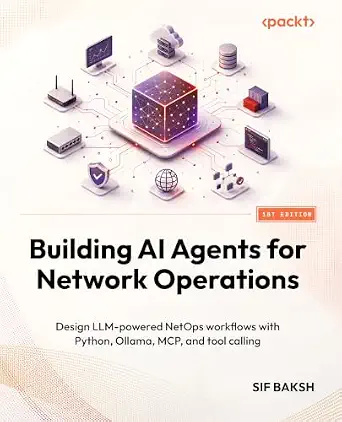 Building AI Agents for Network OperationsView on Amazon →
 - 3
 50 AI Workflows for Engineers: From Debugging to System Design, Code Review &…View on Amazon →
 - 4
 The AI-Powered Accountant: How to Use ChatGPT, AI Tools and Smart Automation…View on Amazon →
 - 5
 OpenCode Custom Workflows: Building Intelligent Automation with AI AgentsView on Amazon →
 - 6
 The No-BS Guide to AI Agents & Automation: Build AI Workflows, Automate Your…View on Amazon →
 - 7
 Practical AI Workflow Automation: A Beginner-Friendly Guide to No-Code ToolsView on Amazon →
 - 8
 Generative AI Workflows and Practical Automation: Mastering ChatGPT, Claude,…View on Amazon →
 - 9
 AI Workflow Automation for BloggersView on Amazon →
 - 10
 AI Workflow Mastery: 100 Practical AI Workflows to Save Hours Every Week, Aut…View on Amazon →
 - 11
 Claude Cowork Automation: Build AI-Powered Workflows, Delegate Repetitive Tas…View on Amazon →
 - 12
 Claude AI Automation & Monetization: Build AI-Powered Systems, Automate Workf…View on Amazon →
 - 13
 Google AI Studio Guide 2026: Build Intelligent AI Workflows and Scalable Auto…View on Amazon →
 - 14
 AI for Workflow Automation (Makola Practical AI Mastery, Book 9)View on Amazon →
 - 15
 Claude Mastery: Claude AI for Beginners – Build Prompts, Skills, and AI Agent…View on Amazon →
Why 2026’s AI Tools Are Game-Changers for Businesses
The adoption of these 15 AI workflow automation tools in 2026 signifies a pivotal shift toward smarter, more efficient business processes. By automating routine tasks, companies can reallocate human resources to strategic initiatives, reduce operational costs, and accelerate decision-making. The ability to integrate with a broad range of applications ensures these tools can fit into diverse tech stacks, making digital transformation more accessible and scalable. For organizations seeking competitive advantages, leveraging advanced automation is no longer optional but essential for staying ahead in rapidly evolving markets.
The 2026 Automation Market Landscape and Recent Developments
Over the past few years, automation tools have transitioned from niche solutions to mainstream business essentials. The 2026 market is characterized by rapid innovation, with new entries offering AI-enhanced features such as natural language processing and predictive analytics. Major players like Zapier, Microsoft Power Automate, and newly emerging platforms are expanding their capabilities. The trend toward no-code and low-code platforms continues, driven by demand from non-technical users. Prior to 2026, the focus was primarily on task automation; now, the emphasis is shifting toward intelligent workflows that adapt and learn over time.
Recent updates include enhanced security features, broader integration options, and AI-driven insights that enable proactive decision-making. Industry analysts predict that these tools will increasingly support complex, multi-step processes across various sectors, including finance, healthcare, and e-commerce. Despite this progress, challenges such as data privacy, platform interoperability, and user training remain areas of concern that are actively being addressed.
Unresolved Questions About 2026 AI Automation Tools
While many tools are gaining traction, it is still unclear how well they will perform in highly regulated industries or with extremely sensitive data. The long-term scalability of some platforms remains to be tested as user demands grow and workflows become more complex. Additionally, the pace of innovation raises questions about future compatibility and the potential need for frequent platform upgrades. Market consolidation and vendor stability are also areas to monitor, as some newer entrants may face challenges maintaining support and development.
Upcoming Developments and Future Outlook for AI Automation
Expect ongoing updates to existing tools, with features such as AI-driven predictive analytics, enhanced security measures, and deeper integrations across platforms. Industry analysts forecast that more vendors will adopt open standards to improve interoperability, reducing fragmentation. Businesses should prepare for increased adoption of automation in sectors like healthcare and finance, where regulatory compliance will be critical. In the near term, user training and best practices for managing complex workflows will be vital to maximize benefits and minimize risks.
Key Questions
Are these AI workflow automation tools suitable for small businesses?
Yes, many tools like AutoFlow Pro and AI TaskMaster are designed with scalability in mind, offering features that suit small to medium-sized businesses. They often provide tiered pricing and user-friendly interfaces that do not require technical expertise.
Can these tools handle sensitive or regulated data?
Most reputable platforms implement security measures such as encryption, access controls, and compliance with standards like GDPR and SOC 2. For highly sensitive data, organizations should verify each platform’s security policies and consider on-premises deployment options if necessary.
Will adopting these tools require extensive technical skills?
Many tools are designed for non-technical users, featuring drag-and-drop interfaces and pre-built templates. However, advanced customization or complex integrations might require some technical knowledge or support from IT specialists.
How will these tools evolve in the next few years?
Future developments are expected to include more AI-powered features like predictive analytics, smarter decision-making, and broader integration capabilities. Vendor competition will likely drive innovation, improving usability and security further.
Source: ThorstenMeyerAI.com
Fall Picks
fall essentials
As an affiliate, we earn on qualifying purchases.