🔍 Read the full analysis: What We Changed After Our AI Horror-Comedy’s First Version Fell Flat on ThorstenMeyerAI.com

Get the latest gadgets delivered free with Prime
- Fast, free delivery on millions of items
- Prime Video, Amazon Music and more included
- Member-only deals all year
TL;DR
Hollow House, a 97-second AI-generated horror-comedy, was completed overnight after its creator rejected a visually polished first cut as boring. The account describes three versions, with the final approach using faster editing and one video model supplied with references for the full cast.
Thorsten Meyer says he rebuilt his 97-second AI horror-comedy Hollow House after deciding its visually polished first cut was boring and amateurish. In a behind-the-scenes account published October 28, Meyer describes three versions made overnight, with the final cut using faster editing and a video model given references for the entire cast.
The short follows a real ghost joining the staff of an extreme haunted attraction, where employees treat the supernatural problem like a workplace issue. In Meyer’s account, a guest says the attraction’s safe word, “cotton candy,” but the scaring does not stop. The shift lead asks whether the ghost signed a waiver, and a popcorn seller is pulled into an attempted exorcism. The characters, voices and sets were AI-generated.
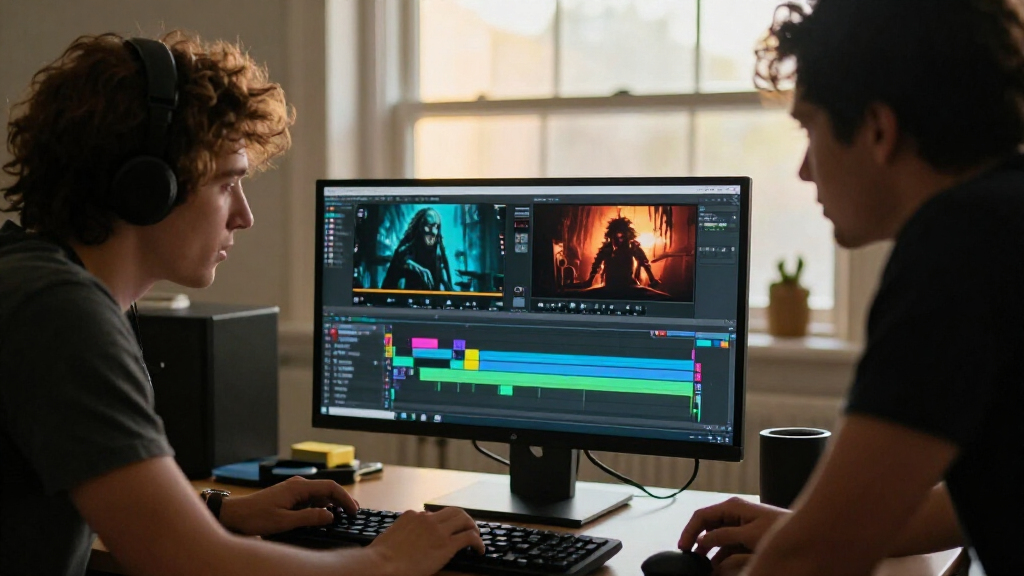
Meyer says the first version consisted of 20 shots and ran 2 minutes 15 seconds. He generated character reference images, used them to create shot frames, then animated those frames with Google’s Veo 3.1 fast mode. The result maintained the intended look, he writes, but its cuts averaged 5.6 seconds. By his count, the short that inspired the project averaged about 1.8 seconds between cuts, leading him to conclude that pacing, not image quality, was the main problem.
The second version used 66 fast cuts and ran 2 minutes 21 seconds. Meyer says the final version was made as three roughly 30-second segments using a single model supplied with references for the cast, and runs 1:37. Across the three versions, he reports spending 2,220 Higgsfield credits, worth about $95 at his plan’s price, and around 2,100 ElevenLabs characters for music and sound effects. These are figures from Meyer’s account, not independently verified production records.
Behind the cut · October 28, 2026
What We Changed After Our AI Horror-Comedy’s First Version Fell Flat
Hollow House took three overnight versions to find its rhythm. Its creator says the breakthrough came from faster editing, full-cast references, and treating the first cut as a draft to reject.
Three cuts. One editorial diagnosis.
The first version had consistent faces, costumes, and lighting. Meyer says the jokes still felt slow, so the next pass changed the rhythm before the final workflow shortened the film.
Good images, weak rhythm
Twenty planned shots were generated from character references and animated with Veo 3.1 fast mode. Meyer judged the result boring and amateurish.
More pace, still longer
The second version pushed the edit to 66 fast cuts. It ran longer than the first, showing that cut count alone did not make a shorter film.
A tighter, reference-led build
Three roughly 30-second segments were made with one video model supplied with references for the entire cast. Meyer completed the color grade.
From character sheets to a finished short
Human decisions shaped the process: choosing references, rejecting a cut, revising prompts, checking dialogue, and finishing the grade.
Build the cast
Eight character reference images helped preserve features and costumes across generated frames.
Generate the first cut
Twenty planned shots were animated with Veo 3.1; the first cut averaged 5.6 seconds per shot.
Repair and re-edit
Prompts, still poses, and sound effects worked around failed actions and garbled dialogue.
Assemble the final
Three short segments used one model with full-cast references; Meyer finished the color grade.
Image quality wasn’t the pacing fix.
Meyer compared the first cut’s 5.6-second average shot length with about 1.8 seconds between cuts in the short that inspired the project. His conclusion: the jokes needed a quicker rhythm.
The first two bars compare reported average intervals between cuts. The final runtime is shown on the same visual track only as a separate production metric, not on a shared time scale.
Generated footage still needed human work.
The account describes specific failures and workarounds, illustrating where iteration and editorial judgment remained part of the workflow.
Listen, then verify
A shouted “HEY!” was spoken as the letters “H-E-Y.” Meyer says he compared Whisper transcripts against the script to spot extra or garbled words.
Change the prompt—or imply it
A full head turn did not work as intended, and an attempted lift was blocked. He reworded the lift as floating and suggested the turn with a still pose and sound effect.
A ghost becomes a workplace issue
In an extreme haunted attraction, a guest says “cotton candy” as a safe word, but the scaring continues. The shift lead asks if the ghost signed a waiver.
References anchor the look
Character sheets were used to keep features and costumes consistent. The final model’s name and version were not specified in the account.
A production account, not an audience study.
The figures and conclusions below are reported by the creator. The account does not provide independent evaluation of the film’s performance.
Meyer reports 2,220 Higgsfield credits, valued at about $95 under his plan, plus roughly 2,100 ElevenLabs characters for music and sound effects. This is not a full cost accounting.
No retention figures, audience reactions, or independent evaluations are reported. The claim that the third version worked is Meyer’s assessment.
The story structure drew inspiration from a short shared on X, but the source is not identified. Meyer says the script, characters, and jokes are original.
A 97-second ghost story with a workplace twist.
Thorsten Meyer’s behind-the-scenes account describes an overnight rebuild from a polished but slow first cut to a shorter final version.
What is Hollow House?
An AI-generated horror-comedy about a real ghost joining the staff of an extreme haunted attraction.
Why redo the first version?
Meyer says it looked good but felt boring. Its 20 shots averaged 5.6 seconds, which he judged too slow for the comedy.
How many versions were made?
Three: a 2:15 cut with 20 shots, a 2:21 version with 66 cuts, and a final 1:37 version made in three segments with cast references.
What did the credits cost?
The creator estimates about $95 for 2,220 Higgsfield credits under his plan, plus around 2,100 ElevenLabs characters. The figure is not a complete production-cost total.
Why the First Cut Needed Rebuilding
The account illustrates a practical distinction in AI-assisted filmmaking: generating attractive images does not by itself produce a working comedy short. Meyer says the first cut had consistent faces, costumes and lighting, but its slow rhythm and largely static camera weakened the jokes. The revision was an editorial decision as much as a technical one.
For readers following generative video, the production offers a specific example of where human judgment remained central. Meyer chose to reject the initial result, change how the project was assembled and finish the color grade. He also reports problems with dialogue and action that required retakes or workarounds. The account does not establish how the same workflow would perform for other filmmakers or projects, but it shows the kinds of iteration one creator says were needed here.
Products Worth Considering

LG 34GX90SA-W 34-inch Ultragear WQHD OLED Curved Gaming Monitor

Samsung 27 Odyssey OLED G5 (G50SF) QHD QD-OLED Gaming Monitor

Samsung 32-Inch Odyssey OLED G8 (G80SH) 4K Gaming Monitor
As an affiliate, we earn on qualifying purchases.
From Character Sheets to Three Cuts
Before making video clips, Meyer created eight character reference images with Google’s Nano Banana 2 image model through the Higgsfield platform. He says the sheets helped keep features and costumes consistent across generated frames, addressing a common production challenge in which a character’s appearance can change between shots.
For the first cut, Meyer paired those references with 20 planned shots and animated each frame using Veo 3.1. He says the model also generated speech and sound with the video. The workflow exposed limits: a shouted “HEY!” was spoken as the letters “H-E-Y,” a requested full head turn did not work as intended, and an attempt to show a guest being lifted was blocked. Meyer says he reworded that action as floating, and used a still pose and sound effect to suggest the head turn instead.
He also says he checked generated dialogue with Whisper, OpenAI’s speech-recognition model, comparing transcripts with the script to catch extra or garbled words. The source account says the story structure was inspired by an AI horror-comedy short shared on X, while Meyer says Hollow House’s script, characters and jokes are original. The source does not identify the referenced short.
“The first version looked great, and when I watched it I called it what it was: terribly boring and amateurish.”
— Thorsten Meyer, creator of Hollow House
What the Production Account Leaves Open
The account does not provide a detailed comparison of all three cuts, such as audience reactions, retention figures or independent evaluations of the final version. Meyer’s conclusion that the third version worked is his own assessment; no outside response or screening results are reported. The claimed $95 cost reflects his stated credit total and subscription-plan pricing, and does not include a full accounting of labor or other expenses.
Some tool behavior is also described from Meyer’s experience rather than documented through technical testing. The account does not specify the name or version of the single model used for the final three segments, beyond saying it had references for the full cast. It also does not identify the short that inspired the structure, so the extent of that influence cannot be assessed from the supplied material.
The Final Cut and Production Details
Meyer’s October 28 account presents Hollow House as a completed short, with a runtime of 1:37 and a linked video. It also includes behind-the-scenes materials such as character sheets, start frames, failed attempts and a contact sheet of the final cut. The source does not announce another version, a release schedule beyond the linked film, or plans for a longer production.
Any further assessment will depend on the finished short and additional information from Meyer, including the final model’s identity and how audiences respond. For now, the documented development is the move from a 20-shot cut that Meyer judged too slow to a shorter, faster-edited final version.
Key Questions
What is Hollow House?
Hollow House is a 1:37 AI-generated horror-comedy about a ghost joining the staff of an extreme haunted attraction.
Why did Meyer redo the first version?
Meyer says the first cut looked good but felt boring and amateurish. Its 20 shots averaged 5.6 seconds per cut, which he judged too slow for the comedy.
How many versions did the film have?
Meyer describes three versions: a 20-shot, 2:15 cut; a 66-cut, 2:21 version; and the final 1:37 cut made in three segments with cast references supplied to one model.
How much did the AI generation cost?
Meyer reports spending 2,220 Higgsfield credits, which he valued at about $95 under his plan, plus roughly 2,100 ElevenLabs characters for music and sound effects. The figure is his estimate and is not a complete production-cost accounting.
Source: ThorstenMeyerAI.com