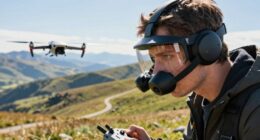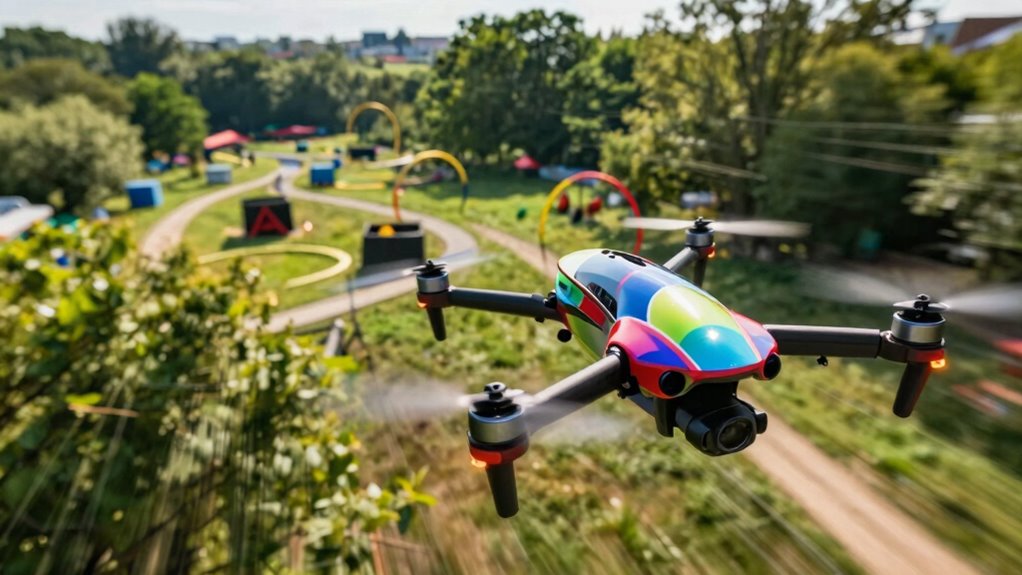
FPV drone flying is all about speed, agility, and acrobatic control, giving you an immersive, adrenaline-filled experience. Unlike camera drones, which focus on steady, cinematic footage with stable flight, FPV drones prioritize rapid maneuvers and precision at high speeds. They require skill to handle tricky movements, and stability is less of a concern. If you want to explore what truly sets FPV apart and how it differs from camera drones, there’s more to discover ahead.
Key Takeaways
- FPV flying emphasizes speed, agility, and immersive, first-person perspective experiences, unlike the stability-focused camera drone flying.
- FPV drones are lightweight and highly maneuverable, sacrificing stability for rapid, precise movements.
- FPV pilots require advanced skills to control high-speed, dynamic maneuvers, whereas camera drones are more user-friendly.
- FPV flying prioritizes adrenaline and quick reactions over cinematic stability and high-quality visuals.
- The core technological focus in FPV is on agility and responsiveness, while camera drones focus on stability and smooth footage.

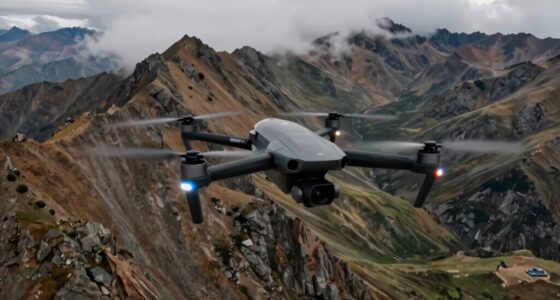
When flying a camera drone, you tend to focus on maintaining a steady hover or a smooth glide, capturing cinematic shots with minimal effort. Their design often incorporates larger, more stable frames and sophisticated sensors that help keep the drone steady even in less-than-ideal conditions. If your goal is to produce professional-quality aerial videos or photographs, the emphasis on flight stability ensures your footage is clear, crisp, and free of unwanted motion. Additionally, aerial stability is a key factor that distinguishes camera drones, making them more suitable for cinematic applications. While FPV drones offer unmatched aerial agility, they often sacrifice some degree of flight stability due to their lightweight, nimble frames and high-speed capabilities. They require a skilled pilot to maintain control, especially in challenging conditions. Conversely, camera drones are generally easier to operate for capturing steady footage, making them more accessible to beginners and hobbyists looking for high-quality, stable aerial shots. The design considerations of camera drones are often geared toward flight stability, which helps achieve smooth, professional results even for less experienced operators. This focus on stability is rooted in the aerodynamic principles that enable smooth and controlled flight, further distinguishing their purpose from that of FPV drones. Moreover, advancements in sensor technology have significantly contributed to the enhanced stability and quality of footage that modern camera drones can produce.
Ultimately, what makes FPV so different from camera drone flying is the experience itself. FPV flying is about speed, precision, and feeling immersed in the flight, while camera drones focus on delivering stable, professional footage with less emphasis on rapid maneuvering. Knowing these core differences helps you choose the right drone based on whether you crave adrenaline-fueled racing or smooth, cinematic captures.

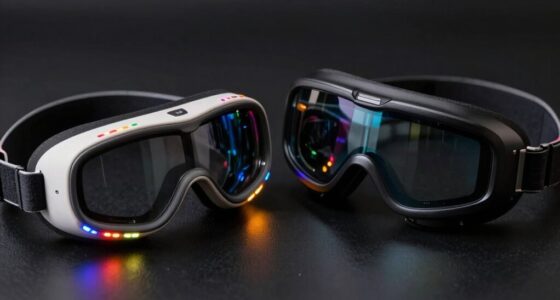
APEX FPV Drone Kit,FPV Goggles,First-person view drone,FPV Racing Drone for Beginners,Low-Latency 5.8G Transmission, easy control,Drop-Resistant,VR70-2.0
This is a 5.8G analog FPV goggle built for beginner freestyle, featuring near-zero latency for responsive flight control….
As an affiliate, we earn on qualifying purchases.
As an affiliate, we earn on qualifying purchases.
Frequently Asked Questions
What Skills Are Essential for FPV Drone Flying?
To excel in FPV drone flying, you need strong pilot precision and aerial agility. You should develop quick reflexes to react to rapid changes in your drone’s environment. Practicing smooth, accurate controls helps you navigate tight spaces and perform complex maneuvers. Building a sense of spatial awareness and mastering the basics of drone setup will boost your flying skills, making your experience more immersive and enjoyable.
How Expensive Is Setting up an FPV Drone?
Setting up an FPV drone typically costs between $300 and $1,000, depending on your goals. An interesting statistic is that professional aerial cinematographers often spend over $2,000 on high-end equipment. For racing drone techniques, you’ll need a solid frame, camera, and transmitter, while aerial cinematography demands even more investment in stabilization gear. Your budget influences performance, but starting simple helps you learn and grow your skills efficiently.
Can Beginners Safely Learn FPV Flying?
Yes, beginners can safely learn FPV flying if you follow safety protocols and use proper training resources. Start with beginner-friendly simulators to build your skills and always fly in open, obstacle-free areas. Invest time in understanding safety guidelines, such as avoiding crowds and maintaining line-of-sight, even if you’re practicing FPV. With patience and proper guidance, you’ll gain confidence and enjoy flying safely.
What Legal Restrictions Exist for FPV Drone Pilots?
Imagine flying through a legal maze where each turn represents FPV regulations you must navigate carefully. You’re responsible for understanding local laws, including restrictions on altitude and no-fly zones. Liability insurance acts as your shield against unforeseen mishaps. You need permits for certain areas and must respect privacy laws. Staying informed and compliant keeps your flight safe and legal, allowing you to enjoy FPV’s thrill without risking penalties or fines.
How Long Does It Take to Master FPV Flying?
It typically takes several months to a year to master FPV flying, depending on your dedication. You’ll develop aerial cinematography skills and racing agility as you practice. Expect to spend time learning to control your drone smoothly, interpret live video feeds, and navigate complex environments. Consistent practice helps you improve your reflexes and precision, turning you into a confident pilot capable of capturing stunning footage and racing with agility.
high speed FPV drone
As an affiliate, we earn on qualifying purchases.
As an affiliate, we earn on qualifying purchases.
Conclusion
So, when you compare FPV drones to camera drones, you see they’re built for different experiences. FPV drones give you that immersive, first-person view, making every flight feel like you’re right there in the action. Did you know that the FPV drone market is expected to grow at a compound annual rate of over 20% through 2027? Whether you’re chasing adrenaline or capturing stunning footage, understanding these differences helps you choose the right drone for your passion.

CADDXFPV Walksnail Avatar HD FPV Goggles X – 1080P/100FPS, 50° FOV, OLED
Immersive 1080P Ultra-Wide FPV Experience: Dual 1920×1080 HD displays deliver sharp details, vivid colors, and smooth visuals. The…
As an affiliate, we earn on qualifying purchases.
As an affiliate, we earn on qualifying purchases.

DJI Mini 4K Camera Drone Combo, Drone with 4K UHD Camera for Adults, Under 249 g, 3-Axis Gimbal Stabilization, 10km Video Transmission, Auto Return, 2 Batteries for 62-Min Max Flight Time, QuickShots
No Registration Needed – Under 249 g, this drone with camera for adults 4K does not require FAA…
As an affiliate, we earn on qualifying purchases.
As an affiliate, we earn on qualifying purchases.