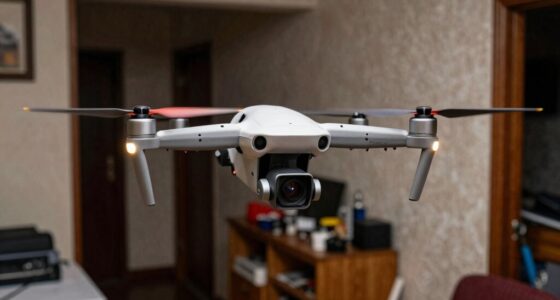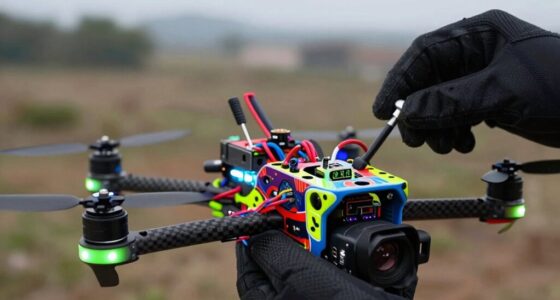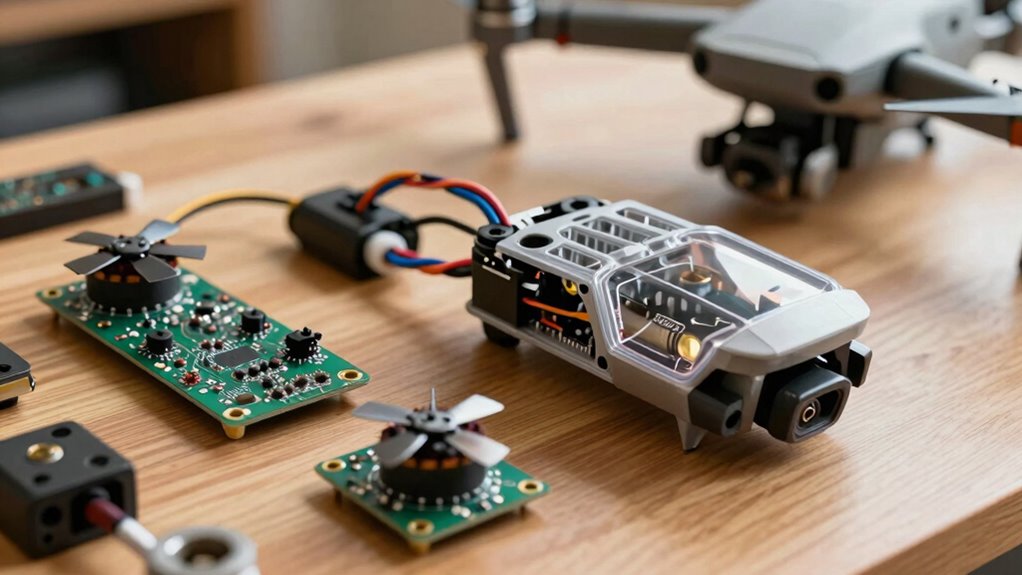

To start understanding drone components without feeling overwhelmed, focus on the basics like batteries, motors, and frame design. Learn how the battery’s voltage and capacity affect flight time, and see how motors and propellers work together for lift and speed. Gradually build your knowledge by exploring how these parts connect and impact performance. Keep it simple at first, and as you progress, you’ll uncover more about how everything fits together seamlessly.
Key Takeaways
- Begin with basic components like batteries and motors before exploring advanced parts.
- Use simple diagrams or videos to visualize how each component functions together.
- Focus on understanding one component at a time to avoid information overload.
- Relate components to real-world drone operation to see their practical roles.
- Gradually expand your knowledge as confidence and understanding grow.
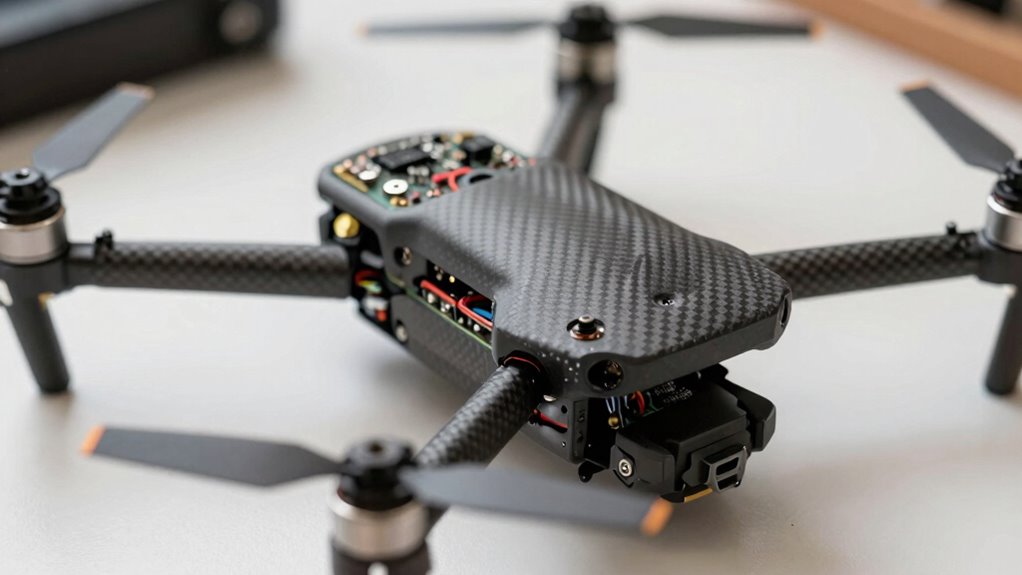
If you’re new to drones, understanding their components can seem overwhelming at first, but breaking it down into basic parts makes it manageable. The key is to start with the fundamental elements and gradually build your knowledge. One of the most important components to understand is the power system, which includes the battery and motors. When examining the battery, pay attention to its specifications. These include voltage, capacity (measured in milliamp-hours or mAh), and discharge rate (C rating). Higher voltage generally means more power and longer flight times, but it also requires compatible motors and electronic speed controllers (ESCs). Capacity determines how long your drone can stay in the air before needing a recharge, so a larger mAh rating usually means longer flights. The discharge rate indicates how much power the battery can deliver safely; exceeding this can damage the battery or reduce its lifespan. Understanding how battery specifications impact drone performance is crucial when selecting components. Next, focus on the motors. There are different motor types used in drones, mainly brushed and brushless motors. Brushed motors are simpler and cheaper but less efficient, often found in toy-grade drones. Brushless motors, on the other hand, are more durable, produce less heat, and offer better performance, making them the preferred choice for hobbyist and professional drones. Understanding motor specifications, such as KV rating (which indicates the RPM per volt), helps you grasp how fast the motor will spin at a given voltage. A higher KV means a faster spinning motor, which can influence the drone’s agility and speed. Pairing the right motor type with appropriate battery specifications ensures optimal performance and flight time. Additionally, understanding electronic components like the ESCs and flight controllers helps you see how the drone’s components work together to control movement and stability. As you familiarize yourself with these basics, you’ll also want to learn about the drone frame design, because it affects flight stability and durability. Recognizing how component compatibility influences overall drone performance helps you make better choices when assembling or upgrading your drone. Once you get familiar with these basics, you can start exploring how the drone’s frame, propellers, and electronic components work together. The frame supports all parts and influences flight stability, while propellers generate lift and thrust. The size and pitch of the propellers, combined with motor KV ratings, determine how efficiently your drone flies. As you learn, you’ll notice how each component affects overall flight performance. Keep it simple at first—focus on understanding how the battery specifications and motor types influence your drone’s power, speed, and flight duration. Over time, you’ll see how these parts interconnect and contribute to the drone’s behavior. With patience and curiosity, you’ll gradually develop a solid grasp of drone components without feeling overwhelmed.
As an affiliate, we earn on qualifying purchases.
Frequently Asked Questions
What Are the Most Essential Drone Components for Beginners?
As a beginner, focus on the propeller types and battery specifications, since they’re essential for drone performance. Propellers come in different sizes and materials, affecting flight stability and efficiency, so choose accordingly. Battery specs, like voltage and capacity, determine flight time and power. Start with a simple drone that highlights these components, and you’ll gradually understand how they influence your flying experience without feeling overwhelmed.
How Do Drone Parts Interact During Flight?
During flight, drone parts work together seamlessly: propeller mechanics generate lift and control movement, while flight sensors constantly monitor altitude, orientation, and position. The flight controller processes sensor data, adjusts motor speeds, and coordinates propeller actions to maintain stability, direction, and altitude. You can think of it as a synchronized dance—propellers spin, sensors inform, and the flight controller orchestrates each move to keep your drone steady and responsive.
Can I Build a Drone Without Technical Experience?
Yes, you can build a drone without technical experience by starting with DIY assembly kits designed for beginners. These kits often come with step-by-step instructions, making the process manageable. You might also explore basic software programming to customize your drone’s flight features. Take it slow, learn as you go, and gradually build your skills—before long, you’ll be confidently assembling and programming your own drone.
What Safety Precautions Should I Take When Learning About Drones?
When learning about drones, you should prioritize safety by wearing appropriate safety gear like goggles and gloves. Always familiarize yourself with emergency procedures, such as how to safely land or shut down your drone if something goes wrong. Keep a safe distance from people and obstacles, and practice in open areas. Staying cautious and prepared helps prevent accidents and builds your confidence as you learn about drone components safely.
Are There Any Affordable Kits for Starting Drone Exploration?
You can find affordable drone kits perfect for beginners, like the Holy Stone HS210 or DJI Tello, which are great for exploring drone photography and flight stability. Think of these kits as training wheels—they help you learn the basics without feeling overwhelmed. I started with a similar kit, and it made understanding how each component influences flight easy and fun, giving you confidence to take on more advanced drones later.
As an affiliate, we earn on qualifying purchases.
Conclusion
Getting familiar with drone components might seem like a tall order at first, but take it one step at a time, and you’ll find the journey more like a friendly stroll than a mountain climb. Remember, every expert was once a beginner, so don’t rush the process. Embrace the learning curve with patience and curiosity, and soon enough, you’ll be steering your drone’s ins and outs with confidence and ease. Happy flying!
drone electronic speed controllers
As an affiliate, we earn on qualifying purchases.
As an affiliate, we earn on qualifying purchases.
As an affiliate, we earn on qualifying purchases.