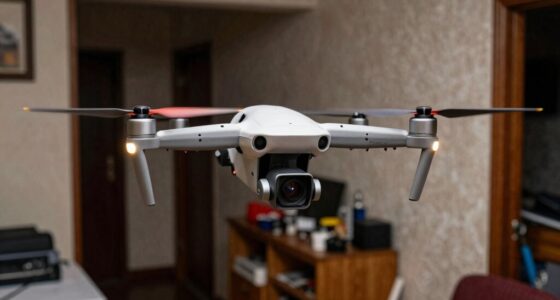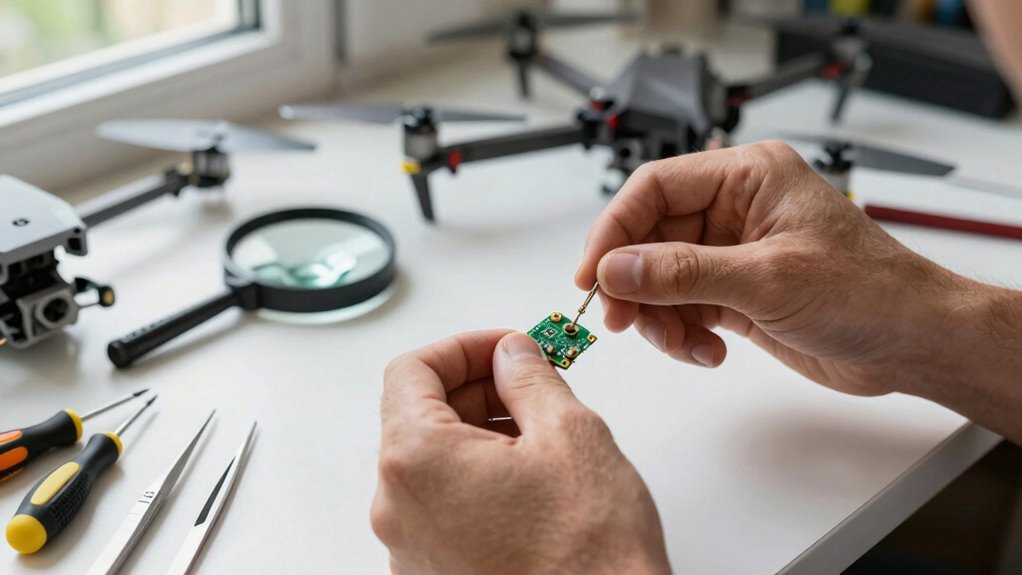

To learn drone repair basics one skill at a time, start by focusing on understanding core components like motors, batteries, and flight controllers. Practice safe disassembly, use essential tools, and diagnose common issues step by step. Building your skills gradually helps you troubleshoot effectively and prevents mistakes. As you gain confidence with each task, you’ll strengthen your overall repair abilities. Keep exploring each area, and you’ll uncover even more tips to improve your drone maintenance expertise.
Open a free Amazon Business account
Business pricing, bulk buying and tax-exempt orders.
As an affiliate, we earn on qualifying purchases.
Key Takeaways
- Start with understanding core components like motors, propellers, and batteries to build a solid repair foundation.
- Practice using essential tools (multimeter, screwdrivers) through disassembly and reassembly exercises.
- Learn troubleshooting techniques for common issues by diagnosing electronic components and wiring.
- Incorporate regular preventative maintenance to improve skills and drone longevity.
- Combine hardware knowledge with software updates to develop comprehensive repair and diagnosis abilities.
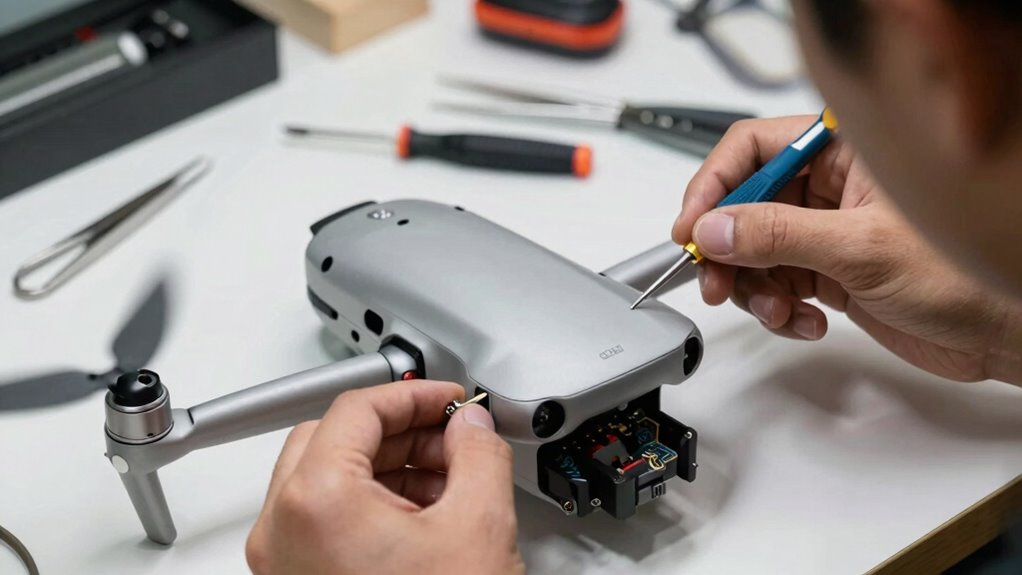
Learning drone repair can seem overwhelming at first, but breaking it down into manageable skills makes the process much easier. When you start, focus on understanding the core components of your drone—motors, propellers, batteries, and the flight controller. Once you grasp how these parts work together, troubleshooting becomes much less intimidating. You’ll learn how to diagnose common issues, like motor failure or unresponsive controls, which are often the root of many repair problems.
Start with core components—motors, propellers, batteries, flight controller—and build your repair skills gradually.
As you progress, it’s helpful to develop a basic toolkit containing screwdrivers, pliers, and a multimeter. These tools will become your go-to for inspecting wiring connections or testing circuit continuity. Learning how to disassemble and reassemble your drone safely is an essential skill that boosts your confidence and guarantees you won’t damage delicate parts during repairs. Over time, it’s beneficial to recognize patterns in what causes failures, helping you anticipate and prevent problems before they happen. Understanding electronic components can further refine your diagnostic skills and improve your troubleshooting accuracy.
Incorporating knowledge of aerial photography and flight planning into your repair journey makes your skills even more valuable. If you’re into aerial photography, you’ll want your drone to fly smoothly and reliably, so understanding how repair relates to flight performance is key. For example, a misaligned gimbal or a faulty camera connection can ruin your shots, so knowing how to troubleshoot these specific issues will keep your photography sessions on track. Similarly, when you’re involved in flight planning, you depend on your drone’s reliability for safe and successful flights. This means learning how to check and maintain your drone’s sensors and GPS modules is essential to avoid crashes or lost flights.
To truly master drone repair, you should also familiarize yourself with the software side—updating firmware and calibrating sensors. These tasks are often overlooked but are indispensable for optimal performance, especially during aerial photography sessions or complex flight plans. Additionally, understanding drone electronics can help you better diagnose and address hardware issues. Gaining a solid understanding of electronic components further enhances your ability to troubleshoot effectively. Practicing regular preventative maintenance like cleaning motors or replacing worn-out parts can significantly extend your drone’s lifespan and improve overall flight quality. As you gain experience, you’ll be better equipped to perform preventative maintenance, like cleaning motors or replacing worn-out parts, which extends your drone’s lifespan and enhances your flying experience.
As an affiliate, we earn on qualifying purchases.
Frequently Asked Questions
How Long Does It Typically Take to Become Proficient in Drone Repair?
It usually takes a few months of consistent practice to become proficient in drone repair. Your drone repair timeline depends on how much time you dedicate each week and your prior technical skills. By focusing on key areas like motors, electronics, and firmware, you’ll develop proficiency faster. Remember, steady practice and hands-on experience are essential for effective proficiency development, making you confident in troubleshooting and fixing various drone issues efficiently.
Are There Certification Programs for Professional Drone Repair Technicians?
Yes, there are drone certification and repair certification programs available for aspiring professional drone repair technicians. These programs validate your skills, improve your credibility, and can help you secure better job opportunities. You might find industry-recognized certifications from organizations like the FAA or specialized training providers. Earning these certifications demonstrates your expertise, builds confidence, and sets you apart in the competitive drone repair industry.
What Safety Precautions Should I Follow During Drone Repair?
When repairing a drone, safety isn’t optional—it’s essential. You should always handle batteries carefully, avoiding punctures or short circuits, and never expose them to heat. Keep tools well-maintained and organized to prevent accidents. Before starting, disconnect power sources, wear safety glasses, and work in a clutter-free area. These precautions protect you from shocks, fires, and injuries, ensuring your repair process stays safe and efficient from start to finish.
Can I Repair Drones Without Prior Technical Experience?
Yes, you can repair drones without prior technical experience, but start with simple tasks like remote troubleshooting and battery replacement. Follow online tutorials and guides to understand the basics, and always handle components carefully. Practice patience and take your time. As you gain confidence, you can gradually move on to more complex repairs. Remember, safety first—disconnect batteries and use proper tools to avoid damage or injury.
What Tools Are Essential for Beginner Drone Repair?
You’ll need essential tools like small screwdrivers, tweezers, and a soldering iron for beginner drone repair. Focus on battery maintenance tools, such as a multimeter, to check voltage and health. For propeller replacement, keep spare propellers and pliers handy. These tools help you safely handle delicate parts, ensuring your drone stays in top shape. Start with these basics, and you’ll build confidence with each repair.
multimeter for drone electronics
As an affiliate, we earn on qualifying purchases.
As an affiliate, we earn on qualifying purchases.
Conclusion
By tackling one repair skill at a time, you’ll build a sturdy foundation, like stacking blocks into a soaring tower of knowledge. Think of each small victory as a stepping stone, guiding your drone from a simple hummingbird to a masterful flyer. Keep your curiosity alive, and don’t rush—each skill you conquer lights the way toward confident, capable repairs. Soon, you’ll be the pilot who makes drones dance at your command, one skill at a time.
drone disassembly and reassembly tools
As an affiliate, we earn on qualifying purchases.
As an affiliate, we earn on qualifying purchases.
As an affiliate, we earn on qualifying purchases.
Evergreen bestsellers Picks
bestsellers
As an affiliate, we earn on qualifying purchases.