FPV drones give you a first-person flying experience by streaming live video from an onboard camera directly to goggles or screens. Unlike regular drones focused on smooth, cinematic footage, FPV models are all about speed, agility, and dynamic maneuvers, ideal for racing and freestyle tricks. They’re manually controlled without autopilot, relying on your skills for navigation. If you want to learn more about how these drones work and their capabilities, there’s much more to discover.
Key Takeaways
- FPV drones transmit real-time video from an onboard camera, providing an immersive first-person view for pilots.
- They are highly agile, fast, and manually controlled, unlike traditional drones that prioritize stability and cinematic footage.
- FPV drones excel in racing, freestyle tricks, and dynamic applications, whereas regular drones focus on steady, planned camera shots.
- Advanced tech like low-latency digital HD transmission and AI obstacle avoidance enhances safety and performance.
- Operating FPV drones requires specific skills, training, and awareness of regulations, differing significantly from the easier control of traditional drones.
Understanding the Core Concept of FPV Drones
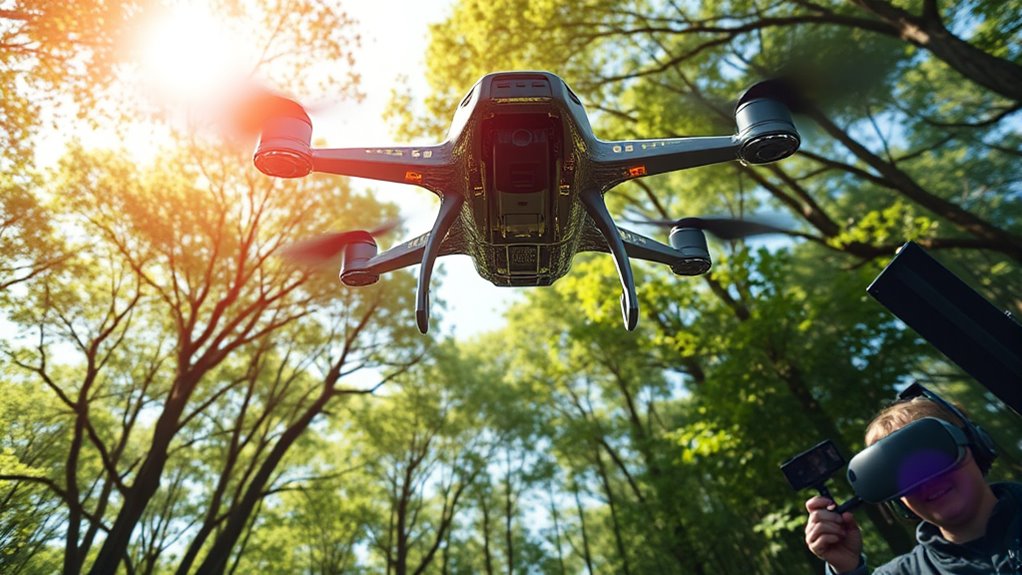
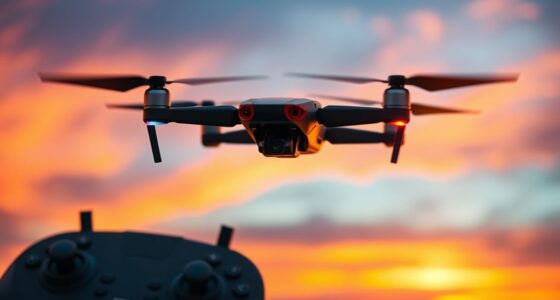
Have you ever wondered what makes FPV drones so unique? It’s the way you see the world through the drone’s eyes, thanks to the live video feed from its onboard camera. This First-Person View allows you to control the drone with incredible precision, as if you’re inside it. Unlike traditional drones, which you fly by watching them externally or through a smartphone, FPV drones transmit real-time video directly to your goggles or screens. This immersive perspective makes steering through tight spaces, performing daring maneuvers, or capturing dynamic footage possible. The core idea is giving you an immediate, inside-the-action experience, making FPV drones ideal for racing, freestyle flying, and creative filming. It’s all about a pilot’s direct connection to the drone’s point of view. Additionally, understanding the importance of travel safety and equipment can help ensure your FPV drone setup remains secure during transport and use. Moreover, the integration of European cloud solutions can enhance the security and reliability of your FPV streaming and data management. Furthermore, paying attention to signal interference mitigation is crucial for maintaining a stable connection during flight. Incorporating advanced signal technologies can significantly improve your flying experience by reducing potential disruptions.
Key Components and Technical Systems of FPV Drones

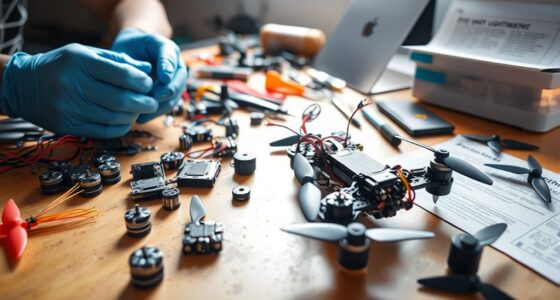
At the heart of an FPV drone are its key components and technical systems that enable immersive flying experience. The camera captures live footage, transmitting it via a video transmitter (VTx) to your goggles or screen. The control system includes motors, Electronic Speed Controllers (ESC), and propellers, all optimized for agility. Power comes from lightweight batteries that deliver high performance. Separately, telemetry and video signals maintain responsiveness and clarity. Your flight relies on a flight controller that interprets your inputs, while antennas ensure strong signal transmission. These systems work together seamlessly, providing the instant feedback and precision needed for high-speed maneuvers.
| Component | Purpose | Emotion/Impact |
|---|---|---|
| – | – | – |
| FPV Camera | Captures real-time footage | Immersive experience |
| Video Transmitter | Sends video feed | Instant connection |
| Motors & ESCs | Power flight | Agility and speed |
| Batteries | Supply energy | Endless possibilities |
Comparing FPV Drones to Traditional Camera Drones

You’ll notice that FPV drones are driven by manual control and real-time video, giving you agility and speed that traditional camera drones can’t match. While FPV pilots focus on dynamic maneuvers and quick navigation, regular drones prioritize stability for smooth footage. Understanding these differences helps you choose the right drone for your specific needs and applications.
Control and Navigation Differences
Unlike traditional camera drones that often rely on GPS and autonomous flight modes, FPV drones are primarily controlled manually, with pilots guiding them through a live video feed. You steer the drone directly, using a remote controller that translates your movements into precise maneuvers. There’s no autopilot or waypoint navigation, so your skill directly affects the flight path. Navigation depends on your ability to interpret the real-time video, making it a more immersive and hands-on experience. You control speed, direction, and altitude in real time, often performing rapid turns or flips. Because of this manual control, FPV flying demands quick reflexes and spatial awareness, setting it apart from the more stable, GPS-guided operation of traditional camera drones.
Flight Dynamics and Speed
FPV drones are built for speed and agility, allowing pilots to perform rapid maneuvers that are impossible with traditional camera drones. You’ll notice they can reach speeds over 120 mph, thanks to lightweight frames, powerful motors, and optimized propellers. Unlike regular drones, which prioritize stability and smooth footage, FPV drones excel in quick turns, flips, and tight navigation through obstacles. Their flight dynamics are highly responsive, giving you direct control through the live video feed, so you can react instantly to your environment. This agility is essential for racing, freestyle tricks, or capturing fast-paced action. In contrast, camera drones focus on steady, cinematic shots at moderate speeds, emphasizing smoothness over raw speed and maneuverability.
Usage and Application Variations
While both FPV drones and traditional camera drones serve aerial imaging needs, they are tailored for different applications based on their control and performance characteristics. You’ll find FPV drones excel in fast-paced environments like racing, freestyle flying, or capturing dynamic action shots. Their agile control allows for quick maneuvers, flips, and close-quarters navigation, ideal for creative and adrenaline-fueled projects. In contrast, traditional camera drones focus on stability and long-duration flights, making them perfect for cinematic shots, surveying, or mapping. They often operate semi-autonomously with GPS guidance, giving you smooth, professional footage. Your choice depends on whether you need fast, immersive control for dynamic footage or steady, high-quality shots for more planned, precise imaging tasks. Additionally, FPV drones often incorporate real-time video transmission, enabling pilots to see from the drone’s perspective and react instantaneously.
Common Uses and Applications of FPV Drones
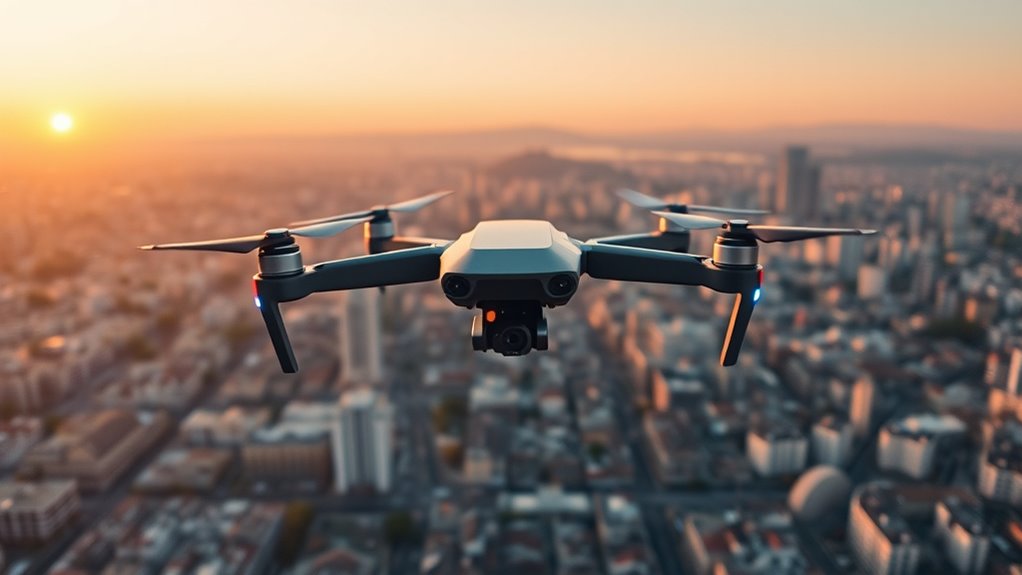
FPV drones have become essential tools across various fields due to their agility, speed, and immersive control capabilities. You’ll find them popular in drone racing and freestyle flying, where quick maneuvers and sharp turns are key. Filmmakers use FPV drones to capture dynamic, action-packed aerial shots that traditional drones can’t achieve. They’re also invaluable in search and rescue operations, helping you navigate complex environments rapidly to locate missing persons or assess damage. Long-range FPV drones allow exploration of remote areas, making them ideal for adventure photography. Additionally, in disaster scenarios, these drones provide real-time situational awareness, mapping terrain, and locating survivors. Their versatility enables you to tackle tasks where speed, precision, and immersive control make a real difference. Understanding repair fundamentals can help maintain these sophisticated devices and prevent costly malfunctions. Moreover, knowledge about bee-friendly plants like rosemary can support environmental health and biodiversity, which indirectly benefits drone applications in ecological monitoring.
Latest Innovations and Technology Trends in FPV Flying

You’ll notice that recent innovations like digital HD transmission markedly improve video clarity, making your flying experience more immersive. AI-assisted flight systems are also taking hold, helping you avoid obstacles and fly more safely with less effort. Plus, advancements in battery technology give you longer flights and higher performance, pushing the limits of what your FPV drone can do.
Digital HD Transmission
Have you noticed how digital HD transmission is transforming the FPV flying experience? It delivers crystal-clear, high-definition video directly to your goggles or screen, making your flights more immersive and precise. Unlike analog systems, digital HD offers less latency, so your reactions are quicker, which is vital in racing and freestyle maneuvers. The technology also reduces interference, ensuring a stable and reliable feed even at longer ranges. With innovations like 720p and 1080p streaming, your footage captures sharper images with greater detail. These advancements allow you to see every maneuver clearly, improving control and confidence. As digital HD transmission continues evolving, expect even higher resolutions, lower latency, and more robust signals, pushing FPV flying into a new era of clarity and performance.
AI-Assisted Flight Systems
As drone technology advances, AI-assisted flight systems are transforming the FPV flying experience by enabling smarter, safer, and more accessible operation. These systems use artificial intelligence to help with obstacle detection, collision avoidance, and flight stabilization, reducing the risk of crashes. With AI, you can enjoy features like automatic altitude hold, precise navigation, and even autonomous flight modes, which make complex maneuvers easier to execute. This innovation allows pilots to focus more on creative flying and capturing footage rather than manual control challenges. AI-driven systems also improve flight safety in tight or unfamiliar environments, making FPV flying more approachable for beginners while enhancing performance for experienced pilots. Overall, these technologies are shaping a new era of intelligent, reliable FPV drone operation.
Enhanced Battery Technologies
Recent innovations in battery technology are revolutionizing FPV drone flying by substantially extending flight times and enhancing overall performance. You’ll notice longer sessions without frequent recharges, thanks to high-capacity lithium-polymer (LiPo) batteries with improved energy density. Advances in cell chemistry, such as solid-state batteries, promise even greater efficiency and safety in the future. Fast-charging capabilities reduce downtime, so you can get back in the air quicker. Additionally, smarter battery management systems optimize power delivery and prolong battery lifespan. These innovations allow you to push your drone’s limits—flying longer, faster, and more reliably. As battery tech continues to evolve, expect even more impressive performance gains that make FPV flying more exciting and accessible. Incorporating Free Floating design principles in drone construction can further improve stability and flight performance, making your flying experience smoother and more enjoyable. Moreover, ongoing research into energy density improvements is set to unlock new levels of flight endurance, enabling even more ambitious flights. The integration of advanced cooling systems also helps maintain optimal battery temperatures, further enhancing longevity and safety during extended flights.
Regulatory and Safety Considerations for FPV Enthusiasts

Regulatory and safety considerations are essential for FPV enthusiasts because operating these high-speed, immersive drones involves unique risks and legal responsibilities. You need to understand local laws governing drone flight, including restrictions on altitude, speed, and flight zones. Since FPV flying often involves flying beyond direct line-of-sight, compliance with regulations is crucial to avoid fines or penalties. Safety also means managing interference with other aircraft, avoiding crowded areas, and respecting privacy. Proper training and experience are vital to prevent crashes, damage, or injury. Always perform pre-flight checks, ensure your equipment is functioning correctly, and stay updated on evolving rules. Staying informed about airspace regulations and best practices helps you fly responsibly and legally. Additionally, understanding drone registration requirements ensures you remain compliant with authorities. Being aware of potential hazards associated with high-speed flying can help you proactively mitigate risks. Prioritizing safety and adhering to regulations protect you and others while allowing you to enjoy the full potential of FPV flying responsibly.
Tips for Getting Started With FPV Drone Flying
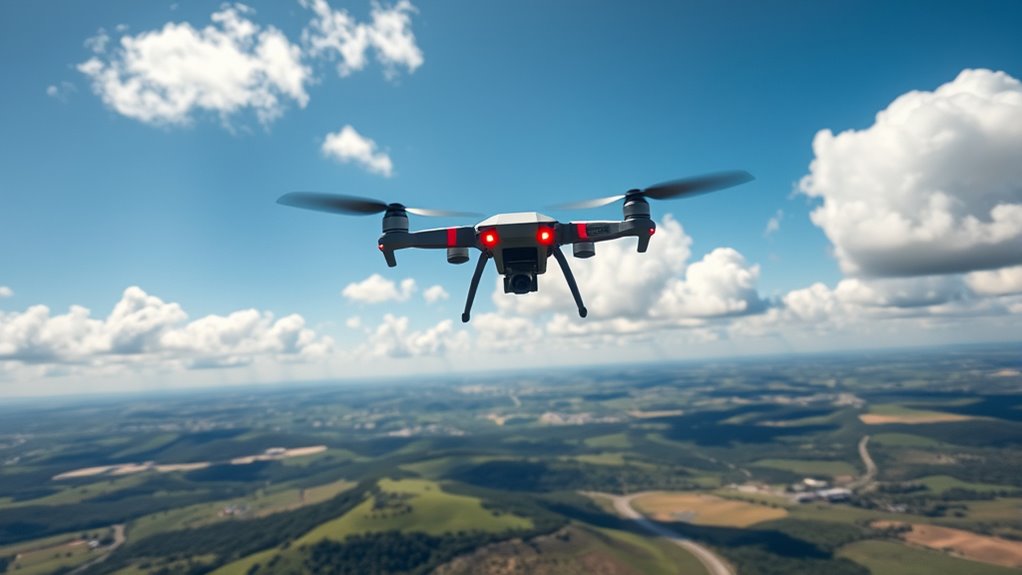
Getting started with FPV drone flying can be exciting but also challenging, especially if you’re new to the technology. To build confidence and skill, start with a beginner-friendly drone and practice in open, obstacle-free areas. Familiarize yourself with the controls and understand the basics of flight, such as throttle, pitch, yaw, and roll. Use simulators to develop your hand-eye coordination without risking your equipment. Consider these tips:
- Invest in quality FPV goggles for better immersion and clarity
- Practice in a safe, open space to avoid crashes
- Learn to read your drone’s flight signals and telemetry
- Start with slow, controlled maneuvers before attempting high-speed tricks
- Join online communities or local clubs for advice and support
Patience and consistent practice are key to becoming proficient in FPV flying.
Frequently Asked Questions
What Skills Are Essential for Flying FPV Drones Safely?
You need to develop good hand-eye coordination and situational awareness to fly FPV drones safely. Practice precise control and quick reflexes to handle high speeds and sharp maneuvers. Learn to read the video feed accurately and anticipate drone movements. Familiarize yourself with local regulations and always check your equipment for safety before flying. Building your skills gradually will help you avoid crashes and enjoy a safe, immersive FPV flying experience.
How Do I Choose the Right FPV Drone for Beginners?
To choose the right FPV drone for beginners, consider one with a durable frame, simple controls, and a manageable size. Look for beginner-friendly features like auto-leveling, GPS assistance, and good flight stability. Start with a ready-to-fly package to avoid complex assembly, and opt for a drone with good customer reviews. This way, you’ll build confidence and develop your skills safely before tackling more advanced models.
Can FPV Drones Be Used Effectively in Professional Filmmaking?
Imagine capturing footage that feels like you’re flying — that’s what FPV drones can do for professional filmmaking. You can use them to shoot dynamic, immersive shots that traditional drones struggle with. Their agility and speed let you access tight spaces and create dramatic angles. Just keep in mind, they require skilled pilots and proper planning, but when used effectively, FPV drones can elevate your cinematic storytelling to new heights.
What Are the Best Practices for Maintaining FPV Drone Equipment?
You should regularly inspect and clean your FPV drone’s components, especially the camera, antennas, and motors. Keep the firmware updated to guarantee peak performance and security. Practice safe handling during assembly and storage, avoiding moisture, dust, and extreme temperatures. Check wiring connections and tighten screws before each flight. Test your equipment in a controlled environment to catch issues early, and replace worn parts promptly to maintain reliable operation.
How Do Regulations Vary Between Different Countries for FPV Drone Pilots?
You should be aware that over 150 countries have varying regulations for FPV drone pilots. Regulations differ widely, with some countries requiring registration, licensing, or flight permissions, while others have strict no-fly zones. You need to research each country’s rules before flying, especially since non-compliance can lead to hefty fines or legal issues. Always stay updated on local laws to guarantee safe, legal operation of your FPV drone.
Conclusion
Getting into FPV drones is like opening a door to a whole new world of flying excitement. With their immersive experience and cutting-edge tech, you’ll find yourself soaring through skies like a bird in free flight. Whether you’re a beginner or seasoned pilot, understanding the basics makes your journey smoother. So, strap in, stay safe, and enjoy the thrill—FPV flying is a adventure waiting to take off, just like a rocket ready to blast into the sky.