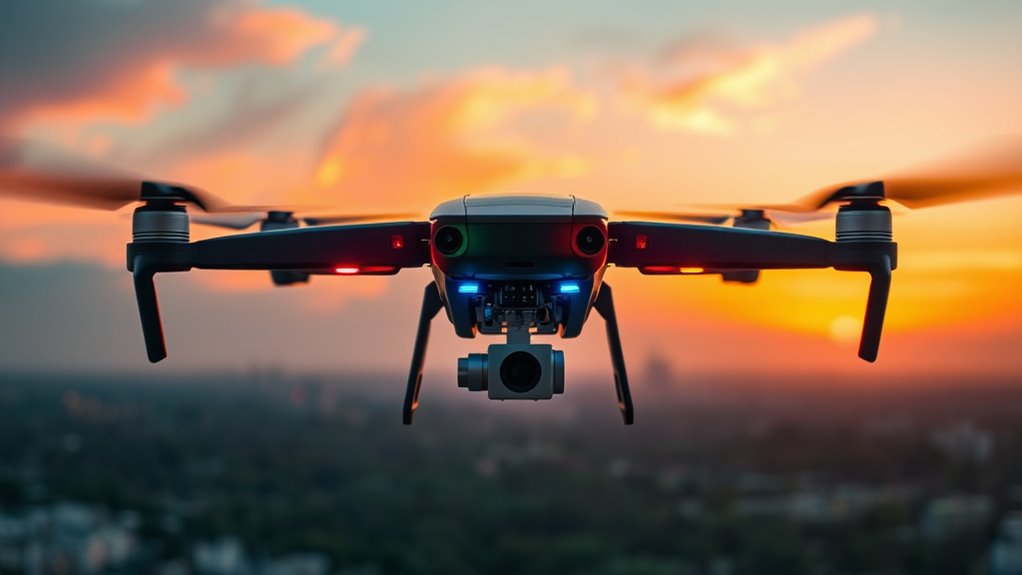
Cinewhoops are compact, ducted FPV drones built for cinematic filming in tight or indoor spaces. They feature protected, ducted propellers that provide safety, stability, and smooth footage. Ideal for capturing professional-looking shots, they excel at controlled, slow flights and close-up shots around obstacles. While they aren’t designed for high-speed maneuvers, their stability and safety features make them perfect for creative indoor and cinematic projects. To learn more about how these drones transform filmmaking, keep exploring.
Key Takeaways
- Cinewhoops are small, ducted FPV drones designed for capturing smooth, cinematic footage in tight or indoor environments.
- Their ducted propellers provide safety and stability, making them ideal for close-up shots around obstacles and people.
- They prioritize stability and controlled flight over agility, ensuring professional-quality visuals and steady footage.
- Cinewhoops are widely used in filmmaking for creative angles, indoor shots, and environments inaccessible to larger drones.
- Safety features like propeller guards and automatic failsafe systems make them reliable and safe for professional content creation.
What Is a Cinewhoop and How Does It Differ From Other Drones
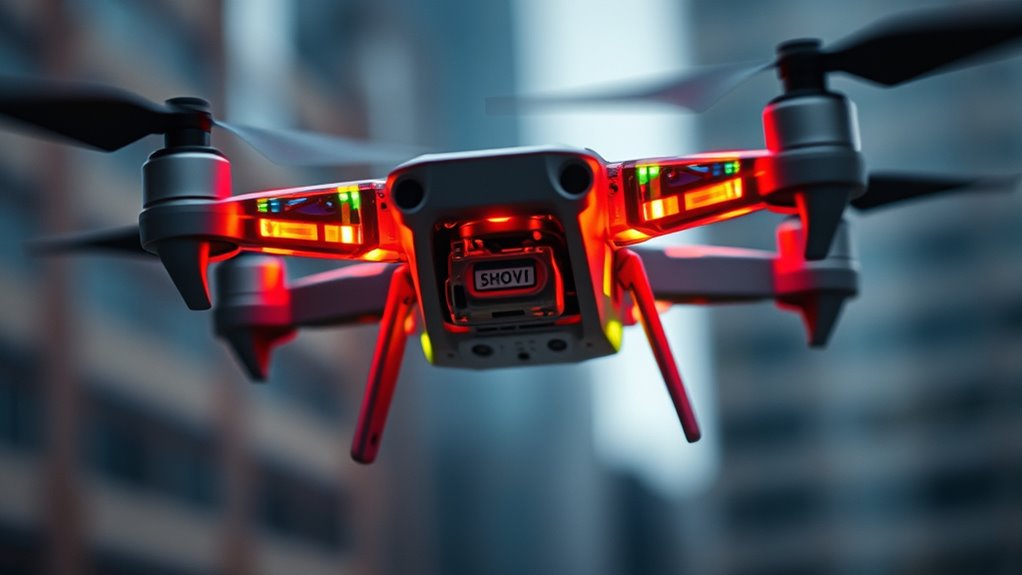
What exactly is a cinewhoop, and how does it stand out from other drones? A cinewhoop is a small FPV drone designed for smooth, cinematic footage, especially indoors or in tight spaces. Unlike racing drones that prioritize speed and agility, cinewhoops focus on stability and controlled flight. They use ducted propellers protected by guards, making them safer around people and surroundings. This design allows you to capture steady, high-quality video without sacrificing safety. Their lightweight build and limited speed mean they’re not for high-speed tricks but excel at delivering smooth, professional-looking shots. Cinewhoops are ideal for filmmakers, videographers, or hobbyists wanting to explore creative angles in confined environments. Their unique combination of safety, stability, and cinematic capabilities sets them apart from typical racing or freestyle drones. Additionally, the use of energy-efficient components helps prolong flight times and reduces environmental impact. Moreover, their design often incorporates durable materials, ensuring longevity and resilience during demanding shoots. When selecting a cinewhoop, considering battery efficiency can further enhance your shooting experience.
Key Design Features of Cinewhoops
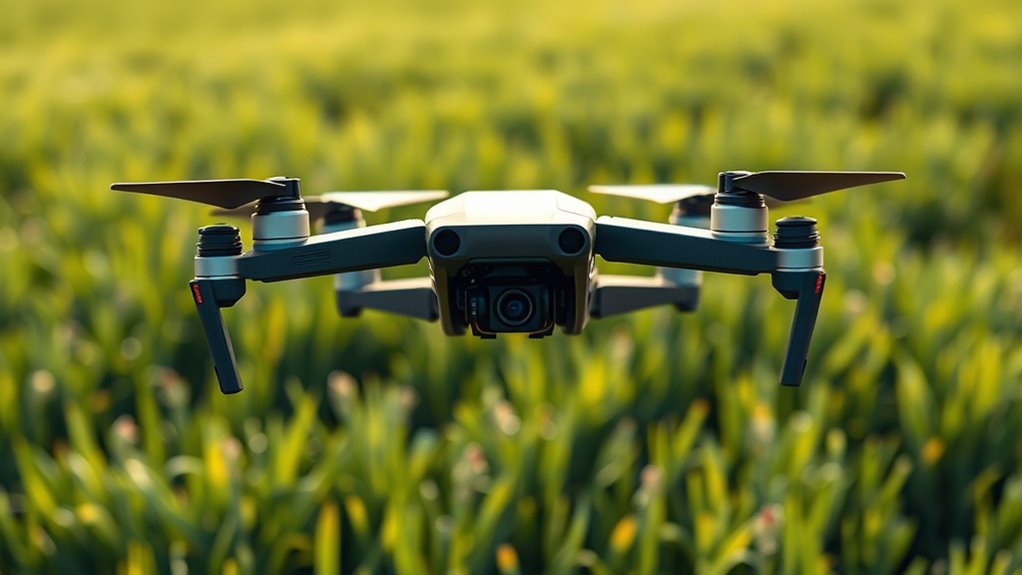
Cinewhoops feature a distinctive design that prioritizes safety, stability, and aerodynamic efficiency. You’ll notice they have ducted propellers, which act as guards, protecting both the drone and nearby subjects during indoor or close-up filming. Their small, lightweight frames, usually built with 3-inch propellers, enable smooth, controlled movements through tight spaces. The ducts increase lift and stability while adding some drag, which limits flight time but enhances safety. You’ll often find these drones equipped with durable, molded ducts and removable arms for easier repairs and vibration reduction. The flight controllers are tuned for ultra-smooth, slow flight, emphasizing stability over agility. Overall, their design balances safety, efficiency, and cinematic quality, making them ideal for capturing fluid footage in confined or indoor environments. Design features of Cinewhoops also contribute to their ability to perform precise, stable shots in challenging environments, especially when combined with advanced stabilization techniques. Additionally, incorporating local automation capabilities can further optimize flight paths and shot consistency during filming. These features are rooted in aerodynamic principles that enhance flight performance and safety. Furthermore, ongoing innovations in battery technology continue to improve flight times and reliability for cinewhoops in various filming scenarios.
How Cinewhoops Perform in Filmmaking and Indoor Shooting
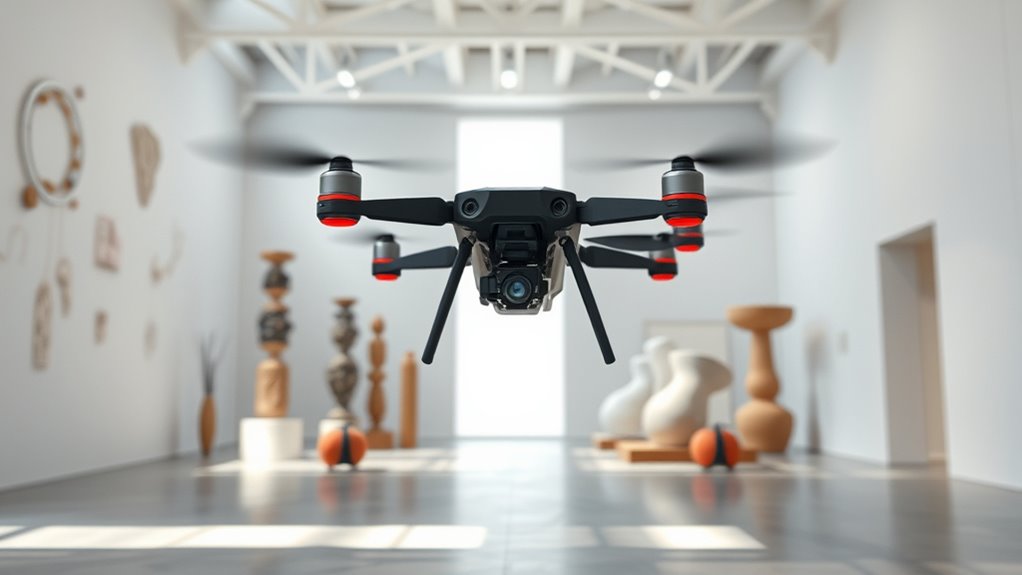
Thanks to their stable, slow-paced flight and ducted design, cinewhoops excel at capturing smooth, cinematic footage in indoor and tight spaces. Their controlled movement allows you to achieve steady shots without sudden jerks or vibrations, making footage look professional and polished. The propeller guards provide safety around people and obstacles while enabling close proximity shots that would be risky with open-prop drones. The limited speed and agility mean you’re less likely to crash, giving you confidence to film in crowded or confined environments. These drones maintain stable hover, perfect for capturing detailed, high-quality visuals. Whether you’re filming inside a building, steering through narrow corridors, or capturing scenic urban scenes, cinewhoops deliver consistent, cinematic results that enhance your storytelling.
Essential Components and Upgrades for Cinewhoops

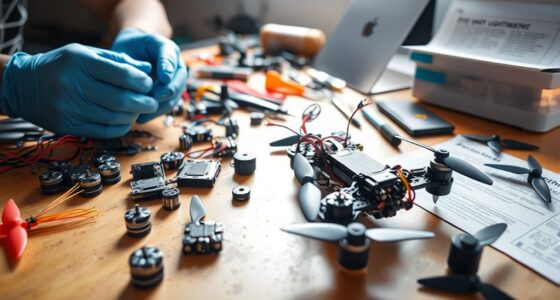
To guarantee your cinewhoop performs at its best, selecting the right components is essential. Start with high-quality motors designed for smooth, efficient power delivery—short, fat motors are ideal for better thrust and stability. Upgrade your flight controller to one with advanced tuning features, like BetaFlight or EmuFlight, to achieve ultra-smooth footage. Use lightweight, durable propellers, typically 3-inch, optimized for efficiency and quiet operation. Invest in a reliable, high-capacity battery to extend flight time without adding weight. Consider adding vibration dampers or soft mounting for your camera to reduce micro-vibrations. Finally, upgrade to a quality HD camera, such as a GoPro or Insta360, for crisp cinematic footage. Incorporating electronic image stabilization can further enhance footage quality and smoothness. Paying attention to flight controller tuning ensures your cinewhoop remains steady and responsive during complex maneuvers. These upgrades ensure steady, professional results and maximize your cinewhoop’s capabilities.
Advantages and Limitations of Using Cinewhoops
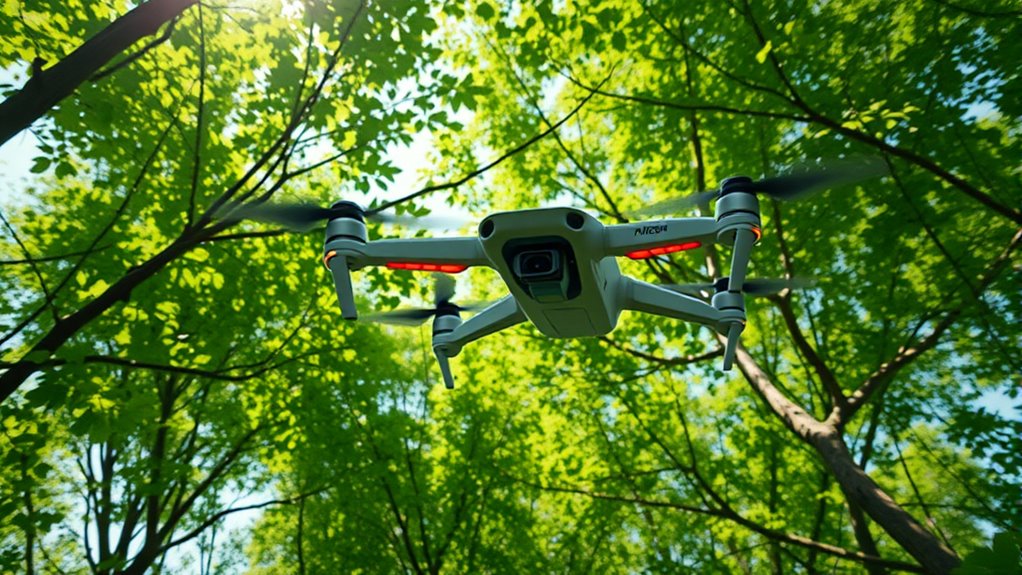
Cinewhoops offer enhanced safety features like propeller guards, making indoor flying around people much safer. However, this added protection can limit your drone’s flight flexibility, especially with regard to speed and agility. Despite these restrictions, cinewhoops provide superior stability, helping you capture smooth, professional-quality footage. Additionally, modern kitchen technology can inspire innovative ways to incorporate drone footage into culinary presentations or filming techniques. By utilizing advanced stabilization, cinewhoops can deliver remarkably steady shots even in confined or cluttered environments. Incorporating flight planning tools can further optimize your shooting sessions, ensuring you maximize the capabilities of your cinewhoop within its limitations. Proper ventilation considerations are also important when using cinewhoops indoors to prevent overheating and ensure safe operation.
Enhanced Safety Features
Enhanced safety features make cinewhoops a popular choice for indoor and close-quarters filming, especially when you need to operate around people or delicate surroundings. The propeller ducts or guards are the key safety element, shielding both the drone’s blades and nearby objects. These guards reduce the risk of injury or damage during crashes, making flying less intimidating for beginners. Additionally, their slow, steady flight helps you maintain better control, decreasing the chance of accidents. Many models also include built-in failsafe systems that automatically land or return the drone if signal loss occurs. These safety features can sometimes add weight and drag, slightly limiting flight time and speed. Still, they make cinewhoops a dependable, safer option for capturing cinematic footage in confined spaces. Understanding drone materials and their impact on durability can further improve safety and performance, especially when considering material strength for crash resistance. Exploring safety feature integration in design can lead to even more reliable flying experiences. Incorporating advanced safety systems, such as obstacle detection, can further enhance flight security and operator confidence. Moreover, ongoing developments in sensor technology continue to push the boundaries of drone safety and reliability.
Limited Flight Flexibility
While cinewhoops excel at capturing smooth, cinematic footage in tight spaces, their design inherently limits flight flexibility. Their slow, steady flight and ducted propellers reduce agility, making quick direction changes or high-speed maneuvers difficult. You won’t be able to perform sharp turns or rapid acrobatics like with freestyle drones. This restricts creative options when dynamic, fast-paced shots are needed.
| Limitation | Impact |
|---|---|
| Reduced agility | Hard to execute fast or complex maneuvers |
| Shorter flight times | Increased weight and drag cut flight duration |
| Slow speed | Less suitable for high-energy scenes |
| Limited maneuverability | Challenging in complex or dynamic environments |
Superior Stability Advantage
The key advantage of cinewhoops is their superior stability, which allows you to capture smooth and professional-looking footage even in challenging environments. Their ducted propellers and lightweight design create a more controlled flight, reducing vibrations and oscillations. This stability makes it easier to film indoors, through tight spaces, or around moving subjects, resulting in footage that looks polished and cinematic. The stability also means you can focus on framing your shots without constantly correcting drift or wobble. Additionally, the built-in propeller guards help prevent crashes and protect your camera equipment, ensuring consistent results. Regular maintenance routines, such as filter replacement, are essential for maintaining long-term reliability and optimal performance. While they sacrifice some agility and speed, cinewhoops excel at delivering steady, high-quality footage that elevates your filmmaking. This makes them ideal for capturing smooth, cinematic shots in confined or complex environments. For beginners and seasoned pilots alike, understanding reliable power sources is essential for ensuring your drone stays operational during critical shoots.
The Growing Role of Cinewhoops in Professional Content Creation
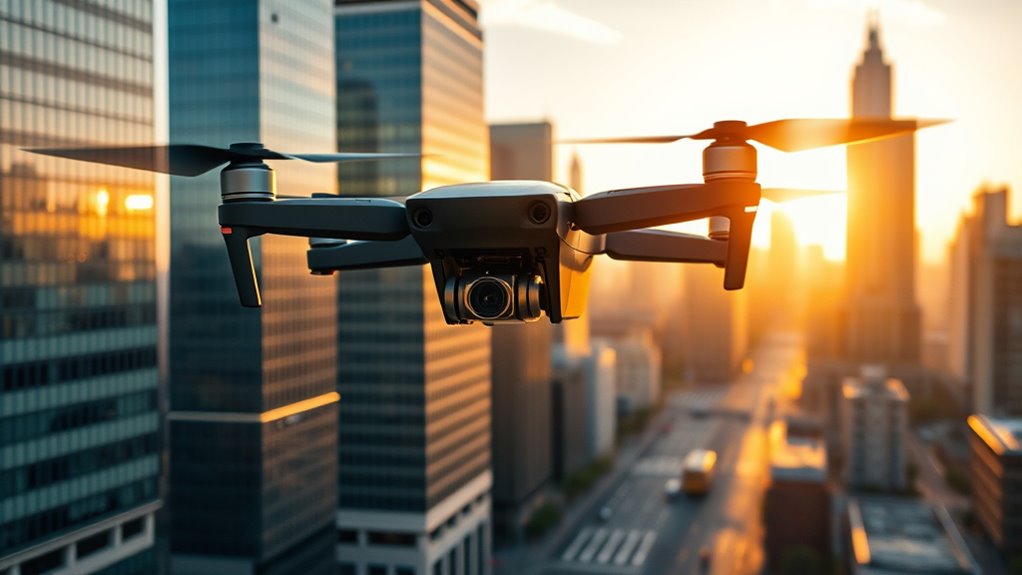
Cinewhoops are increasingly transforming professional content creation by offering filmmakers and videographers a versatile tool for capturing smooth, high-quality footage in challenging environments. Their compact size and stability allow you to shoot in tight indoor spaces, urban settings, and on-location shoots where larger drones can’t operate safely. As their popularity grows, more professionals turn to cinewhoops for their ability to deliver cinematic shots with ease and safety.
Cinewhoops enable smooth, cinematic shots in tight spaces and challenging environments with ease and safety.
Here are three ways cinewhoops enhance your projects:
- Indoor Filming: Easily navigate tight spaces and capture smooth footage without risking damage.
- Unique Angles: Achieve creative perspectives that traditional drones can’t access.
- Cost-Effective Quality: Use affordable equipment for professional-grade results, reducing overall production costs.
Frequently Asked Questions
What Is the Typical Flight Time for a Cinewhoop?
You can expect a typical flight time of around 3 to 7 minutes when flying a cinewhoop. The exact duration depends on factors like battery capacity, payload weight, and flying style. Since cinewhoops carry cameras like GoPro or Insta360, they often have shorter flight times due to added weight and aerodynamic drag. To maximize your flight time, use high-capacity batteries and optimize your flight for efficiency.
Can Cinewhoops Carry Professional-Grade Cameras?
You can think of trying to carry a professional-grade camera like balancing a watermelon on a toothpick—possible but not practical. Cinewhoops are designed to handle compact action cameras like GoPro or Insta360, not bulky professional gear. Their frames and power limits mean they’re better suited for lightweight cameras, so don’t expect to mount your cinema-grade RED or ARRI without turning your drone into a flying wreckage.
Are Cinewhoops Suitable for Outdoor High-Speed Filming?
Cinewhoops aren’t ideal for outdoor high-speed filming. They’re designed for slow, smooth, and stable shots, making them perfect for indoor or close-quarters filming, but their limited speed and agility can’t keep up with fast-moving subjects or high-speed outdoor scenes. The added propeller guards increase drag, reducing their top speed and flight time, so if you need quick, dynamic footage outdoors, a different drone suits those needs better.
How Difficult Is It to Build a DIY Cinewhoop?
Building a DIY cinewhoop is like assembling a complex puzzle—you’ll need patience, some technical skill, and a good understanding of drone components. You must select the right frame, motors, flight controller, and propellers, then carefully wire everything together. While it’s rewarding to create your own, expect a learning curve, especially when tuning the software for stable, cinematic flights. With dedication, you can craft a reliable, personalized cinewhoop.
What Safety Precautions Should I Take When Flying Cinewhoops?
When flying cinewhoops, always wear safety goggles to protect your eyes from spinning propellers. Keep a safe distance from people and pets, especially indoors. Double-check that propeller guards are secure before flight. Avoid flying near power lines or busy roads. Practice in open spaces first to build control, and never fly while疲劳 or distracted. Following these precautions helps prevent accidents and keeps everyone safe during your cinematic flights.
Conclusion
Cinewhoops are transforming filmmaking, especially for indoor and tight spaces. With over 60% of professional content creators now using these drones, their popularity continues to grow. Their compact design and smooth footage make them invaluable tools for cinematic shots. If you’re looking to elevate your footage, investing in a cinewhoop could be a game-changer. Embrace the innovation, and you’ll see your creative possibilities expand dramatically.