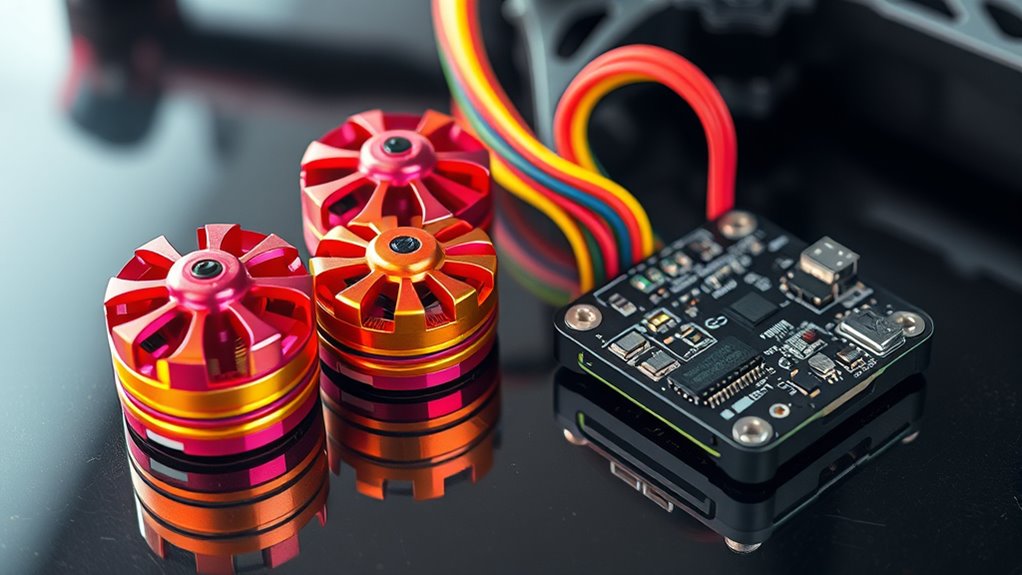
When choosing FPV motors, ESCs, and flight controllers, focus on matching their specs to your flying style and drone size. Look for motors with the right kv rating for power and efficiency, and select ESCs that can handle your motor’s current for safety. Your flight controller should support your preferred features and firmware. Picking compatible components guarantees reliable performance. Keep exploring to learn how these parts work together to optimize your drone’s flight capabilities.
Key Takeaways
- Match motor KV rating with your drone’s size and intended flying style for optimal performance.
- Choose ESCs with sufficient current rating to handle motor demands and ensure reliable power delivery.
- Select flight controllers compatible with your hardware, supporting necessary features like GPS or Betaflight.
- Consider motor size and power output to balance agility, speed, and battery efficiency.
- Ensure all components are compatible in voltage and protocol to prevent connectivity and performance issues.
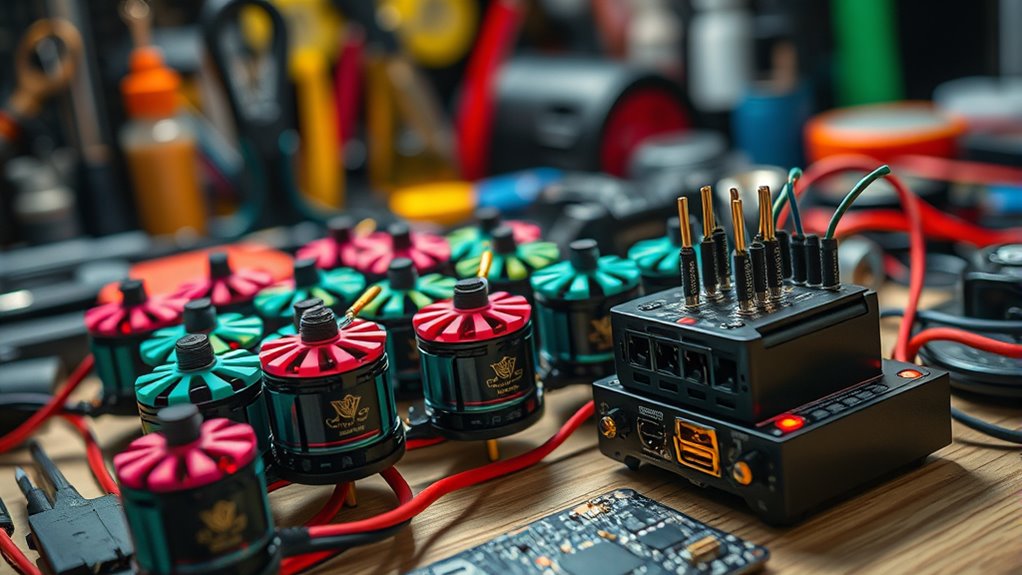
Selecting the right FPV components is vital for building a drone that performs well and meets your flying style. When it comes to powering your drone, battery selection plays a pivotal role. You need to choose a battery that balances capacity, weight, and discharge rate. A higher mAh rating provides longer flight times, but it also adds weight, which can affect agility. Conversely, a battery with a high C rating ensures your motors get enough power during rapid accelerations and sharp turns. It’s important to match your battery’s specifications with your drone’s motor and ESC capabilities to prevent overloads or insufficient power. Also, consider the physical size of the battery—fits your frame comfortably without adding unnecessary bulk. Proper weight distribution contributes significantly to your drone’s stability and handling during flight.
Speaking of frames, the materials you pick will influence your drone’s durability, weight, and overall flight characteristics. Common frame materials include carbon fiber, plastic, and aluminum. Carbon fiber is popular because it’s lightweight and extremely strong, making it ideal for high-performance racing or freestyle drones. Plastic frames are usually more affordable and easier to repair, but they tend to be less durable under crashes. Aluminum frames offer a good balance between weight and strength but can add weight compared to carbon fiber. Your choice should depend on your flying style and how much impact your drone is likely to endure. For aggressive racing, a carbon fiber frame is often the best choice, while casual flying might be fine with a plastic or composite frame.
Frequently Asked Questions
How Do I Balance Motor and Propeller Size for Optimal Performance?
You should match your motor and propeller size by considering propeller durability and motor cooling. Larger props generate more thrust but can strain your motor and reduce cooling, risking overheating. Smaller props are more durable and cool your motor better but provide less power. Balance these factors by selecting a prop size that delivers enough thrust without overloading your motor, ensuring peak performance and longevity.
What Are the Best ESCS for High-Current Drone Builds?
Think of high-current ESCs as the heart of your drone’s power system. For ideal performance, choose high-current ESCs with robust thermal management to prevent overheating during intense flights. Look for models with good cooling features and quality components, like BLHeli_S or DShot-compatible ESCs, ensuring reliable current delivery. This keeps your drone responsive and safe, even under demanding conditions. Proper ESCs are essential for pushing your drone’s limits confidently.
How Do I Select a Flight Controller Compatible With My FPV Gear?
You should select a flight controller compatible with your FPV gear by checking for compatible connectors like UART, I2C, and PWM ports to guarantee seamless integration. Make sure it supports your preferred firmware, such as Betaflight or INAV, and verify if firmware updates are available for improved performance and new features. This guarantees your FPV system functions smoothly and stays up-to-date with the latest enhancements.
What Safety Features Should I Look for in ESCS and Flight Controllers?
You should look for ESCs and flight controllers with safety features like battery management systems to prevent overcharging or overheating. Signal redundancy is also vital, as it guarantees your drone maintains control if one connection fails. These features help protect your gear and improve flight stability. Additionally, choose components with built-in failsafe modes to automatically land or hover if issues arise, keeping your drone and surroundings safe.
How Do Different Firmware Options Affect Flight Controller Performance?
Different firmware options considerably impact your flight controller’s performance by enabling firmware customization to suit your flying style. They optimize hardware compatibility, ensuring your components work seamlessly together. Some firmware offers advanced features like better stability, responsiveness, and obstacle avoidance, while others prioritize simplicity. By investigating how firmware influences performance, you can tailor your setup, enhance flight experience, and achieve more reliable, precise control—making your FPV drone more enjoyable and efficient.
Conclusion
Now that you understand the basics of selecting motors, ESCs, and flight controllers, you’re better equipped to build a drone that suits your flying style. Remember, the right components can make all the difference in performance and durability. Are you ready to take your FPV flying to the next level and turn your ideas into reality? With the right choices, your next epic flight is just around the corner.