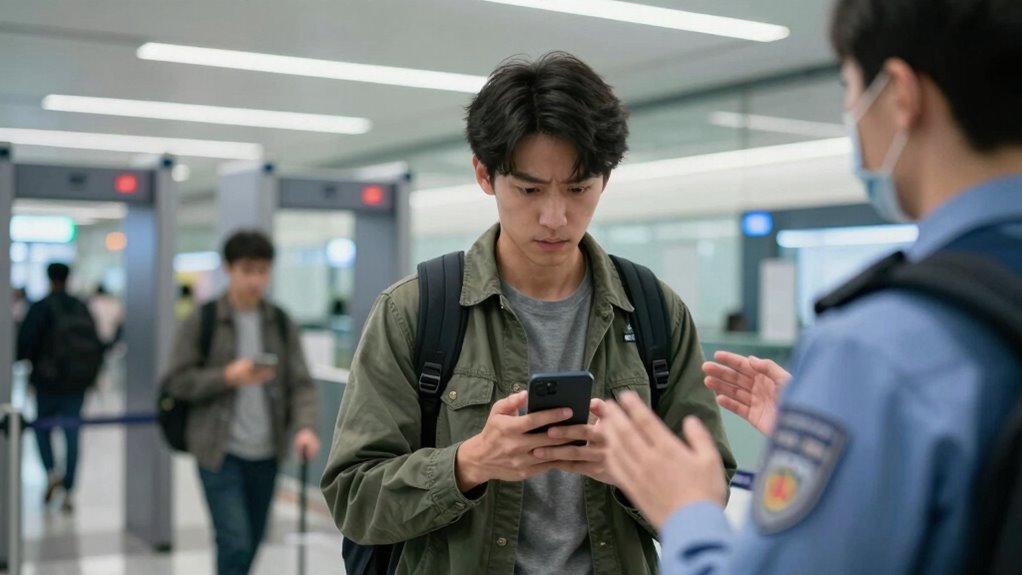

To prepare for questions about your privacy when flying in public, stay confident and polite. Briefly respond with statements like, “I prefer to keep that private,” and redirect the conversation to security measures or protocols. Keep sensitive info off your devices, use privacy screens, and secure personal items. Knowing your rights and security procedures helps you maintain control. If you want to learn how to handle persistent questions and protect your data effectively, continue with these tips.
Key Takeaways
- Practice brief, polite responses like “That’s personal” or “I prefer to keep that private.”
- Stay calm and confident, redirecting focus to security protocols or privacy measures.
- Use privacy screens and secure devices to protect sensitive information from prying eyes.
- Keep responses focused on security procedures rather than personal details.
- Stay informed about airport security policies to confidently uphold your privacy boundaries.
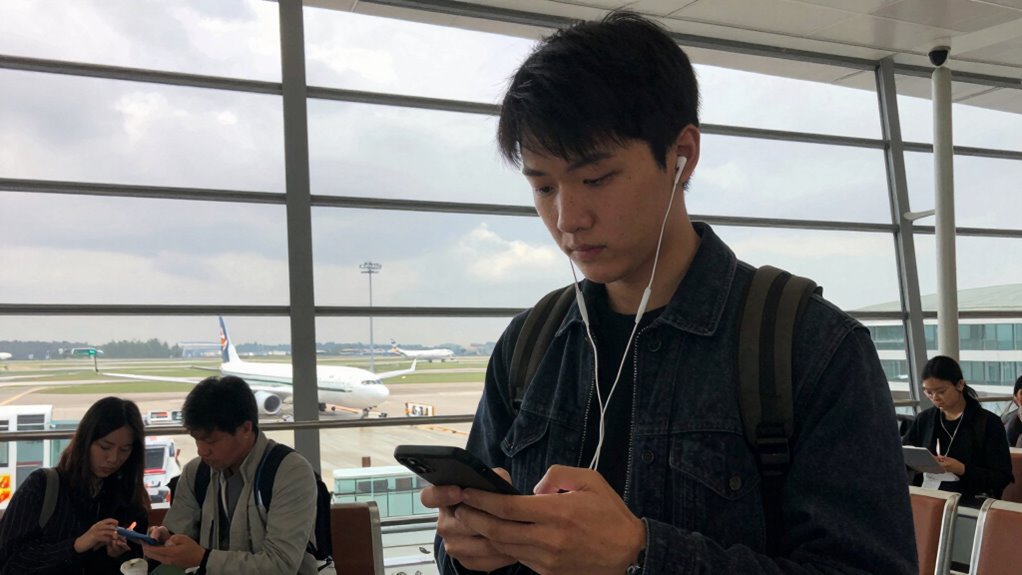
Flying in public often means risking questions about your privacy, especially when others notice your devices or personal items. It’s a common situation: people look over your shoulder or glance at what you’re doing on your phone or laptop. While some curiosity is natural, it can lead to uncomfortable conversations or even security risks if you’re not prepared. To handle this confidently, you need to understand privacy concerns and how to communicate your boundaries effectively. Knowing the security protocols in place at airports and on flights can give you peace of mind and help you stay in control of your information.
First, be aware that many airports and airlines have strict security protocols designed to protect passengers’ privacy and security. These include procedures for screening devices, limiting access to personal data, and safeguarding your belongings. Familiarizing yourself with these protocols before your trip can make you feel more confident and less vulnerable to questions. For example, knowing that TSA agents are trained to follow privacy guidelines can reassure you that your personal data is protected during security checks. However, it’s still wise to keep sensitive information off your devices or to use encryption when necessary. Additionally, understanding security protocols can help you feel more in control during these interactions, especially since many airports implement privacy measures to shield your information from prying eyes.
When someone asks about your devices or personal items, keep your response brief and polite. You can simply say, “I prefer to keep that information private,” or “That’s personal, and I’d rather not discuss it.” This sets a clear boundary without sounding defensive. If the question persists, you can redirect the conversation by commenting on the importance of security protocols or privacy measures in place, such as, “I trust the airport’s security procedures to keep my information safe.” This shifts the focus from your personal details to the broader system designed to protect everyone’s privacy. Being aware of privacy rights can empower you to stand firm in protecting your personal information.
Additionally, consider how you handle your devices in public. Use privacy screens or anti-glare filters to prevent others from reading your screen. When not in use, keep your devices secured in your bag or pocket. If you’re working on sensitive information, avoid displaying it openly in crowded areas. The more proactive you are about protecting your data, the less likely you’ll be caught off guard by prying questions. Staying informed about encryption methods and other security measures can also serve as a helpful reference in these situations. Remember, being prepared with polite, firm responses and understanding the security protocols can help you navigate these situations with confidence. Ultimately, your privacy is your right, and knowing how to defend it while flying in public ensures you stay in control of your personal information.
privacy screen for laptop
As an affiliate, we earn on qualifying purchases.
As an affiliate, we earn on qualifying purchases.
Frequently Asked Questions
Can I Request Privacy During Security Checks?
Yes, you can request privacy during security checks if you have privacy concerns. Explain your concerns to security personnel politely, and they’ll often accommodate you by directing you to a private area or offering alternative procedures. Remember, security protocols are in place to guarantee safety, but your privacy matters too. Being proactive and respectful helps balance security requirements with your privacy needs during these procedures.
Are There Specific Privacy Regulations at Airports?
Yes, airports have specific privacy policies aimed at protecting your data security. These policies govern how your personal information is handled during security checks and other processes. Airports are required to follow strict regulations to guarantee your privacy is respected, including secure handling of biometric data and personal details. Knowing these policies helps you feel more confident about your privacy, and you can always ask staff about how your data is protected.
How Do I Handle Invasive Questions From Airline Staff?
When airline staff ask invasive questions, stay firm but polite, emphasizing your personal boundaries. You can redirect the conversation by mentioning your travel gadgets, like noise-canceling headphones or security apps, to shift focus. Remember, you’re entitled to your privacy; you don’t have to answer anything that makes you uncomfortable. Calmly assert your right to privacy, and if needed, ask to speak with a supervisor to make sure your boundaries are respected.
What Privacy Rights Do I Have During In-Flight Surveillance?
During in-flight surveillance, your passenger privacy and data security are protected by airline policies and regulations. You have the right to know what data is collected and how it’s used. Airlines should secure your personal information against unauthorized access. If you’re concerned, ask flight staff about their privacy measures. Stay informed about airline privacy policies, and consider using privacy tools if you want extra protection during your flight.
How Can I Protect My Personal Data Online Before Flying?
To protect your personal data online before flying, start by using a VPN to encrypt your internet connection, making it harder for hackers to access your information. Enable data encryption on your devices and update your passwords. Avoid public Wi-Fi for sensitive activities, and disable Bluetooth when not in use. These steps help safeguard your privacy, ensuring your data remains secure during your travels.
RFID blocking travel wallet
As an affiliate, we earn on qualifying purchases.
As an affiliate, we earn on qualifying purchases.
Conclusion
Just like the eagle soars high, keeping your privacy in mind helps you stay in control amidst the chaos. Preparing for questions about your privacy when flying in public guarantees you’re not caught off guard, much like a seasoned traveler steering unfamiliar skies. Remember, your personal boundaries are your wings—protect them fiercely. By staying informed and confident, you’ll steer these conversations with ease, soaring above the turbulence, and keeping your privacy secure in every journey.
portable device privacy shield
As an affiliate, we earn on qualifying purchases.
As an affiliate, we earn on qualifying purchases.
anti-glare screen protector for laptop
As an affiliate, we earn on qualifying purchases.
As an affiliate, we earn on qualifying purchases.