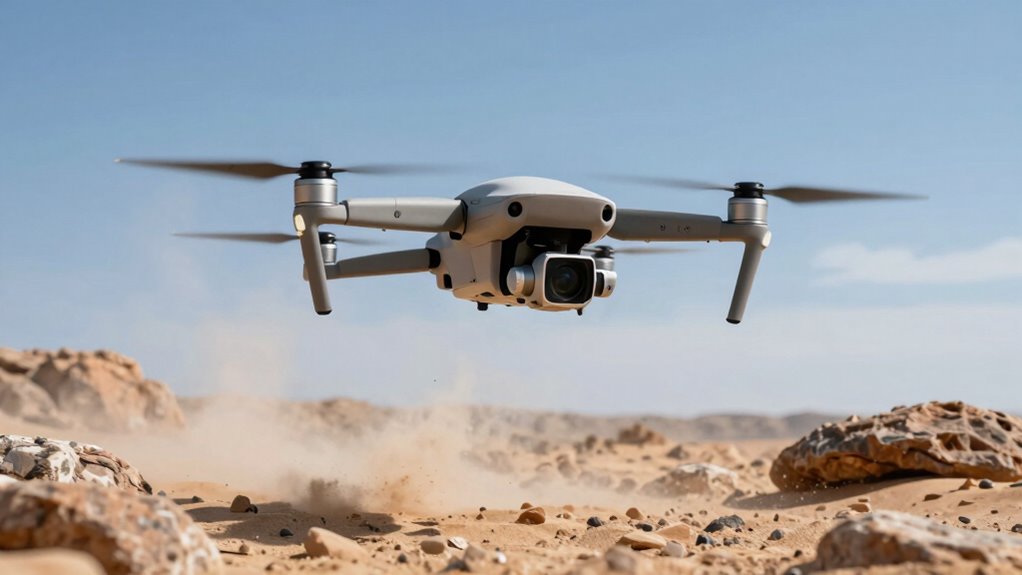

To protect your drone from dust, sand, and moisture, regularly inspect and clean its components using a soft cloth and compressed air. Store it in moisture-resistant containers and use protective covers when transporting through sandy or dusty areas. Avoid flying near metal objects, power lines, or in humid conditions, and keep antennas clean. Consistently maintain and update firmware to prevent interference, and if you want to discover more tips to keep your drone safe, keep exploring these essentials.

Get the latest gadgets delivered free with Prime
- Fast, free delivery on millions of items
- Prime Video, Amazon Music and more included
- Member-only deals all year
Key Takeaways
- Use protective covers or enclosures to shield the drone and components from dust, sand, and moisture during transport and flight.
- Perform thorough pre-flight inspections, cleaning vents, joints, and propeller hubs with compressed air or soft brushes.
- Avoid flying in dusty, humid, or windy conditions that stir up debris and moisture, and land immediately if exposed to adverse elements.
- Store drone and batteries in dry, dust-free environments with silica gel packets to prevent moisture buildup.
- Regularly clean and maintain antennas, sensors, and communication channels to prevent dust accumulation and signal interference.

Dust, sand, and moisture can quickly sabotage your drone sessions if you’re not prepared. These elements pose serious risks, from damaging sensitive components to disrupting your flight. To keep your drone in top shape, focus on proper battery maintenance and minimizing signal interference. Your drone’s battery is especially vulnerable to dust and moisture, which can cause corrosion or reduce overall lifespan. Always inspect your battery before each flight, ensuring it’s clean and dry. Use a soft, lint-free cloth to wipe away any dirt or debris, and store batteries in a moisture-resistant container when not in use. If you notice corrosion or swelling, replace the battery immediately—don’t risk further damage or flight failure.
Protect your drone by inspecting and keeping batteries clean, dry, and corrosion-free before every flight.
Signal interference is another common issue caused by dust and moisture. Flying in dusty environments or through humid air can weaken your drone’s connection to the remote controller. Keep a close eye on the signal strength indicator during your flight. To reduce interference, avoid flying near power lines, large metal objects, or dense foliage, which can reflect or absorb signals. If you’re in a particularly dusty or humid area, consider using a signal booster or antenna upgrade to enhance communication stability. Also, keep your controller and drone’s antennas clean and free from dust buildup, which can impair signal transmission. Additionally, proper maintenance can help prevent issues caused by environmental factors and extend your drone’s operational life.
Pre-flight preparation makes a big difference. Before launching, inspect your drone thoroughly. Use compressed air or a soft brush to clear dust from vents, joints, and propeller hubs. Cover your drone with a protective bag or case when transporting it through sandy or dusty environments. This simple step helps prevent debris from settling into critical parts, especially around the motors and sensors. Regularly checking for environmental contaminants is essential to ensure optimal performance and avoid potential damage. Being aware of how dust and moisture can affect your drone’s components will help you take more effective preventative measures. During the flight, avoid flying too close to the ground or in windy conditions that stir up dust and sand. If your drone does get exposed to moisture or dust, land it as soon as possible. Power it down, and gently clean the affected areas with a dry cloth or compressed air. Ensuring proper storage conditions is crucial for protecting your drone from environmental hazards when not in use.
Post-flight care is equally important. After each session, clean your drone and batteries thoroughly, checking for any signs of wear or debris. Store all components in a dry, dust-free environment, ideally with silica gel packets to absorb residual moisture. Regularly updating your drone’s firmware can also help mitigate signal interference issues, ensuring your drone maintains a strong, reliable connection even in challenging conditions. Staying proactive with battery maintenance and keeping communication channels clear will notably extend your drone’s lifespan and enhance your flying experience, no matter how dusty or humid the environment.
As an affiliate, we earn on qualifying purchases.
Frequently Asked Questions
What Are the Best Storage Options for Drones in Dusty Environments?
For dusty environments, you should opt for airtight, dust-proof storage solutions like hard cases or sealed containers to protect your drone. Regular drone maintenance is essential before and after sessions, ensuring all parts are clean and dry. Use desiccant packs inside storage containers to absorb moisture. Keep your drone in a cool, dry place away from direct sunlight to prevent damage, and always inspect for dust or debris before flying.
How Often Should Drone Sensors Be Cleaned After Dusty Sessions?
You should clean your drone sensors after every dusty session to prevent dust accumulation that can impair performance. Regular cleaning maintains sensor calibration, ensuring accurate images and data. Studies show that dust buildup can reduce sensor sensitivity by up to 30%, leading to blurry footage or navigation issues. By cleaning sensors promptly, you prolong your drone’s lifespan and keep it operating at peak efficiency, avoiding costly repairs or replacements down the line.
Can Weather Conditions Affect Drone Protection Equipment Effectiveness?
Weather conditions can ensure your drone protection equipment’s effectiveness. Poor weather resilience means your gear might not withstand heavy rain, strong winds, or extreme temperatures, risking damage. To significantly environmental durability, choose protective covers and seals rated for harsh conditions. Regularly inspect and upgrade your equipment based on forecasted weather, so your drone remains protected and operational, no matter the environment you’re flying in.
Are There Specific Drone Models More Resistant to Dust and Moisture?
You’ll notice some drone models, like the DJI Mavic series, are designed with weather-resistant materials and resistance features, making them more resilient against dust and moisture. These drones use specialized coatings and sealed joints, enhancing durability in harsh conditions. When choosing a drone, look for models explicitly built with rugged drone material and resistance features, ensuring your flights stay smooth even when dust, sand, or moisture try to interfere.
What Emergency Measures Should Be Taken if Dust or Water Damage Occurs?
If dust or water damage occurs, act quickly. Perform emergency repairs by carefully drying the drone with a soft cloth or silica gel packs. Power it off immediately to prevent further damage, and assess the damage thoroughly, checking motors, sensors, and the circuit board. If necessary, replace damaged parts, and consider professional repair services. Taking prompt action minimizes long-term harm and guarantees your drone stays operational.
As an affiliate, we earn on qualifying purchases.
Conclusion
Think of your drone as a delicate butterfly, gracefully soaring through the skies. Just as you’d protect a fragile creature, safeguard your drone from dust, sand, and moisture to guarantee it remains pristine and ready for flight. With a few simple precautions, you’ll extend its lifespan and keep your sessions smooth. Remember, a well-maintained drone is like a well-tuned instrument—ready to perform its symphony whenever you are. Fly safe and enjoy the journey!
drone moisture-resistant storage case
As an affiliate, we earn on qualifying purchases.
As an affiliate, we earn on qualifying purchases.
As an affiliate, we earn on qualifying purchases.
Columbus Day / Indigenous Peoples' Day Picks
long weekend sales
As an affiliate, we earn on qualifying purchases.