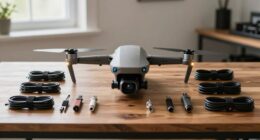
To explain drone flying to curious strangers, tell them that drones act as eye-in-the-sky tools, capturing amazing aerial views that you can’t get from the ground. Show how they fly using motors, propellers, and sensors that keep them stable and allow smooth movement. Mention that GPS and obstacle sensors help with navigation and safety. If you keep exploring, you’ll discover how all these elements come together for fun, safe, and responsible flying.
Key Takeaways
- Drones provide a unique aerial view, capturing landscapes and events from above that are impossible from the ground.
- They fly using motors, propellers, and sensors that maintain stability and allow smooth navigation.
- GPS and obstacle sensors help drones navigate safely and respond quickly to environmental changes.
- Flying involves remote controls or apps, with focus on safety, battery management, and legal flight routes.
- Responsible drone flying includes respecting privacy, following regulations, and ensuring safety for others.
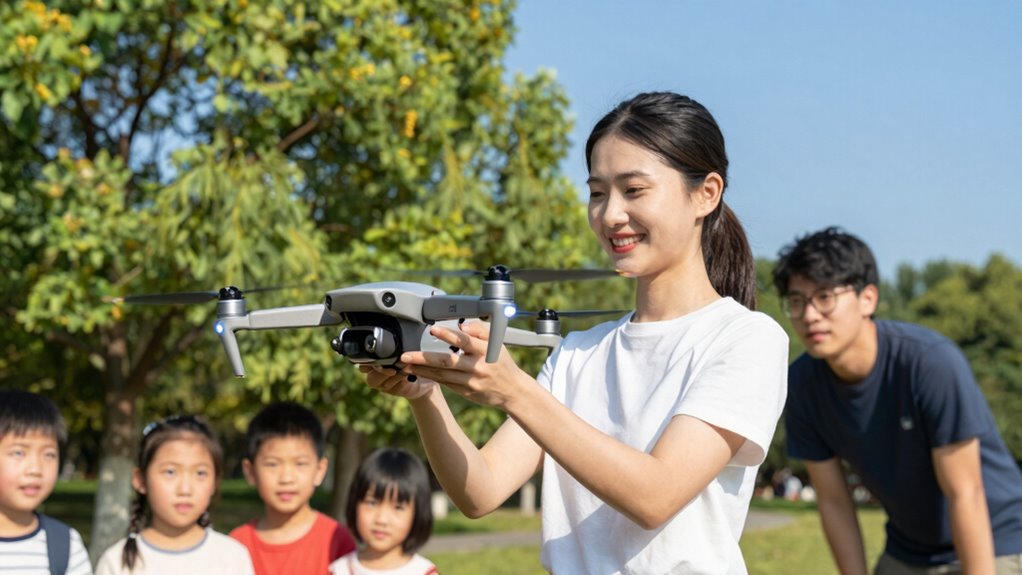
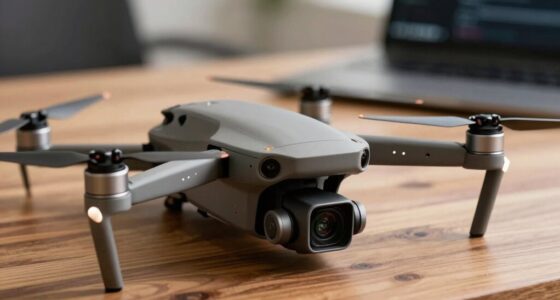
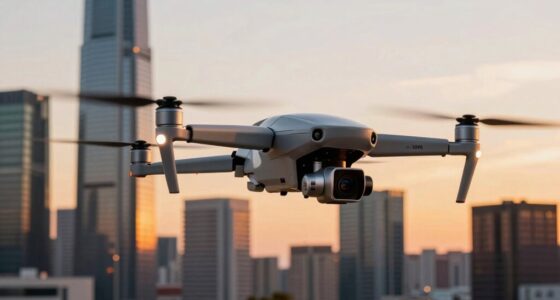
When someone shows curiosity about drone flying, it’s often because they’re enthusiastic to understand what you’re doing up in the sky. You can start by explaining that drones give you an aerial perspective that was once limited to airplanes or helicopters. They allow you to see landscapes, events, or structures from above, offering a unique view. To make it relatable, tell them that flying a drone is like having your own eye in the sky, capturing images or videos that are impossible from the ground. This helps them grasp the purpose behind your flights and sparks their interest further.
Drones provide a unique aerial view, like having your own eye in the sky to capture impossible perspectives.
Next, you want to touch on flight mechanics, which is the core of drone operation. Explain that drones fly through a combination of motors, propellers, and sensors working together seamlessly. When you press the controls, the drone’s motors adjust speed to move up, down, or sideways. The flight mechanics are quite precise, allowing for stable hovering and smooth navigation. Mention that the drone’s onboard sensors constantly monitor its position and orientation, helping it stay balanced even in windy conditions. This stability is what makes aerial footage look professional, and it’s what makes controlling a drone manageable, even for beginners. Additionally, many drones utilize flight stabilization technology, making them easier to operate. Understanding how the drone’s navigation systems work, like GPS and obstacle sensors, can also help pilots feel more confident during flights. It’s also beneficial to understand that real-time data from these sensors enables the drone to respond quickly to its environment, enhancing safety and performance. Furthermore, knowing about remote control features and how they interact with the drone can improve your overall flying experience.
You can also clarify that flying a drone isn’t just about pressing buttons. It involves understanding how to interpret visual cues from the drone’s camera and how to plan a flight path. Explain that you use a remote control or a smartphone app to guide the drone, keeping an eye on its battery life and surroundings. If they’re curious about safety, mention that pilots always check local regulations and fly responsibly, respecting privacy and avoiding no-fly zones. Ultimately, mastering these basics can make drone flying both enjoyable and safe for everyone involved.
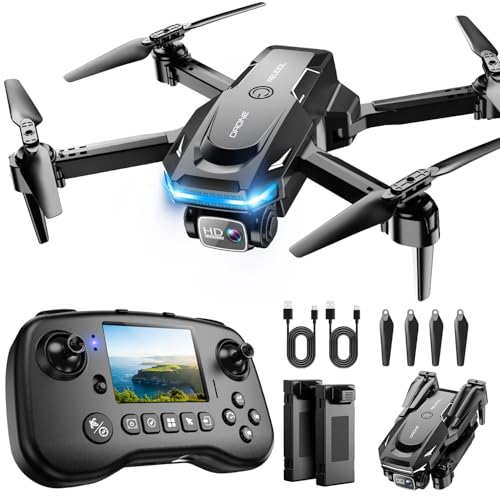
Drone with Camera, Screen on Controller Remote Control Quadcopter FPV Drone
- Built-in HD Screen: Watch live footage without phone
- HD Camera with Adjustable Lens: Capture 1080P videos and selfies
- Easy One-Key Operations: Takeoff, landing, flips, and more
As an affiliate, we earn on qualifying purchases.
As an affiliate, we earn on qualifying purchases.
Frequently Asked Questions
How Do Drones Avoid Obstacles During Flight?
Drones avoid obstacles during flight by using obstacle sensors that detect objects in their path. These sensors send data to the drone’s flight algorithms, which process the information quickly. Then, the drone adjusts its course or altitude to steer clear of obstacles. This real-time system helps drones fly safely and smoothly, even in complex environments. So, your drone’s obstacle sensors and flight algorithms work together seamlessly to prevent crashes.
What Are the Legal Restrictions for Flying Drones?
You must register your drone with authorities and follow privacy rules, or face fines—because apparently, flying a toy requires adult supervision. Keep your drone below 400 feet, avoid no-fly zones, and respect others’ privacy. Laws vary by country and city, so you better check local regulations first. Ignoring these restrictions turns your drone hobby into a potential legal comedy, where you’re the star of the unwanted show.
How Long Can a Drone Stay in the Air?
You can typically keep a drone in the air for about 20 to 30 minutes, depending on the drone’s battery life and flight conditions. Higher-end models with larger batteries can sometimes stay airborne for up to an hour, but most consumer drones have limited flight durations due to drone battery life. To maximize your flight duration, make sure to monitor your drone’s battery level and land before it runs out.
What Skills Are Needed to Operate a Drone Effectively?
To operate a drone effectively, you need to master drone calibration to guarantee stable flight and accurate controls. Good battery management is also vital; you should monitor battery levels closely and plan your flights accordingly to avoid crashes. Additionally, develop skills like understanding flight controls, maintaining line of sight, and practicing smooth maneuvers. With consistent practice, you’ll become confident in handling your drone safely and efficiently.
How Do Drones Capture Stable, High-Quality Footage?
Drones deliver dazzling, darting footage when you prioritize perfect drone camera stabilization and clever aerial footage techniques. You control smooth, steady shots by adjusting gimbal settings, practicing precise pilot movements, and using advanced stabilization technology. By mastering these methods, you guarantee your footage remains fluid and high-quality, capturing breathtaking landscapes and dynamic scenes. Focus on fine-tuning your controls, and you’ll fly into the domain of remarkable, reliable aerial imagery.
Drone with Camera – Drone with Screen on Controller for Beginners, Foldable Remote Control Quadcopter with Gesture Control, 3D Flip, One Key Start, Emergency Stop, 2 Batteries, Easier to use
- Built-in HD Screen: Watch live footage without phone
- HD Camera with Adjustable Lens: Capture 1080P videos and selfies
- Easy One-Key Operations: Takeoff, landing, flips, and more
As an affiliate, we earn on qualifying purchases.
As an affiliate, we earn on qualifying purchases.
Conclusion
Think of flying a drone as guiding a tiny star through the sky—each movement lights up new possibilities and horizons. When you share this experience, you’re revealing a universe of innovation and exploration, inviting others to see the world from a fresh perspective. Just like a star’s gentle glow, your passion for drone flying can inspire curiosity and wonder in others, illuminating their path to understanding the limitless sky of technology.
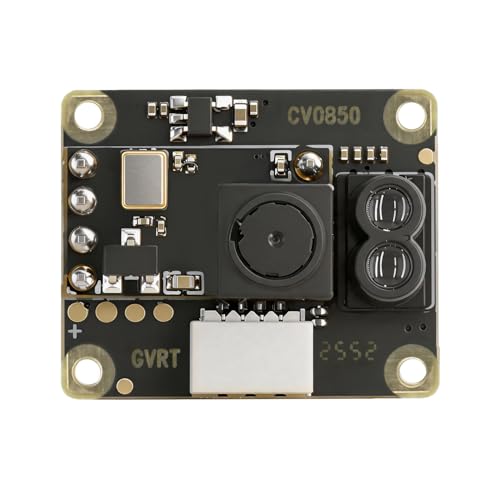
AERO SELFIE Infrared Optical Flow ranging Module CV0850 dToF Sensor for Drones & Robots, ranging 20mm to 8000mm with ±2cm Accuracy, UART/I2C, 50Hz, Suitable for Altitude Hold, and Obstacle avoidanceg
- Protocol Compatibility: Supports open-source flight protocols with auto detection
- Advanced dToF Technology: Provides precise short-distance measurements
- Measurement Range & Accuracy: Measures 20mm-8000mm with ±2cm accuracy
As an affiliate, we earn on qualifying purchases.
As an affiliate, we earn on qualifying purchases.

GPS Drone with Camera for Adults, 2K HD GPS Drones with Auto Return, Follow Me, Circle Fly, Waypoint Fly, Optical Flow, Brushless Motor, Foldable 5G Transmission FPV Quadcopter
- High-Resolution Camera: 2K HD adjustable camera with shock absorption
- Real-Time 5G Transmission: Stable live video streaming and HD photo sharing
- GPS Auto Return: Smart return when signal lost or low battery
As an affiliate, we earn on qualifying purchases.
As an affiliate, we earn on qualifying purchases.