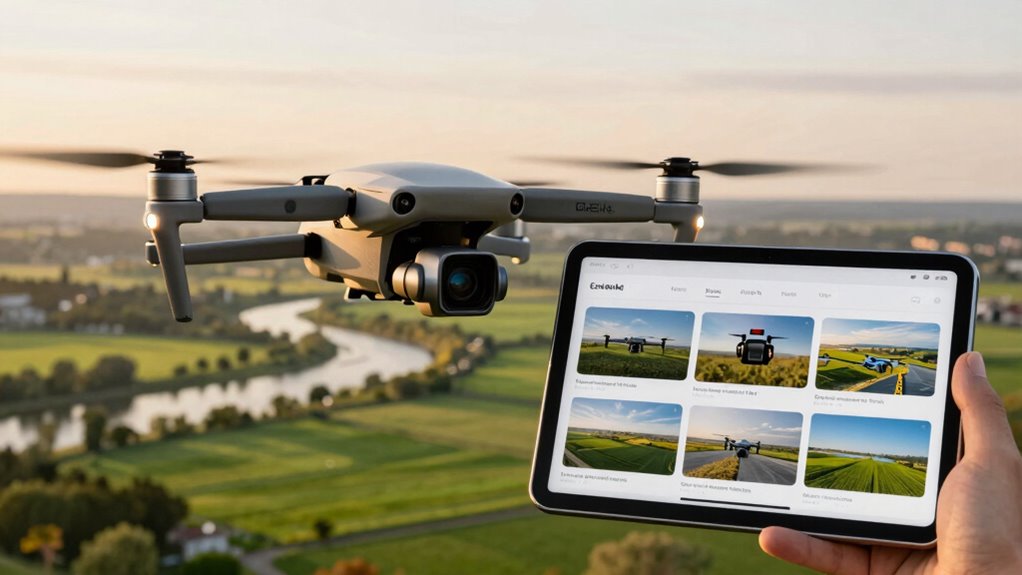

To choose the right media for high-resolution drone footage, focus on fast storage options like high-speed SSDs or microSD cards supporting UHS-II or UHS-III standards, which prevent bottlenecks and guarantee seamless data transfer. Use reliable, high-capacity devices that can handle large files from 4K or 6K recordings, and back up your footage often. Proper media selection, combined with ideal camera settings, helps you capture stunning, professional-quality footage—just keep going to learn more about maximizing your workflow.

Get the latest gadgets delivered free with Prime
- Fast, free delivery on millions of items
- Prime Video, Amazon Music and more included
- Member-only deals all year
Key Takeaways
- Select high-speed SSDs or microSD cards supporting UHS-II/UHS-III for fast data transfer during recording and editing.
- Ensure media can handle the high data rates of 4K or 6K footage to prevent bottlenecks.
- Use reliable, durable storage devices to safeguard large, high-resolution files.
- Match media standards with your drone’s camera settings for seamless workflow and maximum quality.
- Backup footage on multiple drives to prevent data loss and maintain workflow efficiency.

Capturing stunning high-resolution drone footage requires more than just a good camera; it demands the right media to guarantee your footage remains clear, detailed, and vibrant. Choosing the proper media involves understanding how your drone’s camera settings and post processing techniques work together to produce the best results. When selecting media, you need to prioritize storage devices that can handle high data rates without compromising quality. Solid-state drives (SSDs) are ideal because they offer fast read and write speeds, which are critical when recording large, high-resolution video files. Avoid slower microSD cards or external drives that might bottleneck your workflow, leading to dropped frames or corrupted footage. Opt for high-capacity, high-speed cards that support UHS-II or UHS-III standards, ensuring your media can keep pace with your drone’s recording capabilities.
Use high-speed SSDs and UHS-II/III cards to ensure smooth, high-quality drone footage recording without drops or corruption.
Your drone camera settings play a crucial role in capturing quality footage. Shooting in the highest resolution available, such as 4K or even 6K if your drone supports it, preserves more detail and gives you flexibility during post processing. Adjust your ISO, shutter speed, and aperture carefully to avoid noise, motion blur, or overexposure. Properly calibrated drone camera settings enhance the clarity and color accuracy of your footage, making post processing techniques more effective and less time-consuming. When editing, you’ll want to use software that allows you to fine-tune color grading, contrast, and sharpness—these post processing techniques can elevate your footage from good to stunning. Remember, the better your footage is straight out of the drone, the less work you’ll need to do later. Additionally, understanding media standards can help you select the most compatible and efficient storage options for your workflow. Knowing the data transfer speeds of your media ensures you can work seamlessly without delays during editing sessions. Incorporating workflow optimization strategies can further streamline your editing process and reduce potential bottlenecks.
Choosing the right media also impacts your workflow’s efficiency. High-resolution files are large and demand fast, reliable storage to prevent lag during editing. Using media with fast transfer speeds reduces the time it takes to move files from your drone to your editing station, allowing you to focus more on the creative aspects of your project. Additionally, backing up your footage on multiple drives ensures you don’t lose valuable data, especially when working with large files that are difficult to replace.
Ultimately, selecting the appropriate media, optimizing your drone camera settings, and applying effective post processing techniques work together to produce high-quality, professional-grade drone footage. Your media choice influences the entire workflow, from capturing crisp, vibrant images to delivering polished, high-resolution final videos. By paying attention to these details, you’ll consistently achieve stunning results that showcase your skills and the breathtaking landscapes you film.
high-speed SSD for drone footage
As an affiliate, we earn on qualifying purchases.
As an affiliate, we earn on qualifying purchases.
Frequently Asked Questions
How Does Media Type Affect Drone Battery Life?
Media type considerably affects your drone’s battery life through battery drain and media compatibility. Using high-capacity or high-resolution media can increase power consumption, leading to quicker battery drain. Additionally, incompatible media might force your drone to work harder, further reducing flight time. To maximize battery life, choose media that’s compatible with your drone’s specifications and avoid unnecessarily large or complex files, ensuring efficient operations and longer flights.
What Media Formats Are Best for 4K Drone Footage?
If you want your 4K drone footage to look stunning, go for lossless formats like ProRes or DNxHR, which keep detail sharp and colors vibrant. Avoid heavy media compression; it ruins quality faster than bad coffee. For smoother file transfers, choose formats that balance quality and size, making your editing process a breeze. Remember, your footage deserves the best media to truly shine in high resolution.
Can Media Storage Impact Drone Flight Stability?
Media storage can impact drone flight stability if the storage device isn’t compatible or if its capacity is insufficient. When media compatibility is off, your drone might struggle to save footage properly, causing delays or errors. Also, limited storage capacity forces you to stop and swap media often, which can interrupt your flight. Confirm your media device matches your drone’s requirements and offers ample storage to maintain smooth, stable flights.
How Do I Protect Media Files From Corruption?
Imagine your media files as delicate glass ornaments hanging in a windstorm; you protect them through media encryption, shielding them from unauthorized access, and by creating regular file backups, ensuring a second copy survives any crash or corruption. Store your files on reliable, high-quality storage devices, and avoid abrupt removals. These steps keep your high-resolution drone footage safe, preserving your work from accidental loss or damage.
Are There Specific Media Requirements for Professional Editing?
Yes, for professional editing, your media should have minimal compression to preserve quality. Use high-bit-rate formats like ProRes or DNxHR to prevent quality loss during editing. Make sure your footage supports color grading by shooting in RAW or log profiles, providing a wider dynamic range and flexibility. Avoid aggressive compression, as it hampers color grading and detailed editing. These requirements help you maintain the highest possible quality throughout the editing process.
UHS-II microSD card for 4K drone
As an affiliate, we earn on qualifying purchases.
As an affiliate, we earn on qualifying purchases.
Conclusion
Choosing the right media for your high-resolution drone footage isn’t just about storage; it’s about preserving the vividness of each detail. Imagine your footage as a window into a breathtaking world, where every color and contour tells a story. When you pick the perfect media, you’re not just saving data—you’re safeguarding your vision, ensuring it remains sharp and stunning for years to come. Trust the process, and let your footage truly soar.
high capacity drone storage card
As an affiliate, we earn on qualifying purchases.
As an affiliate, we earn on qualifying purchases.
professional drone video editing SSD
As an affiliate, we earn on qualifying purchases.
As an affiliate, we earn on qualifying purchases.
Fall Picks
fall essentials
As an affiliate, we earn on qualifying purchases.