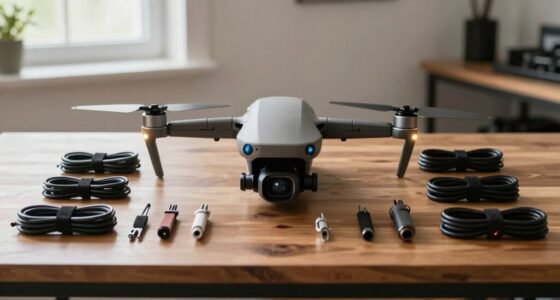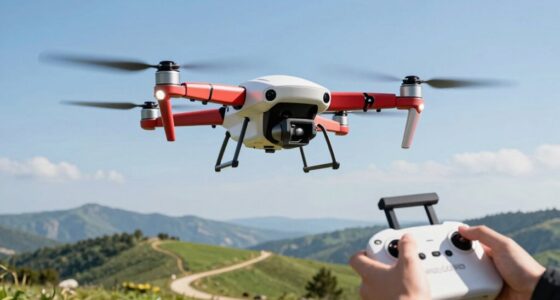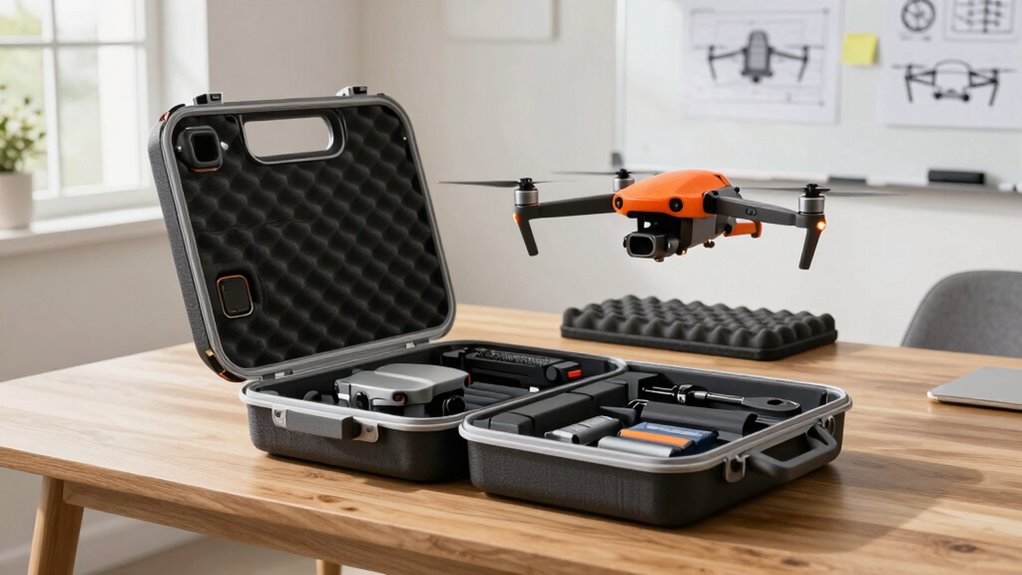

To build a more reliable drone gear transport setup, focus on securing batteries with insulation and fireproof containers, and disconnect them during transit. Use padded cases and custom compartments to protect your equipment, and verify all gear is powered off and clearly labeled. Plan your routes carefully, including backup options, and use high-quality GPS modules for better accuracy. Maintaining your gear and minimizing vibrations ensures dependable operation—keep exploring to discover even more ways to improve your setup.
Listen free for 30 days with Audible
Thousands of audiobooks and originals — cancel anytime.
As an affiliate, we earn on qualifying purchases.
Key Takeaways
- Use shock-absorbing, padded cases and custom compartments to protect equipment from impacts during transit.
- Power off all devices and secure batteries separately in fireproof containers to prevent accidental activation or damage.
- Implement clear labeling and organized packing to prevent mishandling and facilitate quick access.
- Develop a detailed, contingency-inclusive transport plan considering environmental factors and potential risks.
- Regularly inspect and maintain gear to ensure all components are functional and reduce malfunctions during transport.
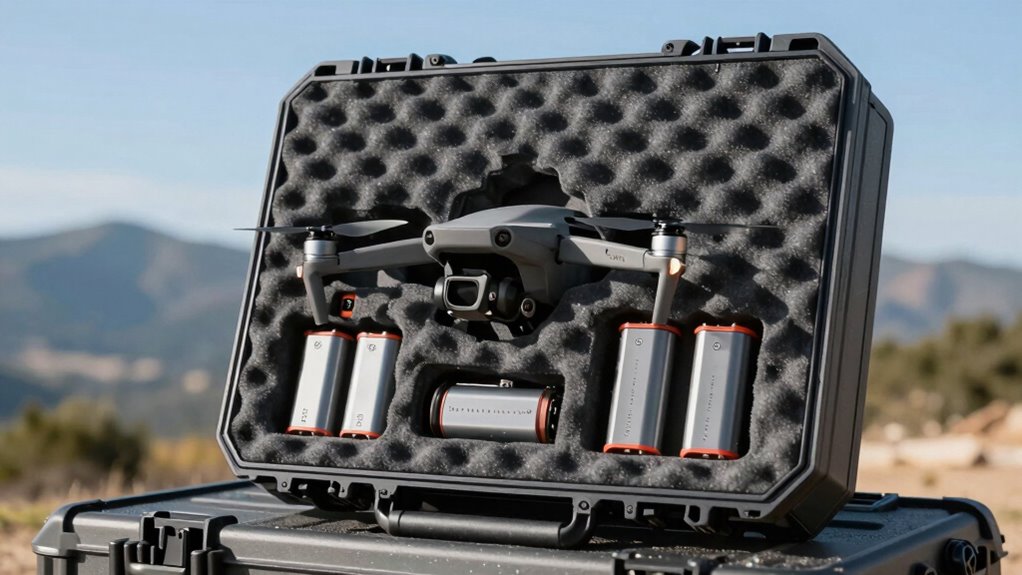
Establishing a reliable drone transport setup requires careful planning and precise execution. Your first priority should be guaranteeing that your drone’s battery safety measures are airtight. Lithium-polymer batteries, common in drones, are powerful but can pose risks if mishandled or damaged. Always use batteries with proper insulation, avoid overcharging, and store them in fireproof containers when not in use. Regularly inspect your batteries for swelling, leaks, or corrosion, as these are indicators of potential failure. When preparing for transport, disconnect batteries if possible, and secure them separately to prevent accidental activation or damage during movement. This vigilance reduces the risk of thermal runaway, which can lead to fires or equipment loss.
Prioritize battery safety with insulation, proper storage, and regular inspections to prevent thermal runaway and ensure reliable drone transport.
Another vital aspect is guaranteeing GPS accuracy throughout your transport setup. Accurate GPS positioning is essential for safe navigation and precise delivery, especially in complex environments. Before each trip, verify that your GPS system is calibrated correctly. Use high-quality GPS modules with multi-constellation support to improve signal reliability and reduce errors caused by signal multipath or interference. During transit, avoid areas with dense buildings or thick foliage that can obstruct signals. If you’re transporting in an urban or challenging environment, consider integrating external GPS antennas to enhance signal reception. Consistent GPS accuracy not only helps in maintaining a reliable route but also minimizes the risk of drone drift or unintended deviations, which could result in crashes or lost gear. Enhancing your setup with reliable GPS hardware can significantly improve overall navigation performance. Additionally, employing robust shielding techniques around your GPS components can help mitigate interference and further stabilize signal quality. Incorporating proper shielding ensures that your GPS signals remain as clear as possible, especially in environments prone to electromagnetic interference.
In addition to batteries and GPS, you should also focus on how your drone is secured during transport. Using padded cases, foam inserts, or custom compartments helps prevent physical shocks that could damage sensitive components. Make sure your drone is completely powered off before packing to eliminate accidental motor spins or system errors. Label your gear clearly, especially if you’re transporting multiple drones or accessories, to avoid mix-ups or mishandling. Regularly check your equipment for wear and tear, and replace any compromised parts before deployments. Paying attention to equipment maintenance ensures your gear remains dependable and reduces the likelihood of malfunctions during critical operations.
Finally, plan your routes carefully and keep a backup plan ready. Reliable transport isn’t just about the drone itself but also the journey you undertake. Ensure your vehicle or carrying method offers a stable, vibration-free environment. Keep communication devices charged and within reach, so you can respond quickly if issues arise. When all these elements come together—battery safety, GPS accuracy, secure packing, and thoughtful planning—you build a robust, dependable drone transport setup that minimizes risks and maximizes operational success.
As an affiliate, we earn on qualifying purchases.
Frequently Asked Questions
What Materials Are Best for Shock Absorption in Drone Cases?
You should choose materials with excellent durability and shock absorption properties for your drone case. Foam inserts, like EVA or memory foam, are ideal because they absorb impact and protect sensitive gear. Rubberized materials or silicone also provide excellent shock absorption techniques, reducing vibrations during transport. Hard plastics like polypropylene or polycarbonate offer durability and impact resistance, ensuring your drone gear stays safe even in rough conditions.
How Do I Prevent Drone Gear Theft During Transit?
To prevent drone gear theft during transit, you should implement robust security measures like tamper-proof locks and GPS tracking. Use secure storage solutions, such as lockable cases or containers, to keep your gear protected. Always stay vigilant, avoid predictable routes, and consider discreet packaging to reduce theft risk. Combining these strategies guarantees your drone equipment stays safe and secure throughout transportation.
Can I Customize Transport Cases for Specific Drone Models?
Yes, you can customize transport cases for specific drone models. You should use custom foam inserts and case padding tailored to your drone’s dimensions, ensuring a snug fit. This customization protects delicate parts from shocks and vibrations during transit. By designing case padding that precisely contours to your drone’s shape, you minimize movement and potential damage, giving you peace of mind on every journey.
What Is the Optimal Weight Limit for Drone Transport Setups?
You should aim for a weight limit around 25-30 pounds for drone transport setups. This range balances battery safety and weight distribution, ensuring your gear isn’t overloaded and remains stable during transit. Keep batteries secure and separate to prevent safety hazards, and distribute weight evenly to avoid shifting. Staying within this limit helps protect your drone gear, reduces damage risk, and makes handling easier.
How Often Should I Inspect and Maintain My Transport Equipment?
You should inspect and maintain your transport equipment regularly—at least before every flight and monthly for deep checks. Ironically, neglecting this can jeopardize transport safety and harm equipment durability, risking drone damage or failure. Routine inspections catch issues early, ensuring your gear stays reliable. Staying vigilant keeps your setup in top shape, giving you peace of mind and preventing costly mishaps, because safe transport isn’t just good practice—it’s essential.
fireproof battery storage container
As an affiliate, we earn on qualifying purchases.
As an affiliate, we earn on qualifying purchases.
Conclusion
Now that you’ve set up your transport system with sturdy cases, secure straps, and organized compartments, you’re almost there. But remember, the real test is in the unexpected—what happens when conditions aren’t perfect? Keep your setup adaptable and always be ready to improvise. The key to truly reliable transport isn’t just the gear you pack, but how you respond when the unanticipated strikes. Stay prepared, and the skies will remain yours to command.
high accuracy GPS module for drones
As an affiliate, we earn on qualifying purchases.
As an affiliate, we earn on qualifying purchases.
shock absorbing drone carrying case
As an affiliate, we earn on qualifying purchases.
As an affiliate, we earn on qualifying purchases.
Fall Picks
fall essentials
As an affiliate, we earn on qualifying purchases.