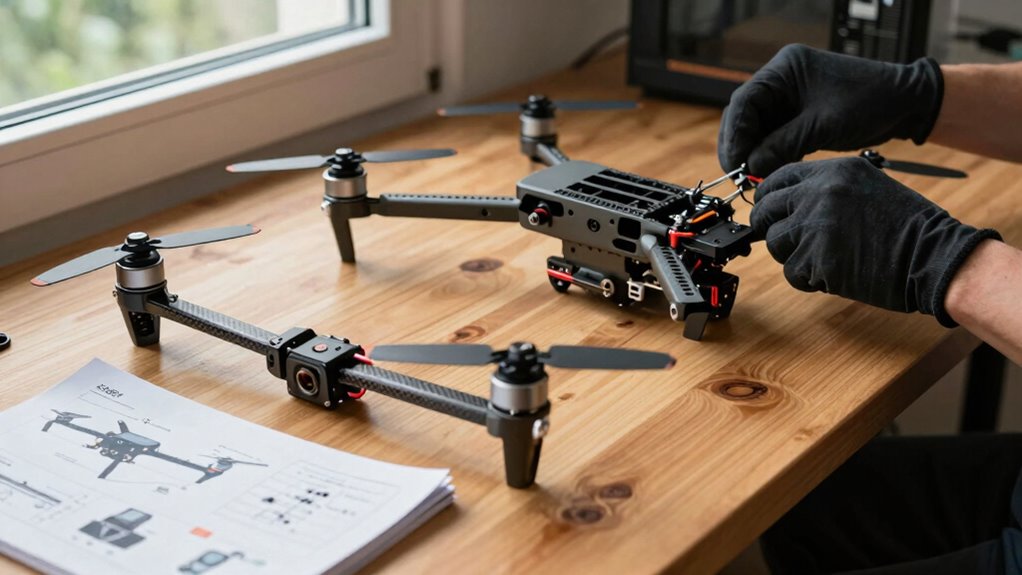

To build a high-value drone kit, start by identifying your main purpose—racing or aerial photography—and choose components suited for that goal. Focus on lightweight, durable frames and powerful motors for agility or stability, depending on your needs. Choose low-latency FPV systems and programmable flight controllers for reliability. Balance quality and cost, avoiding unnecessary features. Keep sustainability in mind, selecting eco-friendly materials. Continue exploring to discover how to customize your kit for peak performance and longevity.

Get the latest gadgets delivered free — and shop member deals
- Fast, free delivery on millions of items
- Access to Prime Big Deal Days deals on October 6–7
- Prime Video, Amazon Music and more included
Key Takeaways
- Identify primary drone use (racing or photography) to select appropriate components for performance and durability.
- Choose lightweight, sustainable materials and durable parts to balance agility, stability, and environmental impact.
- Prioritize high-quality, low-latency FPV systems and responsive flight controllers for real-time feedback and safety.
- Balance cost and quality by selecting reliable brands and avoiding unnecessary features, ensuring long-term value.
- Customize the drone kit to specific needs, optimizing for responsiveness, flight time, or stability as required.
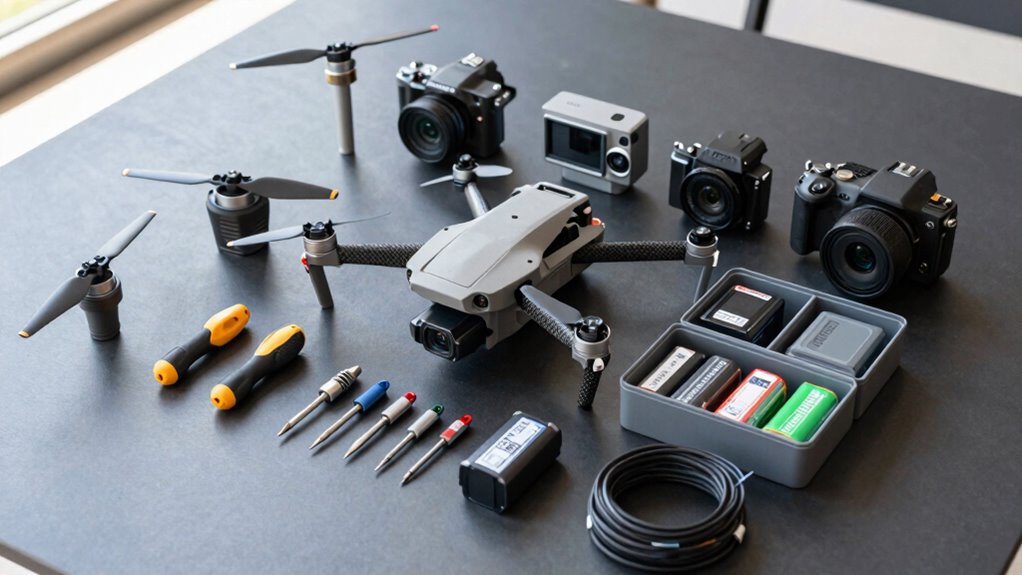
On the other hand, if drone racing is your main interest, your kit will need to emphasize speed, agility, and quick responsiveness. Opt for a lightweight, aerodynamic frame designed for agility, with powerful motors that provide rapid acceleration. Your choice of propellers should favor quick responsiveness and high thrust-to-weight ratios. A high-quality, low-latency video transmission system is essential for real-time racing feedback, so choose a reliable FPV (First Person View) setup. Additionally, a flight controller with advanced racing features, like programmable flight modes and quick failsafe responses, will give you the competitive edge. In both cases, selecting durable components that can withstand crashes is crucial; racing drones tend to take more hits, while aerial photography drones should endure long hours of flight. Considering biodiversity and the environment when choosing your drone materials can also contribute to sustainable practices. It’s also important to consider the cost of your components to avoid overspending while still maintaining quality. Cost is another critical factor. While it’s tempting to go for top-tier equipment, you can build a highly capable drone without overspending. Focus on quality components that offer good value, and avoid flashy, unnecessary features that don’t serve your primary purpose. Balancing quality and budget means researching brands and reading reviews to find reliable parts that last. You should also consider the ease of maintenance and future upgrades, so your drone remains high-value over time. Whether your goal is capturing breathtaking aerial shots or winning drone races, your kit should be tailored to your specific needs, ensuring you get the most out of your investment. In the end, a well-chosen combination of components will deliver the performance and durability you need, making your drone a valuable tool for your passion.
high-performance racing drone kit
As an affiliate, we earn on qualifying purchases.
As an affiliate, we earn on qualifying purchases.
Frequently Asked Questions
How Do I Choose the Right Drone for My Specific Needs?
To choose the right drone, first identify what you need it for—like capturing sharp images with a quality drone camera or ensuring smooth footage with excellent flight stability. Consider your skill level and budget, then compare models that excel in these areas. Look for features like camera quality, flight stability, battery life, and ease of use. Picking a drone that matches your specific needs guarantees better performance and satisfaction.
What Safety Precautions Should I Follow When Building a Drone?
Prioritize safety by practicing proper procedures. Protect yourself with battery safety—avoid punctures, overcharging, or short circuits. Handle propellers with care, ensuring they’re secure before flight to prevent accidents. Wear safety gear like gloves and goggles, and work in a clear, clutter-free space. Double-check connections and components, and always test your drone in open areas away from people. Following these precautions keeps your building process safe and secure.
How Much Should I Budget for a High-Value Drone Kit?
You should budget around $500 to $1,500 for a high-value drone kit. This range covers quality drone batteries to guarantee longer flight times and reliable power. Investing in a good camera stabilization system is also vital for clear footage. Higher-end kits may include advanced features, but focus on balancing your needs with your budget to get the best value for your investment.
Can I Upgrade My Drone Components Later On?
Yes, you can upgrade your drone components later on. Did you know that over 60% of drone enthusiasts regularly upgrade parts? When upgrading, focus on battery compatibility to guarantee safety and performance. You can also improve flight time and stability with propeller upgrades. Just make sure new components fit your current drone model, and check manufacturer guidelines to avoid compatibility issues. Upgrading keeps your drone sharp and adaptable for future needs.
What Legal Regulations Apply to Flying Drones in My Area?
You need to check your local regulations, as insurance requirements and privacy concerns vary by area. Many regions mandate drone registration and liability insurance to protect yourself and others. Also, be mindful of privacy laws—avoid flying over private property without permission. Stay informed about specific rules in your area to guarantee safe, legal flying, and respect others’ privacy while enjoying your drone activities.
aerial photography drone components
As an affiliate, we earn on qualifying purchases.
As an affiliate, we earn on qualifying purchases.
Conclusion
Now that you know how to craft a drone kit tailored to real needs, you’re armed with a toolbox as sharp as an eagle’s talon. Think of your kit as a trusty compass, guiding you through the skies and challenges ahead. With each carefully chosen component, you’re not just building a drone—you’re forging a winged extension of your vision. So, take off confidently, and let your high-value drone soar to new heights, painting the sky with your ingenuity.
As an affiliate, we earn on qualifying purchases.
programmable flight controller for drones
As an affiliate, we earn on qualifying purchases.
As an affiliate, we earn on qualifying purchases.
Fall Picks
fall essentials
As an affiliate, we earn on qualifying purchases.