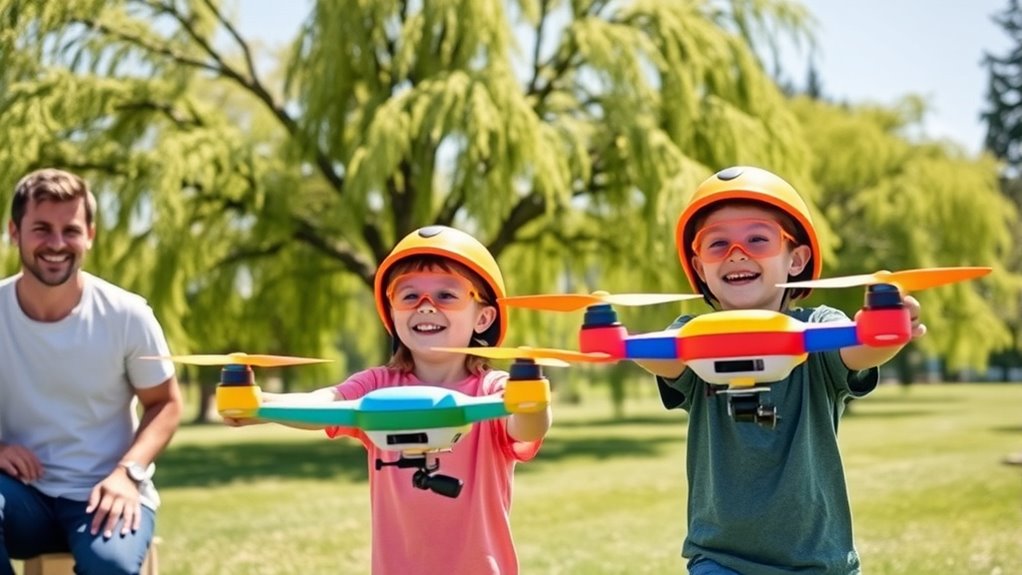

To guarantee safe and fun drone flying for kids, always choose beginner-friendly models with features like propeller guards, lightweight design, and simple controls. Teach your child to fly outdoors in open areas away from people, animals, and obstacles, while supervising closely. Encourage respectful flying practices and patience as they learn. Setting clear boundaries and using protective gear can boost confidence and safety. Keep exploring for more tips to make drone adventures both exciting and secure.

Get the latest gadgets delivered free with Prime
- Fast, free delivery on millions of items
- Prime Video, Amazon Music and more included
- Member-only deals all year
Key Takeaways
- Choose beginner-friendly drones with safety features like propeller guards and lightweight design.
- Supervise children closely, demonstrating safe control and encouraging gradual skill development.
- Teach kids to fly outdoors in open areas away from people, animals, and obstacles.
- Emphasize the importance of line-of-sight control and respectful flying practices.
- Equip children with protective gear and set clear boundaries to ensure safe, enjoyable drone experiences.
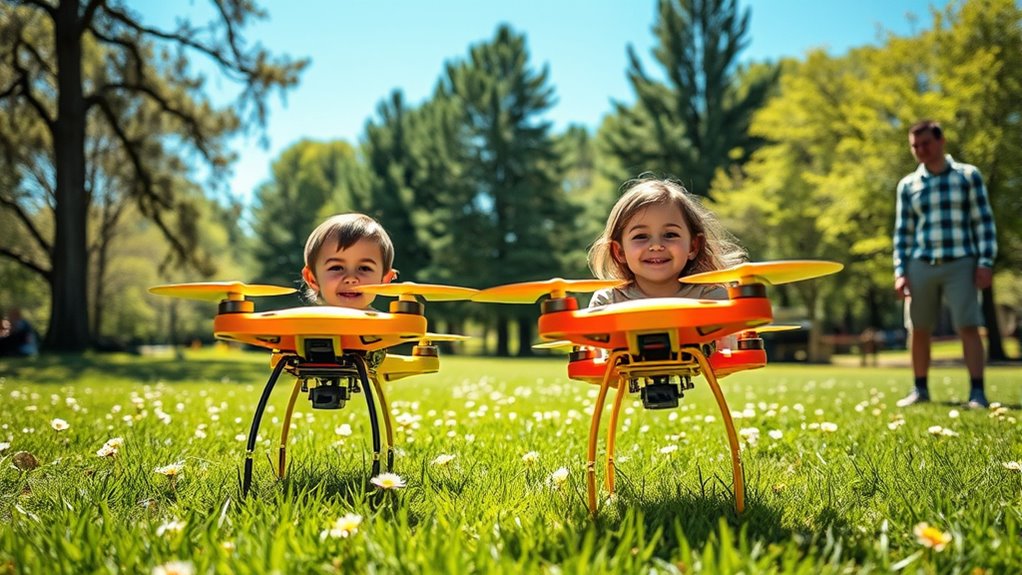
Have you ever wondered how kids can safely enjoy flying drones? If you’re considering introducing your child to this exciting activity, understanding safety guidelines is essential. Starting with the right equipment, like beginner models, can make a significant difference in ensuring a safe and enjoyable experience. These beginner models are designed with simplified controls and robust build quality, making them perfect for young beginners who are just learning how to fly. They often come with features like propeller guards, which help prevent injuries and damage during accidental crashes, giving you peace of mind as your child explores drone flying.
Beginner drone models with safety features like propeller guards are ideal for kids learning to fly.
When selecting a drone for your kid, prioritize models that are specifically labeled as beginner models. These are built with safety in mind and are typically lightweight, reducing the risk of injury or damage if they fall or crash. Additionally, look for drones with easy-to-understand controls, so your child can learn basic flying techniques without frustration. Many beginner models also include features like altitude hold and one-button takeoff and landing, simplifying the flying process and helping your child maintain control. This not only boosts confidence but also minimizes the chance of accidents caused by unfamiliarity or overcorrecting.
Before your child starts flying, it’s vital to establish safety guidelines. Teach them to always fly in open, outdoor areas away from people, animals, trees, and power lines. Remind them to keep the drone within their line of sight and avoid flying near busy roads or crowded spaces. Setting boundaries helps prevent dangerous situations and keeps everyone safe. Encourage your child to wear protective gear such as safety goggles, especially during the initial learning phase, to prevent injury from unexpected crashes or flying debris. Additionally, understanding Free Floating principles can help your child control the drone more effectively and safely during flight.
Supervise your child closely during their first flights. Show them how to handle the remote control properly, emphasizing gentle movements and patience. Explain that crashes are part of the learning process but shouldn’t cause frustration; they’re opportunities to learn and improve. Consistent practice within safe parameters will help your child develop their flying skills gradually while understanding the importance of safety. Reinforce the importance of respectful and responsible flying, including respecting others’ privacy and property.
kids beginner drone with propeller guards
As an affiliate, we earn on qualifying purchases.
As an affiliate, we earn on qualifying purchases.
Frequently Asked Questions
What Are the Best Age-Appropriate Drones for Beginners?
For beginners, the best age-appropriate drones are simple, lightweight models with good drone battery life, so your child can enjoy longer flights. Look for drones with durable build quality and easy controls. Camera quality isn’t a priority at this stage, but some models offer basic cameras for fun photos. These drones help kids learn flying skills safely, making their first experience enjoyable and educational.
How Can I Teach My Child Responsible Drone Usage?
Research shows that consistent parents’ supervision and teaching proper drone etiquette markedly boost responsible usage. Start by setting clear rules about where and when your child can fly, emphasizing safety and respect for others. Show them how to handle the drone carefully and model responsible behavior. Encourage open conversations about potential risks and the importance of following laws. By actively guiding them, you help your child develop safe, respectful drone habits that last.
Are There Specific Safety Certifications for Kids’ Drones?
Yes, there are specific safety standards and certification requirements for kids’ drones. Manufacturers often design these drones to meet safety standards like ASTM or CE certifications, guaranteeing they are safe for children. Before buying, check for proper certification labels and age recommendations. This helps you ensure the drone complies with safety regulations, providing a safer flying experience for your child and peace of mind for you.
What Maintenance Do Kids’ Drones Typically Require?
You should regularly check your kid’s drone for proper battery care and propeller replacement. Keep the batteries charged but avoid overcharging to extend their lifespan. Inspect propellers for damage and replace them if they’re cracked or chipped to guarantee safe flying. Clean the drone gently after use and store it in a cool, dry place. Performing these simple maintenance tasks keeps the drone in good condition and safe for your child to fly.
How Do I Prevent My Child From Losing Their Drone?
Prevent your child’s drone from disappearing with simple, smart strategies. Start with secure storage safety tips—designate a specific spot for the drone and keep it out of reach when not flying. Use drone theft prevention techniques like attaching a GPS tracker or engraving the drone with their name. These measures help protect the drone from loss and theft, giving you peace of mind and ensuring hours of happy, safe flying fun.
lightweight kids drone with altitude hold
As an affiliate, we earn on qualifying purchases.
As an affiliate, we earn on qualifying purchases.
Conclusion
With wonderful, well-chosen drones, you’ll watch your kids’ confidence soar and their creativity soar even higher. Remember to prioritize safety, supervise steadily, and set simple, sensible rules. By doing so, you’ll foster fun-filled flights that foster focus, friendship, and fun. So, equip your youngsters with the right remote, review rules regularly, and watch them wield their winged wonders wisely—making memorable moments in a safe, spirited, and satisfying soaring adventure.
kids drone with one-button takeoff and landing
As an affiliate, we earn on qualifying purchases.
As an affiliate, we earn on qualifying purchases.
children safety goggles for drone flying
As an affiliate, we earn on qualifying purchases.
As an affiliate, we earn on qualifying purchases.
Halloween Picks
halloween
As an affiliate, we earn on qualifying purchases.