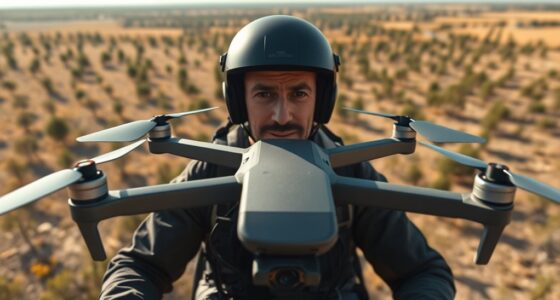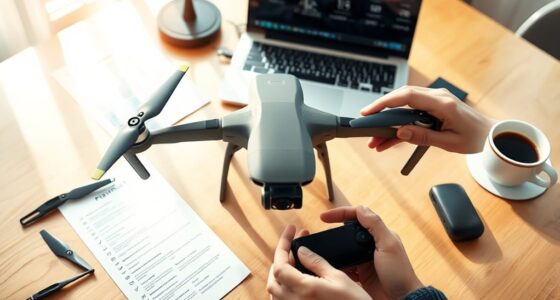
Many drone misconceptions come from misunderstandings about safety rules and technology. You might think drones are inherently dangerous or invade privacy, but most risks are minimized through FAA regulations and smart features like obstacle avoidance and return-to-home. Responsible operation and knowing the facts can drastically reduce fears and accidents. Once you understand how drones are designed to be safe and respectful, you’ll see there’s much more to discover. Keep exploring to learn the truth behind these myths.
Key Takeaways
- Many fears about drone invasions are based on misconceptions; responsible flying under FAA regulations reduces privacy concerns.
- Modern drones are equipped with safety features like obstacle avoidance and GPS stabilization, making crashes less likely when used correctly.
- Perceived dangers often result from careless operation; following FAA rules and maintaining drones ensures safer flights.
- Drones are not inherently unsafe; proper education and responsible use dispel myths about their risks and malfunctions.
- Building trust through knowledge of regulations and safety practices promotes responsible drone use and counters negative stereotypes.
Are drones really as risky or invasive as many believe? That’s a common concern, but the truth is, when you understand the rules and safety measures in place, drones are much less intimidating than they might seem. The Federal Aviation Administration (FAA) has established clear regulations to guarantee drone safety and protect privacy. These rules are designed to prevent accidents, safeguard people on the ground, and keep airspace organized. As a drone user, you’re expected to follow these regulations, which include flying below 400 feet, avoiding restricted areas, and maintaining visual line of sight. When you do so, you contribute to safer skies and reduce the potential for mishaps. Many misconceptions about drones stem from a lack of awareness about these regulations, which are in place precisely to manage risks and promote responsible flying.
Understanding FAA regulations can help you see that most drone accidents or invasions of privacy are preventable. For instance, flying beyond your line of sight or over crowds without proper authorization increases risk and may violate FAA rules, leading to fines or legal trouble. However, if you stick to the rules—flying only in permitted areas, respecting privacy boundaries, and avoiding congested zones—you greatly diminish the risk of accidents or privacy breaches. Drone safety isn’t just about following the law; it’s about being a responsible operator who values safety for everyone. Many drone crashes happen because pilots ignore regulations or fly recklessly, but by staying informed and cautious, you can avoid contributing to that problem.
Following FAA rules and respecting privacy greatly reduces drone risks and accidents.
Another common myth is that drones are inherently dangerous or prone to malfunction. While no technology is flawless, modern drones are built with safety features like GPS stabilization, obstacle avoidance, and automatic return-to-home functions. These features help prevent crashes and keep your drone safe during operation. Proper maintenance, calibration, and understanding how your drone works also go a long way toward ensuring safe flights. When you respect FAA regulations and prioritize drone safety, you’re not only protecting yourself but also everyone around you. This responsible approach helps dispel fears and misconceptions, showing that drones, when operated correctly, are useful tools rather than hazards.
In essence, the perceived risks associated with drones often come down to ignorance or careless flying. Educating yourself about FAA regulations and drone safety practices transforms your flying experience from risky to responsible. It’s about respecting the rules, understanding your equipment, and flying with care. Additionally, educating yourself about drone safety helps establish trust with the community and regulatory authorities. When you do that, you help build a positive reputation for drone enthusiasts and demonstrate that drones can be both fun and safe, not invasive or dangerous.
Frequently Asked Questions
Can Drones Replace All Traditional Photography Methods?
Drones can’t replace all traditional photography methods, but they broaden your creative applications. Think of aerial perspectives as a new window into your work, adding depth and dimension that ground shots can’t match. While drones excel in capturing expansive landscapes or hard-to-reach angles, traditional photography still shines for intimate, detailed shots. Embrace both tools, blending their strengths to elevate your art and tell richer stories.
Are Drones Suitable for All Weather Conditions?
Drones aren’t suitable for all weather conditions due to weather limitations like rain, snow, strong winds, and fog, which can affect flight safety and performance. You should always check local flight restrictions and weather forecasts before flying. Poor visibility and adverse conditions increase the risk of crashes or damage. To guarantee safe drone operation, avoid flying in extreme weather and stay within recommended flight restrictions.
How Long Can Most Consumer Drones Fly?
Most consumer drones typically fly for about 20 to 30 minutes per battery charge, depending on the model and flying conditions. Battery life directly impacts flight duration, so you should always carry spare batteries if you plan extended flights. Factors like wind and payload can reduce flight time. To maximize your drone’s flying time, guarantee batteries are fully charged and avoid aggressive maneuvers that drain power faster.
Do Drones Require Special Licenses to Operate?
You typically need drone licensing and pilot certification if you’re flying for commercial purposes or if your drone exceeds certain weight limits, generally over 0.55 pounds (250 grams). For recreational flying, regulations are usually simpler, but it’s essential to follow local laws. Always check your country’s rules to make certain you’re compliant, as licensing requirements can vary. Staying informed helps you fly responsibly and legally.
Are Drone Cameras Capable of High-Resolution Imaging?
Yes, drone cameras are capable of high-resolution imaging. With advances in camera technology, you can capture stunning aerial photography that showcases crisp details and vibrant colors. Modern drone cameras often feature 4K or even higher resolution, making them ideal for professional-quality shots. Whether for photography or videography, you can trust that drone cameras deliver exceptional image quality, allowing you to create impressive visuals from above.
Conclusion
Don’t let myths cloud your view of drones. The truth is, they’re safe, versatile tools used responsibly by many. Whether it’s their flight capabilities or legal restrictions, understanding the facts helps you see drones in a new light. So next time you hear a rumor, remember: knowledge is power. Embrace the real story, and you’ll discover how drones can truly benefit and inspire your world.