Before sunset, assess your drone’s sensors and camera capabilities in low-light conditions. Start your flight early to maximize daylight, and keep a close eye on battery life as it drains faster in the dark. Make sure you stay within visual line of sight and follow local regulations for low-light flying. Shadows and reduced contrast can hide obstacles, so plan your route carefully. If you want to master these challenges, there’s more detail to explore below.

Get the latest gadgets delivered free with Prime
- Fast, free delivery on millions of items
- Prime Video, Amazon Music and more included
- Member-only deals all year
Key Takeaways
- Review your drone’s sensor specifications to understand its low-light performance and limitations.
- Plan flights early enough to maximize daylight and avoid rushing as sunset approaches.
- Adjust camera settings—use high resolution, increased exposure, and ND filters for better low-light footage.
- Monitor battery life closely, as low-light conditions can increase power consumption and flight risks.
- Ensure compliance with local regulations and maintain visual line of sight for safe night or low-light flying.
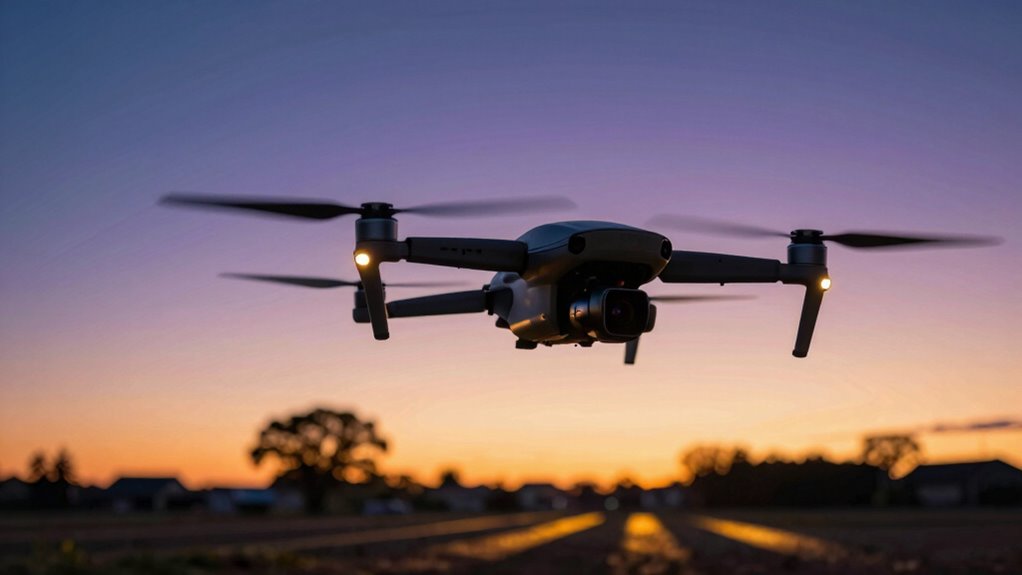
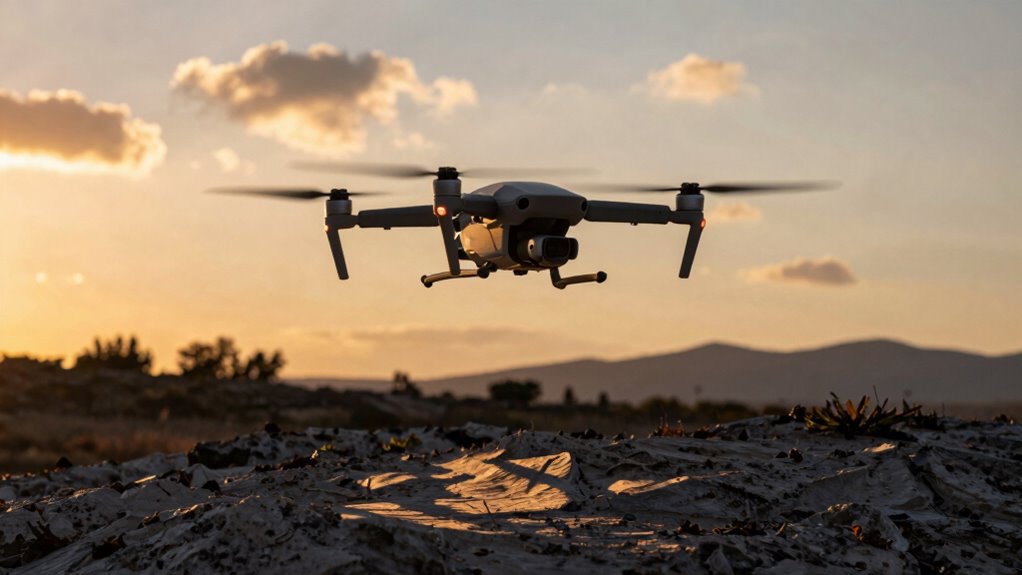
As sunset approaches, it’s tempting to push your drone’s capabilities to capture stunning low-light shots, but understanding its limitations is vital for a safe and successful flight. Night navigation becomes more challenging as visibility drops, so you need to be aware of how your drone’s sensors and GPS functions perform in diminished light. Many drones rely on visual sensors or GPS signals to maintain stable flight and avoid obstacles, but these systems can struggle in low-light conditions. Shadows and reduced contrast can make it harder for the drone’s sensors to detect objects, increasing the risk of collisions. Before flying at sunset, review your drone’s specifications and sensor capabilities to gauge whether it’s equipped for effective night navigation. If your drone has obstacle avoidance sensors, check if they are active and functioning properly in low light, as some sensors are less reliable when darkness falls.
Camera performance during sunset is another vital consideration. As the natural light diminishes, your drone’s camera may struggle to deliver sharp, clear images due to limited exposure and sensor sensitivity. Many consumer drones perform best in well-lit conditions, and their low-light capabilities can vary greatly. To maximize your chances of capturing quality footage, set your camera to the highest possible resolution and adjust exposure settings if available. Use ND filters if your drone supports them to reduce glare and improve contrast. Keep in mind that even with the best settings, low-light footage can appear grainy or blurry, so it’s wise to manage your expectations accordingly. Additionally, understanding your drone’s sensor capabilities can help you anticipate its performance in challenging lighting. Being aware of sensor limitations ensures you won’t be caught off guard by unexpected performance issues as light diminishes. Recognizing the camera’s low-light performance can also help you plan your shots more effectively. Furthermore, researching your drone’s low-light performance can be beneficial for planning successful sunset flights.
Timing your flight is essential. Plan to start your drone’s flight well before sunset, giving yourself enough time to complete your shots while sufficient daylight remains. This buffer helps avoid rushing in the decreasing light and reduces the chances of losing visual line of sight or encountering navigation issues. Always keep a close eye on the drone’s battery life, as low-light conditions can cause you to fly more cautiously, potentially draining power faster as the drone works harder to stabilize itself. Additionally, be aware of local regulations and restrictions related to night flying, as some areas have strict rules that could affect your plans. Being familiar with local regulations related to low-light or night flights can prevent legal issues and ensure a smooth experience.
In essence, thinking through night navigation and camera performance before sunset flights guarantees you’re prepared for the unique challenges low-light conditions present. By understanding your drone’s capabilities and limitations, you can make smarter decisions, fly more safely, and capture the best possible shots before darkness takes over.
drone low light sensor performance
As an affiliate, we earn on qualifying purchases.
As an affiliate, we earn on qualifying purchases.
Frequently Asked Questions
Can Drone Cameras Automatically Adjust for Low-Light Conditions?
Drone cameras often automatically adjust for low-light conditions through advanced camera sensors that optimize exposure and sensitivity. You’ll also benefit from image stabilization, which helps reduce blurriness caused by shaky movements in dim lighting. However, automatic adjustments aren’t foolproof, so it’s wise to manually tweak settings or plan flights during brighter times. Understanding these features lets you capture clearer footage even in challenging lighting conditions.
What Safety Precautions Are Recommended During Sunset Drone Flights?
During sunset drone flights, prioritize safety by staying alert to night time navigation challenges and weather impact. Just like a sailor relies on stars when GPS fails, keep your drone within line of sight and avoid flying in fog or strong winds. Always check weather conditions beforehand, and use a spotter if possible. These precautions guarantee you maintain control and avoid accidents as visibility diminishes.
How Does Low Light Affect Drone Battery Life?
Low light can impact your drone’s battery life because the sensor sensitivity increases, causing the drone to work harder to capture images or videos. This extra effort can drain the battery faster. Additionally, frequent low-light conditions contribute to battery degradation over time, reducing overall lifespan. To maximize flight time, avoid prolonged low-light flights and monitor your drone’s battery health regularly. Proper maintenance helps guarantee reliable performance even in challenging lighting conditions.
Are There Specific Drone Models Best Suited for Low-Light Photography?
You’ll notice that drones with larger sensors and wider lens apertures excel in low-light photography, capturing more light and detail. Models like the DJI Mavic 3 or Autel Evo Lite+ are designed for this, thanks to their enhanced sensor sensitivity and adjustable apertures. As the sun sets, these drones adapt better, giving you clearer, brighter images even in dim conditions. Choosing the right model makes low-light shots more achievable and stunning.
What Legal Restrictions Apply to Flying Drones at Sunset?
When flying drones at sunset, you must guarantee regulatory compliance by checking local laws, such as altitude limits and no-fly zones. Be mindful of privacy concerns, avoiding capturing images of private property without permission. Stay within visual line of sight and avoid flying near airports or crowded areas. Understanding these restrictions helps you fly responsibly and legally, ensuring a safe experience while respecting others’ privacy rights during sunset drone flights.
As an affiliate, we earn on qualifying purchases.
Conclusion
As the sun dips below the horizon, remember your drone is like a lighthouse in the gathering dusk—guiding you safely through shadows. By understanding its limits before sunset, you’re not just avoiding trouble; you’re illuminating the path for future flights. Embrace the twilight as a symbol of balance—where caution and curiosity meet. With thoughtful planning, you’ll navigate low-light skies confidently, turning fleeting moments into lasting memories, just like a lighthouse guiding ships safely home.
drone obstacle avoidance sensors
As an affiliate, we earn on qualifying purchases.
As an affiliate, we earn on qualifying purchases.
As an affiliate, we earn on qualifying purchases.
Fall Picks
fall essentials
As an affiliate, we earn on qualifying purchases.