In aerial photography, composition matters even more because the atmosphere is constantly shifting, affecting how scenes look and how you perceive them. Changes in altitude, pollution, and weather can distort light, contrast, and color, making it harder to capture clear, compelling images. You need to carefully frame your shots, considering atmospheric conditions to guarantee depth, mood, and detail come through. Keep exploring, and you’ll discover how understanding atmospheric impacts can elevate your aerial compositions.
Key Takeaways
- Atmospheric variability significantly influences light, color, and visibility, making thoughtful composition essential for accurate scene interpretation.
- Higher altitudes reduce haze and pollution effects, requiring strategic framing to capture clarity and detail.
- The atmosphere acts as a lens, bending light; composition must account for these distortions to enhance scene perception.
- Changing atmospheric conditions affect depth, mood, and contrast, demanding adaptable compositional techniques for aerial photography.
- Understanding atmospheric effects helps optimize composition for dynamic, shifting aerial environments.

Have you ever wondered why the air around us can vary so much in quality? It’s because the atmosphere isn’t static; it shifts constantly, influenced by factors like temperature, pollution, and weather patterns. When you look at the sky or a distant landscape, you’re seeing an aerial perspective that’s shaped by these changes. The way objects appear at different distances isn’t just about optical illusion—it’s directly affected by altitude effects and how particles, moisture, and pollutants scatter light. This makes composition incredibly important when capturing or understanding scenes in the air, more so than on the ground.
In the air, the atmosphere acts like a lens, bending and scattering light in ways that alter how we perceive depth and clarity. As you ascend in altitude, the air becomes thinner and cleaner, reducing the scattering of light caused by dust and pollution. This change in composition can make distant objects appear sharper and clearer, emphasizing the significance of understanding altitude effects. When you’re taking photographs or trying to interpret what you see from a high vantage point, knowing how atmospheric conditions influence aerial perspective can make all the difference. It’s not just about the scene itself, but also about how the atmosphere modifies it.
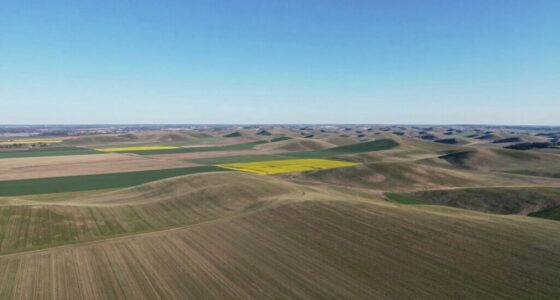
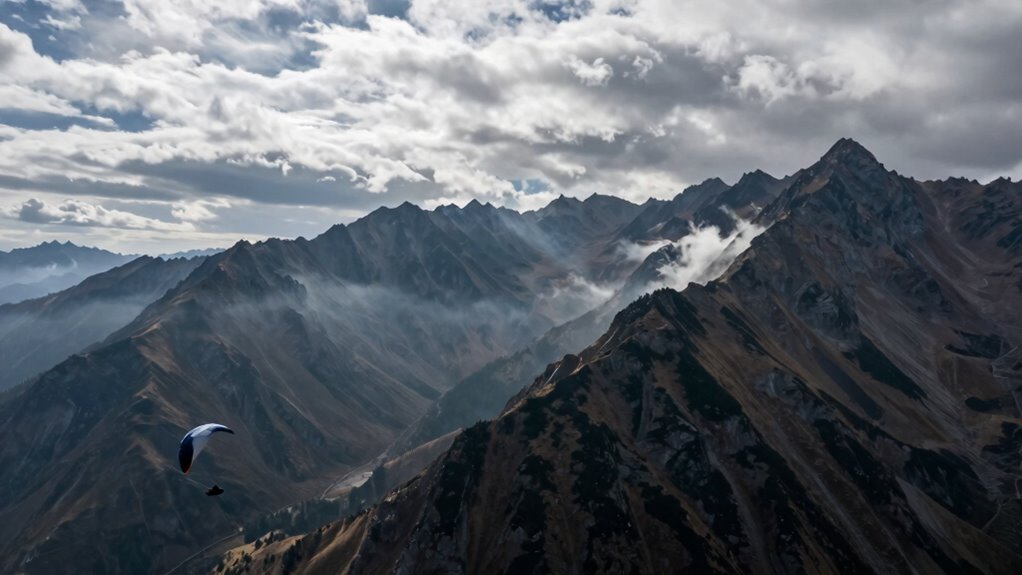
Because of this, composition in aerial photography or observation demands a keen eye for these effects. You need to consider how haze, smog, or humidity might obscure or distort your view. A well-composed shot or observation accounts for these variables, using them to enhance depth or mood rather than letting them diminish clarity. For instance, capturing a mountain range from a high altitude involves understanding how atmospheric clarity changes with elevation, affecting the overall composition. The subtle gradations of color and contrast caused by altitude effects can turn a flat image into a vibrant, dynamic scene.
On the ground, you might have more control over framing and lighting, but in the air, you need to adapt to constantly shifting atmospheric conditions. Recognizing the importance of composition in this scenario enables you to better interpret aerial views, whether for photography, navigation, or scientific observation. The atmosphere’s composition and altitude effects shape what you see and how it’s perceived, making it essential to approach air-based scenes with knowledge and intention. Additionally, understanding the atmospheric composition can help you predict how weather patterns might influence visibility and scene quality. Recognizing how light scattering varies with atmospheric conditions can further improve your ability to interpret and capture aerial scenes effectively. A comprehensive knowledge of aerosol particles and their impact on visibility can also enhance your understanding of atmospheric effects, especially regarding how they influence the visibility of distant objects. Being aware of humidity levels can additionally help you anticipate haze or fog formation that may impact your observations.

Freewell Mega 16-Pack Filter Kit for DJI Mini 5 Pro with UV, ND, ND/PL, LPR, Glow Mist, 10-Stop ND1000, CPL, Haze Reduction, Cinematic Filter Set for Aerial Photography
Complete Control: ND and ND/PL filters offer precise light reduction and glare control for optimal exposure in various…
As an affiliate, we earn on qualifying purchases.
As an affiliate, we earn on qualifying purchases.
Frequently Asked Questions
How Does Altitude Affect Aircraft Fuel Efficiency?
Altitude profoundly impacts your aircraft’s fuel efficiency because higher altitudes allow for better altitude optimization. As you climb, the thinner air reduces drag, helping you cut down fuel consumption. However, flying too high can increase engine strain, so finding the ideal altitude is key. By maintaining the right altitude, you maximize fuel efficiency, saving costs and extending your aircraft’s range. Proper altitude management is essential for efficient and economical flights.
What Materials Are Best for Aircraft Structural Composition?
Think of aircraft materials as the skeleton of a soaring bird. You’ll want lightweight alloys that mimic feathers—strong yet easy to lift. Fiber reinforcements act like muscles, providing extra strength without adding weight. These materials work together, ensuring your aircraft stays agile and efficient. By choosing the right combination, you create a structure that’s both resilient and light, helping your aircraft perform at its very best in the skies.
How Do Weather Conditions Impact Aerial Composition Strategies?
Weather conditions critically influence your aerial composition strategies. Unpredictable weather patterns, like turbulence or storms, demand materials that withstand stress and vibration. Atmospheric stability affects how loads distribute across the aircraft’s structure, so you must adapt your design to guarantee safety and performance. By understanding these factors, you can select materials and design choices that enhance resilience, ensuring your aircraft handles various weather challenges efficiently.
What Role Does Aerodynamics Play in In-Flight Composition?
Ironically, aerodynamics is your secret weapon in in-flight composition, helping you glide effortlessly through the sky. You optimize airflow and harness wing aerodynamics to reduce drag and enhance stability. By understanding these principles, you can craft a more efficient, balanced performance — even in unpredictable weather. Without it, your flight’s harmony could crumble; with it, you master the art of seamless, graceful movement through the air.
How Is Composite Material Technology Evolving for Aviation Use?
You’ll see composite material technology evolve through ongoing material innovation, making aircraft lighter and stronger. Advances focus on improving composite durability, ensuring these materials withstand harsh conditions at high altitudes and long flights. These innovations lead to better fuel efficiency and safety. As research progresses, expect more durable, versatile composites that can adapt to future aviation needs, revolutionizing aircraft design and performance even further.
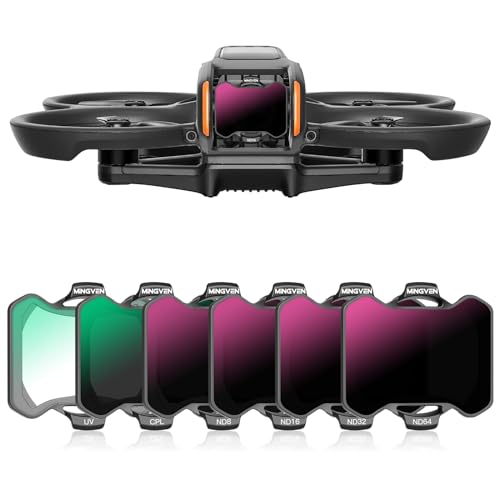
MINGVEN Avata 2 ND Filters, UV + CPL + ND Filters Set Camera Lens for DJI Avata 2 Drone Accessories – 6 Pack (CPL, UV, ND8, ND16, ND32, ND64)
MINGVEN Avata 2 nd filters set includes 6-pack filters (UV, CPL, ND8, ND16, ND32, and ND64). Offer precise…
As an affiliate, we earn on qualifying purchases.
As an affiliate, we earn on qualifying purchases.
Conclusion
Remember, in the sky’s vast canvas, your composition is like a skilled painter’s brushstroke—guiding the eye and telling a story. Even in the air, where everything moves and changes, your choices shape the scene’s impact. Think of it as steering a delicate dance on a tightrope—balance and focus are key. When you master composition, you’re not just capturing a moment; you’re orchestrating a symphony that captures hearts and imaginations.

NEEWER CPL Filter Compatible with DJI Mini 5 Pro Drone, Snap On Adjustable Circular Polarizing Polarizer Lens Filter Multicoated Optical Glass Aerial Photography Accessories
【Designed for Mini 5 Pro】 Compatible with DJI Mini 5 Pro Drone, Mini 5 Pro Camera Drone Fly…
As an affiliate, we earn on qualifying purchases.
As an affiliate, we earn on qualifying purchases.

Drone Camera Lens Filter for High Altitude Aerial Photography NEO Lightweight Plastic and Optical Glass Filter
[Elevate Your Visuals] Provide essential and color correction for professional grade aerial visuals.
As an affiliate, we earn on qualifying purchases.
As an affiliate, we earn on qualifying purchases.