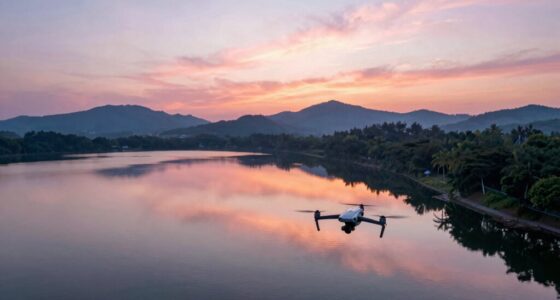
To use ND and ND/PL filters intentionally, start by evaluating your scene’s lighting and desired effect. Choose the right filter strength to control exposure and motion blur or reduce reflections. Adjust your camera settings—slower shutter speed, low ISO, and narrow aperture—to maximize the filter’s impact. Stabilize your camera with a tripod for sharp images, especially during long exposures. Mastering this balance lets you create more artistic, intentional shots, and you’ll find out how to refine these techniques further as you continue exploring.
Key Takeaways
- Match filter strength to scene brightness and desired motion effect for precise exposure control.
- Use a tripod to maintain stability and sharpness during long exposures with filters.
- Adjust camera settings (shutter speed, aperture, ISO) intentionally to complement filter effects.
- Combine ND and PL filters to creatively manage reflections, glare, and color saturation.
- Plan lighting conditions and filter choices beforehand to achieve consistent, artistic results.
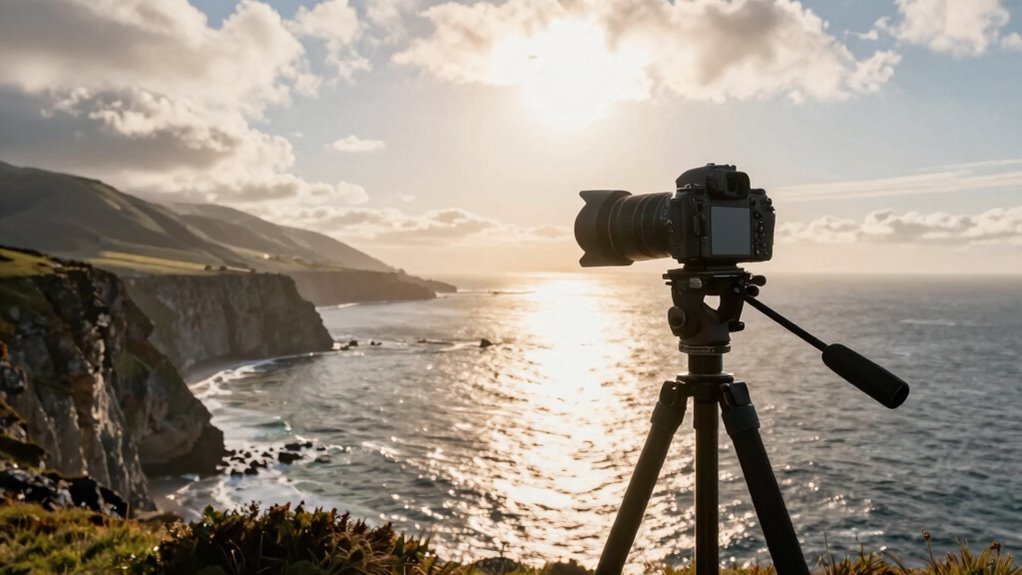
If you want to get the most out of your ND and ND/PL filters, understanding how to use them intentionally is vital. These filters are powerful tools that can transform your photography, but only if you know how to choose the right one and adjust your camera settings accordingly. The first step is mastering filter selection. Think about the scene you’re capturing: are you looking to create a smooth, silky water effect, or do you want to control reflections and glare? A neutral density (ND) filter reduces the amount of light entering your lens, allowing you to use slower shutter speeds even in bright conditions. An ND/PL (polarizer) filter adds the ability to reduce reflections and enhance colors. Combining these functions means you can manipulate your shot more creatively, but it requires careful filter selection based on your scene and desired outcome.
Once you’ve picked the right filter, focus on your camera settings. The key is to adjust your shutter speed, aperture, and ISO to complement the filter’s effect. With ND filters, you’ll mostly be working with longer exposure times. For example, if you want to blur the movement of water, you might set your camera to a shutter speed of several seconds. Since the filter limits light, you’ll need to slow down your shutter to make the most of it. Keep your ISO low to minimize noise, and use a narrow aperture if you want more depth of field. The polarizer, on the other hand, often requires less drastic adjustments, but you’ll still want to tweak your camera settings to optimize brightness and contrast. Using a tripod is vital here—without it, even the slightest movement can ruin your shot.
Filter selection and camera settings go hand in hand. Before shooting, take a moment to assess the lighting conditions. If the scene is extremely bright, a stronger ND filter or a combination of ND and ND/PL filters might be necessary. Conversely, in lower light, a lighter filter or none at all might suffice. Experimentation is key: try different filter strengths and camera settings to see how they affect your image. Remember, the purpose of these filters isn’t just to darken the scene but to give you creative control over motion, reflections, and color saturation. Additionally, understanding light management techniques can help you better plan your shots and achieve the desired effects. By understanding how to match filter selection with the correct camera settings, you guarantee each shot is intentional and aligned with your artistic vision.

K&F CONCEPT 82mm Variable ND2-ND400 ND Lens Filter (1-9 Stops) for Camera Lens, Adjustable Neutral Density Filter with Microfiber Cleaning Cloth (B-Series)
【Import Optical Glass】Crafted from premium AGC optical glass with 8 multi-layer coatings, this ND filter reduces reflections and…
As an affiliate, we earn on qualifying purchases.
As an affiliate, we earn on qualifying purchases.
Frequently Asked Questions
How Do ND Filters Affect Color Accuracy in Images?
ND filters can cause a slight color shift in your images, often adding a subtle tint that may affect color accuracy. To maintain tonal preservation, choose high-quality filters with minimal color cast, and consider shooting in RAW to correct any color shifts during post-processing. Using an evenly coated filter and regularly cleaning it also helps guarantee your colors stay true, preserving the natural look of your photos.
Can ND Filters Be Used for Astrophotography?
Yes, you can use ND filters for astrophotography to reduce brightness and manage exposure times. They help minimize lens flare from nearby lights and allow longer exposures, which can create smooth star trails or capture faint celestial details. Keep in mind, using ND filters may introduce slight motion blur if the camera isn’t steady, so use a sturdy tripod and remote shutter release for sharp, stunning astrophotos.
What’s the Difference Between Fixed and Variable ND Filters?
A fixed ND filter is like a trusty sidekick with a single strength, offering consistent light reduction, while a variable ND filter is a chameleon, adjusting from light to heavy filtration. Fixed filters are often made from high-quality filter materials and come in specific sizes, ensuring precise results. Variable filters provide flexibility in filter sizes, but may introduce some image quality issues at extreme settings. Choose based on your shooting needs.
How Do I Clean and Maintain My ND Filters Properly?
To clean your ND filters properly, start with gentle cleaning techniques—use a microfiber cloth or lens cleaning solution to remove smudges and dust. Store your filters in a dedicated, padded filter storage case to prevent scratches. Avoid touching the glass surface directly, and always handle them by the edges. Regular cleaning and proper filter storage guarantee your filters stay in top condition, maintaining image quality and extending their lifespan.
Are There Specific Brands Recommended for High-Quality Nd/Pl Filters?
Think of choosing ND/PL filters like selecting a trusted companion—reliable and compatible. Brands like B+W, Lee, and NiSi stand out for their high quality and durability. They offer excellent filter compatibility, ensuring your gear stays protected and performs well over time. When comparing brands, consider your camera’s lens size and filter threading. Investing in reputable brands guarantees sharp images and long-lasting filters, giving you confidence in every shot.

K&F CONCEPT 67mm True Color Variable Fader ND2-32 ND Filter and CPL Circular Polarizing Lens Filter in 1 for Camera Lens Neutral Density Polarizer Filter (Nano-X Series)
【Variable ND & CPL filter in 1】One filter has the ND and CPL filter features, it can not…
As an affiliate, we earn on qualifying purchases.
As an affiliate, we earn on qualifying purchases.
Conclusion
By embracing your ND and ND/PL filters with deliberate intent, you’re gently guiding light’s dance across your lens, shaping each shot with purpose rather than chance. Think of these filters as your artistic brushes, subtly blending shadows and highlights to reveal the scene’s true essence. When used thoughtfully, they help you craft images that whisper stories rather than shout them—transforming fleeting moments into timeless visual poetry.

Tripod for Camera, 72" Tall Camera Tripod Monopod with Remote, Professional Heavy Duty Compact Camera Stand for Phone,DSLR, Spotting Scope, Telescope, Binocular
LIGHTWEIGHT FOR TRAVEL:Compactness when stored and weighs only 3.3 lbs/1.5 kilograms, easy to move around with a strapped…
As an affiliate, we earn on qualifying purchases.
As an affiliate, we earn on qualifying purchases.
K&F CONCEPT 67mm Variable ND2-ND400 ND Lens Filter (1-9 Stops) for Camera Lens Adjustable Neutral Density Filter with Microfiber Cleaning Cloth (B-Series)
【Import Optical Glass】Crafted from premium AGC optical glass with 8 multi-layer coatings, this ND filter reduces reflections and…
As an affiliate, we earn on qualifying purchases.
As an affiliate, we earn on qualifying purchases.