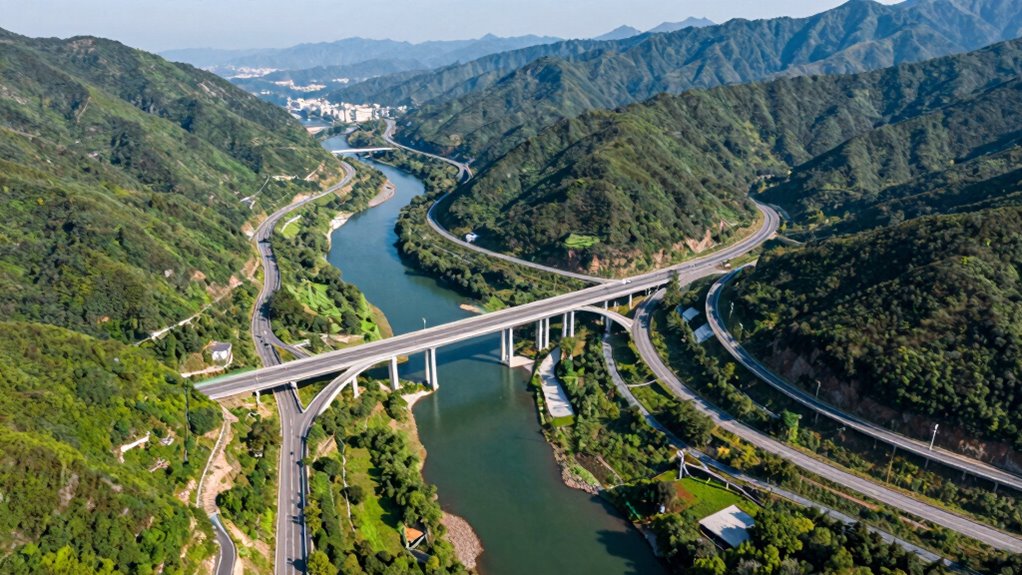
To capture better roads, bridges, and patterns from the air, focus on strong composition by following the rule of thirds and using leading lines like winding roads or arches to guide the viewer’s eye. Elevate your drone for unique angles, and experiment with high or low perspectives to reveal textures and symmetry. Shoot during soft lighting conditions like early morning or late afternoon, and always prioritize safety and local regulations. Keep exploring techniques to elevate your aerial shots even further.

Get the latest gadgets delivered free — and shop member deals
- Fast, free delivery on millions of items
- Access to Prime Big Deal Days deals on October 6–7
- Prime Video, Amazon Music and more included
Key Takeaways
- Use the rule of thirds and leading lines to compose dynamic and balanced shots of roads and bridges.
- Elevate the drone to find unique vantage points that highlight patterns and textures.
- Shoot during golden hour for warm, soft lighting that enhances details and reduces glare.
- Maintain safe distances from structures and stay within legal and local regulations.
- Explore high and low angles to emphasize symmetry and create visually striking patterns.
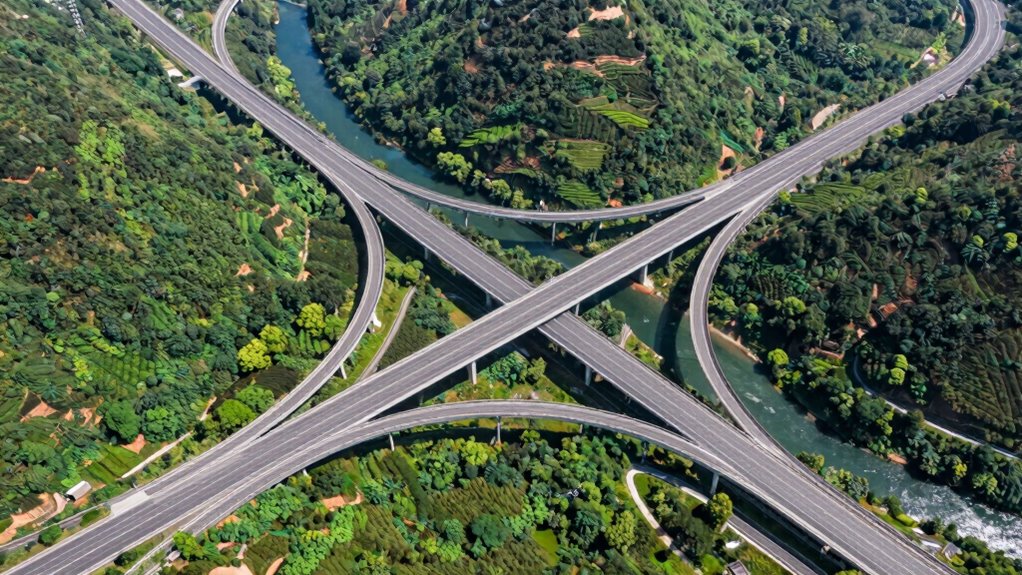
Capturing clear, detailed images of roads, bridges, and patterns from the air requires more than just a good camera; it demands an understanding of composition, lighting, and timing. When flying your drone, safety should always be your top priority. Keep a safe distance from people, buildings, and power lines, and stay within the legal limits of your area. Check local regulations before taking off, and always maintain visual line of sight with your drone. This vigilance not only protects others but also guarantees you can react quickly if something unexpected happens. Practicing drone safety helps you avoid accidents, broken equipment, and potential legal trouble, allowing you to focus on capturing stunning images.
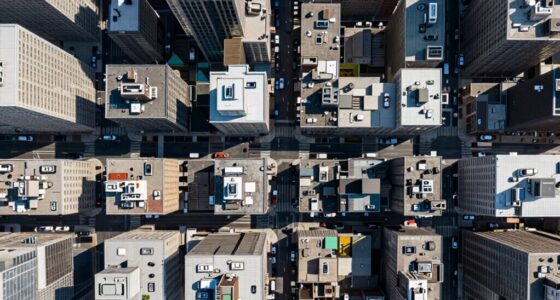
Once you’re confident in your safety protocols, focus on aerial composition. Think of your drone as a painter’s brush—how you frame your shot makes all the difference. Use the rule of thirds to position roads, bridges, or patterns off-center, creating more dynamic and engaging images. Look for leading lines—like a winding road or a bridge’s arch—that guide the viewer’s eye through the photo. Elevate your drone to find unique perspectives, avoiding the most obvious shots. High or low angles can reveal intriguing patterns and textures that aren’t visible at ground level. Pay attention to symmetry and balance; many roads and bridges are naturally symmetrical, so highlight these features to create striking images. Additionally, understanding aerial photography techniques can help you enhance your compositions even further. Developing an awareness of aerial image composition techniques can significantly improve your results.
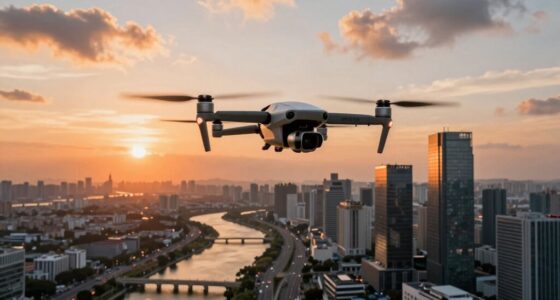
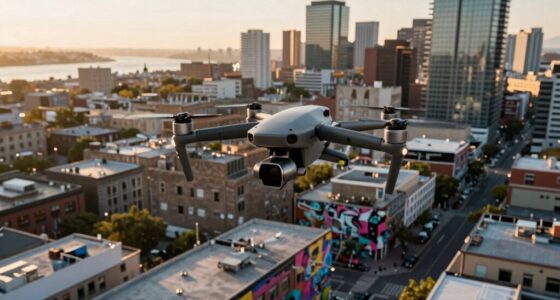
Use the rule of thirds and unique angles to create dynamic, balanced aerial images of roads and bridges.
Lighting plays a vital role in aerial composition. Early morning or late afternoon provides softer, warmer light that enhances textures and reduces harsh shadows. Midday sun can cause overexposure and strong shadows, so if you shoot during this time, look for shade or overcast conditions. Overcast skies can produce evenly diffused light, minimizing glare and reflections on water or glass surfaces, which is especially useful when capturing bridges or waterway patterns. Be mindful of how shadows cast by the structures themselves add depth and contrast, making your images more compelling.
drone camera for aerial photography
As an affiliate, we earn on qualifying purchases.
As an affiliate, we earn on qualifying purchases.
Frequently Asked Questions
What Camera Settings Are Best for Aerial Photography?
For aerial photography, set your camera to a low ISO to reduce noise and use a small aperture like f/8 or higher for sharpness. Select a wide-angle lens to capture more detail, and guarantee camera stabilization—use a gimbal or steady hand—to prevent blurring. Adjust shutter speed based on lighting conditions, typically fast enough to freeze motion, ensuring crisp, clear images of roads, bridges, and patterns from above.
How Do Weather Conditions Affect Aerial Shots?
Weather can totally transform your aerial shots, making them look like otherworldly scenes. Atmospheric effects like fog, clouds, or haze can obscure details, while bright sunlight creates harsh shadows or glare. Wind can shake your drone, causing blurry images. Rain and storms damage equipment and reduce visibility. So, weather impact is significant—ideal conditions help you capture crisp, vibrant images, while poor weather adds unpredictable challenges, often resulting in less-than-stunning shots.
What Legal Permits Are Needed for Drone Photography?
You need to guarantee legal compliance by obtaining the necessary permits before drone photography. Start with permit applications through local, state, or federal agencies, depending on your location and flight area. Some regions require special authorizations for flying over certain landmarks or populated areas. Always check specific regulations, submit your permit applications early, and follow all rules to avoid fines or legal issues, ensuring your aerial shots stay compliant.
How Can I Avoid Distortion in Aerial Images?
To avoid distortion in your aerial images, start by ensuring proper sensor calibration regularly, which helps maintain accurate color and exposure. Use high-quality lenses and check for lens distortion; applying lens correction profiles during editing can considerably improve image accuracy. Maintain steady flight paths and consistent camera settings, and shoot at ideal angles to reduce perspective distortion. These steps will help you capture clearer, more precise aerial photos of roads, bridges, and patterns.
What Are the Best Times of Day for Capturing Roads and Bridges?
The best times of day for capturing roads and bridges are during the golden and blue hours, when lighting conditions are ideal. The golden hour, shortly after sunrise or before sunset, provides warm, soft light that highlights details without harsh shadows. The blue hour, just before sunrise or after sunset, offers cooler tones and even lighting, reducing distortion and enhancing clarity in your aerial images.
high quality drone for landscape shots
As an affiliate, we earn on qualifying purchases.
As an affiliate, we earn on qualifying purchases.
Conclusion
Just like Icarus aimed for the sky, you now have the tools to elevate your aerial photography. By applying these tips, you’ll uncover hidden details, vibrant patterns, and striking structures that often go unnoticed from the ground. Remember, every shot is a chance to tell a story from a new perspective. So, take to the air with confidence—your next masterpiece awaits, waiting to be discovered from the heights where the world’s secrets unfold.
aerial photography drone accessories
As an affiliate, we earn on qualifying purchases.
As an affiliate, we earn on qualifying purchases.
drone landing pad for photography
As an affiliate, we earn on qualifying purchases.
As an affiliate, we earn on qualifying purchases.
Halloween Picks
halloween
As an affiliate, we earn on qualifying purchases.