

📊 Full opportunity report: Vertigo relief app on IdeaNavigator AI — validation score, market gap, and execution plan.

Get the latest gadgets delivered free with Prime
- Fast, free delivery on millions of items
- Prime Video, Amazon Music and more included
- Member-only deals all year
TL;DR
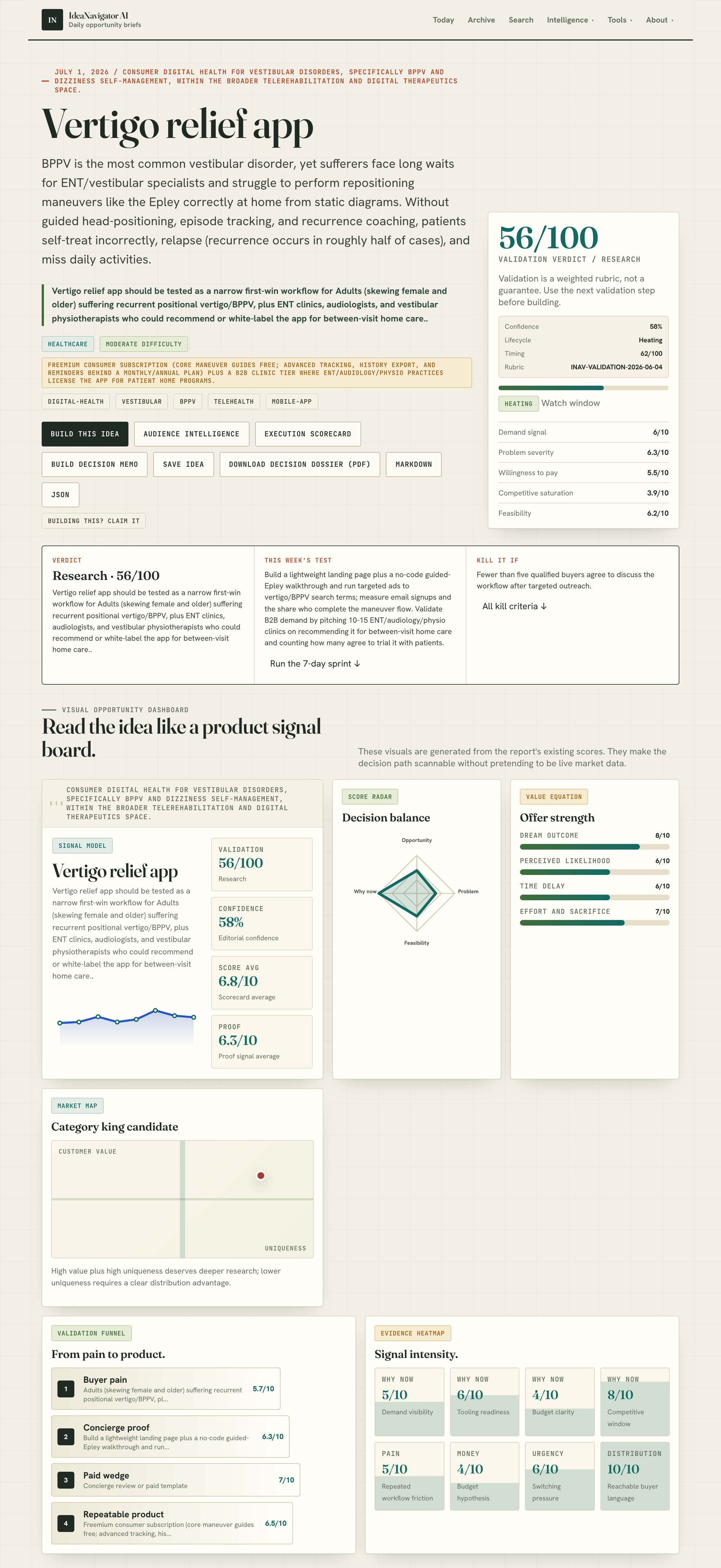
A vertigo relief app designed for adults with recurrent BPPV is entering testing. It offers guided maneuvers, episode tracking, and could be recommended by clinics for home care. Its success depends on validation and clinical adoption.
A new vertigo relief app is being developed to guide adults with recurrent benign paroxysmal positional vertigo (BPPV) through repositioning maneuvers like the Epley, using real-time gyroscope feedback. The app aims to fill a gap in self-management for vertigo sufferers and could be recommended by ENT clinics, audiologists, and vestibular physiotherapists for between-visit care. This development comes amid growing acceptance of digital therapeutics for vestibular disorders and increased telehealth adoption.
The app is designed for iOS and Android devices and will include features such as screening for BPPV candidacy via a short safety survey, animated step-by-step guides for maneuvers, audio cues, and gyroscope-based head-angle feedback. Patients will also be able to log episodes, triggers, and symptom severity over time. The platform will carry a clear disclaimer that it is not a substitute for medical advice, encouraging users to consult healthcare professionals if red-flag symptoms arise.
Market research indicates a significant opportunity: the digital vestibular rehabilitation sector was valued near USD 498 million in 2024, with a projected annual growth rate of approximately 13.5%. Learn more about unbundling apps. The app’s revenue model includes a freemium subscription for consumers, offering basic maneuver guides free of charge, with premium features such as detailed tracking, history export, and reminders behind a paywall. Additionally, ENT and audiology clinics can license the app for patient use, integrating it into their care pathways.
Validation efforts include launching a landing page with a guided Epley maneuver demo, running targeted ads to vertigo-related search terms, and measuring signups and completion rates. Clinic interest will be gauged by pitching 10-15 practices to trial the app as part of their patient home programs, assessing demand and usability.
Potential Impact on Self-Management and Clinical Practice
This app could significantly improve self-treatment accuracy for BPPV, reducing relapse rates and enabling patients to manage vertigo episodes more effectively at home. Its integration into clinical workflows may also streamline patient care, decrease wait times for specialist intervention, and support telehealth models that have gained momentum during the COVID-19 pandemic. If validated, this platform could catalyze broader adoption of digital therapeutics in vestibular care, expanding access and improving patient outcomes.
Products Worth Considering

DJI Osmo Mobile 8 Standard Combo Phone Gimbal Stabilizer

DJI Osmo Mobile 8 Phone Gimbal with Mic Mini Transmitter, Infinity Black

DJI Osmo Mobile 7P with Mic Mini TX (Infinity Black) Gimbal Stabilizer
As an affiliate, we earn on qualifying purchases.
Growing Demand for Digital Solutions in Vestibular Care
Benign paroxysmal positional vertigo (BPPV) is the most common vestibular disorder, yet patients often face long waits for specialist diagnosis and treatment. Traditional repositioning maneuvers like the Epley require precise head movements, which are difficult to perform correctly without guidance. The rise of telehealth and smartphone sensor technology has created new opportunities for remote management of vestibular disorders.
Recent market analysis shows the digital vestibular rehabilitation space is expanding rapidly, driven by increased acceptance of telemedicine and reimbursement for digital health solutions. The COVID-19 pandemic accelerated this shift, prompting developers and healthcare providers to explore mobile apps and remote monitoring tools for vertigo management.
Prior efforts have included static diagrams and instructional videos, but patient adherence and correct execution remain challenges. The new app aims to address these issues by providing real-time feedback and episode tracking, potentially improving treatment success and reducing recurrence.
“Guided repositioning with real-time head-angle feedback could transform how patients manage BPPV at home.”
— an anonymous researcher
Uncertainties Around Validation and Clinical Integration
It is not yet confirmed how effective the app will be in real-world settings or whether patients will adopt and use it correctly without in-person supervision. Validation studies, clinical trials, and user feedback are still pending, and integration into healthcare workflows remains to be tested.
Next Steps for Validation and Adoption Trials
The development team plans to launch a landing page with a guided Epley maneuver demo to gather user interest and measure engagement. Simultaneously, they will pitch ENT, audiology, and physiotherapy clinics to pilot the app as part of their patient care programs. Results from these efforts will determine the app’s readiness for broader release and potential regulatory approval.
Key Questions
How does the app guide users through the maneuvers?
It uses animated step-by-step instructions, audio cues, and gyroscope-based feedback to ensure correct head positioning during maneuvers like the Epley.
Can the app replace in-person treatment?
No, the app is designed as a self-management tool and is not a substitute for professional medical advice or treatment. Users should consult healthcare providers if symptoms persist or worsen.
Is this app available now?
The app is currently in development and early testing phases. It will undergo validation before a wider rollout.
How will clinics incorporate this app into their care?
Clinics may license the app to recommend it for patient use between visits, supporting home-based rehab and reducing clinic visit frequency.
What are the main benefits for patients?
Patients can perform repositioning maneuvers more accurately at home, track their symptoms, and potentially reduce recurrence of vertigo episodes.
Source: IdeaNavigator AI