
TL;DR

Get the latest gadgets delivered free with Prime
- Fast, free delivery on millions of items
- Prime Video, Amazon Music and more included
- Member-only deals all year
Google.org is providing $2.5 million to support the World Bank Group and the International Finance Corporation in expanding digital public infrastructure for agriculture. The effort aims to help 1 million farmers access services by the end of 2027, using an AI-enabled network planned for countries in Latin America, Southeast Asia and Sub-Saharan Africa.
Google.org is providing $2.5 million to support the International Finance Corporation and the broader World Bank Group in expanding digital public infrastructure for agriculture. Under the World Bank Group’s AgriConnect initiative, the effort aims to help 1 million farmers access livelihood-improving services by the end of 2027, through a shared online network planned across parts of Latin America, Southeast Asia and Sub-Saharan Africa.
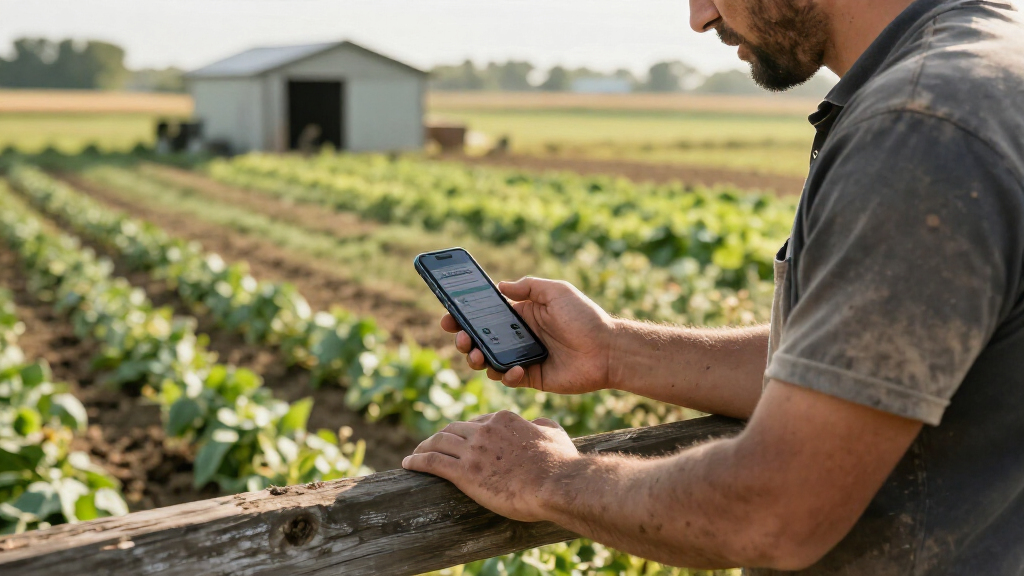
The planned system, called the Open Network for Agriculture (ONA), is intended to connect public and private service providers on a shared digital network. Google says the approach could let farmers reach multiple services through one platform rather than relying on separate, disconnected apps. The World Bank Group will build an AI-enabled network, according to the announcement.
Services identified in the report include digital farmer IDs, credit lines, direct subsidy payments and markets where farmers can sell produce. The platform is also intended to provide voice-powered advice in local languages on farming, weather, prices and finances. These are the kinds of services the network is designed to connect; the announcement does not detail which providers or services will be available in each participating country.
Google.org’s funding is a contribution to the effort, not a statement of the project’s total cost. Google’s report says the World Bank Group will expand agricultural digital public infrastructure following a pilot in India. The report does not provide the pilot’s results or specify how many farmers took part.
Farmers who must navigate separate service providers and apps may face practical barriers to getting information, credit or public support. A shared network could make services easier to find and connect, while allowing different providers to participate without each building a standalone channel for every farmer. The single-platform approach is the central promise of the initiative, though its reach and usefulness will depend on how it is put into practice.
The target of 1 million farmers by the end of 2027 gives the effort a measurable goal. Access to services such as finance, subsidies and markets can affect farmers’ ability to make decisions and sell their produce. However, the announcement describes planned connections and potential benefits; it does not report measured improvements in income, productivity or service uptake.
The initiative also reflects a wider development approach: investing in shared digital systems that public agencies and private companies can build on. For farmers, the outcome will depend not only on the platform but on whether relevant services are available, accessible in local languages and usable where connectivity or digital access is limited.
Products Worth Considering

Jackery Explorer 2000 v2 Portable Power Station with Two 200W Solar Panels

Bose SoundLink Flex Bluetooth Speaker (2nd Gen), Portable Waterproof Speaker, Black

Jackery Explorer 300 Portable Power Station, 292Wh
As an affiliate, we earn on qualifying purchases.
From India Pilot to Regional Plans
The World Bank Group’s AgriConnect initiative provides the framework for the work described by Google. Google.org says its support will help the World Bank Group expand digital public infrastructure for agriculture, after what it calls a successful pilot in India. The next phase is planned across several countries in Latin America, Southeast Asia and Sub-Saharan Africa; the announcement does not name those countries.
Digital public infrastructure refers here to shared digital systems that enable online services. Google describes these systems as “public roads” for services: infrastructure that can connect users with multiple public and private providers. The report also places the funding within an existing Google and World Bank Group alliance to accelerate digital transformation in emerging markets. It does not give further details about the alliance’s earlier projects or the overall budget for ONA.
““We’re helping farmers around the world connect to essential services online.””
— Google, in its report
Countries, Access and Results
The report does not name participating countries, set out a rollout schedule or explain how farmers will sign up. It also gives no breakdown of the $2.5 million contribution, the project’s full funding needs or the expected cost of operating the network after launch.
Details about the India pilot are limited: Google calls it successful but does not provide figures, evaluation methods or specific outcomes. The announcement also does not describe how farmer data will be handled, what safeguards will apply to AI-generated advice, or how advice will be checked for accuracy and suitability in different local conditions. It is therefore not yet possible to assess the network’s likely reach or impact from the published information.
Rollout Details and 2027 Goal
The World Bank Group is expected to develop the AI-enabled ONA and expand the model beyond the India pilot into several countries across the three named regions. The stated milestone is to help 1 million farmers access services by the end of 2027. The announcement does not give interim targets or dates for launching services in individual countries.
Further information will be needed to track progress, including the countries selected, participating service providers, available services and how access will be measured. Updates on those points would help establish whether the network is reaching farmers and whether the connected services are producing the livelihood benefits the initiative seeks.
Key Questions
Who is funding and leading the initiative?
Google.org is providing $2.5 million in support. The International Finance Corporation and the broader World Bank Group are involved in expanding agricultural digital public infrastructure under AgriConnect.
What is the Open Network for Agriculture?
ONA is a planned shared digital network intended to connect public and private agricultural service providers, so farmers can reach services through a common platform rather than separate apps.
What services could farmers access?
The report names digital farmer IDs, credit lines, direct subsidy payments, produce markets and voice-powered local-language advice on farming, weather, prices and finances. The announcement does not confirm which services will be offered in each country.
Where will the network operate?
The planned expansion covers several countries in Latin America, Southeast Asia and Sub-Saharan Africa. Google’s report does not identify the countries or give a rollout timetable.
When is the farmer access target?
The initiative aims to help 1 million farmers access livelihood-improving services by the end of 2027. The report does not provide interim milestones or a method for counting access.
Source: rss