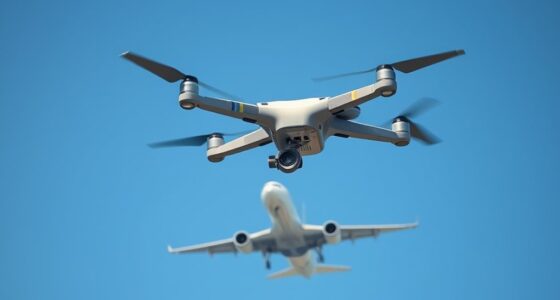
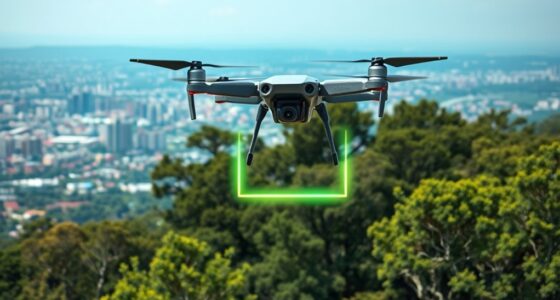
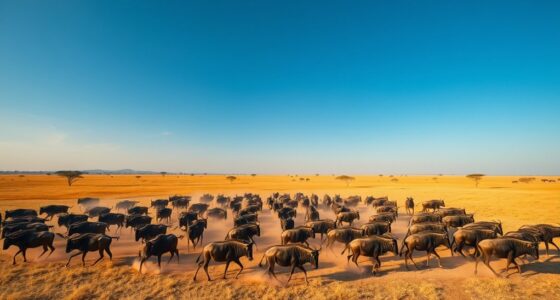
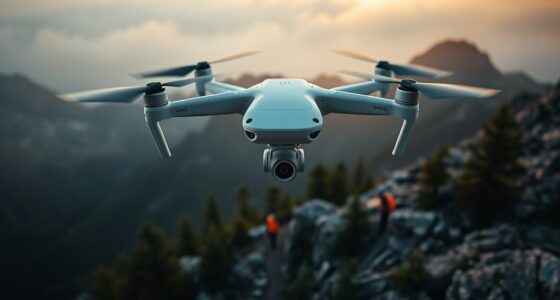
Drones in Hollywood help filmmakers cut costs, expand creative options, and capture breathtaking aerial shots once only possible with helicopters. They cost up to 90% less, offering flexible angles and dynamic movements that improve storytelling. With advanced stabilization and high-resolution cameras, drones boost scene quality and safety, enabling directors to achieve cinematic magic more easily. If you keep exploring, you’ll discover how drones are shaping the future of filmmaking and redefining industry standards.
Key Takeaways
- Drones significantly cut aerial filming costs, enabling more creative shots and reducing reliance on expensive helicopters.
- They expand cinematic possibilities by capturing unique angles, high-speed shots, and complex movements previously impossible or risky.
- Drones enhance pre-production with site scouting, terrain mapping, and shot planning, improving safety and efficiency.
- High-quality drone footage is used in blockbuster scenes like action chases and immersive creature shots, adding realism and excitement.
- Regulatory compliance and safety protocols are crucial for legal drone use, with ongoing innovations expanding their cinematic capabilities.
Cost Savings and Budget Optimization With Drone Technology

Drones have revolutionized filmmaking budgets by markedly reducing aerial filming costs. Instead of spending $20,000 to $40,000 on a helicopter for a 10-hour shoot, you can operate a drone for as little as $5,000 to $13,000 per day. This means aerial shots that once drained your budget now cost up to 90% less. For example, Los Angeles Times reports drone operation costs as low as $5,000 daily, compared to $25,000 for helicopters. The savings give you more flexibility to allocate funds toward talent, post-production, or extra shooting days. Additionally, the integration of energy-efficient cloud servers can streamline data management and storage, further enhancing production efficiency. The development of high-quality camera technology has ensured drone footage matches the clarity of traditional methods, making aerial shots even more compelling. Incorporating advanced stabilization technology also ensures smooth footage that rivals professional helicopter shots, making drones an even more valuable tool. Furthermore, advancements in battery technology extend flying time, enabling longer shoots without frequent recharges, thus increasing productivity. Moreover, the increasing availability of training programs helps operators master drone piloting techniques, improving overall footage quality. As a result, drones have made aerial cinematography accessible, allowing you to achieve professional-quality shots without blowing your entire budget.
Expanding Creative Horizons and Visual Innovation

The advent of drone technology has opened new domains of creative possibility, allowing filmmakers to craft shots that were previously impossible, dangerous, or prohibitively expensive. With drones, you can push artistic boundaries and craft immersive visuals that captivate audiences. FPV drones provide tight tracking shots that pull viewers into action, while drone-mounted cameras swoop over crowds to mimic flying creatures, as seen in Jurassic World. Their compact size enables unique perspectives and dynamic movements, expanding the visual language of filmmaking. Additionally, understanding the challenges of caregiving can help filmmakers appreciate the importance of safety and responsibility when using advanced equipment like drones. Incorporating air quality considerations into planning can also ensure that drone operations are conducted in safe environments, especially during long shoots or in urban areas. Considering environmental factors such as weather and air quality can further enhance the safety and effectiveness of drone use in filmmaking. Awareness of smart home technology can also inform filmmakers about the latest innovations in safety and monitoring systems that might be applicable for secure drone operations.
Technical Capabilities Driving Filmmaking Excellence
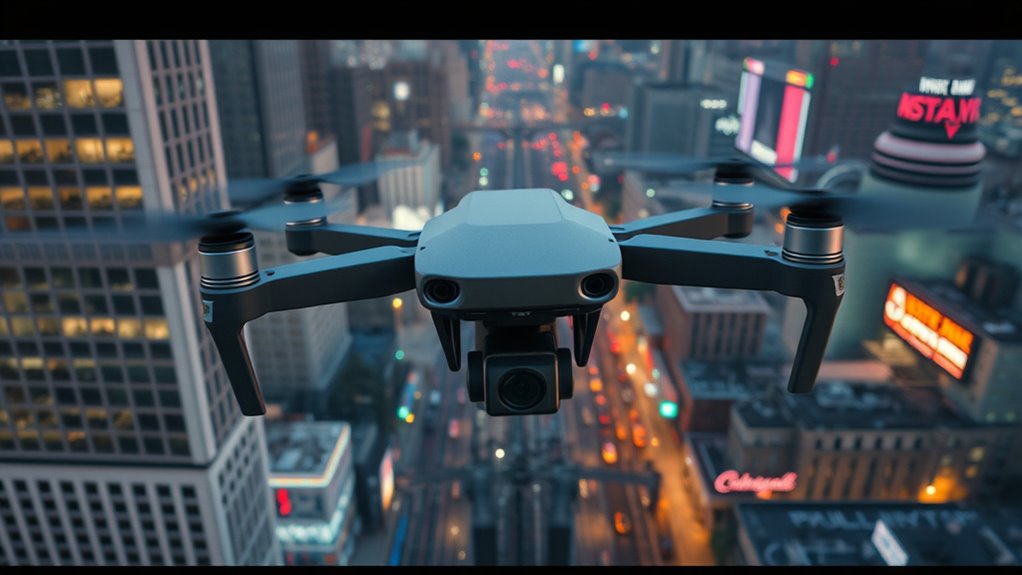
Advancements in drone technology have markedly elevated filmmaking standards by enabling high-quality aerial footage with remarkable efficiency. You can now capture 4K+ resolution shots at speeds up to 60 mph, adding dynamic movement to your scenes. Modern drones feature longer flight times, enhanced stabilization, and compact high-resolution cameras, allowing you to execute complex shots with ease. FAA regulations keep drones within your line of sight and below 400 feet, but innovations still push the boundaries of what’s possible. These advancements mean you can achieve cinematic shots previously requiring helicopters, saving costs and time. Additionally, Free Floating techniques allow for smooth, natural camera movements that enhance cinematic storytelling. The improved performance ensures your footage is sharp, stable, and visually striking, elevating your storytelling and delivering professional-grade results that captivate audiences.
Industry Adoption: Drones Changing Hollywood Standards

As drone technology continues to evolve, Hollywood has rapidly integrated these tools into standard filmmaking practices, reshaping industry norms. You now see drones in over 75% of action films, transforming how scenes are shot. They’re replacing helicopters, cutting costs by up to 90%, and allowing for more creative freedom. The market’s booming—projected to hit nearly $47.4 billion by 2029—and the number of commercial drones is doubling by 2024. Imagine this:
| Scene Type | Traditional Method | Drone-Enabled Approach |
|---|---|---|
| Aerial Chase | Helicopter, costly, noisy | Tiny drone, quick setup |
| Crowd Shot | Crane, limited angles | Low-flying drone swoops |
| Wilderness Scene | Large crew, extensive prep | Compact drone flies in |
Drones are now essential tools, setting new standards across Hollywood.
Iconic Films and TV Shows Featuring Drone Footage
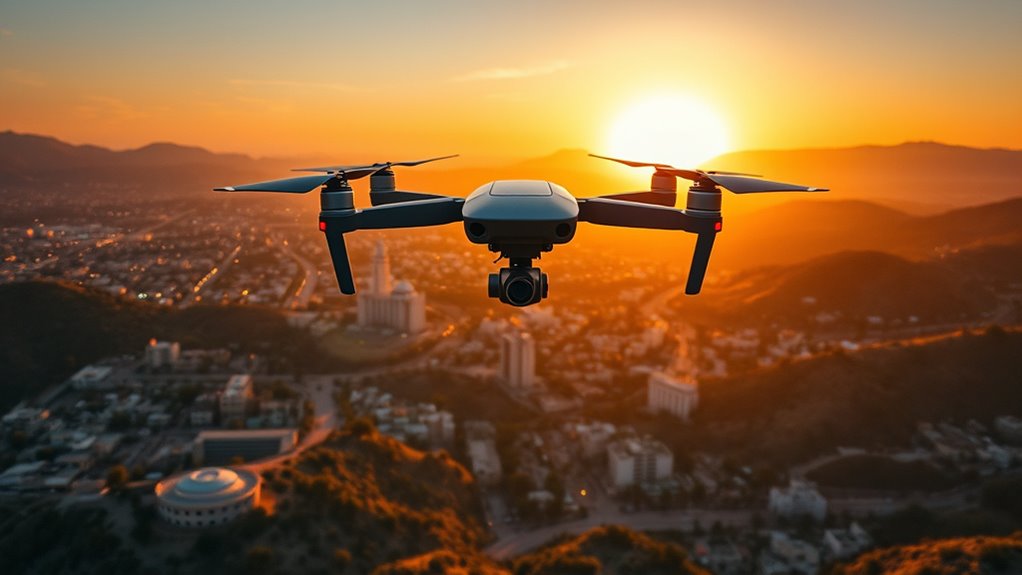
Iconic films and TV shows have increasingly relied on drone footage to create breathtaking and dynamic scenes that once seemed impossible or too costly to film. You’ve likely seen drones in action in blockbuster hits like *Skyfall*, where they captured the high-speed motorcycle chase from above, adding intensity and scale. In *The Wolf of Wall Street*, drones provided voyeuristic shots of lavish parties, enhancing the storytelling. *Jurassic World* used drone-mounted cameras to mimic flying pterosaurs, delivering immersive attack sequences. Modern productions such as *Harry Potter*, *Mission Impossible*, and *Captain America* incorporate drone footage to elevate their visuals. During the pandemic, drones helped filmmakers shoot with fewer crew members, proving their value in creating cinematic magic efficiently and safely. Incorporating simple systems and clear routines, filmmakers can effectively utilize drones to enhance storytelling while maintaining safety and efficiency. Additionally, design thinking principles can guide the development of innovative drone filming techniques to better meet creative and technical challenges.
Enhancing Pre-Production and Planning Processes
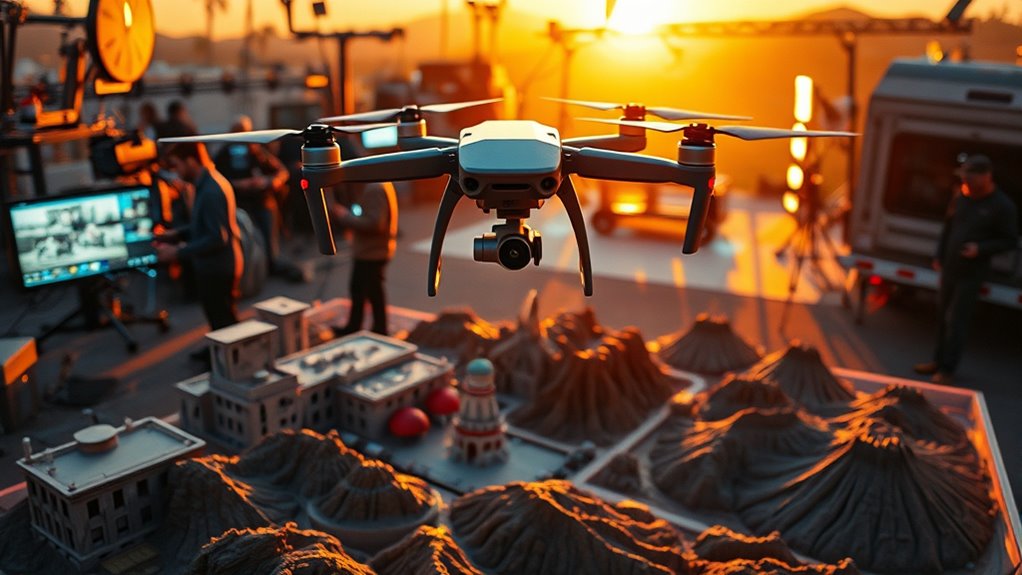
Using drones in pre-production can markedly improve site scouting by providing detailed aerial views quickly and safely. They also enable precise terrain mapping, helping you plan camera angles and logistics more accurately. With this technology, developing shot lists becomes more informed, saving time and reducing surprises during filming. Additionally, understanding vehicle specifications can assist in selecting the right drone equipment compatible with your production needs. Incorporating knowledge of field‑of‑view and imaging‑scale can further optimize your drone footage for desired framing and detail. Moreover, being aware of aerial photography regulations ensures compliance and smooth operation during shoots.
Site Scouting Efficiency
Drones have revolutionized site scouting by making pre-production planning faster, safer, and more accurate. Instead of sending crews into unfamiliar terrain, you can now survey locations remotely, reducing risks and saving time. Drones capture high-resolution images and videos, providing detailed overviews to assess accessibility, lighting, and potential challenges. This accelerated process helps you make informed decisions early, avoiding costly surprises later. Additionally, integrating ventilation considerations into drone surveys can improve overall site planning and safety protocols. A thorough understanding of analytical thinking can further enhance the interpretation of drone data for complex site assessments. By applying innovative technologies, filmmakers can optimize their scouting process and ensure a smoother production workflow. Embracing remote sensing techniques, such as drone surveys, allows for comprehensive environmental analysis, supporting sustainable and responsible filmmaking practices. Incorporating insights from biography finder can also provide valuable background context to better understand the location history and significance.
Terrain Mapping Accuracy
Accurate terrain mapping has become a game-changer for pre-production and planning, building on the efficiencies gained through aerial site assessments. Using drones equipped with high-resolution cameras and LiDAR sensors, you can generate precise 3D models of the landscape, providing detailed topographical data. This accuracy helps identify potential challenges like uneven terrain, obstacles, or access issues early in the process, saving time and resources. It also ensures that your shoot plans align with real-world conditions, reducing surprises during filming. With drone-based mapping, you gain a thorough understanding of complex environments, enabling better logistical planning and safety assessments. Additionally, wellness technology can be incorporated to monitor environmental conditions, ensuring safety during drone operations. Ultimately, this technology streamlines production workflows, minimizes costs, and enhances your ability to visualize shots within the actual terrain.
Shot List Development
Integrating drone footage into your pre-production planning streamlines shot list development by providing detailed aerial views of your locations. These visuals help you identify the best camera angles, movements, and vantage points, ensuring you capture the scene’s full scope. With drone reconnaissance, you can visualize complex shots early, saving time during filming. You’ll better understand terrain challenges and identify obstacles, allowing you to plan for safety and equipment placement. This insight enables precise shot sequencing and minimizes surprises on set. Using drone footage also helps communicate your vision to the crew and stakeholders, aligning expectations. Ultimately, incorporating aerial views enhances your shot list, making your shooting schedule more efficient and your final product more dynamic.
Overcoming Challenges and Regulatory Considerations

You need to navigate strict regulatory compliance and safety standards to keep your drone operations legal and secure. Safety and operational risks, like crashes or interference, can threaten both production timelines and personnel. Addressing these challenges head-on guarantees your drone use remains efficient, compliant, and safe for everyone involved.
Regulatory Compliance Challenges
Regulatory compliance remains a significant hurdle for filmmakers using drones, as maneuvering the complex rules can slow down production and increase costs. You need to navigate federal, state, and local regulations that vary widely, which can delay shooting schedules. Obtaining the necessary permits often involves lengthy approval processes, detailed safety plans, and strict adherence to airspace restrictions. You also must ensure drone operators are certified and follow operational guidelines, adding logistical challenges. Non-compliance risks hefty fines, legal action, or confiscation of equipment, potentially halting your project altogether. Staying current with evolving regulations demands ongoing research, planning, and coordination with authorities. Despite these hurdles, strategic planning and expert consultation help filmmakers successfully integrate drones into their productions while maintaining conformity.
Safety and Operational Risks
While drones offer filmmakers remarkable creative and budget advantages, managing safety and operational risks remains a critical challenge. You must guarantee drones operate within FAA regulations, such as staying within line of sight and flying below 400 feet. Malfunctions, crashes, or loss of control can cause injuries or property damage, risking legal issues and delays. Weather conditions like wind and rain also impact flight safety, requiring careful planning and real-time monitoring. Operator training is essential to prevent accidents and maintain control during complex shots. Additionally, steering through crowded sets or urban environments increases collision risks. To mitigate these dangers, you need thorough risk assessments, safety protocols, and contingency plans, ensuring the crew’s safety while harnessing drone technology’s creative potential.
The Future of Drone Cinematography in Film Production
As drone technology continues to advance rapidly, its role in film production is poised to expand even further, transforming how filmmakers capture stunning visuals. Future innovations will likely include longer flight times, improved battery efficiency, and more sophisticated stabilization, enabling even more complex shots. AI-driven flight planning and obstacle avoidance will enhance safety and precision, allowing for autonomous operation in challenging environments. As camera quality improves with higher resolutions and better low-light performance, drones will deliver cinematic images rivaling traditional equipment. Additionally, integration with virtual and augmented reality may open new creative avenues, enabling directors to visualize scenes in real-time. Overall, these advancements will make drone cinematography more accessible, versatile, and integral to storytelling, pushing the boundaries of what’s possible on screen.
Empowering Independent Filmmakers With Aerial Technology
Advancements in drone technology are opening new doors for independent filmmakers to access professional-grade aerial shots without the hefty price tag of traditional equipment. You can now capture stunning visuals that once required expensive helicopters or cranes, all with affordable drones. This technology reduces costs by up to 90%, freeing your budget for talent, post-production, or more shooting days. Drones’ compact size and maneuverability let you explore creative angles and dynamic movements that were previously out of reach. High-resolution cameras and stabilization systems enable you to produce cinematic-quality footage in various genres. With FAA regulations allowing longer flight times and better performance, you can confidently incorporate drone shots into your projects. Overall, drone tech democratizes filmmaking, empowering you to create impressive visuals independently.
Frequently Asked Questions
How Do Filmmakers Ensure Drone Safety During Complex Shots?
You guarantee drone safety during complex shots by conducting thorough pre-flight planning, including site surveys and risk assessments. You use skilled operators who monitor drone behavior constantly, maintaining clear line of sight and adhering to FAA regulations. You also utilize obstacle avoidance technology and establish safe operational zones. Regular equipment checks and emergency protocols help prevent accidents, allowing you to capture stunning footage while prioritizing safety for everyone involved.
What Are the Training Requirements for Drone Operators in Hollywood?
You need to complete FAA Part 107 certification to operate drones commercially in Hollywood. This involves passing a knowledge test covering regulations, safety, and airspace rules. You must also demonstrate good flying skills and understanding of drone maintenance. Many productions require additional on-set training to handle complex shots safely. Staying current with evolving regulations and participating in ongoing safety education guarantees you meet industry standards and operate responsibly during filming.
How Does Weather Impact Drone Filming Schedules and Safety?
Weather considerably impacts your drone filming schedule and safety. You need to monitor conditions closely, as high winds, rain, or fog can cause loss of control or damage. Poor visibility makes navigation risky, forcing delays or cancellations. Strong winds can destabilize your drone, while rain can interfere with electronics. Always have a backup plan, check weather forecasts regularly, and postpone shoots if conditions threaten safety or footage quality.
Are There Specific Regulations for Drone Use in Different Countries?
You should know that drone regulations vary widely across countries. In the US, the FAA enforces strict rules like line-of-sight operation and altitude limits. In Europe, EASA sets similar standards, but each country might have additional rules. Always research and follow local laws before flying a drone abroad. Failing to comply can lead to fines, confiscation, or legal trouble, so it’s essential to stay informed and adhere to each country’s regulations.
How Do Drones Integrate With Traditional Camera Equipment on Set?
You combine drones with traditional camera equipment by mounting high-quality cameras on drone gimbals, ensuring smooth footage. You control the drone’s movement to match the shot’s needs, often coordinating with the camera crew for seamless shots. This integration allows you to capture dynamic aerial angles, complex tracking shots, and sweeping landscapes, expanding your creative options while maintaining stability and precision that traditional equipment alone can’t achieve.
Conclusion
As you navigate the skies of filmmaking, drones serve as your loyal companions, gently lifting your stories to new heights. They quietly weave breathtaking vistas and dynamic shots into your creative tapestry, opening doors to endless possibilities. With each flight, you embrace innovation’s whisper, transforming visions into cinematic realities. In this ever-evolving landscape, drones help your imagination soar, turning dreams into enthralling scenes that linger long after the credits roll.