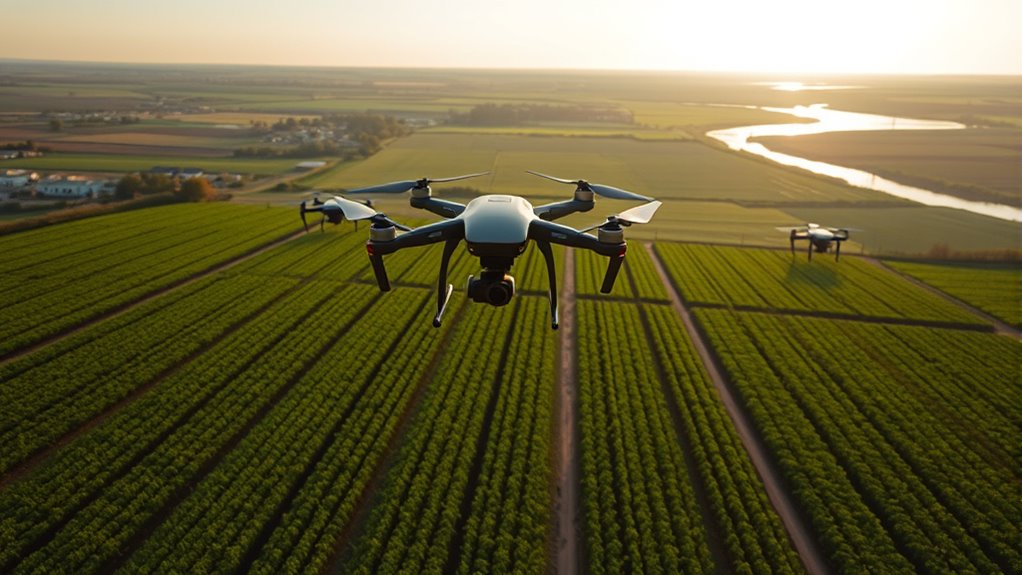
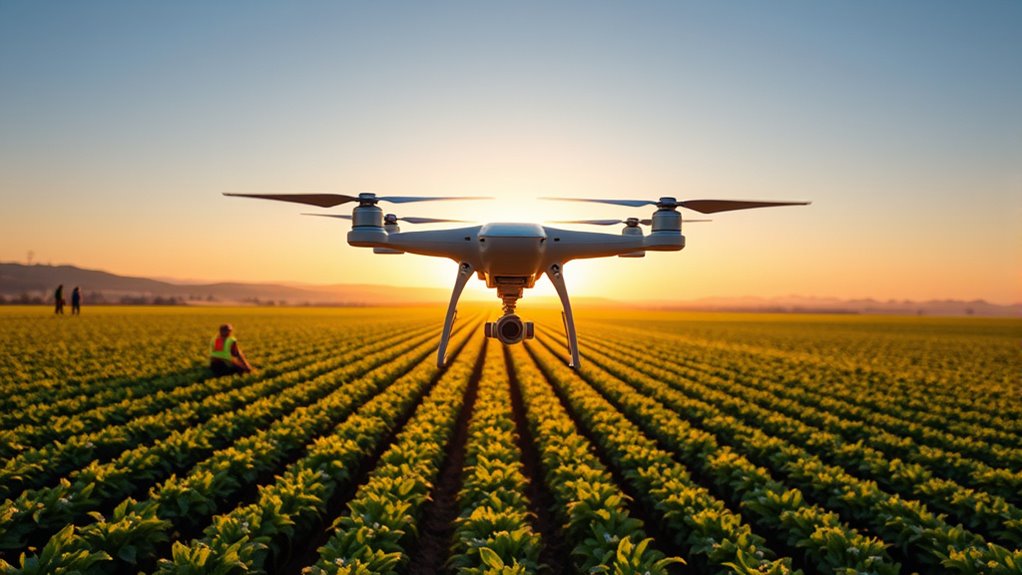
Drones in agriculture help you monitor crops in real time using multispectral imaging, which reveals plant health, water stress, and soil quality better than traditional methods. They identify pests and diseases early, allowing for targeted treatments that save chemicals and reduce environmental impact. Drones also optimize water and nutrient use, cut costs, and improve operational efficiency. If you keep exploring, you’ll discover how these innovative tools are transforming sustainable farming practices worldwide.

Get the latest gadgets delivered free — and shop member deals
- Fast, free delivery on millions of items
- Access to Prime Big Deal Days deals on October 6–7
- Prime Video, Amazon Music and more included
Key Takeaways
- Farmers use drones equipped with multispectral cameras to detect early signs of pests, diseases, and water stress for targeted intervention.
- Aerial data from drones helps optimize irrigation, fertilization, and pesticide application, reducing waste and environmental impact.
- Drones enable rapid, large-scale crop monitoring, saving time and labor compared to traditional ground inspections.
- Precision aerial data supports sustainable farming practices by minimizing chemical runoff and conserving water resources.
- Success stories include reducing chemical use by over 50%, cutting costs, and improving crop yields across various crops and terrains.
multispectral drone camera for agriculture
As an affiliate, we earn on qualifying purchases.
As an affiliate, we earn on qualifying purchases.
Enhancing Crop Monitoring With Multispectral Imaging
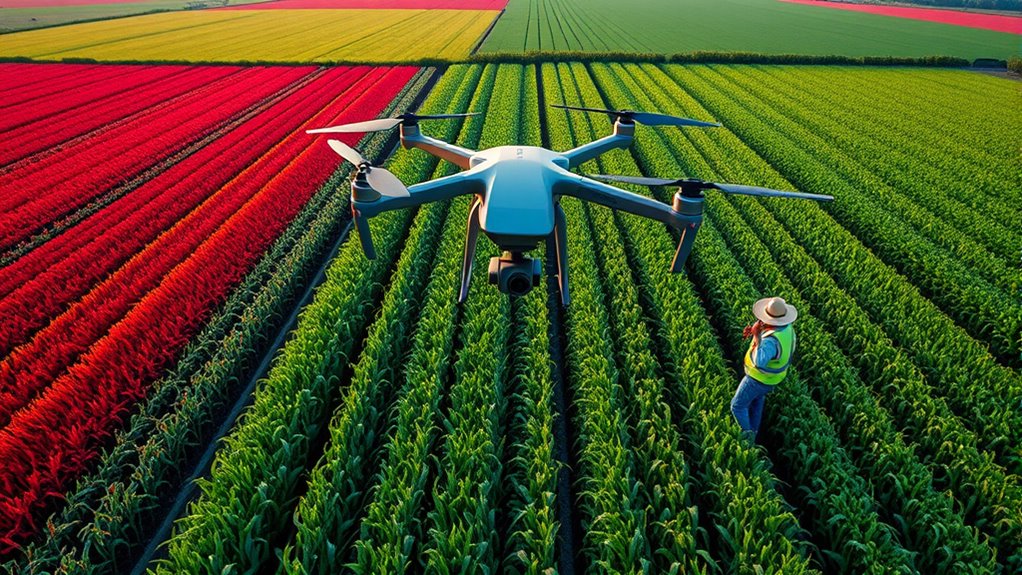
Multispectral imaging has revolutionized crop monitoring by providing detailed insights into plant health that go beyond what the naked eye can see. With this technology, you can identify stress, nutrient deficiencies, and disease early, allowing for targeted interventions. As you fly your drone over fields, multispectral sensors capture data across multiple wavelengths, revealing subtle variations in plant reflectance. This information helps you assess soil quality, detect water stress, and monitor growth patterns precisely. By analyzing multispectral images, you can optimize irrigation, fertilization, and pest control, reducing waste and increasing yields. Additionally, understanding color accuracy can help in interpreting the images more accurately, ensuring better decision-making. This real-time, in-depth data empowers you to make informed decisions quickly, enhancing overall crop management and promoting sustainable farming practices. Moreover, advances in AI-powered analysis are enabling farmers to automate the interpretation of multispectral data, further increasing efficiency and accuracy in decision-making. Implementing European cloud solutions ensures data security and facilitates seamless collaboration across farming operations. Incorporating natural ecosystems into agricultural landscapes can also enhance biodiversity and contribute to sustainable practices. Staying informed about the latest technological advances can help you adopt innovative solutions and stay competitive in modern agriculture.
agricultural drone with crop monitoring
As an affiliate, we earn on qualifying purchases.
As an affiliate, we earn on qualifying purchases.
Precision Pest and Disease Detection
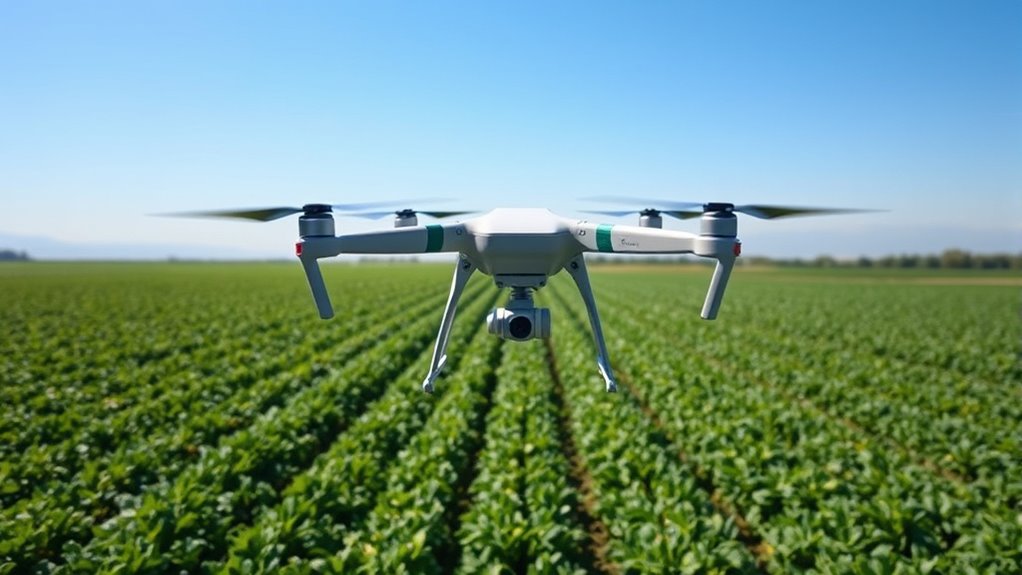
You can use drones to identify pests and diseases in real-time, allowing you to catch problems early and reduce crop damage. Multispectral imaging helps monitor plant health and spot signs of disease that aren’t visible to the naked eye. With targeted treatment strategies, you’ll apply pesticides and fungicides more efficiently, saving resources and protecting your crops. Additionally, understanding biography of influential figures can provide insights into resilience and perseverance that inspire innovative approaches to agricultural challenges. Employing study techniques and exam preparation strategies can enhance your ability to interpret complex aerial data effectively, leading to better decision-making in crop management. Incorporating traditional cooking methods, such as slow-cooking or using specific herbs, can also improve the flavor profile of your farm’s produce and add value to your harvest. Leveraging agricultural technology can further optimize your farming practices and increase yields. Staying informed about emerging technological advancements helps farmers adapt quickly to changing environments and improve overall farm productivity.
Real-Time Pest Identification
How can farmers detect pests and diseases as they appear in real time? Drones equipped with high-resolution cameras and AI-powered image analysis make this possible. As you fly over your fields, the drone captures detailed visuals, instantly analyzing them for early signs of pest activity or disease. The AI compares images with existing data, flagging areas needing immediate attention. This rapid detection allows you to target treatments precisely where they’re needed, reducing chemical use and preventing outbreaks from spreading. Proper equipment setup ensures optimal image quality and data accuracy. Implementing real-time data processing further enhances the speed of detection and response. Additionally, advanced imaging technologies can reveal issues invisible to the naked eye, providing a deeper level of analysis. Incorporating machine learning algorithms improves the system’s accuracy over time, making detection even more reliable. Regular updates and calibration of drone sensors enhance detection precision and adapt to changing field conditions. Real-time pest identification minimizes crop damage and saves you time and money. By continuously monitoring your fields, you stay ahead of problems, making informed decisions quickly. This proactive approach enhances crop health, boosts yields, and supports sustainable farming practices.
Multispectral Disease Monitoring
Have you ever wondered how farmers detect plant diseases and pest infestations before they become visible to the naked eye? With multispectral drone imaging, you can spot early signs of stress or infection by analyzing specific wavelengths of light reflected from crops. These sensors reveal subtle changes in plant health, such as chlorophyll reduction or water stress, that aren’t visible to the naked eye. By capturing data across multiple spectral bands, farmers can identify disease hotspots quickly and accurately. This advanced technology enables early intervention that minimizes crop damage and maximizes yield potential. This early detection allows you to target treatments precisely where needed, reducing chemical use and preventing outbreaks from spreading. Multispectral disease monitoring enhances decision-making, improves crop health, and boosts yields, all while supporting sustainable farming practices.
Targeted Treatment Strategies
Targeted treatment strategies leverage advanced drone technologies to identify pest infestations and disease outbreaks with pinpoint accuracy. By using multispectral imaging and AI analysis, you can detect stress signs in crops early, allowing for precise interventions. This targeted approach minimizes chemical use, reducing environmental impact and input costs. Drones can quickly survey large areas, pinpointing hotspots of pest activity or disease, so you can apply treatments only where needed. This precision not only improves crop health and yields but also conserves resources and lowers labor demands. For example, drones can differentiate between healthy and infected plants, enabling you to target pesticides or fungicides exactly where they’re needed. Incorporating aerospace technology into your pest management strategies enhances detection capabilities and operational efficiency. The integration of aerial imaging data further refines the accuracy of assessments, making pest management more effective and sustainable. This strategic use of aerial data transforms pest management into a more sustainable, efficient process.
As an affiliate, we earn on qualifying purchases.
Optimizing Water and Nutrient Management
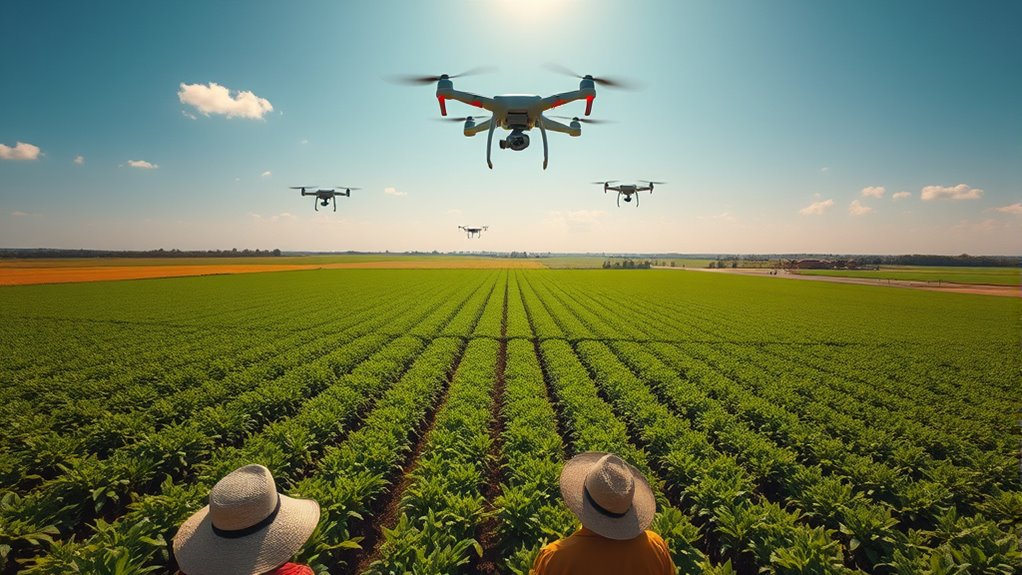
Agricultural drones are transforming water and nutrient management by providing precise, real-time data that enables smarter decision-making. With aerial imagery and multispectral sensors, you can identify areas of water stress or nutrient deficiency quickly. This allows you to apply resources more accurately, reducing waste and improving crop health. Understanding soil health indicators and the basics of water chemistry can help you better interpret drone data and optimize your irrigation and fertilization practices. You’ll see benefits like: – Targeted irrigation, delivering water only where needed – Precise fertilization based on soil and plant health data – Early detection of drought stress or nutrient gaps – Reduced runoff and over-application, protecting the environment These insights help you optimize inputs, enhance crop yields, and promote sustainable practices—all while saving time and resources. Drones give you the tools to manage water and nutrients more effectively than ever before.
drone for pest and disease detection
As an affiliate, we earn on qualifying purchases.
As an affiliate, we earn on qualifying purchases.
Cost Savings and Operational Efficiency Gains
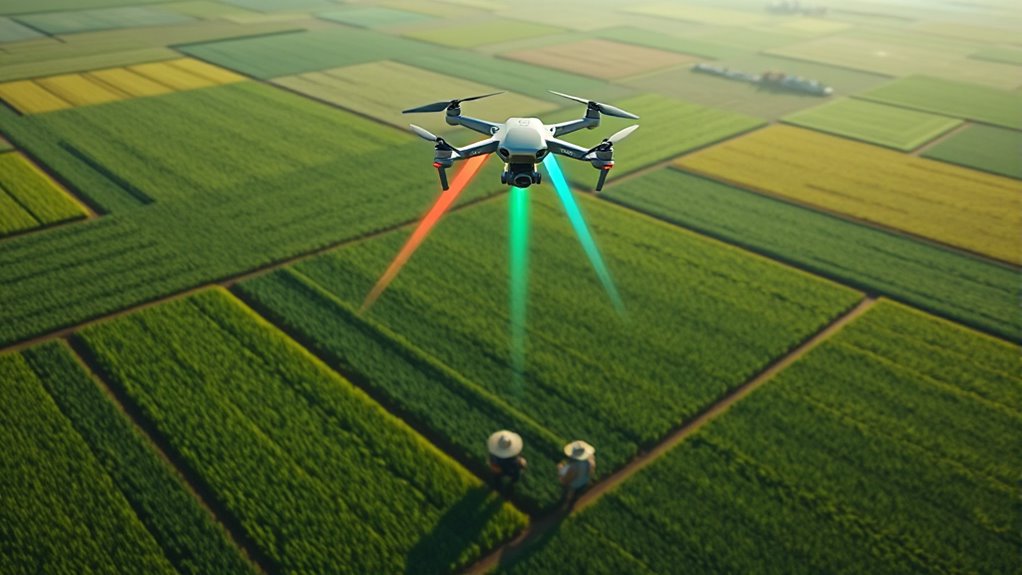
Are you looking to cut costs and boost efficiency on your farm? Drones can help you do both by considerably reducing operational time and labor costs. For example, vineyard spraying that once took days can now be completed in hours, saving you valuable time. Brazilian coffee growers saw a 70% drop in spraying costs compared to manual methods, and input waste decreases as drones improve application accuracy. Operating costs typically range from $7.39 to $12.27 per acre for drone spraying, making them competitive with traditional equipment. Automation reduces physical labor and safety risks, especially for older farmers or those with limited staff. Overall, integrating drones streamlines operations, cuts expenses, and allows you to allocate resources more effectively, increasing your farm’s profitability.
Environmental Benefits and Sustainability Impact
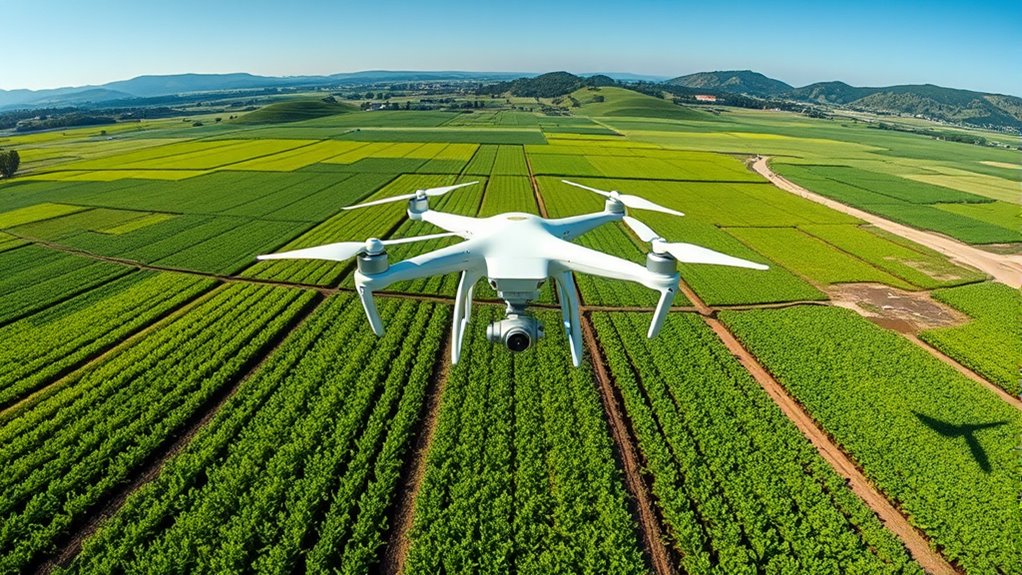
Implementing drone technology not only reduces operational costs but also delivers significant environmental benefits. By using drones for precise application and data collection, you can cut water use, decrease chemical runoff, and lower carbon emissions. These small aerial tools help farmers save water—around 222 million tons globally—and reduce emissions comparable to planting 1.2 billion trees. They also minimize reliance on fossil-fuel-powered machinery, resulting in less energy consumption. Additionally, drones enable you to:
- Reduce chemical usage by nearly 47,000 metric tons through targeted spraying
- Lower water consumption by optimizing irrigation
- Decrease carbon emissions and ecological footprint
- Support sustainable farming practices that protect soil and water quality
These benefits promote eco-friendly agriculture and contribute to global sustainability efforts.
Regulatory Developments and Training Opportunities
Regulatory developments are accelerating the adoption of agricultural drones worldwide, making it easier for you to integrate this technology into your practices. In the U.S., FAA registrations for agricultural drones increased from 1,000 in early 2024 to around 5,500 by mid-2025, streamlining compliance. Countries like Argentina, Spain, and Brazil have relaxed or standardized drone regulations, simplifying pilot licensing and operational procedures. Over 6,000 instructors globally have trained approximately 300,000 drone pilots, ensuring accessible, effective education. Emerging policies emphasize safety, operational clarity, and inclusivity, encouraging more farmers, especially young people and women, to adopt drones. These regulatory improvements reduce barriers and foster broader deployment across various crop types and terrains, helping you leverage aerial data more confidently and efficiently.
Diverse Agricultural Applications and Success Stories

Drones have demonstrated remarkable versatility across a wide range of crops and farming practices, proving their value in diverse agricultural settings. You can see this through their use in spraying pesticides, fertilizers, and fungicides on crops like coffee, rice, vineyards, and orchards. For example, coffee farmers in Brazil use DJI Agras drones to improve spray accuracy and reduce costs on rugged terrain. Vineyard managers in Romania cut chemical use by over 50% and save time. Rice farmers benefit from drones spreading applications more evenly, boosting efficiency. Additionally, drones support specialty crops such as canola, sunflowers, and bananas, adapting to different terrains and crop needs. Their broad application demonstrates how aerial technology enhances productivity and sustainability across agriculture’s many sectors.
Frequently Asked Questions
What Are the Initial Costs for Implementing Drone Technology in Farms?
You’ll typically spend between $7.39 and $12.27 per acre to implement drone technology on your farm. Initial costs include purchasing or leasing drones, which vary depending on the model and capabilities, and training pilots to operate them safely and effectively. Additional expenses may involve registration, insurance, and maintenance. While these costs might seem significant upfront, they often lead to savings through increased efficiency and reduced input waste over time.
How Do Drone Regulations Vary Internationally for Agricultural Use?
International drone regulations are like different languages—you need to learn each to communicate effectively. Some countries, like the U.S., have strict registration and safety requirements, while others, like Brazil and Spain, have relaxed rules to promote adoption. You’ll find standards evolving, with many nations streamlining pilot training and certification. Staying informed guarantees you navigate these regulatory landscapes smoothly and maximize your drone’s potential across borders.
What Safety Protocols Are Recommended for Drone Operation in Agriculture?
You should always perform pre-flight checks, confirm your drone is properly registered, and follow local regulations. Maintain visual line-of-sight, avoid flying near people or animals, and stay clear of restricted airspace. Use safety features like geofencing and emergency stop functions. Keep updated on weather conditions, and operate at safe altitudes. Regularly inspect and maintain your drone to prevent malfunctions, guaranteeing safety for yourself and others during agricultural operations.
How Can Small-Scale Farmers Access Drone Technology Affordably?
You can access drone technology affordably by exploring leasing options, which spread out costs and make drones more accessible. Look for training programs offered at reduced rates or free online courses to learn how to operate them safely. Consider purchasing used or entry-level drones that still provide valuable data and spray capabilities. Joining local farming cooperatives or networks can also help you share costs and resources, making drones more affordable for your farm.
What Future Innovations Are Expected to Enhance Drone Capabilities in Farming?
Future innovations will likely make drone capabilities in farming even more advanced and accessible. You can expect AI enhancements for better real-time decision-making, increased flight times with longer-lasting batteries, and more affordable prices through mass production. Additionally, integration with IoT and multispectral imaging will improve precision, helping you optimize water, fertilizer, and pesticide use. These advancements will streamline operations, boost yields, and support sustainable practices, making drone technology indispensable for future farming success.
Conclusion
By embracing drone technology, you can transform your farming practices—improving crop health, reducing costs, and promoting sustainability. Some might worry about the complexity or expense, but think of drones as your aerial partner, providing precise data that saves time and resources. Imagine a farm where every decision is data-driven, leading to healthier crops and a more profitable, eco-friendly operation. Drones aren’t just a trend—they’re your future in agriculture.
Fall Picks
fall essentials
As an affiliate, we earn on qualifying purchases.