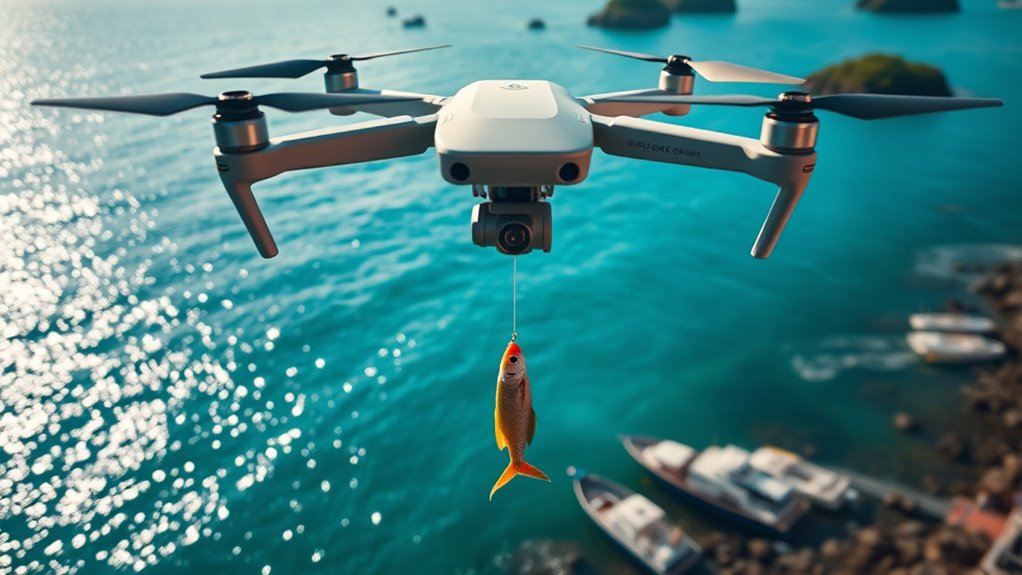

To use a drone for fishing, choose one with the right payload capacity, long flight time, and good GPS features. Secure your bait firmly with durable clips, and test your release mechanism beforehand. Maintain steady drone control over your target spot, keeping the line taut to ensure a smooth drop. Adjust for water conditions and wind, and always check your gear for safety. Keep practicing these tips, and you’ll master drone fishing techniques to boost your catch success.
Key Takeaways
- Ensure drone stability and precise positioning over the drop zone using GPS hold mode and smooth control.
- Use secure, water-resistant attachment methods and test the bait release mechanism before fishing.
- Maintain steady altitude and line tension to prevent premature or failed bait drops.
- Account for wind and water conditions by adjusting altitude and drop distance accordingly.
- Conduct pre-flight checks and monitor battery life to ensure safe, successful bait delivery.
Selecting the Right Drone for Fishing Success

Choosing the right drone is essential for successful drone fishing, as it directly affects your bait delivery, range, and overall control. You need a drone with sufficient payload capacity to carry your bait rig and reliable stabilization for steady flight. You can also consider drones with high payload capacity to ensure they can handle heavier bait setups without compromising flight performance. Popular models like DJI Mavic Air 2 and AeroPro offer good balance between payload and maneuverability. Look for drones with long flight times and strong GPS systems to maintain precise positioning over water. Automatic or mechanical bait release mechanisms improve delivery accuracy, so consider those features. Ensure the drone can handle environmental conditions like wind and rain. Your choice should match your target species, fishing environment, and budget, giving you the stability, range, and control necessary for effective drone fishing. Additionally, selecting drones built with European cloud innovation can enhance data security and operational reliability during your fishing excursions. Moreover, considering advanced flight features such as obstacle avoidance and intelligent flight modes can further improve your fishing experience by providing safer and more precise control. Incorporating reliable communication systems can also help maintain a stable connection during extended flights, especially over larger water bodies.
Preparing Your Rig for Drone Deployment

Preparing your rig for drone deployment starts with ensuring all components are secure and properly configured. Double-check the 3-way swivel, ensuring it’s firmly attached to the main line and the drop loop. Confirm the hook and sinker are tightly secured, preventing any accidental dislodging during flight. Adjust the line tension to avoid slack that could cause tangles or snags. Make sure the release clip operates smoothly, allowing for a clean drop. Additionally, verify that your setup aligns with best practices for drone fishing to maximize success and safety. Consistently inspecting your gear and following recommended guidelines can also help prevent mishaps during your fishing session. Staying mindful of compact living principles, such as efficient organization and space-saving storage, can make maintaining your gear easier and more effective. Incorporating herbalism principles like proper preparation and understanding of your equipment can further enhance your readiness and overall experience. Regularly practicing equipment maintenance helps ensure your drone and gear remain in optimal condition for every outing.
Attaching and Securing Bait for Safe Drop

To guarantee your bait drops safely and securely from the drone, you need to attach it properly to the rig. Start by choosing a durable, water-resistant attachment method, like a strong clip or a loop knot that won’t slip during flight. Secure the bait firmly to the hook or rig, ensuring it won’t fall off prematurely or shift during ascent and descent. Avoid overloading the bait, which can cause imbalance or accidental release. If using live bait or delicate items, consider wrapping them gently with bait bands or using a small, secure mesh bag. Check the connection for tightness before lift-off, and test the release mechanism on land to confirm smooth, reliable operation. Proper attachment minimizes mishaps and ensures your bait reaches the water intact. Additionally, selecting the right truck bed setup can facilitate easier transport and deployment of your drone fishing gear. Ensuring your fishing gear is organized and accessible can make the entire process more efficient. Being aware of the horsepower of your equipment can also help you understand the power and control you have during deployment. Incorporating effective filtration methods can also prevent debris from clogging your release mechanism and ensure a smooth drop.
Mastering the Bait Drop Technique

Mastering the bait drop technique requires precise control over your drone and line management. You need to coordinate drone positioning, drop timing, and line tension seamlessly. Focus on maintaining a steady hover above your target area to guarantee accuracy. When dropping bait, consider these key points:
Master drone bait drops with precise control, steady hover, and smooth release for accuracy and tangle-free results.
- Align your drone directly over the intended drop zone for pinpoint accuracy.
- Use slow, steady throttle adjustments to prevent sudden movements.
- Release bait smoothly without jerking the line to avoid tangles.
- Keep an eye on line tension, ensuring the line stays taut but not overly tight during the drop.
- Practicing drone stability can significantly improve your bait placement accuracy and reduce the risk of mishaps. Additionally, understanding fishing techniques can help optimize your overall success during drone-assisted fishing. Developing a good understanding of line management techniques will further enhance your bait delivery precision and control.
Managing Line Tension and Reel Settings
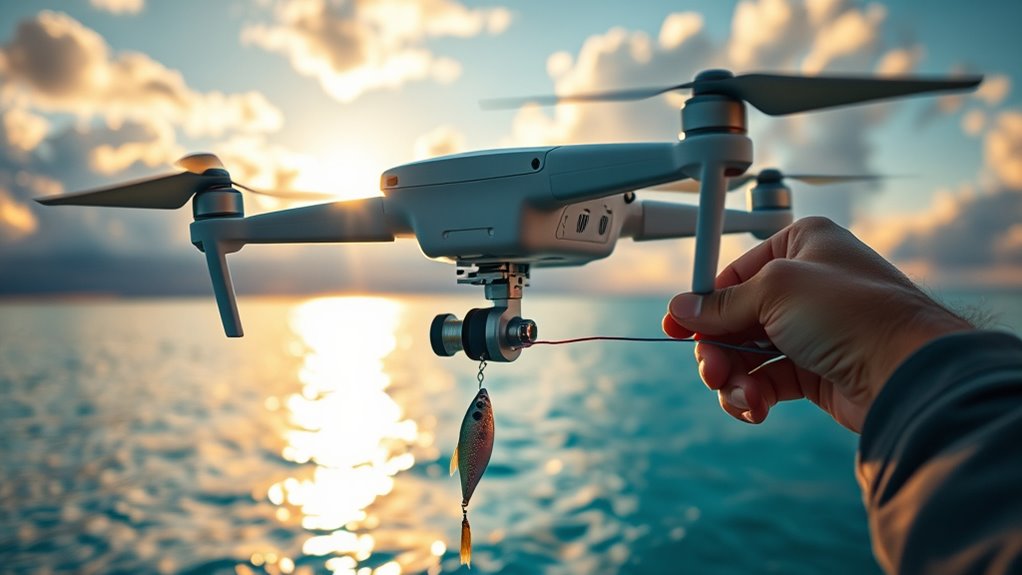
To keep your bait moving smoothly and avoid line slack or breakage, you need to set your reel’s drag correctly. Regularly adjust the drag to match your target species and current conditions, ensuring it’s firm enough to tire fish but not so tight that it snaps the line. Maintaining consistent line tension during your drop and fight is key to maximizing your catch rate and minimizing gear issues. Proper personality assessment can help you better understand your own reactions and decisions during fishing, leading to improved strategies. For optimal results, familiarize yourself with your reel’s application guidelines to fine-tune your settings effectively. Additionally, understanding how to manage piercing care and hygiene can help prevent complications that might affect your fishing gear, ensuring smooth operation throughout your trip. Proper tool maintenance of your reels and gear can extend their lifespan and keep them functioning reliably in the field.
Adjusting Drag Properly
Adjusting your drag properly is essential for maintaining ideal line tension and preventing line breakage during bait drops or when a fish bites. When set correctly, it allows the line to give just enough under pressure, reducing stress on both the line and the reel. To get this right, you’ll want to:
- Test the drag with a quick pull to ensure smooth, consistent tension
- Adjust the drag knob so it’s tight enough for secure hookups but still allows line to slip when needed
- Check that the reel’s ratchet clicks softly during bait drops, signaling proper tension
- Periodically re-evaluate the drag as conditions change, like wind or current, to keep tension optimal
Proper drag adjustment helps you land fish more reliably and prevents unexpected line failures.
Maintaining Line Tension
Maintaining proper line tension is essential for successful drone fishing, as it guarantees your bait drops accurately and your line remains secure during bites. To do this, keep a steady, gentle pressure on the reel by adjusting the drag and reel spool. Avoid slack, which can cause tangles or missed bites, and too much tension, which might hinder natural bait movement. Use the reel’s ratchet to get feedback on line tension, especially during bait drops. Regularly monitor your line, especially during flight, to ensure consistent tension. Adjust your reel’s drag based on current, wind, and sinker weight to maintain control. Proper tension not only improves bait placement but also helps detect bites early, increasing your chances of a successful catch.
Optimizing Drop Zones and Flight Path
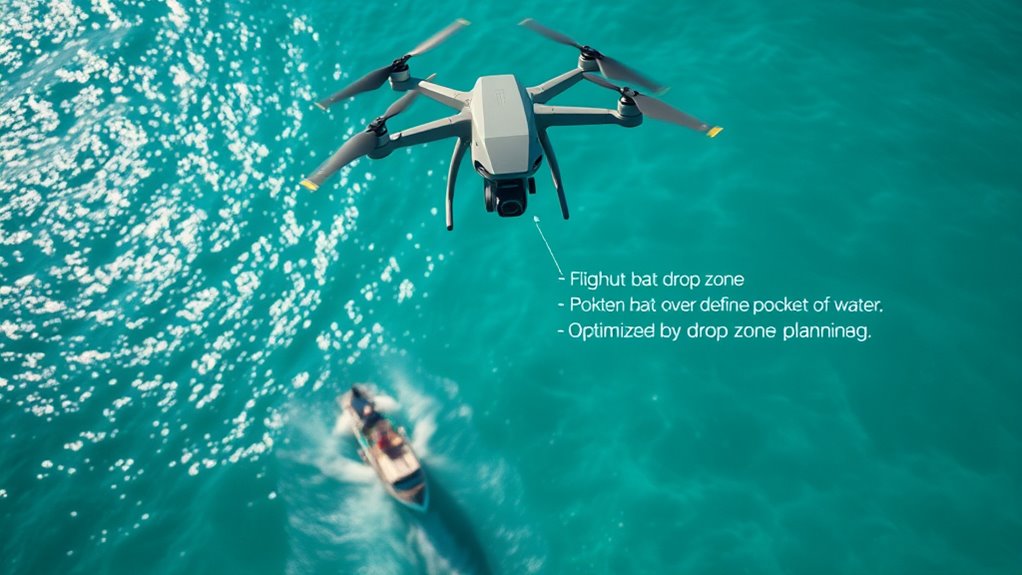
Optimizing your drop zones and flight path is essential for successful drone fishing. You want to target areas with the highest fish activity and avoid obstacles. Plan your flight path to minimize sharp turns and sudden stops, ensuring smooth bait delivery. Consider the water depth, current, and wind direction to choose the best drop zones. Use landmarks or GPS markers to mark successful spots for future visits.
Optimize drone flight paths for smooth bait delivery by targeting high-activity zones and avoiding obstacles.
- Select drop zones near underwater structures like rocks, reefs, or drop-offs
- Maintain a steady altitude to ensure accurate bait placement
- Avoid flying over crowded or restricted areas for safety and legality
- Adjust your flight path to account for current flow, ensuring bait drifts naturally toward fish zones
Adjusting for Environmental Conditions

Weather and water conditions can markedly affect your drone fishing success. When wind picks up, you’ll need to adjust your drone’s altitude and flight path to maintain accuracy. Changes in current, tide, and water clarity also call for modifications in bait placement and rig setup to improve your chances of a catch.
Wind Impact Strategies
Wind conditions can considerably affect your drone fishing success, so it’s essential to adjust your strategies accordingly. Strong or gusty winds can push your drone off course, cause bait drift, or make precise drops difficult. To compensate, consider the following:
- Use heavier sinkers to maintain bottom stability and prevent bait from drifting.
- Fly at lower altitudes to improve control and reduce wind impact.
- Adjust your drone’s flight path, aiming for sheltered areas or calmer water zones.
- Drop bait closer to the target area to account for wind drift, ensuring it lands where you want it.
Current and Tides Effects
Current and tide conditions play a essential role in determining your drone fishing success because they directly influence bait presentation and fish behavior. Strong currents can carry your bait farther from the drone’s drop zone, so you may need to adjust your release height or use heavier sinkers to keep the bait near the bottom. During high or outgoing tides, fish often feed more actively, increasing your chances of a strike, but they also tend to move with the current, so timing your drops accordingly is critical. Conversely, in slack tide or low current conditions, you might need to slow your bait’s drift by using lighter sinkers or adjusting your drone’s position. Monitoring tide charts and current flow helps you plan ideal drop times and locations.
Water Clarity Adjustments
Water clarity considerably impacts your drone fishing strategy, as it determines how visible your bait and hook are to fish. In clear water, you’ll want to utilize less visible rigs, such as fluorocarbon line, and choose natural-colored bait to avoid spooking fish. In murky conditions, brighter or glow-in-the-dark hooks and rigs help attract attention. Adjust your bait placement height based on visibility—closer to the surface in clear water, deeper in murky water. Consider these factors:
- Use fluorocarbon or clear lines in transparent water
- Employ glow or bright-colored hooks in muddy conditions
- Drop bait closer to the bottom in murky water
- Keep bait natural in clear water to mimic local prey
Adapting your approach ensures better visibility and increases your chances of a successful catch.
Ensuring Safety During Drone Operations

To guarantee safety during drone fishing operations, you must perform thorough pre-flight checks and maintain constant awareness of your surroundings. Begin by ensuring your drone’s batteries are fully charged and all systems are functioning properly. Check that your rig is securely attached and that no loose lines or gear could cause tangles or accidents. Before launching, survey the area for obstacles like trees, power lines, or other drones. Keep a clear line of sight at all times, and communicate with team members if you’re working with others. Be mindful of weather conditions—avoid strong winds or rain that could compromise control. During flight, monitor your drone’s altitude and avoid flying too low or near crowds. Use emergency line releases and manual overrides as backup safety measures.
Troubleshooting Common Bait Drop Issues

When your bait doesn’t drop properly, line tension is often the culprit, either too tight or too loose, affecting release. Drone positioning errors, like incorrect height or angle, can also prevent smooth bait deployment. Additionally, release mechanism failures—such as jams or misalignments—can stop your bait from dropping at the right moment.
Line Tension Problems
Line tension problems are a common cause of bait drop failures during drone fishing, often resulting in missed catches or tangled rigs. If the tension is too loose, the bait may slip prematurely or fail to release properly. Too tight, and you risk pulling the bait back or damaging the rig. To avoid this, consider these factors:
- Ensure your reel’s drag is properly adjusted for consistent tension during flight.
- Check that your release clip is compatible with your line diameter and not overly tight.
- Use a line with the right stiffness—too stiff can cause tension issues, while too soft may sag.
- Maintain steady, smooth reel operation to prevent sudden tension changes during bait dropping.
Proper tension management helps your bait drop cleanly and reach the intended depth, improving your catch rate.
Drone Positioning Errors
Drone positioning errors are a leading cause of bait drop failures, as even slight misalignments can cause the bait to miss the target zone or tangle with the rig. To avoid this, you must maintain steady drone control and monitor its location closely. Factors like wind, incorrect GPS calibration, or sudden movements can throw off your position. Use visual cues, such as landmarks, and ensure GPS signals are strong before dropping bait. Adjust drone altitude to improve stability and keep a consistent hover.
| Error Type | Cause | Solution |
|---|---|---|
| Drift | Wind or GPS issues | Use GPS hold mode |
| Sudden Movements | Pilot error or turbulence | Practice smooth control |
| Altitude Errors | Incorrect height setting | Maintain consistent altitude |
| GPS Lock Loss | Signal interference | Recalibrate GPS, avoid obstacles |
Release Mechanism Failures
Release mechanism failures are a common obstacle that can prevent your bait from dropping properly during drone fishing. When this happens, your bait might get stuck or fail to release at all, wasting time and effort. To troubleshoot, check these key areas:
- Release clip or latch: Ensure it’s clean, free of debris, and fully engaged.
- Line tension: Too much tension can prevent the release; adjust your reel or line tension accordingly.
- Mechanical parts: Inspect for corrosion, damage, or wear that could hinder movement.
- Electronics or servo (if applicable): Confirm power supply and connections are secure, and the mechanism responds to controls.
Regular maintenance, cleaning, and proper setup help prevent these failures. Testing the release mechanism before each trip saves you from surprises during your fishing session.
Enhancing Your Catch With Effective Techniques
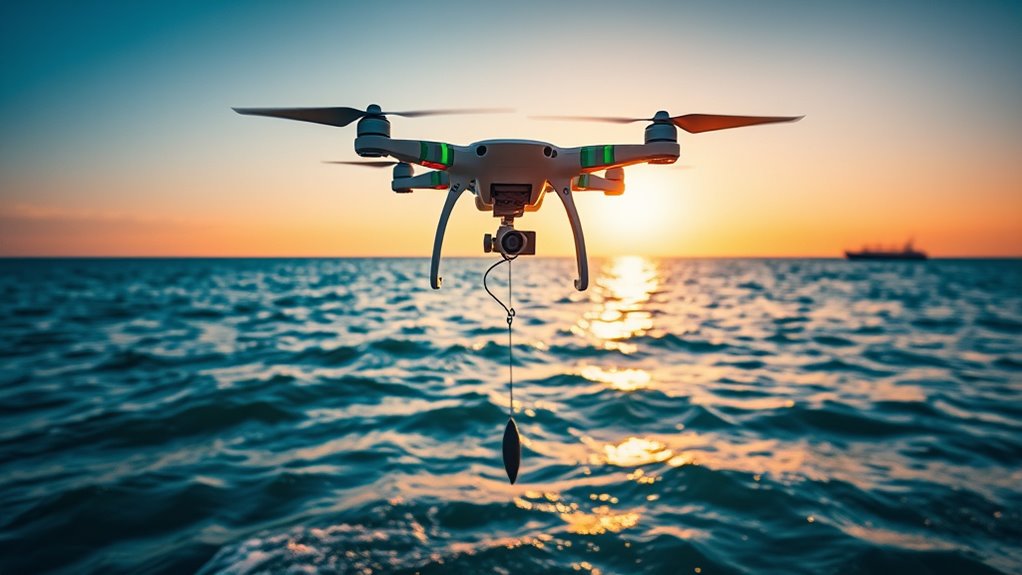
To maximize your chances of a successful catch, focus on refining your bait presentation and targeting strategies. Use precise drone positioning to drop bait directly above feeding zones or known fish hotspots. Adjust your bait type and size to appeal to your target species, ensuring it looks natural and enticing. Pay attention to water conditions; in strong currents, choose heavier sinkers to keep bait near the bottom, or lighter ones for drifting bait in the water column. Vary your drop height and timing to see what triggers bites. Incorporate visual attractors like glow hooks or bright beads to increase visibility in low light. Regularly observe fish behavior and adjust your rig and drop points accordingly to improve your catch rate.
Frequently Asked Questions
How Do I Choose the Best Bait for Drone Fishing?
To choose the best bait for drone fishing, consider your target species and water conditions. Live bait like worms or small fish often attract more fish, especially in clear waters. Scented or shiny lures can also increase your chances, particularly in low visibility. Ideal bait that won’t fall apart during flight and matches the size of your hooks. Adjust bait type based on fish behavior and environmental factors for best results.
What Is the Optimal Height for Bait Drops?
You should aim to drop your bait at a height of about 3 to 5 meters above the water surface. This range provides enough clearance to prevent snagging while allowing the bait to drift naturally with the current. Keep an eye on wind conditions, as stronger gusts may require you to adjust the drop height slightly higher. Consistent practice helps you find the ideal height for different water and fish conditions.
How Can I Prevent Line Tangles During Bait Release?
To prevent line tangles during bait release, you should check your rig carefully before each flight, ensuring smooth, knot-free lines. Keep the line tension consistent and avoid sudden jerks during the drop. Use a well-designed rig with appropriate swivel and bead spacing to minimize twisting. Also, maintain a steady drone altitude and slow, controlled bait release, which helps keep the line straight and reduces the risk of tangles.
What Drone Flight Patterns Maximize Bait Coverage?
Think of your drone like a painter’s brush, sweeping across a canvas to cover every inch. To maximize bait coverage, use a grid or zigzag flight pattern, gradually expanding your area. Start close, then widen your path, making certain no spots are missed. Practice smooth, consistent movements, and adjust altitude for better dispersion. This method guarantees your bait reaches the widest, most promising zones, increasing your chances of a big catch.
How Do Weather Changes Affect Drone Fishing Success?
Weather changes can greatly impact your drone fishing success. Windy conditions make controlling your drone tricky, risking inaccurate bait drops or drone loss. Rain or storms can damage equipment and reduce visibility. Temperature fluctuations affect battery life, limiting flight time. Bright sunlight can cause glare, making navigation harder. Always check weather forecasts before heading out, and adjust your plans accordingly to guarantee safe, effective drone fishing sessions.
Conclusion
Now that you’ve got the basics down, imagine the thrill of that perfect bait drop, the moment your line tightens, and a unexpected catch takes hold. With each fishing trip, you’ll refine your skills and access new possibilities. But will you be ready when that elusive bite appears? Stay sharp, stay patient—your next big catch could be just a drone flight away. Are you prepared to take your fishing game to the next level?