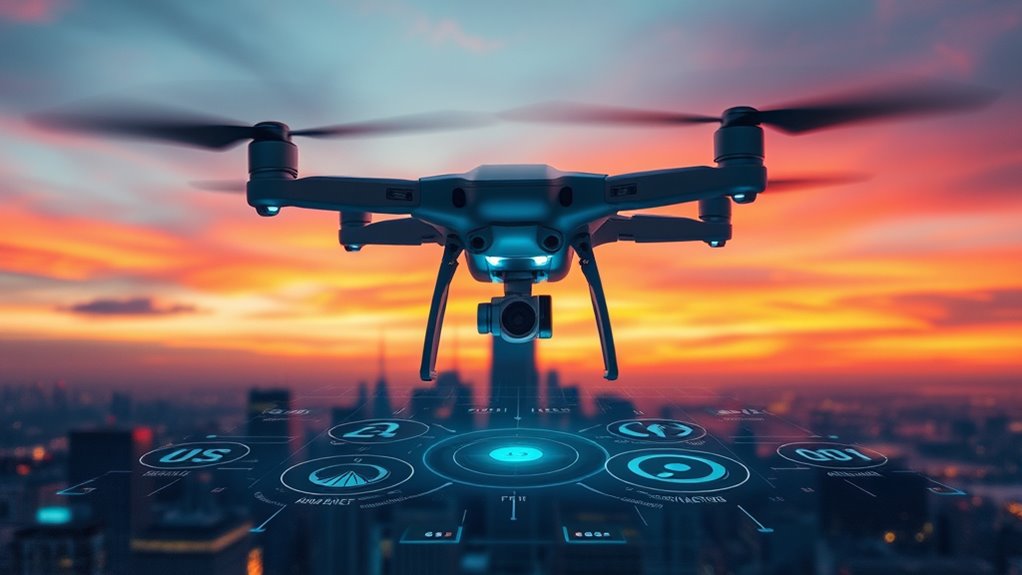

Artificial intelligence is markedly enhancing drones by enabling autonomous navigation, precise sensor data processing, and advanced surveillance. You can rely on AI-driven features like obstacle avoidance, real-time environmental analysis, and adaptive learning to improve safety and efficiency in complex or hazardous areas. These capabilities help drones perform tasks such as search and rescue, infrastructure inspection, and monitoring more effectively than ever before. Keep exploring to discover more about how AI is transforming drone technology for your needs.

Get the latest gadgets delivered free with Prime
- Fast, free delivery on millions of items
- Prime Video, Amazon Music and more included
- Member-only deals all year
Key Takeaways
- AI enables autonomous navigation, allowing drones to interpret sensor data and avoid obstacles in complex environments.
- Machine learning improves drone capabilities through continuous data-based learning and adaptation.
- AI-driven image recognition enhances surveillance, object detection, and target tracking for security applications.
- Sensor integration with AI allows precise environmental analysis and real-time decision making.
- AI optimizes drone operations in challenging conditions, reducing human oversight and increasing efficiency.
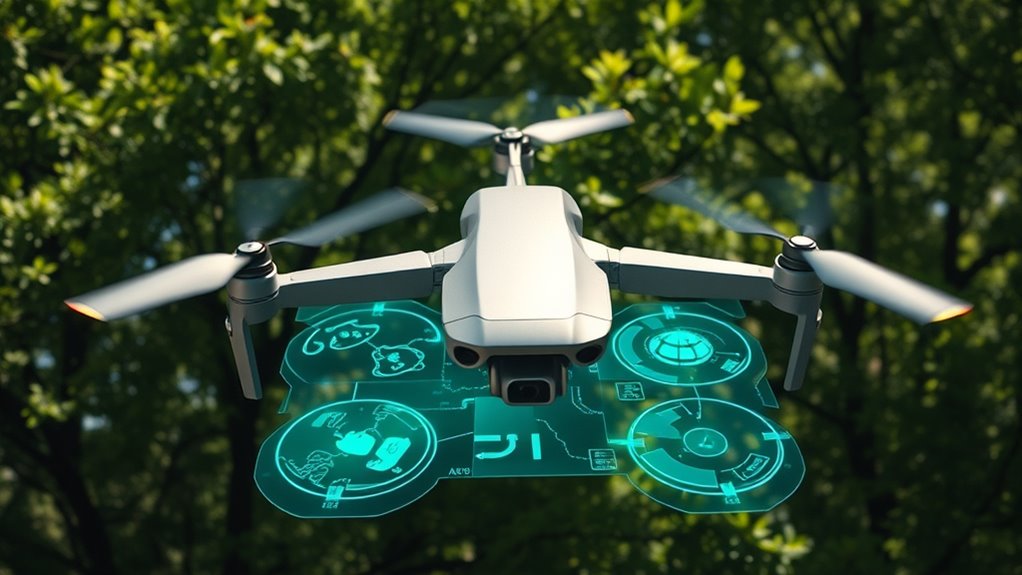
Have you ever wondered how drones are becoming smarter and more capable? Thanks to advancements in artificial intelligence, these flying machines are evolving rapidly, transforming various industries. One of the key ways AI boosts drone performance is through autonomous navigation. Instead of relying solely on pre-programmed routes or remote control, modern drones use AI algorithms to interpret real-time data from sensors and cameras. This allows them to navigate complex environments independently, avoiding obstacles and adjusting their flight paths on the fly. With autonomous navigation, drones can operate in hazardous or hard-to-reach areas without risking human lives, making them invaluable for search and rescue missions, infrastructure inspections, and agricultural monitoring. AI-powered navigation systems process vast amounts of sensor data instantly, ensuring smooth, safe flights even in unpredictable conditions. This capability not only increases efficiency but also reduces the need for constant human oversight. Additionally, high-precision sensors and improved color accuracy further enhance their ability to perform detailed inspections and data collection.
Enhanced surveillance is another critical area where AI is revolutionizing drone technology. Drones equipped with AI-driven image recognition and data analysis can monitor large areas more effectively than ever before. They can identify specific objects, track moving targets, and analyze patterns in real-time. For example, in security applications, AI-enabled drones can detect unauthorized personnel, identify suspicious activities, or monitor crowds during major events. In environmental conservation, they can track wildlife movements or detect illegal logging activities. AI’s ability to analyze data on the fly means these drones can provide actionable insights immediately, saving time and resources. Furthermore, AI systems can learn from new data, continuously improving their surveillance capabilities over time. This adaptive learning allows drones to become more accurate and efficient at identifying threats or changes in their environment.
Top picks for "dron artificial intelligence"
As an affiliate, we earn on qualifying purchases.
Frequently Asked Questions
How Does AI Improve Drone Navigation in Complex Environments?
AI enhances your drone’s navigation by using sensor fusion to combine data from cameras, lidar, and GPS, creating a complete environment map. This helps your drone detect obstacles more accurately and respond swiftly. With advanced obstacle detection, your drone can avoid collisions even in complex environments. AI-driven algorithms process this information in real-time, ensuring smooth navigation and safer flights in challenging terrains.
What Ethical Concerns Arise From Ai-Driven Drones?
You should consider ethical concerns like privacy issues and autonomous decision-making when using AI-driven drones. These drones can collect sensitive data without consent, raising privacy concerns. Furthermore, their ability to make autonomous decisions might lead to unintended harm or misuse. It’s vital to establish clear regulations and oversight to guarantee responsible use, protecting individual rights and preventing potential abuses of this powerful technology.
Can AI Help Prevent Drone Accidents and Crashes?
Yes, AI can help prevent drone accidents through enhanced AI safety features. By analyzing real-time data, AI detects potential hazards and makes quick decisions, reducing the risk of crashes. You benefit from smarter collision avoidance systems that adapt to changing environments. This proactive approach to accident prevention guarantees safer drone operations, giving you confidence while flying and minimizing damage or injury risks.
How Is AI Used in Drone Swarm Technology?
Imagine a flock of birds moving in perfect harmony—AI makes drone swarms just as graceful. You use AI algorithms for autonomous coordination, allowing multiple drones to communicate, adapt, and respond like a single, intelligent organism. This seamless teamwork enhances efficiency in search and rescue, surveillance, and environmental monitoring. With AI guiding their every move, drone swarms become a symphony of technology, working together effortlessly, no matter the chaos around them.
What Are the Limitations of Current AI in Drones?
You might find that current AI in drones faces sensor limitations, restricting their ability to perceive complex environments accurately. Additionally, computational constraints limit processing power, which can slow decision-making and reduce responsiveness. These issues can hinder performance, especially in dynamic or unpredictable situations. While advancements are ongoing, addressing sensor and processing limitations remains essential to fully unleash AI’s potential in drone technology.
Conclusion
As you watch drones slicing through the sky with newfound agility, powered by AI’s smart eyes and quick reflexes, you realize how these machines are transforming our world. From soaring over lush landscapes to steering through crowded cityscapes, AI makes drones smarter and safer. Imagine the endless possibilities unfolding before you—precision, efficiency, and innovation coalescing in every flight. This isn’t just technology; it’s a future where drones become your eyes and hands in the sky.
Columbus Day / Indigenous Peoples' Day Picks
long weekend sales
As an affiliate, we earn on qualifying purchases.