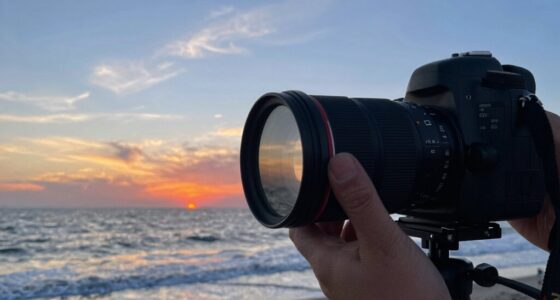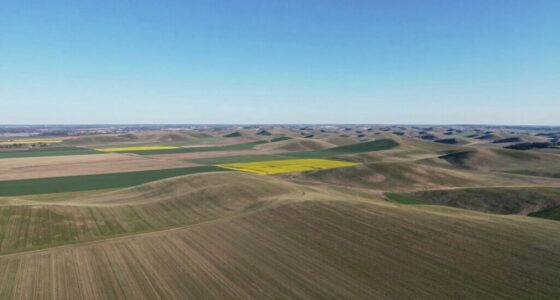

The overlooked skill that makes your aerial photos feel cinematic is mastering composition and lighting. When you focus on framing your shots thoughtfully and use natural light to add depth and mood, your images become more engaging and storytelling. Good stabilization ensures sharpness, but it’s the combination of well-planned composition and lighting that truly elevates your work from simple snapshots to cinematic scenes. Keep exploring, and you’ll discover even more ways to craft visuals with powerful impact.

Get the latest gadgets delivered free with Prime
- Fast, free delivery on millions of items
- Prime Video, Amazon Music and more included
- Member-only deals all year
Key Takeaways
- Mastering composition guides viewers’ focus and creates a balanced, storytelling frame.
- Effective use of lighting, especially during golden hours, adds depth and mood.
- Combining thoughtful framing with natural lighting enhances cinematic atmosphere.
- Precise drone stabilization ensures sharp, distraction-free images for better storytelling.
- Understanding how composition and lighting interact elevates aerial photos from snapshots to cinematic scenes.
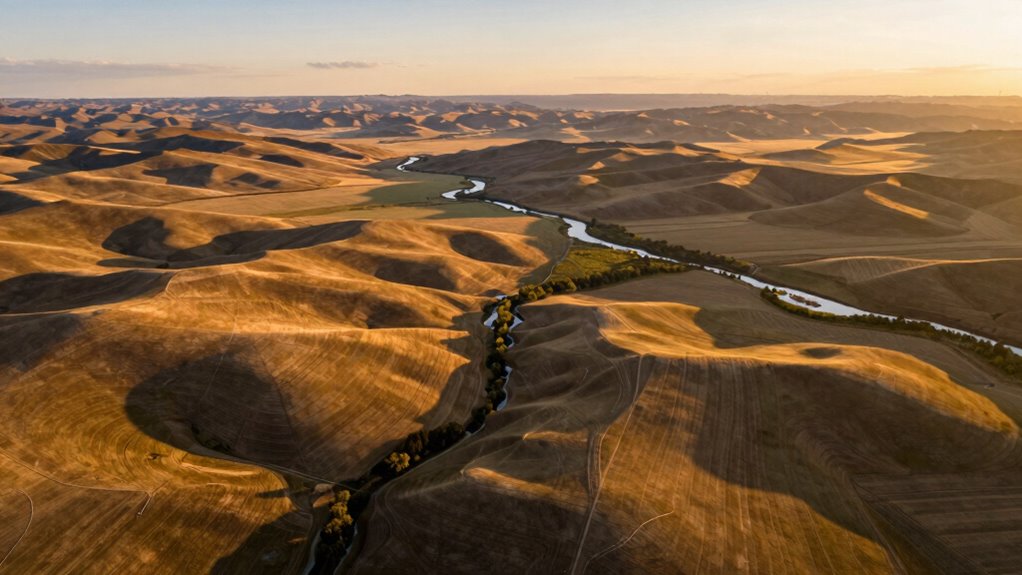
While capturing stunning aerial photos often involves choosing the right drone or camera, there’s an essential skill that many overlook—composition. No matter how advanced your equipment is, if you don’t frame your shot thoughtfully, even the most technically perfect image can fall flat. Composition guides the viewer’s eye, creates balance, and adds a cinematic feel that transforms a simple photo into a compelling story. It’s about understanding how elements within your frame interact and ensuring they work together to produce a powerful visual narrative.
Composition transforms technical shots into cinematic stories by guiding the viewer’s eye and creating visual balance.
One critical aspect of achieving cinematic aerial shots is maintaining drone stability. When your drone hovers steadily, the resulting image appears crisp and professional, free of distracting jitters or blurs. Smooth, stable footage allows you to focus on framing your shot perfectly, emphasizing key elements without disruption. Practice controlling your drone’s movements, especially when maneuvering in gusty conditions or tight spaces, to keep the camera steady. Using features like gimbal stabilization further enhances drone stability, ensuring your images remain sharp and fluid. When your drone is stable, you gain the freedom to experiment with composition, leading to more dynamic and engaging shots.
Lighting techniques also play a crucial role in elevating your aerial photography. The right lighting can add mood, depth, and a cinematic quality that makes your images stand out. Early mornings and late afternoons, known as golden hours, provide warm, soft light that enhances textures and creates beautiful shadows. Position yourself to take advantage of natural light, aiming to avoid harsh midday sun that can flatten images or produce unflattering shadows. Additionally, understanding how to work with shadows and highlights within your frame can add depth and dimension, making your aerial shots feel more immersive. Developing an understanding of lighting principles can help you better control these effects and craft images that evoke emotion and tell a story, rather than just capturing a scene. Incorporating composition principles and lighting techniques together can significantly improve your overall results, especially when you understand how visual storytelling enhances the cinematic feel.
Combining stable drone operation with well-executed lighting techniques puts you in control of your aerial compositions. It’s about more than just capturing a scene—it’s about making your viewer feel like they’re looking into a cinematic world. When you pay attention to these overlooked skills, your aerial photos will feel more intentional, cinematic, and engaging. Remember, the key isn’t just in the gear you use but in how you compose, stabilize, and light your shots. Master these elements, and you’ll elevate your aerial photography from simple snapshots to visual storytelling that resonates.
Products Worth Considering

DJI Osmo Mobile 8 Standard Combo Phone Gimbal Stabilizer

DJI Osmo Mobile 8 Phone Gimbal with Mic Mini Transmitter, Infinity Black

DJI Osmo Mobile 7P with Mic Mini TX (Infinity Black) Gimbal Stabilizer
As an affiliate, we earn on qualifying purchases.
Frequently Asked Questions
How Does Lens Choice Impact the Cinematic Feel of Aerial Photos?
Your lens choice profoundly impacts the cinematic feel of aerial photos by shaping your artistic perspective. Using a wide-angle lens offers a broad, dynamic view that emphasizes scale and depth, creating a sense of grandeur. Conversely, a telephoto lens isolates details, providing a more intimate, dramatic scene. Embracing lens diversity allows you to experiment and craft unique, cinematic aerial images that evoke emotion and tell compelling stories.
What Camera Settings Are Ideal for Cinematic Aerial Shots?
You want your aerial shots to stand out, so set your camera to a low ISO for minimal noise and a wide aperture to keep the scene sharp. Use a shutter speed that captures motion blur without losing detail—around 1/60 to 1/125 sec. Fine-tune with color grading to enhance mood, and don’t forget to stabilize your shot to avoid shaky footage, making your images truly cinematic.
How Does Weather Influence the Cinematic Quality of Aerial Photography?
Weather greatly influences the cinematic quality of your aerial photos. Cloud cover can create dramatic skies, adding depth and mood, while clear skies produce crisp, vibrant images. Wind patterns impact stability, so strong winds may cause camera shake or blur, reducing cinematic feel. By choosing ideal weather conditions—like soft cloud cover and calm winds—you enhance the mood, making your aerial shots more cinematic and visually compelling.
Can Post-Processing Techniques Enhance the Cinematic Effect?
Yes, post-processing techniques like color grading and depth enhancement can markedly boost the cinematic feel of your aerial photos. Color grading allows you to set a mood or tone, making your images more vivid and emotionally impactful. Depth enhancement adds layers and dimension, creating a sense of immersion. By carefully applying these techniques, you transform ordinary shots into cinematic masterpieces that captivate viewers and evoke a strong visual story.
What Role Does Timing and Lighting Play in Cinematic Aerial Images?
Timing and lighting are the brushstrokes that paint cinematic aerial images. During the golden hour, you harness soft, warm light that bathes scenes in magic, making every shot feel alive. Shadow play adds depth and drama, highlighting textures and guiding your eye through the composition. By capturing images at the right moment, you create a visual symphony that transforms ordinary views into cinematic masterpieces.
Conclusion
Remember, mastering the overlooked skill can turn a simple aerial shot into a cinematic masterpiece. Think of it like tuning an old radio—you might have the right frequency, but without adjusting the dials, the music won’t sound right. When you pay attention to this subtle detail, your photos resonate like a well-composed symphony, mesmerizing viewers and transforming your work from ordinary to extraordinary. So, don’t ignore that tiny tweak—it’s the secret that elevates your aerial photography.