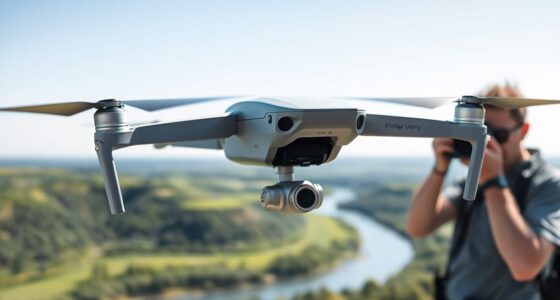
To confidently pilot a drone, you need to know key terms like pitch, which tilts the drone forward or backward; roll, which moves it side to side; yaw, which spins it left or right; and throttle, which controls altitude. Understanding these controls and modes guarantees safer, more precise flights. Familiarizing yourself with these terms helps in handling your drone smoothly; keep exploring, and you’ll soon master all the essentials for successful flying.

Get the latest gadgets delivered free — and shop member deals
- Fast, free delivery on millions of items
- Access to Prime Big Deal Days deals on October 6–7
- Prime Video, Amazon Music and more included
Key Takeaways
- Pitch, Roll, Yaw, Throttle are the fundamental controls used to maneuver the drone in different directions.
- Flight Modes (e.g., GPS, Sport, Manual) determine how the drone responds and operates in various conditions.
- Pre-Flight Checklist ensures all systems and controls are functioning correctly before flying.
- Control Sensitivity adjusts how responsive the drone is to pilot inputs, affecting precision and safety.
- Flight Responsiveness depends on high refresh rates and system settings for smooth, accurate control during flight.
As an affiliate, we earn on qualifying purchases.
Understanding Flight Controls and Systems
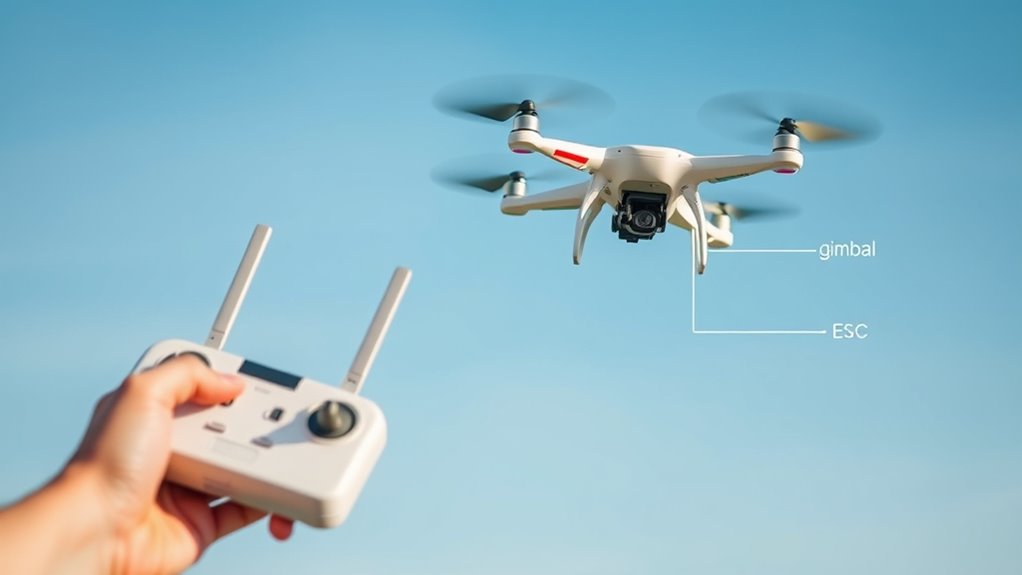
Next, you’ll want to understand flight controls. These are the mechanisms that let you steer and operate your drone. Think of flight controls as the interface between you and your aircraft. They include joysticks, switches, and sometimes even smartphone apps that translate your commands into movement. The primary controls are usually pitch, roll, yaw, and throttle. Pitch tilts the drone forward or backward, roll moves it side to side, yaw spins it left or right, and throttle controls its altitude. Mastering these controls is essential because they determine how smoothly and accurately you can pilot your drone. When you’re practicing, focus on gently manipulating these inputs to get a feel for how your drone reacts. Additionally, understanding the high refresh rates of some drones can improve your responsiveness during fast-paced flying sessions. Being aware of the drone’s energy efficiency can also help extend your flight times and optimize your flying experience. Paying attention to control sensitivity settings can further enhance your piloting accuracy and comfort. Recognizing the importance of flight modes can also help you adapt to different flying conditions and improve safety. Using a pre-flight checklist can ensure all systems are functioning properly before each flight for safer operation.
As an affiliate, we earn on qualifying purchases.
Frequently Asked Questions
What Is the Maximum Altitude a Drone Can Legally Fly?
You can generally fly your drone up to a maximum altitude of 400 feet (about 120 meters) due to altitude restrictions set by regulations. This flight ceiling helps prevent interference with manned aircraft and ensures safe operations. Always check local laws and airspace rules before flying, as some areas may have lower altitude restrictions or special permissions. Staying within these limits keeps you compliant and safe during your drone flights.
How Do Weather Conditions Affect Drone Flight Safety?
Weather can be a drone pilot’s worst enemy, turning a smooth flight into chaos. High wind speed can destabilize your drone, making control difficult or causing crashes. Precipitation effects, like rain or snow, can damage electronics and impair visibility. Always check weather conditions before flying, and avoid flying in strong winds or during storms. Staying aware helps make certain your flight stays safe and enjoyable, no matter what Mother Nature throws your way.
What Are Common Causes of Drone Crashes?
You might crash your drone due to pilot error, like losing control or misjudging obstacles, or mechanical failure, such as motor issues or battery problems. Bad weather can also contribute, but most crashes stem from mistakes during manual flying or overlooked maintenance. To prevent this, stay calm, follow guidelines, regularly check your equipment, and practice flying in safe environments to build confidence and skill.
How Does GPS Influence Drone Stability?
GPS acts like a reliable compass, guiding your drone with pinpoint accuracy. When GPS accuracy is high, it stabilizes your flight, preventing drifting and sudden movements. This guarantees smooth flight stabilization, especially in windy conditions. Conversely, if GPS signals weaken, your drone may become unstable, making control tricky. You’ll notice how essential strong GPS signals are for maintaining steady, safe flights, keeping your drone aligned like a well-trained performer.
What Maintenance Is Recommended for Drone Batteries?
You should regularly calibrate your drone batteries to guarantee accurate readings and peak performance. Always use the recommended charger and avoid overcharging or discharging the batteries completely. Keep track of charge cycles, as batteries degrade over time with each cycle. Store batteries in a cool, dry place, and inspect them for swelling or damage before each flight. Proper maintenance extends battery life and guarantees safer, more reliable flights.
As an affiliate, we earn on qualifying purchases.
Conclusion
Now that you’ve learned these key drone terms, you’re ready to take flight with confidence. Think of yourself as a captain steering a vast sky, your controls like a trusted compass guiding you through every twist and turn. With this knowledge, you’ll soar smoothly and safely, turning the mysterious language of drones into your own flight story. Remember, every pilot once started with a single word—your journey begins now.
drone control sensitivity settings
As an affiliate, we earn on qualifying purchases.
As an affiliate, we earn on qualifying purchases.
Evergreen bestsellers Picks
bestsellers
As an affiliate, we earn on qualifying purchases.