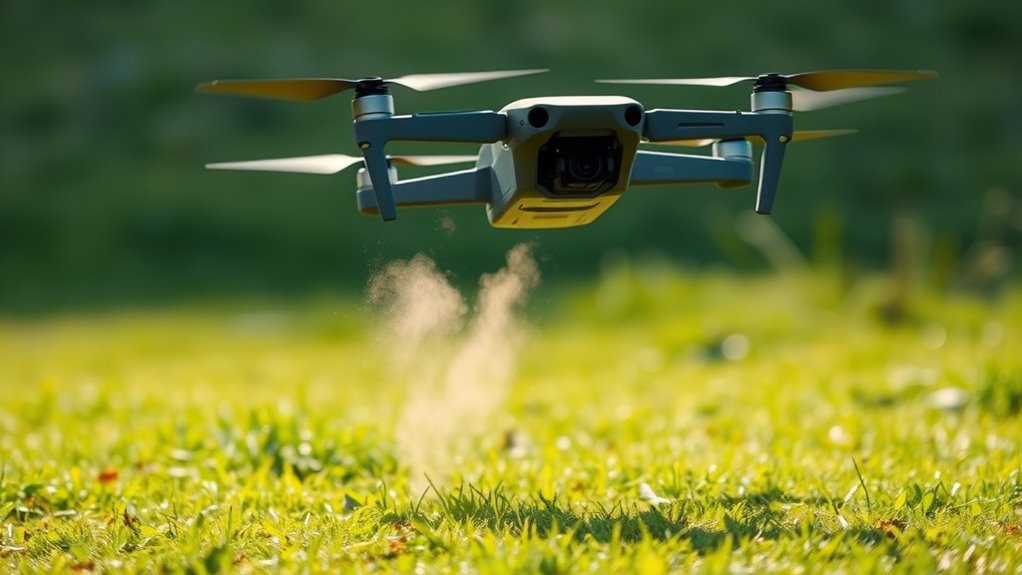

If your drone flips on takeoff, it’s likely due to issues like damaged or bent propellers, which cause uneven thrust and instability. Calibration problems with sensors can also make it hard to keep balanced, especially if recent crashes occurred. Environmental factors like wind or uneven ground add to the risk by pushing or destabilizing your drone. To prevent this, check for damage, verify proper calibration, and choose a smooth, flat takeoff area—exploring more helps you gain control.
Key Takeaways
- Damaged or chipped propellers can cause uneven thrust, leading to instability and flips during takeoff.
- Improper calibration of sensors like gyroscopes and accelerometers affects drone balance at launch.
- Wind and environmental factors can destabilize the drone, especially if other issues are present.
- Uneven or unstable takeoff surfaces increase the risk of tipping over during lift-off.
- Combining propeller damage, calibration errors, and environmental conditions amplifies the likelihood of flips at launch.
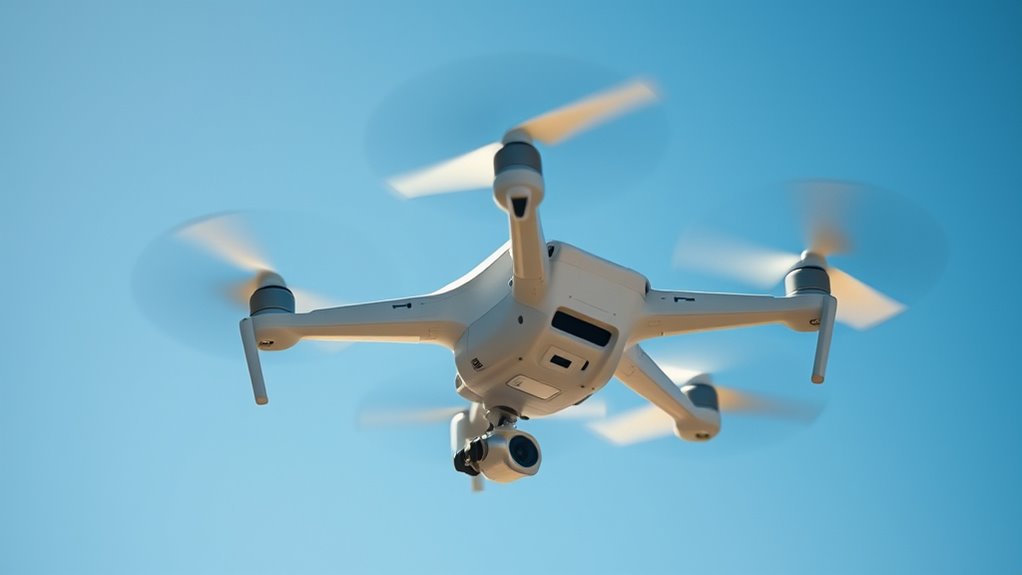
Many drone operators have experienced the startling moment when their drone flips over immediately after takeoff. This sudden tip-over can be frustrating and confusing, especially if you’re new to flying. Often, the root causes stem from issues like propeller damage or calibration problems, which can notably affect your drone’s stability right from the start.
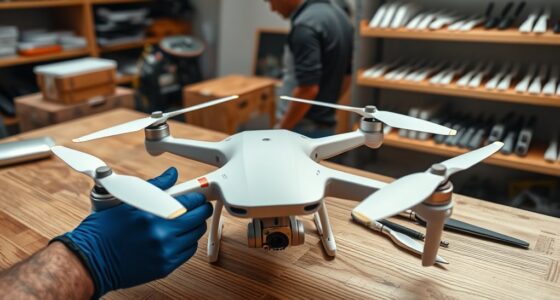
Propeller damage is a common culprit. If your propellers are chipped, bent, or cracked, they won’t generate the balanced lift needed for stable flight. Even minor damage can cause uneven thrust, making the drone lean or wobble during takeoff. Before every flight, always inspect your propellers thoroughly. If you notice any damage, replace them immediately. Using damaged propellers not only risks flipping your drone but also increases the chances of further damage to the motors or other components. Properly maintained propellers are essential for smooth, controlled lift-off and to prevent the drone from tipping over.
Inspect and replace damaged propellers to ensure stable, safe drone takeoff.
Another frequent cause is calibration issues. When your drone’s sensors, such as the gyroscope and accelerometer, aren’t properly calibrated, it can lead to instability during takeoff. Calibration ensures that your drone’s internal sensors accurately interpret its position and orientation relative to gravity and other forces. If these aren’t calibrated correctly, the drone might misinterpret its balance, causing it to tilt or flip unexpectedly. It’s a good habit to calibrate your drone regularly, especially after crashes, firmware updates, or if you notice odd handling behavior. Many drones have straightforward calibration procedures in their settings, which should be performed according to the manufacturer’s instructions to optimize stability.
Wind conditions can also worsen issues caused by propeller damage or calibration problems. Even a slight breeze can push a drone to one side if it’s not flying straight or if its sensors are off. In such cases, the drone might struggle to maintain level flight, leading to a flip during takeoff. To avoid this, choose calm days for flying and ensure your drone’s calibration is up to date.
Lastly, remember that uneven ground or an unstable takeoff surface can contribute to tipping over. Always find a flat, stable spot for takeoff. A rough or sloped surface can throw off your drone’s initial balance, making it more prone to flipping when combined with propeller or calibration issues.

Drone Cleaning Kit for DJI, Holy Stone, Scoot, FPV Drone, Hobby RC Quadcopters Multirotors - with Spray Cleaner for Screen Lens
【Comprehensive Cleaning Solution】: Our cleaning kit is meticulously designed to address every cleaning pain point of your drone....
As an affiliate, we earn on qualifying purchases.
Frequently Asked Questions
How Can I Prevent Drone Tip-Overs During Startup?
To prevent drone tip-overs during startup, start by calibrating your battery properly to guarantee consistent power. Check that your propellers are aligned correctly and securely attached, as misaligned propellers can cause instability. Always perform a pre-flight check, including testing controls and verifying that the drone’s center of gravity is balanced. These steps help improve stability during takeoff and reduce the risk of flipping.
Do Weather Conditions Significantly Influence Drone Stability on Takeoff?
Weather conditions, especially wind interference, greatly impact drone stability during takeoff. Studies show that gusts over 15 mph increase crash risk by 40%. You might experience tip-overs if you don’t account for wind, as it causes pilot error or destabilizes the drone. Always check weather forecasts before flying, and avoid launching in strong winds to keep your drone steady and safe during takeoff.
Are Certain Drone Models More Prone to Flipping on Launch?
Yes, some drone models are more prone to flipping on launch. Model design plays a big role; for example, drones with a high center of gravity or uneven weight distribution are less stable. Additionally, the manufacturer’s reputation for quality and safety features influences how well a drone handles takeoff. Look for models with balanced design and reliable build quality to minimize the risk of tip-overs during launch.
What Maintenance Checks Can Minimize Flip Incidents?
Think of your drone as a delicate dancer; proper maintenance keeps it balanced. To minimize flip incidents, regularly inspect the battery for any damage or swelling, ensuring it supplies stable power. Check propeller integrity by looking for cracks, chips, or warping, replacing damaged blades promptly. Keeping these checks routine helps your drone perform a smooth, confident takeoff, preventing tip-overs and ensuring a safe flight every time.
How Does Pilot Experience Affect Drone Tip-Over Frequency?
Your pilot experience markedly impacts how often your drone tips over during takeoff. With proper pilot training and consistent skill development, you become better at controlling the drone’s throttle and balance, reducing tip-over incidents. As you gain more experience, you learn to anticipate and react to potential issues quickly. This improved control helps prevent flips, especially during critical launch moments, ensuring smoother takeoffs and safer flights.

Universal Drone Airdrop System, Release Device, Payload Clip, Airdropper, Fish Bait Delivery Device , Drone Accessories, Compatible with DJI Mavic Mini5 Pro,Mini 4 Pro, Mini 3, Mini 2, Air 2, Air 2S, Air 3, Mavic 3, Mavic 2, Spark (Airdrop Device)
【Broad compatibility】Universally Drone Airdrop System, for DJI Mini4/Mini3/Mini2/Air2/Air2S/Mavic 3/Mavic 2 DJI Series Drone/Spark.(Note: but not suitable for DJI...
As an affiliate, we earn on qualifying purchases.
Conclusion
Just like a tiny boat can capsize in calm waters if it’s unbalanced, your drone’s tip-over at launch often comes down to setup. I once watched a beginner’s drone tumble because they didn’t check the battery placement—similar to a ship’s rudder slipping from control. Remember, a quick pre-flight check is your anchor. When you verify everything’s aligned and balanced, you’re much less likely to see your drone flip—making every flight smooth sailing instead of a shaky start.
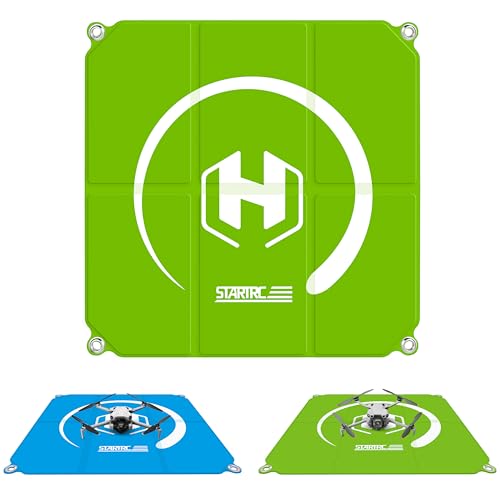
STARTRC Drone Landing Pad for DJI Mini & NEO Drones (22 in/55 cm), Foldable & Portable, Waterproof, Stain-Resistant, Ideal for the Mini 5 Pro, Mini 3, Mini 4K, NEO 2, Mini 4 Pro, Avata 2, Avata 360, Flip, FPV drones, Compatible with Mavic 4 & Air 3S, Ideal for Outdoor Flying
FULL MODEL COMPATIBILITY: Designed for compatibility with DJI Mini, NEO, AVATA, FLIP and other series drones; fully compatible...
As an affiliate, we earn on qualifying purchases.

VIFLY Drone Strobe Light, Anti Collision Light for FAA Drone Night Flying, Fits DJI Mini 3 Pro/Mini 4 Pro/Mini 2/Air 3/Air 3S/Mavic 3/Mavic 2/Avata/Neo/Flip(1pc pack)
Super Bright: VIFLY Strobe installs 5*3W Hi-intensity LEDs which provide the greatest range available for a mini strobe....
As an affiliate, we earn on qualifying purchases.