
TL;DR

Get the latest gadgets delivered free — and shop member deals
- Fast, free delivery on millions of items
- Access to Prime Big Deal Days deals on October 6–7
- Prime Video, Amazon Music and more included
Game design has long borrowed from and lent to user experience design: tutorials, instant feedback, progressive difficulty and reward loops are established UX tools. Coverage and search interest around the topic spiked around 2019, though no single trigger event has been confirmed.
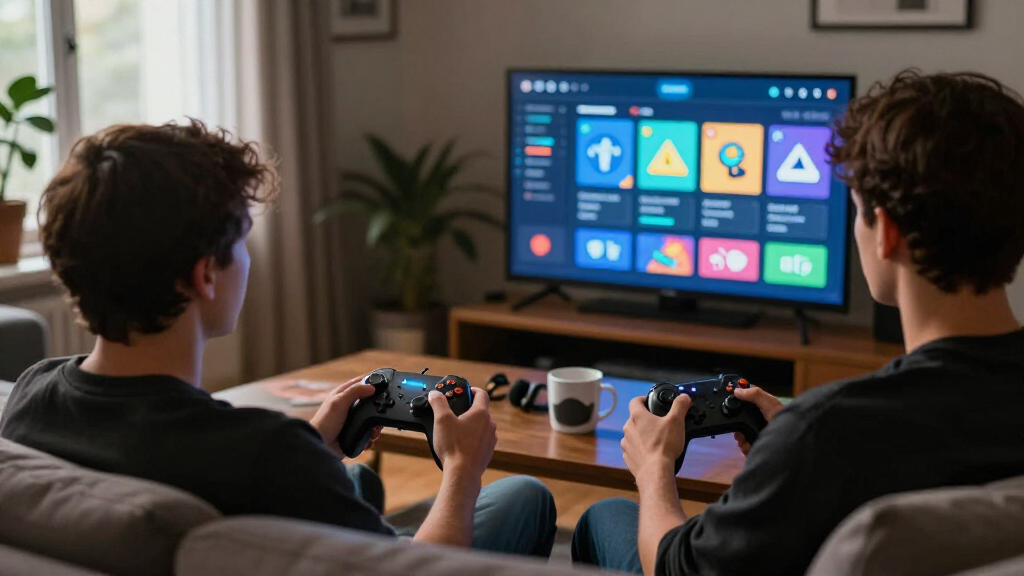
Interest in how video games inspire great user experience (UX) design spiked in 2019, as designers, product teams and tech commentators circled a shared question: why do games hold attention for hours while business software loses it in minutes? The topic is not new — game design and UX design have cross-pollinated for over a decade — but the volume of articles, talks and tutorials connecting the two fields grew noticeably through 2019. No single announcement or event has been confirmed as the trigger for the surge; it appears to be an aggregate trend rather than a discrete development.
The core argument uniting this coverage is that games solve, as a matter of survival, problems that product teams struggle with. Three practices recur across the discussion. The first is onboarding through play: well-designed games teach complex mechanics without manuals, layering instruction into the first minutes of interaction — the approach popularized by Nintendo’s design philosophy and studied widely in UX literature. The second is immediate, legible feedback: every button press in a game produces a visible or audible response, a standard many web and app interfaces still fail to meet. The third is progression and motivation systems — experience points, levels, unlocks — which product teams have adapted into onboarding checklists, streaks and achievement badges.
These techniques have long-established track records. Tutorial-as-first-level design dates back decades in console gaming. Gamification — the application of points, badges and leaderboards to non-game products — became a mainstream business term in the early 2010s and has since been used across fitness apps, education platforms and enterprise software with mixed but documented results. The 2019 wave of interest differs mainly in emphasis: rather than bolting on badges, writers and practitioners argued that games model the entire feel of good interaction, including difficulty curves, error recovery and the sense of player agency.
It should be stated plainly: the claims in this body of commentary are practitioner arguments and design observation, not peer-reviewed findings. Where writers assert that game-inspired onboarding measurably improves retention or conversion, they typically cite individual case studies from their own companies or anecdotes from well-known games, not controlled experiments. The verified fact is the breadth and persistence of the discussion itself, and the long, documented history of specific design patterns — tutorial levels, feedback cues, progression systems — moving from games into mainstream software.
Why Product Teams Are Studying Games
The crossover matters because attention is the scarcest resource in software. Products compete against games and game-like apps for user time, and teams that ignore what games have learned about onboarding, feedback and motivation risk building interfaces users abandon quickly. For readers working in design or product, the game-inspired toolkit offers concrete, testable patterns: teach by doing rather than explaining, respond to every input, make progress visible, and ramp difficulty gradually rather than dumping complexity on a first-time user.
The interest also reflects a shift in how the industry defines UX success. Early gamification efforts were widely criticized as shallow — badge systems bolted onto products that were otherwise unpleasant to use. The 2019-era discussion moved toward deeper structural borrowing, treating game feel, flow states and difficulty curves as legitimate subjects for product research. That reframing has influenced how onboarding flows, empty states and progress indicators are designed in mainstream apps today.
From Gamification Backlash to Game Feel
The relationship between the two fields runs in both directions. Modern game interfaces themselves borrowed from software usability work — controller layouts, menu systems and heads-up displays evolved alongside general HCI research. In the other direction, gamification entered the business mainstream in the early 2010s through vendors and consultants promising engagement gains, then drew a backlash when points-and-badges schemes often failed to change behavior. By the late 2010s, practitioners had largely moved past that first wave, and the discussion centered instead on principles: the much-cited design maxim ‘make the first level the tutorial,’ the importance of responsive feedback, and the psychology of gradual challenge. This history is well documented in both game design literature and UX publishing, and forms the backdrop for the 2019 surge in interest.
What the 2019 Spike Doesn’t Prove
The trigger for the heightened 2019 interest is unconfirmed. It coincided with the broader growth of design content online, the expansion of product design as a discipline, and high-profile releases that reignited discussion of game onboarding, but no specific conference talk, article or product launch has been verified as the cause. Likewise, claims that game-derived techniques reliably improve retention, conversion or satisfaction lack rigorous published evidence in most cases; reported wins are typically vendor or in-house case studies without control groups. Whether the techniques transfer cleanly from entertainment — where users opt in voluntarily — to utility software, where use is often obligatory, remains an open question in the field.
Where the Games-to-UX Thread Leads
Readers can expect the discussion to continue evolving along two lines. First, design teams are increasingly formalizing the borrowed practices — first-run experience design, progressive disclosure and feedback systems are now standard parts of product design practice and appear in major design systems. Second, the debate over motivation mechanics continues: as regulators and researchers scrutinize engagement-driven design, particularly for younger users, the ethics of applying game-derived compulsion loops to everyday software is likely to receive more attention. Teams interested in the topic can test the patterns directly through onboarding experiments, which remain the most reliable way to know whether game-inspired design helps a given product.
Key Questions
What specific UX practices come from video games?
The most cited are tutorial-style onboarding that teaches through play, immediate visual and audible feedback for every user action, visible progression systems such as levels or streaks, and gradual difficulty curves that withhold complexity until users are ready.
Is gamification the same thing as game-inspired UX?
No. Gamification typically refers to adding points, badges and leaderboards to non-game products. Game-inspired UX is broader, covering the underlying feel of interaction — teaching, feedback and pacing — rather than reward mechanics alone.
Is there proof that game-inspired design improves retention or engagement?
Not in a rigorous, general sense. Reported improvements come mostly from individual company case studies and practitioner experience. Controlled, peer-reviewed evidence that these techniques transfer reliably across product types is limited.
Are there risks in copying game design into everyday software?
Potentially, yes. Techniques built to maximize voluntary entertainment engagement can feel manipulative or annoying in tools people must use, and engagement-driven loops have drawn criticism from researchers and regulators, particularly where younger users are involved.
Why did interest in this topic spike in 2019?
The exact trigger is unconfirmed. The spike coincided with growth in product design as a discipline, expanding design content online, and renewed attention to game onboarding, but no single event has been verified as the cause.
Source: hn
Fall Picks
fall essentials
As an affiliate, we earn on qualifying purchases.