
📊 Full opportunity report: How to Reduce Heat and Noise in a High-Power AI Workstation on ThorstenMeyerAI.com — validation score, market gap, and execution plan.
TL;DR
High-power AI workstations generate significant heat and noise due to sustained GPU loads. Key methods include undervolting GPUs, optimizing airflow, and choosing effective cooling solutions. This guide explains confirmed techniques and what remains uncertain.
High-power AI workstations produce excessive heat and noise because they operate under sustained, near-constant load, unlike gaming PCs. Experts confirm that targeted cooling and power management techniques can significantly mitigate these issues, improving both comfort and performance.
According to Thorsten Meyer of ThorstenMeyerAI.com, the main sources of heat and noise are the GPU, CPU, power supply, VRMs, and case airflow. The GPU is the primary contributor, often responsible for over 70% of thermal load during local inference tasks, with its fans being the loudest component under sustained load.
One of the most effective confirmed methods is undervolting the GPU and capping its power limit. This reduces heat output and fan noise without sacrificing performance in memory-bound inference workloads, which dominate high-power AI setups. For example, lowering power limits from 575W to around 70–80% can cut tens of watts of heat and noise.
Optimizing case airflow is also critical. Proper ventilation prevents recirculation of hot air, reducing baseline temperatures across components. Using high-quality fans, managing cable clutter, and ensuring unobstructed airflow pathways are recommended. Additionally, selecting appropriate cooling solutions—air or liquid—depends on workload and case constraints, with dedicated guides available for deep dives.
Other factors include managing CPU loads, upgrading power supplies, and reducing coil whine or vibrations transmitted through the case. These can contribute to overall noise but are secondary to GPU cooling strategies.
An AI workstation isn’t a gaming PC —
and that’s why it runs hot.
Local inference is a sustained load: the GPU sits near full power for hours with no loading screens, so the heat never dissipates and the fans never get a break. Here’s where the heat comes from — and the five levers that reduce it.
Impact of Effective Cooling on AI Workstation Performance
Implementing these confirmed strategies can dramatically improve the operational environment of high-power AI workstations. Lower heat levels reduce thermal throttling, maintaining higher inference speeds and efficiency. Noise reduction enhances user comfort and allows AI development to be conducted in quieter settings, including home offices. These improvements can extend hardware lifespan and reduce energy consumption, making AI workflows more sustainable and practical for long-term use.
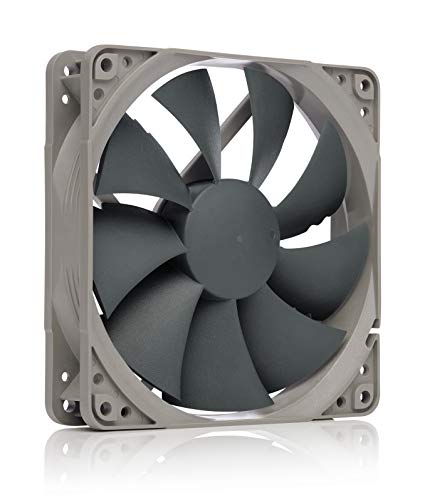
Noctua NF-P12 redux-1700 PWM, High Performance Cooling Fan, 4-Pin, 1700 RPM (120mm, Grey)
- Size: 120x120x25 mm
- Voltage: 12V
- PWM Control: 4-pin PWM
As an affiliate, we earn on qualifying purchases.
As an affiliate, we earn on qualifying purchases.
Why High-Power AI Workstations Run Hot and Loud
Unlike gaming PCs, AI workstations operate under continuous, near-constant loads, especially during inference tasks involving large models or batch processing. This sustained load prevents the cooling system from catching up, leading to higher operating temperatures and louder fan noise. Historically, cooling solutions optimized for gaming bursts are insufficient for these workloads. Experts emphasize that understanding the specific thermal and acoustic profiles of AI hardware is essential for effective mitigation.
Previous efforts focused on general cooling upgrades, but recent insights highlight the importance of power management, especially undervolting GPUs, as the most impactful and cost-effective approach. The industry is increasingly adopting these practices to improve workstation performance and user experience.
“The key to reducing heat and noise in AI workstations is targeted power management, especially undervolting GPUs, which can cut thermal output dramatically without sacrificing inference performance.”
— Thorsten Meyer, ThorstenMeyerAI.com

CORSAIR 4000D RS ARGB Frame Modular Mid-Tower ATX PC Case, High Airflow, 3X Pre-Installed RS Fans, InfiniRail™ Mounting System, ASUS BTF, MSI Zero, Gigabyte Stealth, Black
- Modular Frame System: Customizable and upgradeable design
- Pre-Installed ARGB Fans: Includes 3 high-performance ARGB PWM fans
- Silent Operation: Supports Zero RPM mode for low noise
As an affiliate, we earn on qualifying purchases.
As an affiliate, we earn on qualifying purchases.
Unresolved Questions About Cooling Optimization
While undervolting and airflow improvements are proven, the optimal configurations for different hardware models and workloads remain somewhat variable. The long-term effects of aggressive undervolting on hardware lifespan are still being studied, and some users report inconsistent results depending on specific GPU models and case setups. Further research is needed to establish standardized best practices across diverse hardware configurations.

NOVATECH AI Workstation Desktop PC – Intel Core i9-14900K, Liquid Cooling – Machine Learning, Data Science, 3D Rendering, Video Editing, Simulation (RTX 5080 | 64GB RAM | 2TB)
- High-Performance CPU: Intel Core i9-14900K processor
- Powerful GPU: NVIDIA RTX 5080 with 16GB VRAM
- Ample RAM: 64GB DDR5 6000MHz memory
As an affiliate, we earn on qualifying purchases.
As an affiliate, we earn on qualifying purchases.
Next Steps for Improving AI Workstation Cooling
Developers and users should experiment with undervolting settings tailored to their hardware, guided by manufacturer recommendations and community-tested configurations. Future updates may include more sophisticated thermal management tools integrated into GPU drivers or workstation management software. Additionally, advancements in cooling technology and airflow design are expected to further reduce heat and noise, making high-power AI workstations more efficient and user-friendly.

Thermal Grizzly WireView GPU – 1x8Pin PCIe Normal – GPU Power Consumption Measuring Device – PCIe Power Connector – Real Time Direct Monitoring – Made in Germany
- Real-Time Wattage Display: Instant GPU power draw in watts
- Multi-Value Screen: Displays W, V, A, min/max, and averages
- Peak Power Monitoring: Reveals load changes and power peaks
As an affiliate, we earn on qualifying purchases.
As an affiliate, we earn on qualifying purchases.
Key Questions
Can undervolting GPUs harm my hardware?
When done correctly following manufacturer guidelines and community-tested settings, undervolting typically does not harm hardware. However, aggressive undervolting beyond recommended levels may cause instability or reduce hardware lifespan. Always proceed with caution and monitor system stability.
What cooling solutions are best for high-power AI workstations?
Both high-quality air coolers and liquid cooling systems can be effective, depending on case size, noise preferences, and workload. Proper airflow management and case ventilation are essential regardless of cooling method.
How much can I expect to reduce noise by undervolting?
Undervolting can reduce fan speeds significantly, often leading to noise reductions of 10–20 decibels, making the workstation noticeably quieter during sustained loads.
Is it worth upgrading my case for better airflow?
Yes. A case with good airflow design, unobstructed vents, and quality fans can lower temperatures across components, reduce fan speeds, and decrease noise levels, especially in multi-GPU setups.
Source: ThorstenMeyerAI.com