To match drone accessories to the job, focus on compatibility and purpose rather than trendy gadgets. Check your drone’s specifications and guarantee accessories like batteries, payloads, and sensors are designed for your model to maximize efficiency and safety. Avoid hype by choosing accessories that truly fit your operational needs, helping you extend flight times and improve results. Keep these principles in mind, and you’ll open smarter, more effective drone setups—more tips are ahead if you want to get it right.
Key Takeaways
- Assess your specific operational needs and choose accessories that directly enhance those functions.
- Verify compatibility with your drone model to prevent performance issues and safety hazards.
- Prioritize lightweight, purpose-built accessories to optimize flight time and stability.
- Research and review real-world performance, avoiding hype-driven gadgets with unproven benefits.
- Strategically align accessories with your mission goals for cost-effective and reliable drone operations.
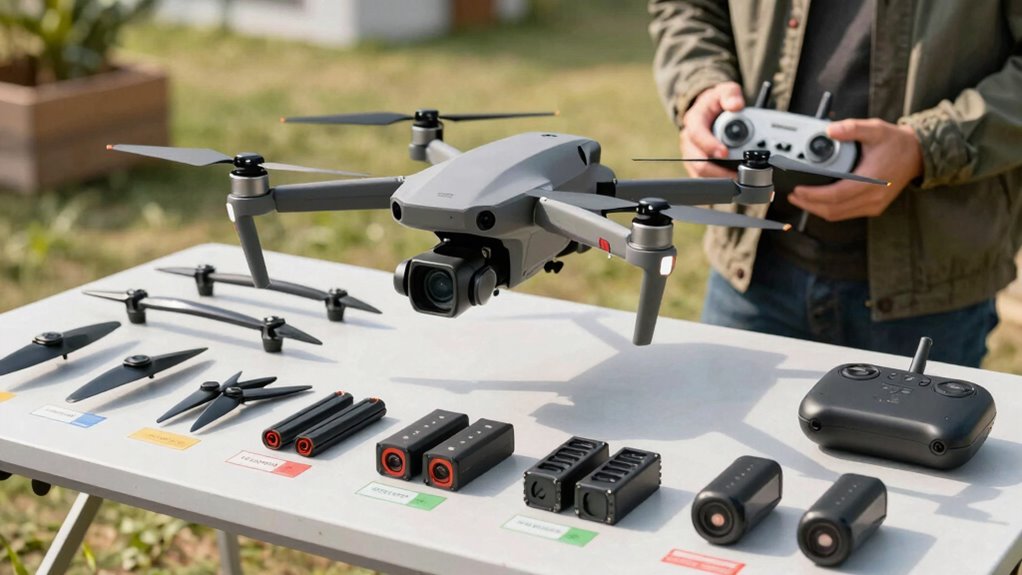
Choosing the right drone accessories can considerably enhance your performance and efficiency, but it’s not just about picking the most popular gadgets. It’s about understanding how each accessory integrates with your drone’s capabilities and your specific needs. The first step is to contemplate battery compatibility. Not all batteries are created equal, and using incompatible batteries can lead to reduced flight times, potential damage to your drone, or even safety hazards. Before buying a new accessory, check the drone manufacturer’s specifications to verify the accessory, especially batteries and chargers, are compatible. This guarantees you get reliable power delivery and prolongs the lifespan of your drone. Proper battery compatibility also means you won’t be caught off guard by unexpected power failures during critical operations, which could compromise your mission or shoot. Additionally, understanding your drone’s power system helps you select accessories that won’t overload or strain your setup, ensuring longer, safer flights. Recognizing the importance of system compatibility can prevent costly mistakes and improve your overall experience. Being aware of power management strategies can further optimize your drone’s performance during extended flights. Incorporating efficient energy use techniques can help you make the most of your battery life, especially during long missions. A thorough understanding of energy consumption can also guide you in choosing accessories that balance performance with battery efficiency.
Next, think about payload efficiency. Adding accessories like cameras, sensors, or other equipment can markedly boost your drone’s capabilities, but they also add weight. If your accessories aren’t optimized for payload efficiency, you might find yourself sacrificing flight time, stability, or even risking damage to your drone. Instead, focus on lightweight, purpose-built accessories that maximize functionality without overloading your drone. For example, selecting a compact, high-quality camera that meets your needs without adding unnecessary weight can make a big difference. Payload efficiency isn’t just about minimizing weight; it’s about ensuring your drone’s motor and flight systems can handle the additional load without strain, which can lead to faster battery drain and mechanical wear.
When matching accessories to the job, avoid falling for hype and focus on practical compatibility. Just because a gadget is trending doesn’t mean it’s suitable for your drone or your specific application. Take time to research and read reviews about how well accessories work with your drone model. Consider your operational environment—is your focus on aerial photography, surveying, or inspection? Different jobs require different setups, and the right accessories should enhance your capabilities rather than complicate them. By prioritizing battery compatibility and payload efficiency, you ensure your drone remains reliable, safe, and effective for the task at hand. This strategic approach helps you get the most out of your investment and prevents unnecessary setbacks caused by incompatible or poorly optimized accessories. Remember, smart choices in accessories lead to smarter, more successful flights.
As an affiliate, we earn on qualifying purchases.
Frequently Asked Questions
How Do I Determine the Best Accessory for My Drone’s Specific Task?
To find the best accessory for your drone’s specific task, first identify the accessory types that suit your needs, like cameras, sensors, or additional payloads. Then, consider your battery options to guarantee your drone has enough power for extended flights or demanding jobs. Match these accessories to your drone’s capabilities and mission requirements, avoiding hype and focusing on what truly enhances performance and efficiency for your particular task.
Are There Compatibility Issues Between Different Drone Accessories and Models?
Yes, there can be compatibility issues between drone accessories and models. To avoid this, check the accessory compatibility and drone accessory standards specified by the manufacturer. Confirm the accessory matches your drone’s make and model, especially regarding connectors, size, and power requirements. Always verify compatibility before purchasing or installing new accessories, so you don’t encounter issues during operation and can maximize your drone’s performance safely.
What Safety Considerations Should I Keep in Mind When Adding Accessories?
Think of adding accessories like upgrading your drone’s armor—safety first. Always check battery safety, avoid overloading, and confirm secure connections to prevent malfunctions. When considering weather resilience, verify accessories are rated for your environment to avoid crashes. I once ignored weather ratings, and my drone struggled in rain. Keep safety in mind, and your gear will perform reliably, no matter the conditions.
How Can I Upgrade Accessories Without Compromising Drone Performance?
To upgrade accessories without compromising drone performance, focus on accessory customization that fits your drone’s specifications. Choose lightweight, compatible parts to prevent added strain. Prioritize battery optimization by selecting accessories that don’t drain power excessively. Regularly check for firmware updates and maintain balance to guarantee smooth operation. This approach helps you enhance your drone’s capabilities while maintaining stability and flight time.
Do Certain Accessories Require Special Training or Skills to Use Effectively?
Think of accessory customization as tuning a musical instrument—you need the right skills for harmony. Some accessories, like advanced cameras or LIDAR sensors, do require special training or user proficiency to use effectively. Without proper knowledge, you risk misusing or damaging your drone. To guarantee success, invest in training or tutorials, and practice to master these tools, turning your drone into a precise instrument rather than a clumsy mess.
lightweight drone payload sensors
As an affiliate, we earn on qualifying purchases.
As an affiliate, we earn on qualifying purchases.
Conclusion
By choosing the right drone accessories, you’re not just outfitting your gear—you’re crafting a symphony of precision and purpose. Don’t let the hype drown out your judgment; instead, let your expertise be the compass guiding each decision. When you match tools to the task, you’re planting seeds for success that will grow into a towering oak of achievement. Remember, in this drone world, your choices are the wings that carry your vision to new heights.
As an affiliate, we earn on qualifying purchases.
drone accessory compatibility check
As an affiliate, we earn on qualifying purchases.
As an affiliate, we earn on qualifying purchases.