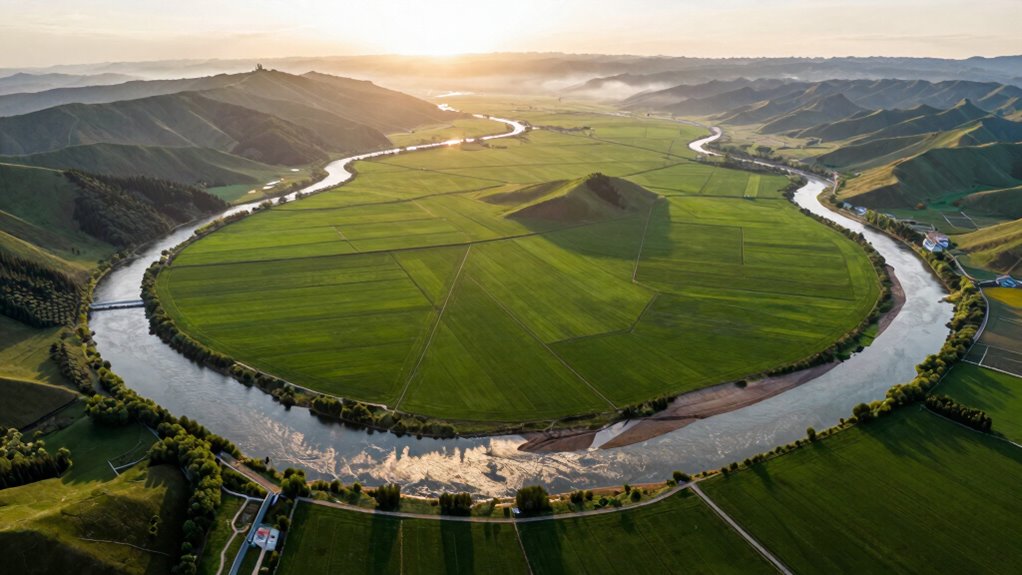

Certain landscapes work better from the air because their large-scale patterns, bold geometries, and vibrant colors become more visible and impactful. Open spaces like fields and deserts turn into striking mosaics, while water bodies and vegetation reveal intricate shapes and reflections. Natural and human-made features often align in symmetrical or rhythmic ways, creating visual stories. If you continue exploring, you’ll discover how aerial views can reveal the true character and hidden details of any landscape.

Get the latest gadgets delivered free — and shop member deals
- Fast, free delivery on millions of items
- Access to Prime Big Deal Days deals on October 6–7
- Prime Video, Amazon Music and more included
Key Takeaways
- Large-scale patterns and geometry are more visible and impactful from above.
- Open, flat areas like fields and deserts reveal vibrant mosaics and repetitive designs.
- Water bodies and vegetation create dynamic visual contrasts and reflections.
- Symmetrical and organized layouts enhance visual rhythm and clarity from aerial views.
- Landscapes with distinctive textures and clear shapes are more striking when viewed from above.
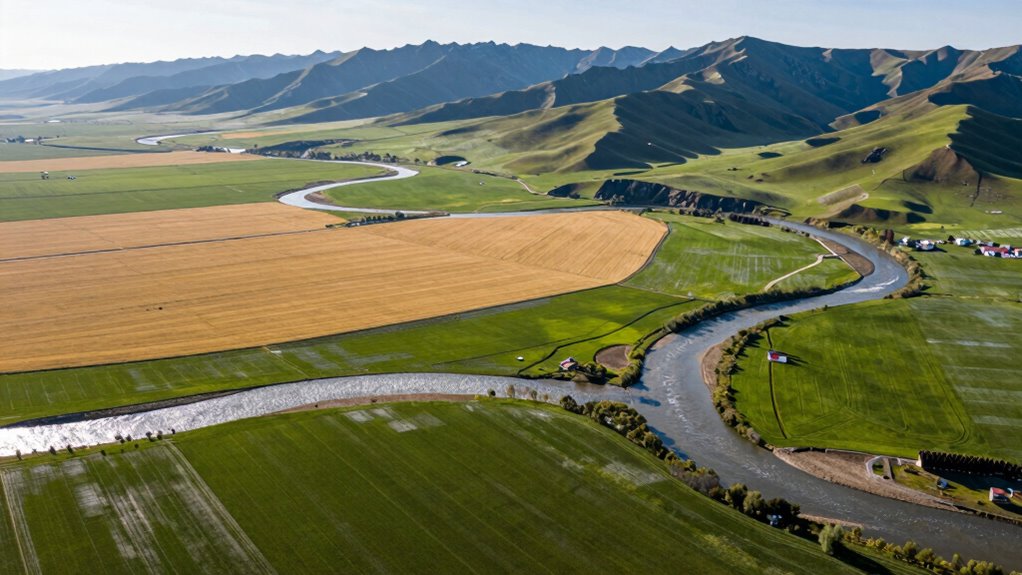
From high above, landscapes reveal their true character, showcasing patterns, textures, and colors invisible from the ground. When you look at a scene from an aerial perspective, you gain a fresh lens that transforms familiar terrain into a compelling visual story. Certain landscapes work better from the air because they offer clear, striking shapes and contrasts that draw your eye and communicate their essence instantly. Flat, open spaces like agricultural fields or deserts become vibrant mosaics, each patchwork telling a story of human activity or natural processes. These expansive views allow you to see how different elements connect and interact, creating a cohesive image that’s both informative and captivating.
From above, landscapes transform into vibrant mosaics, revealing patterns and connections unseen from the ground.
The power of aerial perspective lies in its ability to strip away the distractions of ground-level detail, focusing instead on large-scale patterns. This makes landscapes with bold geometries or repetitive elements especially effective. For example, sprawling vineyards or terraced hillsides form symmetrical, eye-catching designs that are hard to appreciate from the ground but become mesmerizing from the air. You notice how lines, curves, and color blocks come together to create a visual rhythm that guides your eye across the scene. This clarity enhances your understanding of the landscape’s structure and function, making it an excellent tool for visual storytelling. Additionally, landscape patterns reveal how natural and human-made features integrate within the environment, offering insights into land use and ecological health. Recognizing these patterns from above can also help in environmental monitoring, providing a broader view of ecological changes over time. Analyzing these patterns from an aerial perspective can uncover subtle ecological health indicators that might be overlooked from ground level. By understanding these aerial perspectives, viewers can better interpret the story behind the landscape’s design and purpose.
Water bodies, from lakes to rivers, also shine when viewed from above. Their irregular shapes and reflections add a dynamic element to aerial imagery. The way water interacts with its surroundings—like contrasting dark lakes against lush green forests—can evoke emotion and tell stories of environmental health or seasonal change. Similarly, forests with their intricate canopy patterns reveal details unseen from the ground. The contrast between dense woodland and open clearings creates striking visuals, emphasizing the landscape’s diversity and complexity.
Ultimately, landscapes that work better from the air are those whose patterns and textures communicate something meaningful at a glance. Your perspective from above empowers you to see the bigger picture, understanding how individual elements fit into the landscape’s overall narrative. Whether it’s the symmetry of farmland, the winding elegance of rivers, or the patchwork of urban development, aerial views turn ordinary scenes into extraordinary visual stories. They remind you that sometimes, the most compelling stories are best seen from a higher vantage point, where patterns come into focus and the landscape’s true character unfolds before your eyes.
aerial drone camera for landscape photography
As an affiliate, we earn on qualifying purchases.
As an affiliate, we earn on qualifying purchases.
Frequently Asked Questions
How Does Lighting Affect Aerial Landscape Photography?
Lighting plays a vital role in aerial landscape photography by creating shadow play, which adds depth and texture to your images. During the golden hour, the soft, warm light enhances colors and highlights key features, making landscapes more striking. You’ll find that capturing scenes when the sun is low in the sky helps emphasize contours and details, making your aerial shots more compelling and visually appealing.
What Equipment Is Best for Capturing Landscapes From the Air?
To capture stunning aerial landscapes, you should use a drone with excellent stability features, ensuring smooth footage even in windy conditions. Pair it with a versatile lens selection, like a wide-angle lens, to encompass expansive views. Maintaining drone stability helps you get sharp images, while choosing the right lens allows you to highlight specific landscape details, making your aerial shots more compelling and professional-looking.
How Can Weather Conditions Influence Aerial Landscape Shots?
Weather can turn your aerial shots into breathtaking masterpieces or dull snapshots. You’ll find that weather variability and atmospheric conditions directly impact lighting, contrast, and color vibrancy, making scenes either pop or fade into obscurity. Clear, sunny days often deliver sharp, vibrant images, while clouds, fog, or storms can add mood but obscure details. Understanding these conditions helps you plan shots for the best possible aerial landscape results.
What Are Common Mistakes to Avoid in Aerial Landscape Photography?
You should avoid shaky footage caused by drone instability and poor composition. Guarantee your drone remains stable by checking battery levels and wind conditions. Use composition techniques like leading lines and the rule of thirds to frame your shots effectively. Also, watch for overexposed or underexposed areas, and avoid cluttered scenes that distract from the main subject. Planning your shots and maintaining drone stability will result in more engaging aerial landscape photos.
How Do Different Times of Day Impact Landscape Visuals From Above?
Did you know that landscapes captured during golden hour are 60% more visually striking? Time of day effects dramatically change how landscapes appear from above. Early morning and late afternoon create softer light, enhancing shadow play and highlighting textures. Midday sun, however, can wash out details. By choosing the right time, you emphasize shadows and contrasts, making your aerial shots more dynamic and mesmerizing.
high-resolution drone camera for scenic shots
As an affiliate, we earn on qualifying purchases.
As an affiliate, we earn on qualifying purchases.
Conclusion
So, now you see that certain landscapes have a knack for working from the air because they’re designed with simplicity, strong patterns, and contrast in mind. When you look down, these elements come together like a well-rehearsed dance, creating a visual harmony that’s hard to ignore. Remember, a picture is worth a thousand words — and in this case, a striking landscape can speak volumes, proving that sometimes, less truly is more.
aerial photography accessories kit
As an affiliate, we earn on qualifying purchases.
As an affiliate, we earn on qualifying purchases.
best drone for capturing landscapes from above
As an affiliate, we earn on qualifying purchases.
As an affiliate, we earn on qualifying purchases.
Fall Picks
fall essentials
As an affiliate, we earn on qualifying purchases.