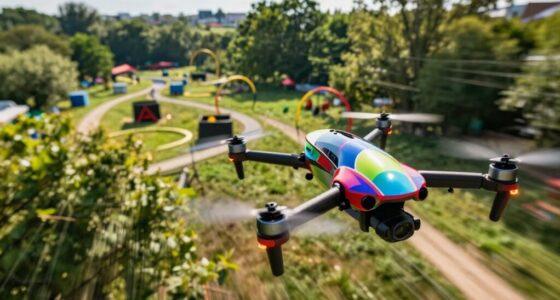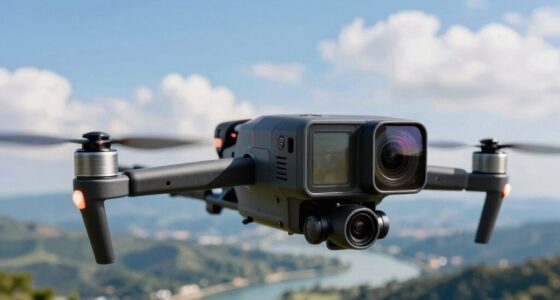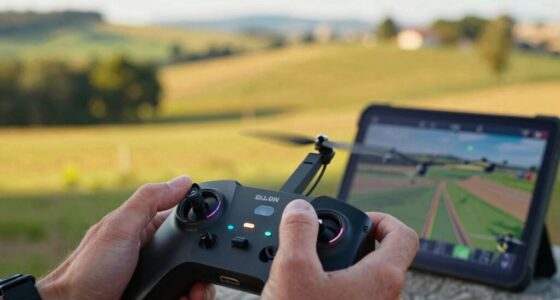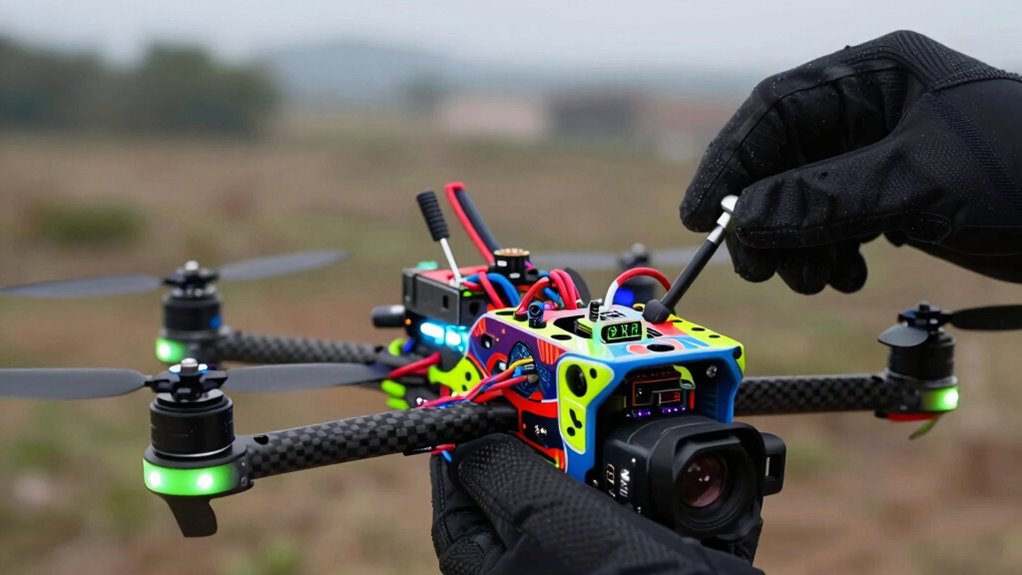

Building and flying FPV drones teach you hands-on skills that camera drones can’t match. You develop control, speed, and precision through complex maneuvers, while gaining quick reflexes and fine motor coordination. You also learn how components like motors and flight controllers influence flight and how aerodynamics and electronics work together. This active process builds resilience, troubleshooting skills, and creative control. Keep exploring, and you’ll uncover even more ways FPV builds sharpen your overall flying and technical abilities.
Listen free for 30 days with Audible
Thousands of audiobooks and originals — cancel anytime.
As an affiliate, we earn on qualifying purchases.
Key Takeaways
- FPV builds require hands-on mechanical and electronic knowledge, fostering deeper understanding and troubleshooting skills absent in camera drone operation.
- Customizing FPV drones enhances control, speed, and agility, developing advanced piloting skills camera drones cannot provide.
- Building and tuning FPV drones involve learning aerodynamics and electronics, promoting technical expertise beyond passive flying.
- FPV flying demands quick decision-making and real-time problem-solving, strengthening mental resilience and focus.
- The active, creative process of building and modifying FPV drones encourages continuous learning and skill development.
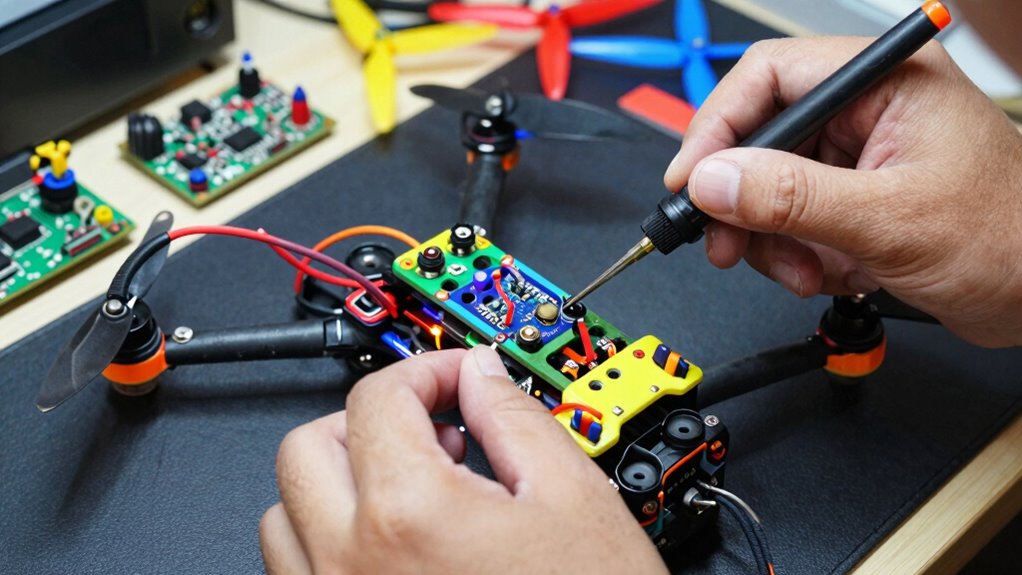
Building FPV drones isn’t just about assembling a flying machine; it’s a hands-on way to develop skills you can’t find elsewhere. When you immerse yourself in the world of FPV, you quickly learn that the craft is about more than just getting the drone off the ground. It’s about mastering control, precision, and speed. Unlike camera drones, which are often designed for stable footage and simple operation, FPV builds are all about dynamic flying, including aerial acrobatics and drone racing. These activities push you to hone quick reflexes and fine-tune your coordination, skills that become second nature over time.
FPV drone building develops control, speed, and agility through dynamic flying and racing skills.
As you work on your FPV build, you develop an intuitive understanding of your drone’s mechanics. You learn how each component, from motors to flight controllers, influences performance. This knowledge allows you to troubleshoot issues rapidly and adapt your setup for different types of flying. When you practice aerial acrobatics, you’re not just performing tricks—you’re refining your control and learning to anticipate your drone’s behavior in complex maneuvers. This level of finesse isn’t something that’s typically emphasized with camera drones, which prioritize stability over agility.
Drone racing adds another layer of skill development. It demands speed, agility, and strategic thinking, forcing you to become intimately familiar with your drone’s capabilities. Racing requires you to navigate tight courses at high speeds, often executing sharp turns and quick stops, all while maintaining control. The adrenaline rush you experience from racing sharpens your focus and reaction time, qualities that transfer to other areas of your life. You learn to read the environment quickly and respond with precision, skills that remain unique to the FPV experience.
Building FPV drones also teaches patience and persistence. Achieving mastery over aerial acrobatics or drone racing isn’t instant; it involves trial and error, continuous adjustment, and learning from failures. The process instills resilience and problem-solving abilities that go beyond flying. The process of building and flying FPV drones fosters a deeper understanding of drone mechanics and how they work together to achieve desired flight characteristics. It’s through this comprehensive understanding that builders develop a more intuitive grasp of flight dynamics, which is less emphasized in camera drone operation. Developing this mechanical intuition is crucial for successful FPV flying and sets it apart from more passive drone activities.
Additionally, the process of understanding and optimizing aerodynamics and electronics in FPV builds fosters a deeper appreciation for drone mechanics and how they work together to achieve desired flight characteristics. It’s through this comprehensive understanding that builders develop a more intuitive grasp of flight dynamics, which is less emphasized in camera drone operation. Building FPV drones also teaches patience and persistence. Achieving mastery over aerial acrobatics or drone racing isn’t instant; it involves trial and error, continuous adjustment, and learning from failures. The process instills resilience and problem-solving abilities that go beyond flying. Moreover, engaging deeply with the electronics and aerodynamics of FPV drones encourages a greater curiosity and understanding of aerodynamic principles, which enhances overall flight performance. Camera drones, which are designed for ease and stability, don’t offer this level of engagement or challenge. They serve well for casual photography, but they can’t match the hands-on skills you develop through building and flying FPV drones—skills that translate into technical understanding, quick decision-making, and creative control.
In essence, FPV building is an all-encompassing education in aerodynamics, electronics, and real-time decision-making. It’s a physical and mental discipline that cultivates skills you simply won’t acquire through camera drone operation. Whether you’re performing aerial acrobatics or racing through courses, you’re actively learning, adapting, and pushing your limits—experiences that make FPV far more than just a hobby.
As an affiliate, we earn on qualifying purchases.
Frequently Asked Questions
What Are the Essential Tools for Building FPV Drones?
You need essential tools like a soldering iron, wire cutters, and pliers for building FPV drones. A good multimeter helps verify component compatibility, ensuring your drone’s electrical system works flawlessly. Consider a screwdriver set for assembling parts securely. These tools give you precise control, helping you develop aerial agility and troubleshoot issues effectively, which builds your skills in ways camera drones can’t match.
How Long Does It Typically Take to Complete an FPV Build?
You might think building an FPV drone takes just a few hours, but in reality, it often spans several days. Ironically, mastering advanced soldering and selecting lightweight materials extends the process, as precision is key. You’ll spend time troubleshooting, fine-tuning, and testing each component. Patience is essential because rushing through it can compromise performance. So, be prepared for an engaging, sometimes lengthy, but ultimately rewarding build experience.
Are FPV Builds Suitable for Beginners?
FPV builds are suitable for beginners, especially if you’re enthusiastic to learn advanced flight techniques and enjoy customization options. While building your own drone might seem complex at first, it offers hands-on experience that helps you understand flight mechanics and controls. Starting with a beginner-friendly kit allows you to gradually develop your skills and tinker with customization options, making the learning process both rewarding and empowering.
What Safety Precautions Should I Take During FPV Drone Assembly?
During FPV drone assembly, you should conduct a risk assessment beforehand and wear protective gear like goggles and gloves. For example, a hobbyist once injured their eye while handling charged batteries without eye protection. Always disconnect power when working on electronics, keep your workspace organized, and avoid loose clothing. Taking these precautions minimizes risks, ensuring a safer building experience and helping you avoid injuries during assembly.
How Do FPV Builds Improve Troubleshooting Skills?
FPV builds improve your troubleshooting skills by forcing you to understand component compatibility and identify issues quickly. When a drone isn’t functioning properly, you actively diagnose problems, check wiring, and test signals, honing your ability to troubleshoot signal interference or hardware faults. This hands-on process sharpens your understanding of electronics, making you more confident in pinpointing issues efficiently—skills that camera drones rarely require due to their plug-and-play nature.
FPV drone motors and flight controllers
As an affiliate, we earn on qualifying purchases.
As an affiliate, we earn on qualifying purchases.
Conclusion
Building FPV drones teaches you patience, precision, and problem-solving. It challenges you to learn, adapt, and improve with every mistake. Just like crafting a perfect flight, it’s about persistence, attention to detail, and embracing the process. These skills become second nature, shaping your approach to challenges beyond drones. Ultimately, FPV builds not just machines, but resilience, creativity, and confidence—traits that camera drones simply can’t teach. Embrace the build, and watch yourself grow.
As an affiliate, we earn on qualifying purchases.
As an affiliate, we earn on qualifying purchases.
Fall Picks
fall essentials
As an affiliate, we earn on qualifying purchases.