
📊 Full opportunity report: Unlock Faster Desktop Workflows With Watch-Once Spoken Commands on IdeaNavigator AI — validation score, market gap, and execution plan.

Get the latest gadgets delivered free with Prime
- Fast, free delivery on millions of items
- Prime Video, Amazon Music and more included
- Member-only deals all year
TL;DR
A new prototype allows users to record desktop workflows once and replay them via spoken commands. This aims to reduce repetitive tasks for power users and streamline productivity.
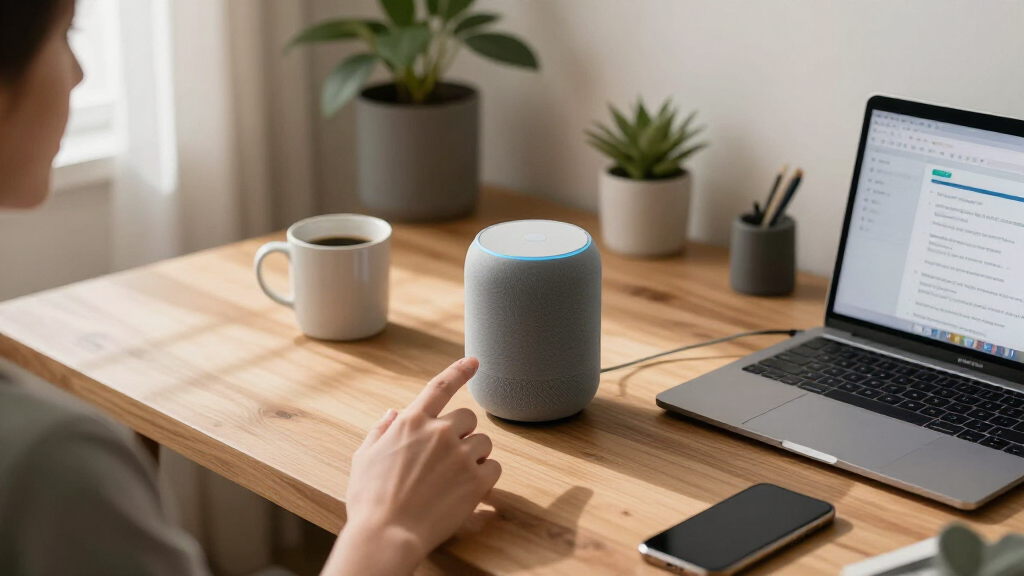
IdeaNavigator AI has introduced a prototype feature that allows users to record complex desktop workflows once and then trigger them via spoken commands. This development aims to help power users reduce time spent on repetitive tasks, addressing longstanding friction in automation setup and execution.
The new system enables users to perform a series of desktop actions—such as renaming files, resizing images, or transferring data between applications—and save this sequence as a ‘watch-once’ recording. Once recorded, the workflow can be replayed by issuing a spoken command, with each step visible for confirmation. If an action risks failure, the system pauses for approval or rolls back to the last safe point. This approach leverages recent advances in screen-understanding models, which can generalize a workflow after observing it once, reducing the need for scripting or brittle hotkey setups.According to an anonymous researcher involved in the project, this prototype is designed specifically for power users who spend hours weekly on repetitive desktop chores. The goal is to create a reliable, autonomous chain that minimizes setup friction and maximizes efficiency. The system’s initial focus is on five common workflow archetypes, including batch renaming, report reformatting, and data transfer between apps, with plans to expand based on user feedback. The team plans to ship a beta version soon, targeting a group of 200 power users to measure weekly retention and effectiveness.
Potential Impact on Desktop Productivity
This development could significantly reduce the time and mental load associated with repetitive desktop tasks for power users. By enabling workflows to be recorded once and triggered via simple spoken commands, it addresses long-standing barriers such as scripting complexity and fragile hotkey configurations. If successful, this approach could shift how users automate daily chores, making automation more accessible and trustworthy.
Furthermore, the ability to replay workflows with visual step-by-step confirmation enhances reliability, which has been a critical concern in existing automation tools. As a result, professionals in fields like design, data analysis, and content management could see immediate productivity gains, reducing burnout and freeing up time for more complex tasks.
As an affiliate, we earn on qualifying purchases.
Advances in Screen-Understanding Enable New Automation
Recent improvements in screen-understanding models have made it possible for AI systems to observe a workflow once and then generalize it for repeated execution. This contrasts with traditional scripting or macro tools, which require detailed coding or brittle hotkey setups. The concept of watch-once commands builds on these technological advances, aiming to make automation more intuitive and less friction-prone for users who are not programmers.
Historically, desktop automation has been limited by the complexity of scripting languages and the fragility of hotkey-based macros, which often break when screen layouts change. The new approach leverages AI that can understand and replay workflows visually, providing a more robust and user-friendly alternative. The idea is aligned with broader trends toward AI-assisted productivity tools, which aim to democratize automation for non-technical users.
As an affiliate, we earn on qualifying purchases.
Uncertainties About Workflow Generalization and Reliability
It is not yet clear how well the system will generalize across diverse workflows or adapt to significant changes in screen layouts. The prototype is still in testing, and user feedback will determine its robustness. Additionally, the long-term reliability of the replay mechanism, especially in complex or error-prone tasks, remains to be validated in broader deployment.
macro recording software for Windows
As an affiliate, we earn on qualifying purchases.
As an affiliate, we earn on qualifying purchases.
Planned Beta Testing and Expansion of Workflow Archetypes
The team plans to release a beta version targeting 200 power users to evaluate weekly retention and workflow effectiveness. Early feedback will inform improvements, including expanding the range of supported workflows and enhancing the system’s ability to handle errors gracefully. If successful, the feature could be integrated into broader productivity suites or offered as a standalone tool, with potential commercial plans for team-based workflow libraries.
desktop productivity automation devices
As an affiliate, we earn on qualifying purchases.
As an affiliate, we earn on qualifying purchases.
Key Questions
How does the watch-once spoken command system work?
The user performs a desktop workflow once while the system records each step visually. Later, issuing a spoken command triggers the system to replay the recorded steps, pausing for confirmation or rolling back if needed.
What types of tasks can this system automate?
Initial support includes repetitive tasks like batch renaming, image resizing, report reformatting, and data transfer between applications. Future updates may expand to more complex workflows based on user feedback.
Is this system available for general use now?
No, it is currently in testing as a prototype. A beta version targeting a select group of power users is expected soon, with wider availability depending on testing outcomes.
Will this require scripting or programming skills?
No. The goal is to enable users to record workflows visually and trigger them via voice commands, eliminating the need for scripting or hotkey setup.
What are the limitations of the current prototype?
Reliability across diverse workflows and screen configurations is still being evaluated. The system’s ability to handle errors and adapt to layout changes remains under testing.
Source: IdeaNavigator AI
Halloween Picks
halloween
As an affiliate, we earn on qualifying purchases.