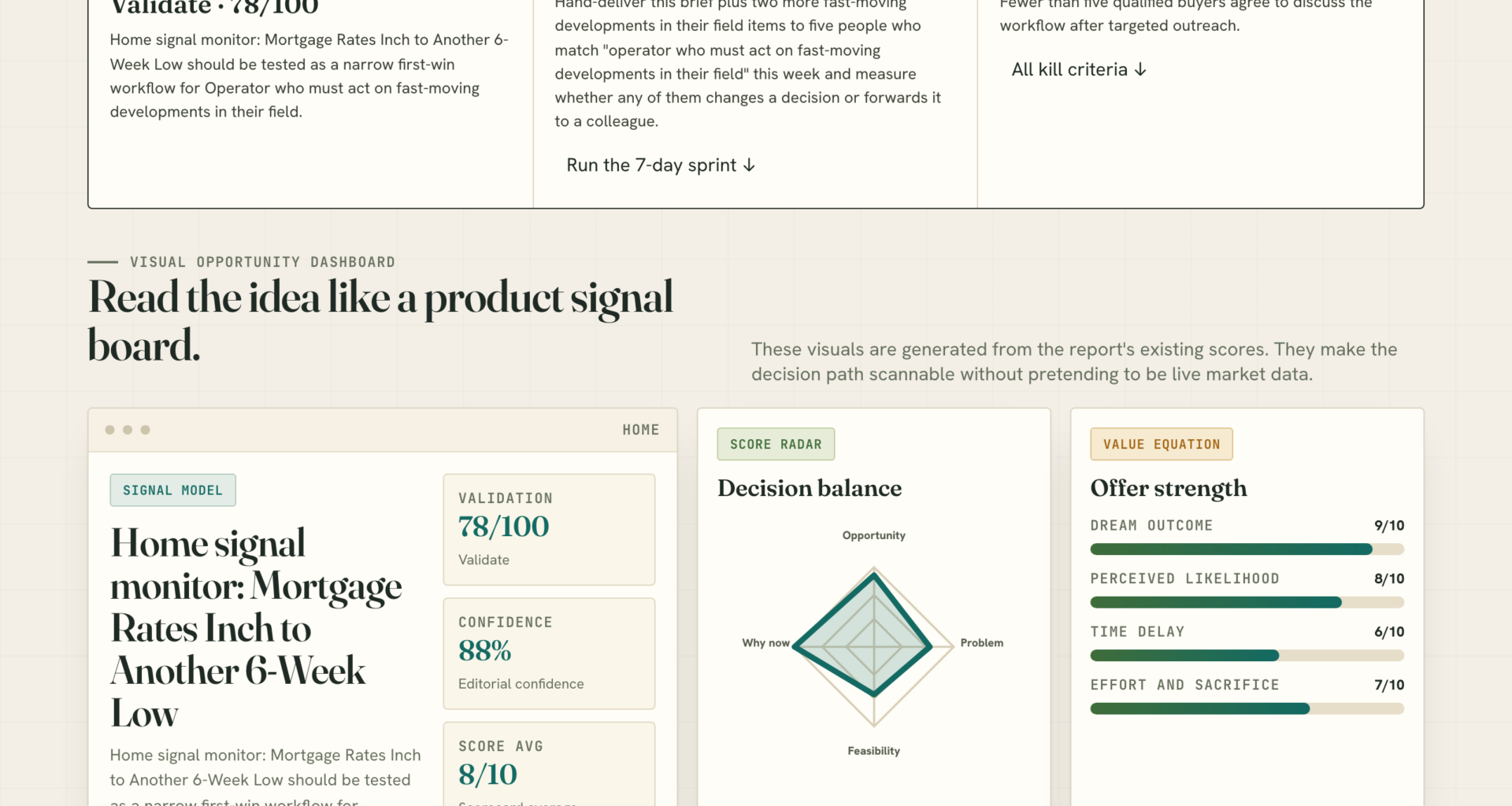

📊 Full opportunity report: Home signal monitor: Mortgage Rates Inch to Another 6-Week Low on IdeaNavigator AI — validation score, market gap, and execution plan.

Get the latest gadgets delivered free with Prime
- Fast, free delivery on millions of items
- Prime Video, Amazon Music and more included
- Member-only deals all year
TL;DR

Mortgage rates have decreased further, hitting a six-week low. This development could influence borrowing costs and housing affordability. The trend reflects broader market conditions and investor sentiment.
Mortgage rates have fallen to their lowest level in six weeks, according to recent market data. This decline, confirmed by industry sources, could influence borrowing costs for homebuyers and impact the housing market trajectory. The movement comes amid broader economic signals and investor behavior that are shaping mortgage lending trends.
Data from mortgage industry analytics indicates that the average 30-year fixed mortgage rate has decreased to approximately 6.2%, the lowest since early March. This marks a decline of around 0.1 percentage points from the previous week, according to the Mortgage Bankers Association. Experts attribute this trend to easing bond yields and shifts in investor sentiment, which are influencing mortgage pricing.
Financial analysts note that this decline may provide some relief to prospective homebuyers facing rising housing prices and borrowing costs. However, mortgage rates remain elevated compared to pre-pandemic levels, and the overall impact on housing affordability remains complex. Industry insiders emphasize that market conditions continue to be volatile, with rates susceptible to fluctuations driven by economic data and Federal Reserve policies.
Why the 6-Week Low in Mortgage Rates Matters
This decline in mortgage rates is significant because it could temporarily ease borrowing costs for homebuyers, potentially stimulating activity in the housing market. It also signals a possible shift in investor confidence and market expectations about future interest rate movements. For lenders and policymakers, the trend provides insight into current economic conditions and the effectiveness of monetary policy adjustments.
However, the sustained level of rates above historical norms means that affordability challenges persist. The movement may also influence future rate expectations, affecting both refinancing activity and new mortgage originations.
As an affiliate, we earn on qualifying purchases.
Recent Trends in Mortgage Rates and Market Factors
Mortgage rates have experienced volatility over the past few months, influenced by economic indicators such as inflation, employment data, and Federal Reserve communications. After reaching recent highs in late 2022 and early 2023, rates have shown signs of stabilization and slight declines. The current six-week low aligns with broader trends of bond market adjustments and investor risk appetite.
Prior to this decline, rates had been steadily climbing due to inflation concerns and monetary tightening measures. The recent easing suggests some market participants are pricing in a potential slowdown or pause in rate hikes, though uncertainty remains about the trajectory of future increases.
“While rates are down slightly, they remain elevated, and borrowers should still consider the broader economic context before making decisions.”
— a mortgage expert
As an affiliate, we earn on qualifying purchases.
Factors That Could Influence Future Mortgage Rate Movements
It is not yet clear whether the current decline will sustain or reverse in the coming weeks. Economic data releases, Federal Reserve policy decisions, and global market conditions could all impact mortgage rates moving forward.As an affiliate, we earn on qualifying purchases.
Next Steps for Market Watchers and Borrowers
Market analysts will continue monitoring economic indicators and Federal Reserve signals to assess whether mortgage rates stabilize further or begin to rise again. Borrowers and lenders should stay alert to upcoming data releases and policy statements that could influence future rates.
Additionally, industry experts suggest that potential homebuyers consider locking in rates if they anticipate further declines, while remaining cautious about ongoing economic uncertainties.
As an affiliate, we earn on qualifying purchases.
Key Questions
What caused mortgage rates to decline to a six-week low?
The decline is primarily attributed to easing bond yields and shifts in investor sentiment, influenced by economic data and market expectations about future Federal Reserve actions.
How might this affect homebuyers?
Lower mortgage rates can reduce borrowing costs, potentially making home purchases more affordable for some buyers. However, overall affordability also depends on housing prices and individual financial situations.
Are mortgage rates expected to keep falling?
It is uncertain. Future movements depend on economic indicators, inflation trends, and Federal Reserve policies, which remain subject to change.
Should I lock in a mortgage rate now?
Prospective borrowers should consider their personal circumstances and consult with lenders. Locking in may be advantageous if rates are expected to rise soon, but market volatility warrants caution.
What does this mean for the housing market overall?
The decline in mortgage rates may encourage more homebuying activity, but other factors like housing supply and prices also play crucial roles in market dynamics.
Source: IdeaNavigator AI
Halloween Picks
halloween
As an affiliate, we earn on qualifying purchases.