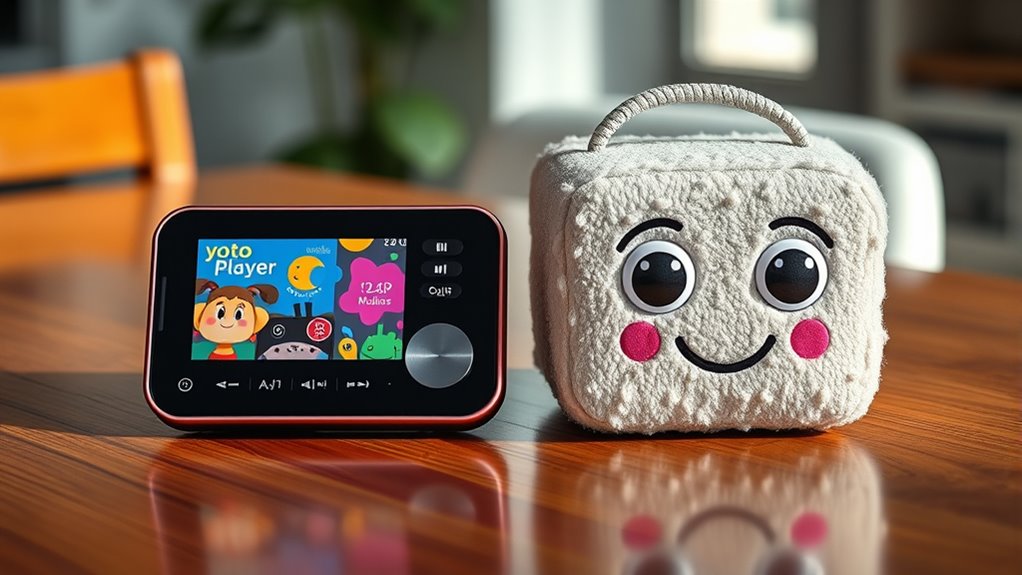

If you’re deciding between the Yoto Player and Toniebox in 2025, I’d weigh their content, durability, and ease of use. Yoto offers a versatile library with customizable cards and a sleek design, great for independent listening. Toniebox features character-based stories built into a tough, child-friendly design, perfect for active kids. Both are excellent choices, but if you want to see which one suits your family best, keep going—there’s more to explore.
Key Takeaways
- Yoto offers extensive digital and physical content customization, while Toniebox focuses on character-themed stories with a curated library.
- Yoto’s app control and screenless design prioritize flexibility, whereas Toniebox emphasizes rugged durability and simple figurine-based operation.
- Yoto’s sleek, portable design with a screen and additional features appeals to style-conscious families, contrasting Toniebox’s child-proof, shock-absorbing build.
- Parental controls are robust on both devices; Yoto provides remote app management and extra features like room thermometer, while Toniebox includes sleep routines.
- Cost and content growth differ: Yoto relies on physical cards and digital updates, while Toniebox depends on purchasing new Tonies; both offer ongoing expansion.
Yoto Player (3rd Gen.) + Disney Classics Bundle – Kids Audio Speaker
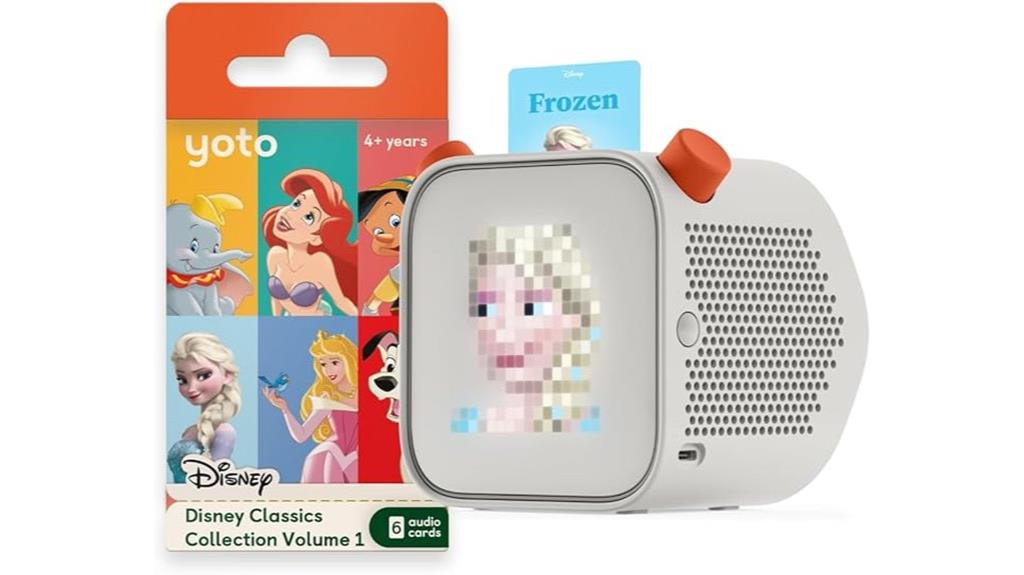
If you’re looking for a screen-free, easy-to-use audio device tailored for kids aged 3 to 12+, the Yoto Player (3rd Gen.) + Disney Classics Bundle is a great choice. It features a simple design: insert a card to play, remove to stop, with large dials for volume and track control. Kids can enjoy curated content like stories, music, and podcasts, plus over 1000 additional cards. The device is safe, with no cameras or ads, and includes kid-friendly features like a nightlight, alarm clock, and room thermometer. It doubles as a portable Bluetooth speaker and supports personalized content, making it versatile and engaging for growing children.
Best For: parents and caregivers seeking a safe, screen-free, interactive audio device for children aged 3-12+ that combines entertainment, education, and parental controls.
Pros:
- Simple and intuitive setup with physical controls and app support for ease of use
- Safe, kid-friendly design with no cameras, mics, or ads, and engaging features like nightlight and alarm clock
- Wide content library including stories, music, podcasts, and customizable options that grow with the child’s interests
Cons:
- Limited to audio content, which may not appeal to children who prefer visual media
- The reliance on physical cards for content means additional purchases for new stories and features
- The device’s screenless design, while safe, offers less visual interaction compared to tablets or smart displays
Toniebox 2 Audio Player Starter Set for Kids 1+ with Playtime Puppy
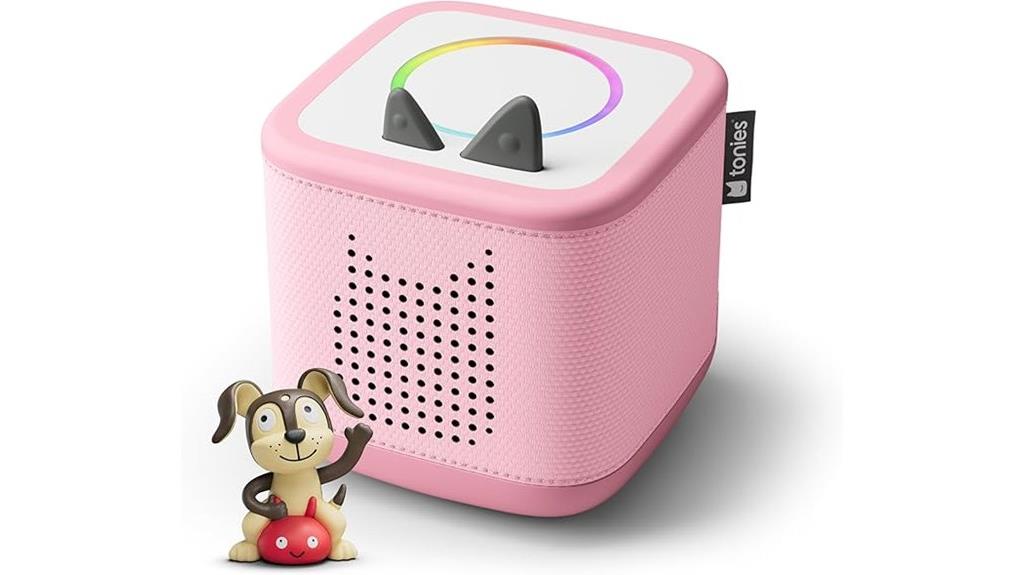
The Toniebox 2 Audio Player Starter Set for Kids 1+ with Playtime Puppy stands out as an excellent choice for parents seeking a durable, user-friendly device that encourages independent play. Its child-friendly design features intuitive controls, like ears for volume and sides for track changes, making it easy for kids to operate. The set includes a Cloud Pink Toniebox, a Playtime Puppy Tonie, and essential accessories, with a vast library of stories, songs, and games. It supports safe, screen-free entertainment and offers parental controls via the app. Plus, its sleep timer and routine features help promote healthy sleep habits, making it a versatile and engaging option for young children.
Best For: Parents seeking a durable, easy-to-use, and safe audio device that fosters independent play and routine development for children aged 1 and up.
Pros:
- Child-friendly, intuitive controls designed for young children
- Extensive library of stories, songs, and games with new content added regularly
- Parental app for safe monitoring and managing playtime
Cons:
- Wi-Fi required for initial setup and updates, which may be inconvenient in some areas
- Additional Tonies and accessories sold separately, potentially increasing overall cost
- Limited functionality without Wi-Fi or additional accessories like the Tonieplay controller
Toniebox 2 Audio Player Starter Set for Kids 1+ with Playtime Puppy
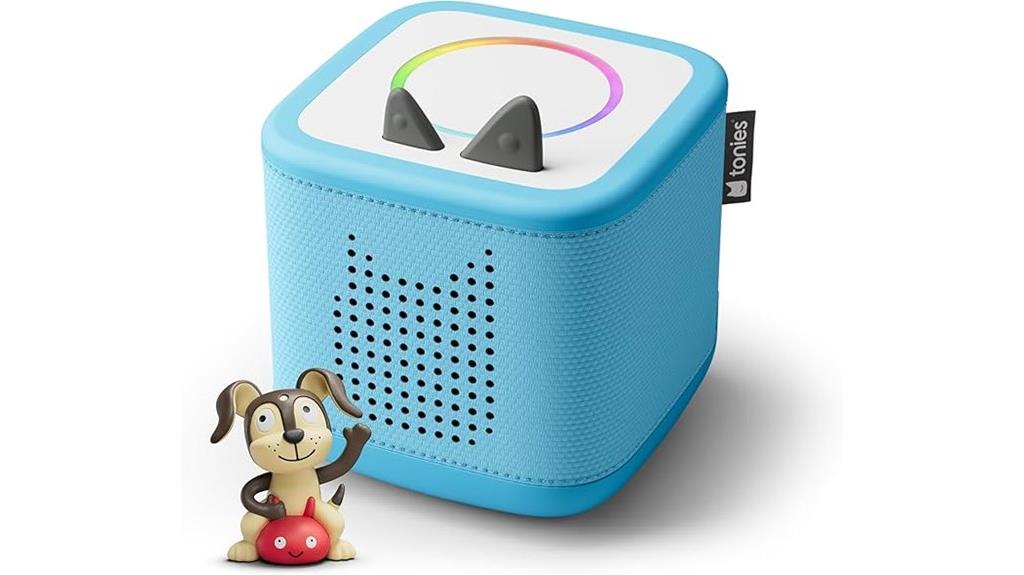
Looking for a durable, easy-to-use audio device designed specifically for young children? The Toniebox 2 Starter Set with Playtime Puppy fits the bill perfectly. It features kid-friendly controls that encourage independent play, letting children explore stories, songs, and games from their favorite characters. The device is built to last for ages 1–9+ and supports a vast library of content, with new additions each month. It includes smart bedtime features like Sleep Timer and Sunrise Alarm to promote healthy routines. Plus, it offers interactive play through Tonieplay, making it a versatile and safe option for young kids to enjoy without screens or ads.
Best For: young children aged 1 and up who enjoy independent, screen-free play and are beginning to explore stories, songs, and interactive games.
Pros:
- Kid-friendly controls that promote easy and independent operation
- Durable design built to last for ages 1–9+ with extensive content options
- Includes smart bedtime features like Sleep Timer and Sunrise Alarm for healthy routines
Cons:
- Additional Tonies and Tonieplay games must be purchased separately
- Wi-Fi required for initial setup and content updates
- Power adapters and longer cables are sold separately, which may add to the overall cost
Yoto Wicked Kids Audio Card for Player & Mini All-in-1 Audio Player
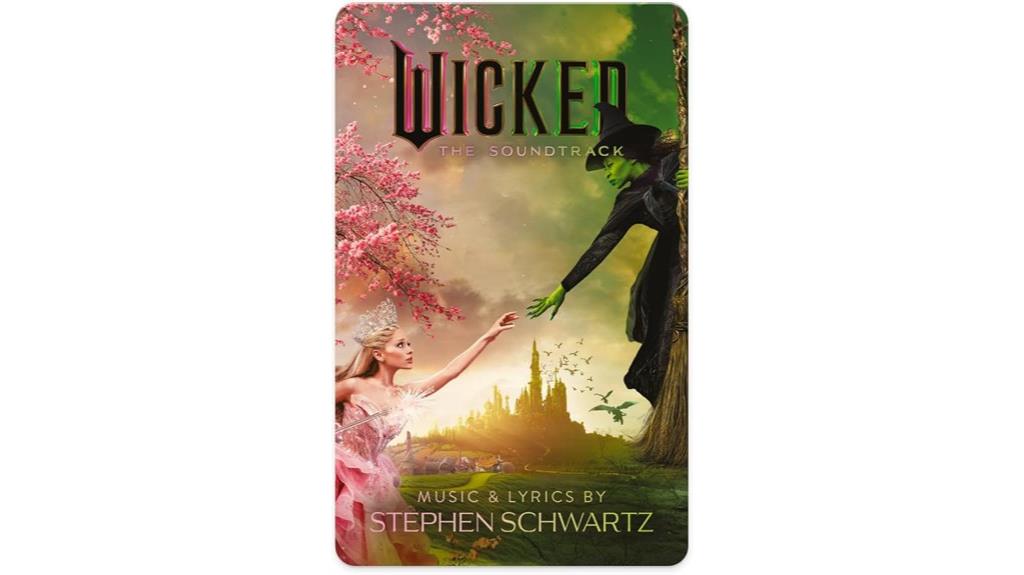
For parents seeking a versatile, screen-free audio solution that’s easy for kids to operate independently, the Yoto Wicked Kids Audio Card for Player and Mini All-in-1 Audio Player stands out. It offers a engaging 56-minute soundtrack that brings Oz magic to life with enchanting songs and immersive soundscapes. Compatible with the Yoto Player and Mini, it’s simple to use—just insert the card to play and remove to stop. Control is also available via a free app, giving extra convenience. With a vast library of over 1000 cards, kids can explore stories, music, and activities safely, fostering independence and creativity in a child-friendly environment.
Best For: parents seeking a safe, easy-to-use, screen-free audio solution that encourages independent listening and creativity for children of all ages.
Pros:
- Simple and intuitive to operate—just insert the card to play and remove to stop.
- Offers engaging content including songs, soundscapes, and stories that foster imagination.
- Compatible with the Yoto Player and Mini All-in-1 Audio Player, with additional control via a free app.
Cons:
- Limited to the specific device (Yoto Player or Mini) for playback, which may require additional purchases.
- Content is curated and may not include every child’s specific interests or preferences.
- The 56-minute runtime may require multiple cards or interruptions for longer entertainment needs.
YOTO Player (3rd Gen.) Kids Bluetooth Audio Speaker
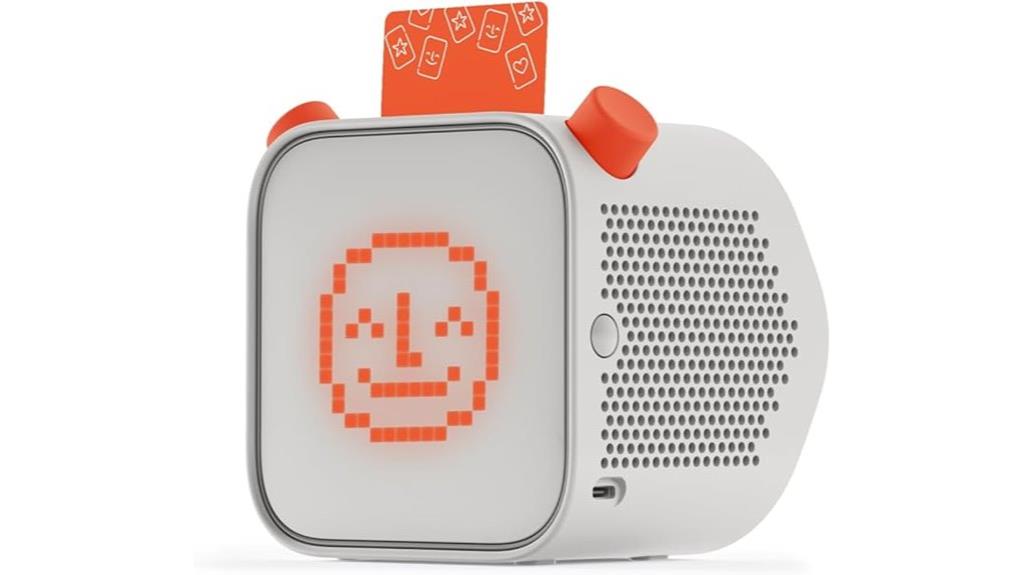
If you’re seeking a screen-free, child-friendly audio device that fosters independence and creative play, the YOTO Player (3rd Gen.) stands out as an excellent choice. This all-in-one speaker is designed for kids aged 3-12+, offering curated content like stories, music, podcasts, and soundscapes that grow with your child’s interests. Its simple setup involves just inserting a card to play, with controls for volume and tracks. The device features a bright pixel display, nightlight, alarm clock, and can be operated via the free Yoto App. With a 24-hour battery life and 32GB storage, it’s perfect for offline, portable entertainment.
Best For: parents and caregivers seeking a safe, screen-free audio device that encourages creative play and independence for children aged 3-12+.
Pros:
- Provides a wide variety of curated content including stories, music, and podcasts tailored for children.
- Simple operation with just inserting and removing cards, plus easy control via large dials and the Yoto App.
- Features versatile functions such as a nightlight, alarm clock, room thermometer, and portable design with long battery life.
Cons:
- Limited to physical cards for content, which may require purchasing or managing a physical library.
- No screen or visual interface beyond the pixel display, which might limit visual engagement for some users.
- Content customization is dependent on available Yoto cards and user-created Make Your Own cards, potentially requiring additional effort or cost.
Factors to Consider When Choosing Yoto Player Vs Toniebox Review

When choosing between the Yoto Player and Toniebox, I consider factors like content variety, ease of use, and parental controls to guarantee it fits my child’s needs. Durability and design are also important, so the device can withstand daily play. Additionally, I look at how easily the content library can grow over time to keep things fresh and engaging.
Content Selection Variety
Choosing between the Yoto Player and Toniebox often hinges on the variety of content each offers. The Yoto Player has an extensive library of over 1,000 cards, featuring stories, music, podcasts, and soundscapes, giving kids a broad spectrum of media. Its Make Your Own cards also let parents and children create personalized content, adding a unique layer of customization. In contrast, the Toniebox offers hundreds of character-themed Tonies, including stories, songs, and interactive games, with new titles added monthly. While both platforms support content expansion, Yoto’s digital library and customizable cards provide a wider range of media types and genres. If variety and personalization are priorities, Yoto’s offerings stand out as more diverse and adaptable to different preferences.
Ease of Use
Both the Yoto Player and Toniebox are designed to be user-friendly, making it easy for kids to operate them independently. Yoto features large dials that are simple for small hands to turn, while Toniebox uses intuitive ear and side taps for navigation. Yoto requires inserting cards to play content, which teaches kids a little about handling physical media, but it also offers the Yoto app for remote control and content management, adding convenience. On the other hand, Toniebox mainly relies on placing figurines called Tonies for automatic playback, making it straightforward—just set the figure down and listen. Both devices have minimal setup steps, like connecting to Wi-Fi, and are designed for kids to start or stop playback easily, promoting independent use without fuss.
Parental Controls
Parental controls are a crucial factor to take into account because they help guarantee that children access age-appropriate content safely. Both Yoto and Toniebox offer features that let parents manage what their kids listen to, ensuring safe and suitable experiences. Devices with dedicated parental control apps make it easy to filter content, set time limits, and track activity, giving parents peace of mind. Since both are screen-free, they naturally limit exposure to inappropriate content by design. Some systems require Wi-Fi for updates and management, while others operate offline, providing extra safety. The level of control varies, so it’s important to choose a device that aligns with your comfort level and family rules, making sure your child’s listening habits stay safe and healthy.
Durability and Design
When it comes to durability and design, understanding how each device handles everyday wear and tear is essential, especially since kids can be rough with their toys and gadgets. The Toniebox features a rugged, soft-shell exterior made of child-proof, shock-absorbing material, making it highly resistant to drops and bumps. Its rubberized outer shell is built to withstand rough handling, perfect for younger children. In contrast, the Yoto Player has a sleek, compact design with a pixel display, which makes it more vulnerable to damage if dropped. While it emphasizes portability with a lightweight build, this also means it requires more careful handling. Overall, the Toniebox’s robust, shock-absorbing design offers greater durability, whereas the Yoto’s modern look may need extra protection.
Content Growth Potential
Considering the potential for content growth is essential when choosing between the Yoto Player and Toniebox, as both devices offer ways to keep kids engaged over time. Yoto provides over 1,000 cards, including stories, music, and activities, and allows parents and children to create personalized content with Make Your Own cards, encouraging ongoing customization. Toniebox, on the other hand, features hundreds of Tonies with new releases every month, continuously expanding its library with fresh stories, songs, and games. Both platforms support additional downloads or purchases, ensuring media can grow alongside a child’s evolving interests. They’re designed to adapt to developmental stages, making sure content stays age-appropriate and engaging as kids grow older. This ongoing content expansion is key to maintaining long-term interest and value.
Device Compatibility
Choosing between the Yoto Player and Toniebox requires careful attention to device compatibility, as both systems use different media formats and content platforms. I recommend checking whether your preferred audio cards or Tonies are compatible with the device—some only work with specific character Tonies or standard cards. Make certain the device supports your desired content types, like stories, music, or interactive activities, without issues. Compatibility with the device’s app and setup process is also vital, especially if your family prefers certain tech ecosystems. Additionally, verify that the operating system supports updates and content management features you might need later on. Finally, consider the device’s physical design and controls to match your child’s age and dexterity, ensuring easy, seamless operation.
Portability Features
Portability is a key factor when selecting a Yoto Player or Toniebox, especially if your child loves to take their audio adventures on the go. I look for devices that are compact and lightweight, making it easier for kids to carry around without hassle. Built-in rechargeable batteries are essential for long play sessions without constantly swapping batteries or searching for power outlets. Features like a sturdy handle or a strap add to convenience, ensuring kids can transport the device easily. Durability also matters—kids tend to be active, so I prefer devices with a child-proof build that can withstand travel and rough handling. Additionally, wireless options like Bluetooth support flexible listening anywhere, making portability seamless and practical.
Price and Value
When comparing Yoto Player and Toniebox, price and value are key factors that can influence your decision. Both devices fall into the premium kids’ audio market, but their pricing reflects different approaches. Yoto Player models often come with a broader range of content cards and features, which can justify a higher initial cost, especially if you opt for extra content. Tonieboxes usually include a starter Tonie and some accessories, with additional Tonies sold separately, impacting the overall expense. The cost of individual content pieces can add up over time. To determine long-term value, consider not just the upfront price but also durability, content variety, and added features. This helps ensure you choose a device that offers the best entertainment and educational benefits for your investment.
Frequently Asked Questions
Which Audio Player Offers Better Sound Quality for Young Children?
I believe the Yoto Player offers better sound quality for young children. Its audio is crisp, clear, and well-balanced, making it easier for little ears to enjoy stories and music without distortion. The Toniebox is fun and durable but sometimes lacks the same audio clarity. If sound quality is your priority, I recommend the Yoto Player, especially since it delivers a richer listening experience for kids.
How Do Battery Life and Portability Compare Between Yoto Player and Toniebox?
Think of battery life and portability as the wings that let kids explore freely. The Yoto Player generally lasts longer on a single charge, making it great for extended adventures. The Toniebox is portable too, but its built-in rechargeable battery sometimes needs more frequent charging. So, if your child loves long trips or outings, the Yoto Player’s longer battery life might be the better choice for keeping their world spinning smoothly.
Are There More Content Options Available for One Device Over the Other?
I’ve found that the Yoto Player offers a wider variety of content options compared to the Toniebox. Yoto’s extensive library includes numerous genres, educational programs, and exclusive content, giving kids more choices. The Toniebox also has a good selection, but it’s more curated and limited by the Tonies figurines you purchase. If variety matters most, I’d lean toward the Yoto Player for more diverse listening experiences.
Which Device Offers Better Parental Controls and Content Management?
I find the Yoto Player offers better parental controls and content management. It allows me to set time limits, approve or block specific content, and monitor usage easily through its app. The Toniebox, while user-friendly, has fewer customizable controls, making Yoto a more flexible choice for parents who want to manage what their kids listen to and when. So, if control is key, I’d recommend the Yoto Player.
How Do the Durability and Build Quality of Each Player Differ?
Imagine a sturdy companion for your little one; that’s how I see the durability of these players. I find the Toniebox feels a bit more resilient with its soft, rubberized exterior, making it a great choice for active kids. The Yoto Player, while solid, has a more traditional plastic build that’s still durable but might show wear over time. Both are designed to withstand everyday adventures, but Toniebox edges ahead in resilience.
Conclusion
In the end, choosing between the Yoto Player and Toniebox feels like finding the perfect rhythm for your little one’s world. Both offer unique melodies and gentle notes that can brighten any day. It’s really about what fits smoothly into your routine and sparks joy in your child’s imagination. Whichever you pick, I believe it’ll be a soft, comforting tune in their growing story. After all, the best choice is the one that feels just right.